I’m Really Liking Market Day

Market day in Yablanitsa is “something to do” that is much appreciated in my little quiet corner of Bulgaria!

The project that I have been expecting since I returned in Mérida (yes, the beginning of March!) has finally dropped and work is about to get insane. So I wanted to make sure I was well stocked up on groceries and made room in my schedule this morning to go to the market to get some fresh veg.

I set off around 8:45 with the hope of being home by no later than 1:00, and, of course, much earlier if I lucked out and got a ride. It was mercifully cool at that hour and I enjoyed my walk to just past the village limits, about a kilometre.

The sheep were bleating loudly.

IMGP5004

Notice something different with this house?
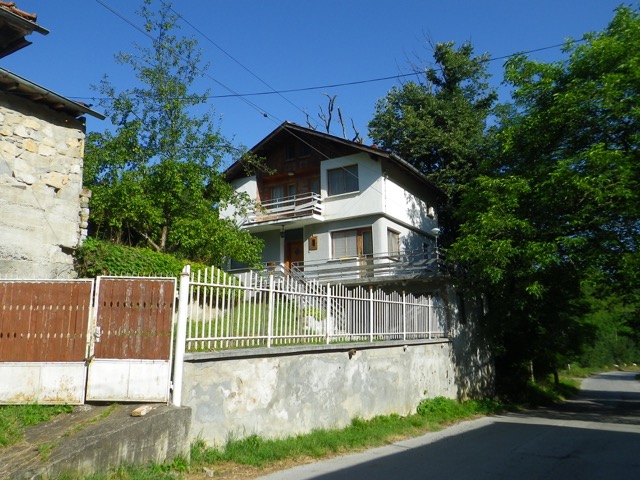
IMGP5005

Soon after, I encountered the “goat man.”

IMGP5009

It’s quite a sight when he takes his herd through the village! The noise from the bells is something I got used to once I understood what I was hearing!

A lovely elderly gentleman pulled over right after the goats. He asked if I was going to the market in Yablanitsa. Yep… He then said something from which I understood that he was going to Pravets, but he could let me off at the square in Yablanitsa (not a detour for him). Great! I hopped in and as we got to the town limits where one access road is closed off before the market, he did the universal hand motions for “I’m going around” and again mentioned the central square (ploshtad) to make sure I knew he wasn’t taking me for a ride. Soon as we got to a corner I recognised, I said, “tuk dobre” (here’s fine) and thanked him profusely.

I passed the infamous taxi on my way to the market and made a note of the very reasonable rates.

IMGP5011

In order to ensure I get a modicum of exercise while living here, my rule is if I get a ride into town, I can’t take a taxi back (being picked up is okay). So the taxi would have to wait for another day.

I also completely photographed the bus schedule (here’s a bit of it):

IMGP5012

I got my veggies, going to the vendors I know as their stuff has been top notch. I had a lot of change and small bills today, which was great because it enabled me to realise something important when someone is rattling off a price — it doesn’t matter if I don’t understand how much change (stotinki) they want if I understand how many leva. For example, my potato/courgette/hot pepper/carrot vendor said 2BGN something. I handed over 3. The tomato vendor’s number was huge, which meant it was only stotinki, so I handed over a 1BGN coin. Much easier than trying to wrangle a notebook and pen for them to write prices and it’s harder for someone to short change me (not necessarily intentionally) than if I give them a big bill.

One thing I find annoying when I go to market is that being with a backpack, my change purse and phone are not easily handy. My skirts don’t have pockets and so I tend to find myself juggling bags and personal belongings. I thought it would be nice to have a very small cross body bag into which I could stuff my change purse, phone, change, tickets, etc. when I’m using my backpack and don’t have my purse. This wasn’t quite what I wanted, but for a mere 5BGN, I was very happy to pick it up today!

IMGP5025

It just fits my phone, but my notebook is too big for it. I could put the change purse in another zippered compartment and put the notebook in here, leaving the compartment unzipped. Again, for 5BGN, it’ll be great until I find something better. This one didn’t have a price tag and was a little different from others marked at 5BGN so it felt like another small victory to say, “Pet?” (Five) and get an answer in the affirmative.

IMGP5026

I then went to get groceries. Like in Mazatlán, I find myself referring to things differently than do the expat locals who have been here a while. They call this the “green store.” I call it the “food store” because that’s  what the sign says (well, actually the word that starts with the X translates to English as “grocery,” but I recognised the first part of the word as being “food,” so food store stuck). This is more of a deli-type store where you have to order things at the counter.

IMGP5019

I like this building. Imagine what a little love could do to it!

IMGP5020

This is a pharmacy (aptekа).

IMGP5021

This is a bookstore (knidzarnitsa — the k is not silent!).

IMGP5022

The Yablanitsa church.

IMGP5023

And this is what the other expats call the “red store,” and I call the supermarket, because that’s what the sign says.
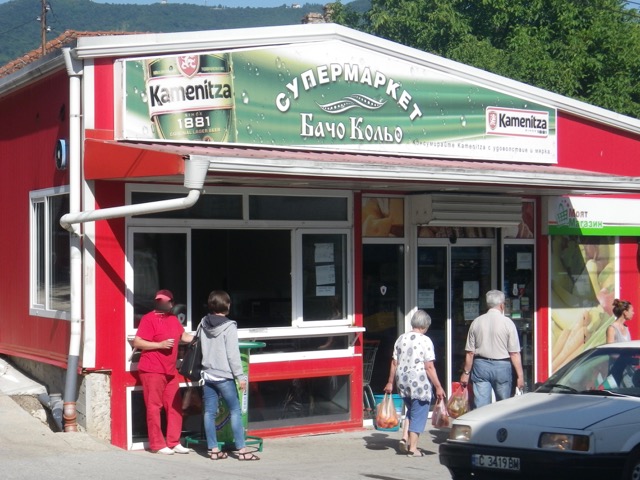
IMGP5024

I showed immense restraint in not buying this even though I got super excited at the word bacon. 😀

IMG_1286 (1)

Had another little linguistic victory when I got to the deli counter to buy butter and they now had two sizes… and I knew how to say big! I didn’t know where the adjective goes in the phrase so I stuck it before butter as I would in English or French (so “I would like one big butter, please.”) and the smile the attendant gave me made up for so much of the rudeness I got when I was in Sofia! “Little” is easy to remember because it’s in the name of the town where I live, malak/maluk!

I was famished by the time I got my shopping done and decided to try some Bulgarian street food at a little stand in the market that smelled like heaven (which I apparently imagine smells like cooking meat and spices…). I wasn’t too sure how to order and so watched a few people until I felt confident enough to get in line. Well, I didn’t have to do that because the cook motioned for a guy to wait while she served me! What a lovely lady. 🙂 I ordered the first thing on the menu, which I thought would be something along the lines of “kebab” since it was kebapche (кебапче). She asked me for 1BGN and then cut a huge piece off a baguette, cut a slit into the piece, smeared it with Bulgarian ketchup (similar to Mexican ketchup — very thin), and then held up what looked like a meat patty and said, “Okay?” I said yes. My snack was mostly bread (which is soooo much better in Europe) with the incredibly savoury and delicious meat thing the middle:

IMG_1289 (1)

I approve of kebapche. 🙂 Next week, I will try it with ljutenica, a spicy Bulgarian relish. I saw it at the stand, but didn’t investigate since I had the ketchup already.

It was then time to make tracks. I walked about 2KM when people who recognised me as staying at Max’s picked me up. They dropped me off at the guesthouse since the road up was blocked by a giant cement mixer!

I got in at 11:00, not even remotely exhausted, and happy with my morning. Now, work!

First Weekend in Sofia, the Communist Tour (by The 365)

There is no way I can do justice to Daniel’s nearly four-hour long tour about Communism in Bulgaria, but I suppose sharing a bit is better than sharing nothing…

Daniel was born in the late ’80s, as Communism collapsed. So his personal story is what his parents told him and more about the period of reconstruction than actually remembering what it was like to live under the regime.

To start, it’s a misnomer to call Communist countries Communist. Communism was a utopia that was aspired to, but the countries we think of as being Communist (like Russia) were instead hard core socialist states aiming to be Communist. This period in Bulgarian history started after the Second World War, during which Bulgaria was half-heartedly aligned with the Axis powers.

By the way, both Nikola and Daniel shared the darkly funny story of how Russia was pressuring Bulgaria to be more aggressive during WWII, so they decided to declare war on the country the farthest from them, figuring they wouldn’t be found on the map: the United States. Well, they were found and the US bombed the hell out of them…

Another thing about Bulgaria during this time that I should have mentioned in my last post is what happened to the Bulgarian Jews during the Holocaust. There was immense pressure from Hitler to deport them to the death camps. Bulgaria’s leaders stalled, claiming that they needed their Jews for reconstruction work. They stalled so much that the entire Jewish population in Bulgaria was spared, something that Bulgaria, deservedly, is very proud of!

The Communist tour started at the court house, but our first stop was the old Princess Korek building. There is no consensus on where the name came from and it is incredible the sign is still up. This building used to be a department store where certain people could buy luxury goods, which were anything not made in Bulgaria, from a Tic Tac to a Rolls Royce. You could only shop in there if you had US dollars and only a small group could have US dollars. Daniel’s parents said that shopping there was a matter of knowing someone who knew someone.

IMGP4972

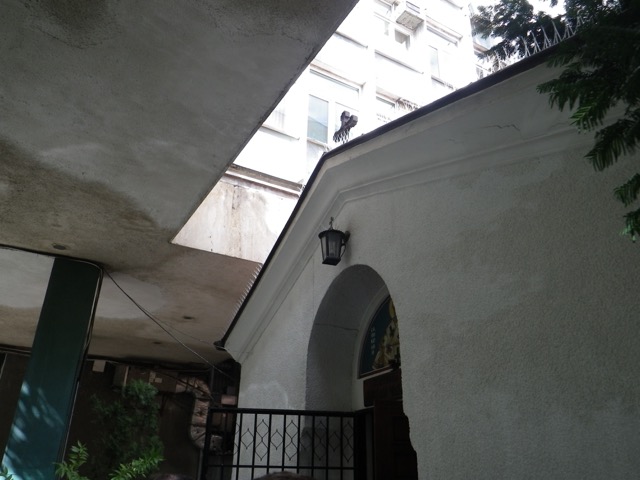
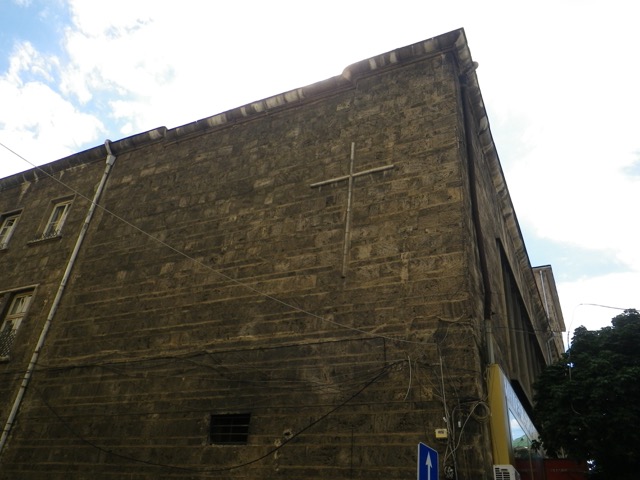
The building hides this small church. Expressions of religion were frowned upon during the Communist era, but not outwardly banned as that would have turned religion into something of a forbidden fruit. It was still something very private that you did not discuss with neighbours. Another guide was baptised in this church and it was done at night with a very small group of people. The Princess Korec building was built in such a way as to hide the cross from the street.

IMGP4973

The Church of St. George is another example of a church that was hidden in plain sight. This is the only view of it not obstructed by other buildings.

IMGP4974

And here’s another sneaky church.

IMGP4975

We turned into this alley and the atmosphere was suddenly sinister. The picture does not do justice to how oppressive this alley felt.

IMGP4976

As it turned out, my gut feeling was correct. This building that is now a night club is where agents would “interrogate” (read, torture) dissidents of the state.

IMGP4977

IMGP4978

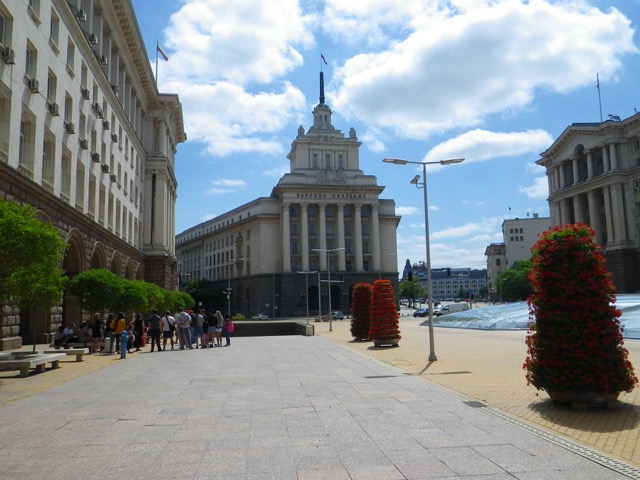
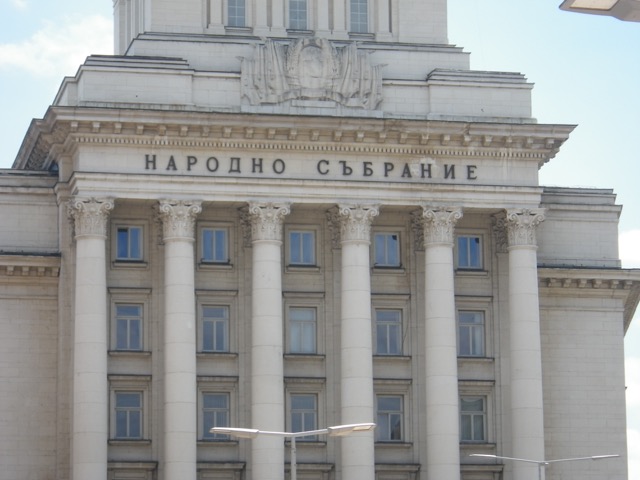
This is the Bulgarian parliament, a few blocks from the Communist headquarters.

IMGP4979

The Communist headquarters were built in the solid “Communist style,” with three types of Greek columns marking the evolution of Communism. Daniels showed us pictures of the complex being built and then of the red star being removed. It is apparently on display in a museum in Sofia. There was a fourth building planned, but they ran out of money so, instead, there was a statue of Lenin.

This is the Monument to the Tsar Liberator, for Russian Emperor Alexander II who liberated Bulgaria from Ottoman rule during the Russo-Turkish War of 1877-1878. It is in front of the Parliament building.

IMGP4980

We paused here to discuss some positive benefits of life under Bulgarian Communist rule:

  • There was financial security under Communism. Daniel’s parents lost everything after Bulgaria became a democracy and the currency was devalued. Things they had taken for granted, like food, suddenly became scarce.
  • Education was free, even if there was a lot of propaganda.
  • There was gender equality, so much so that Bulgaria has one of the smallest wage gender gaps in the world, maybe even smaller than that of the Scandinavian countries.
  • Many social programs, like a generous maternity leave, still exist today.

At another stop , we discussed some of the negative aspects of living under Communism, like limited freedom of expression, but, to be honest, I don’t remember any extensive discussion of the cons like the pros. It was more something that we gleaned as the tour progressed.

One thing I found interesting was how housing was attributed by the government and you could wait for years to get an apartment. Daniel’s parents waited for years for their own place and raised Daniel and his brother in the same small apartment where one of his parents had grown up, sharing it with his grandparents; three generations living under one roof.

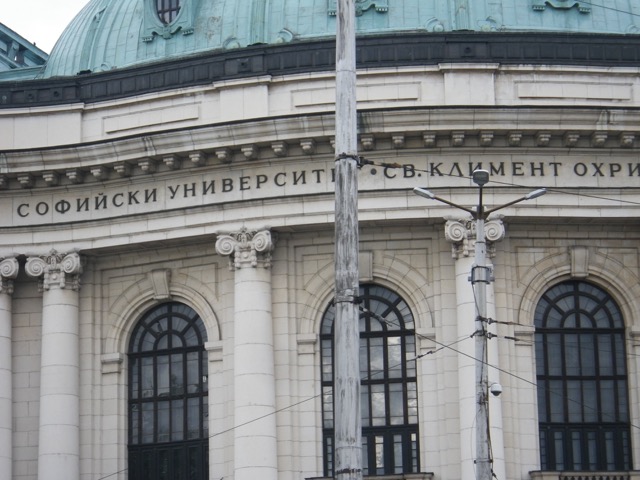
From our spot in front of the Parliament building, we could see Sofia University.

IMGP4982

IMGP4983

IMGP4984

We moved on to the controversial “monument to Communism,” showing a peasant, worker, and soldier.

IMGP4987

Notice that there is more brasswork to the bottom right. Hold that thought.

IMGP4988

The monument is in front of a skatepark. Kids tried to run up the sides, but failed.

IMGP4989

This guy didn’t. Wow!

The statues below the monument to Communism have been the subject of vandalism. This happened in 2011. Notice Ronald McDonald!

IMGP4991

Here it is today, cleaned up, but you can still see traces of the pink paint from another assault on it. The monument is now guarded by a video camera monitored by the “Friends of Russia.” I don’t dare look that up. 😀

IMGP4992

I didn’t take any more pictures of the National Palace of Culture, but we did talk about it a bit. It’s a convention centre and folks are polarised over its utility, or lack thereof. Daniel also talked about the monument to 13 centuries of Bulgaria and how it was built over a monument to WWI veterans. The monument was poorly constructed and fell apart quickly. Currently, the plan is to raze it to… build a monument to WWI veterans.

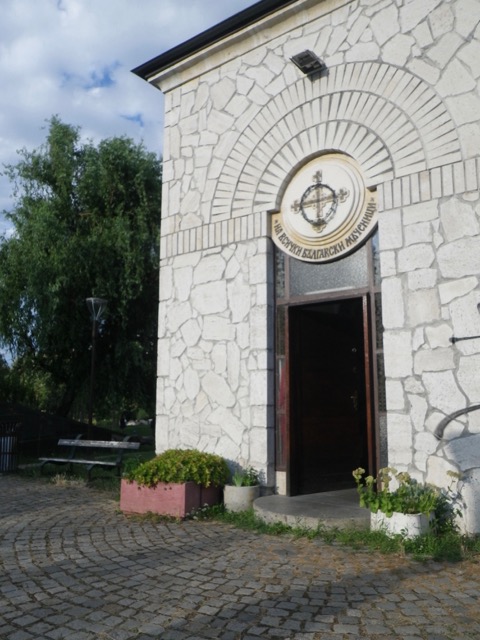
We continued to this little church…

IMGP4994

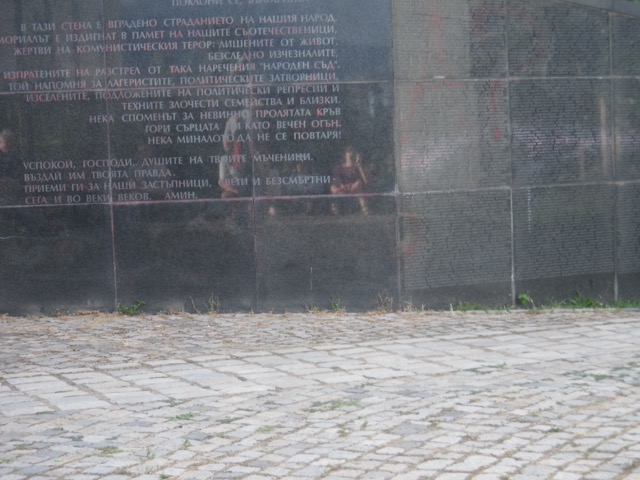
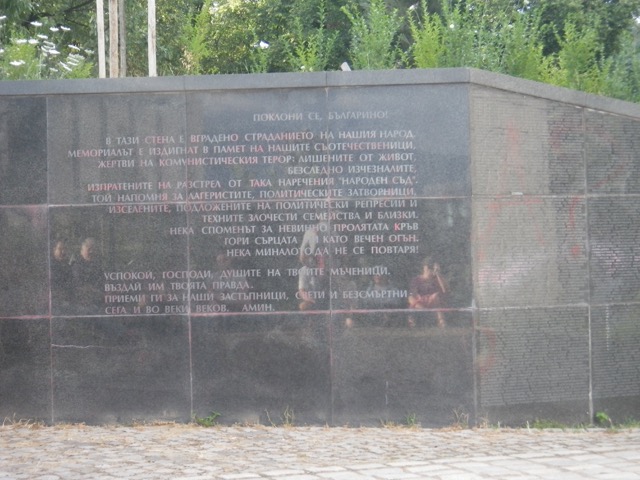
In front of which is the monument to all those who died during the Communist era. Thousands of names etched in stone…

IMGP4995

IMGP4996

IMGP4997

Our final stop was this piece of the Berlin Wall…

IMGP4998

At the end, Daniel gave us all a little pin to remember our tour by. Pins were apparently very popular at one time and he had quite a collection. We picked ours at random. He wasn’t sure what mine symbolises. мая is May, as in the month. I just popped the tiny letters into Google Translate and got “Patriotic War.” Nice little souvenir!

IMGP5003

This post does not even remotely do justice to Daniel’s tour. We learned about leaders of Bulgaria, assassination plots, conspiracy theories, and more. The tour had a fairly neutral point of view and ended with a brief description of how and why Bulgaria has managed to move into the West, with it being a member of the EU, while other nearby countries, like Serbia, have not and are aligned with Russia. It made me realise that I cannot leave this region without visiting other Balkan states.

I have to add something I should have mentioned on the free tour post. The Cyrillic alphabet is linked with Russia but guess what? It started in Bulgaria and Russia later adopted it! I was really surprised to learn that.

Well, if you’ve done the math, I started my day around 9AM and it was now almost 8PM and I had walked who knows how many kilometres. As you can imagine, I was very glad that the tour ended just a few blocks from the hotel. I thought we’d be much further away and had planned on taking a cab home. I was not even remotely hungry so I went straight back to the hotel and crashed. It wasn’t a matter of being too tired to look for food since there was a convenience store right by the hotel where I could have picked up munchies, but I was just beat and still digesting all that pizza and cake!

Sunday was a ridiculously full day, but a really good use of my time in Sofia. I really hope it won’t be my only chance to visit Sofia, but if it is, I hit all the main points.

First Weekend in Sofia, Free Sofia Tour Sunday Morning

Checking into the hotel on Saturday afternoon, I saw a flyer advertising a walking tour. I realised that that would be the best way to get to know the city. So I got on Google to see what English-language tours were available (I never trust anything advertised at the hotel) and found the Free Sofia Tour. It’s a great business model — you get a super high quality tour by a qualified guide who will take you to everything you need to see in Sofia and then then they tell you about their paid themed tours. I did one of those tours Sunday afternoon and hope to be back for the other one at a later day! Even though the free tour is free, I, of course, gave my guide a decent tip.

The free tour started at the court house at 11AM. It was a huge crowd and we were split into three groups. The tour takes two hours so there is no way I am going to remember everything our guide, Nikola, told us, but I will do my best! Follow the links if you want more information.

Our first stop was the Eastern Orthodox Holy Sunday Church, which was razed during an assault in 1925 and subsequently rebuilt. It was the worst terrorist attack in history up to that point, especially considering that high ranking members of the military and government were assassinated. It was an attempt to kill the king, who happened to be late to the service.

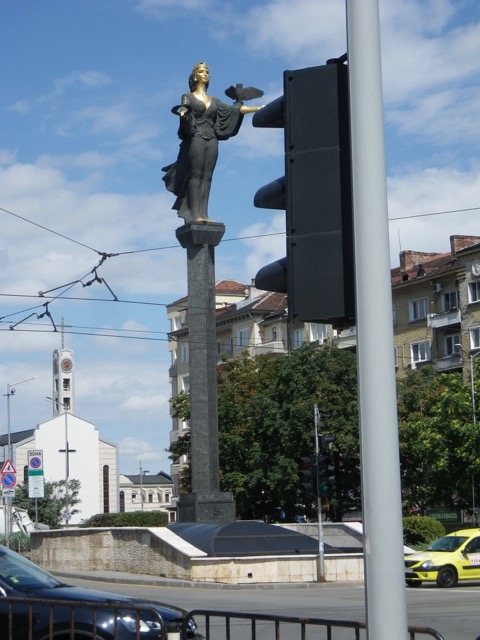
Our next stop was the statue of Saint Sofia, which is an embarrassment since Sofia was not named for this saint, but rather for a church. Adding insult to injury, the statue has pagan symbols and the woman’s dress is too revealing. Sofians are rather divided over this statue being the new symbol of their city. Personally, I love it. 🙂

IMGP4920

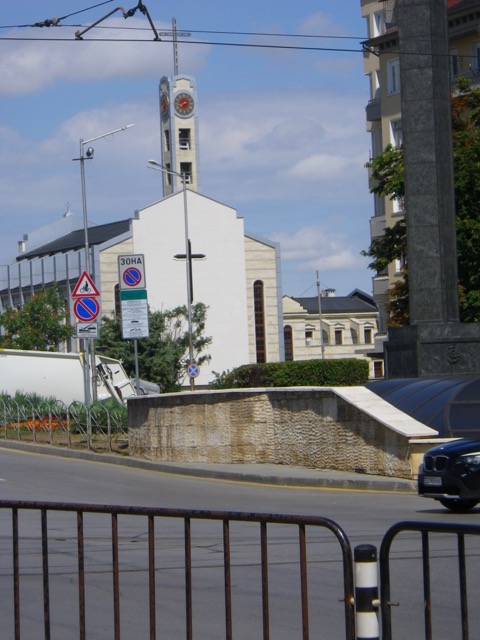
This is the only Catholic Church in Sofia. It will have importance in a moment.

IMGP4921

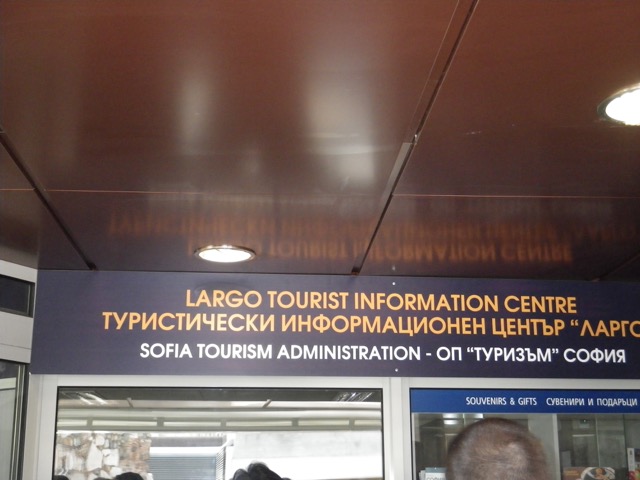
The tourist info centre is in the pedestrian underpass across from the Saint Sofia statue.

IMGP4922

This is Church of St. Petka of the Saddlers. What’s interesting in this location is that you see how Sofia is a city that was built in layers and this is a prime location to see the major layers, from Roman to modern times. I was rather reminded of Seattle, actually. The church was built in medieval times from Roman structures. Those rocks out front are part of those Roman structures.

IMGP4925

Sofia lies over the site of the ancient city of Serdica. While excavating for the new subway lines, all manner of ruins were found and delayed the project. The exposed ruins have been made part of a “pedestrian zone” and you can walk through them. We will see more of them shortly!

IMGP4926

IMGP4927

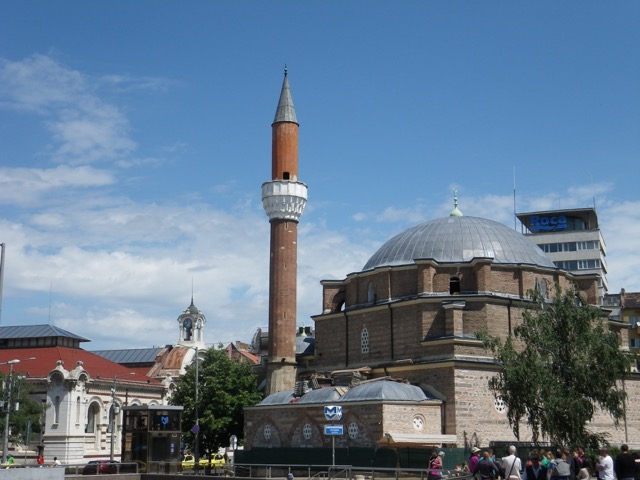
Behind the ruins is the only mosque in Sofia, complete with a minaret. I had hoped to visit inside, but they are doing renovations and weren’t allowing in tourists this weekend. I would have been welcomed under normal circumstances since I was dressed appropriately. Sofia does not have a large Muslim population and this is why there is only one mosque. There were others in the past, which were destroyed or repurposed.

IMGP4928

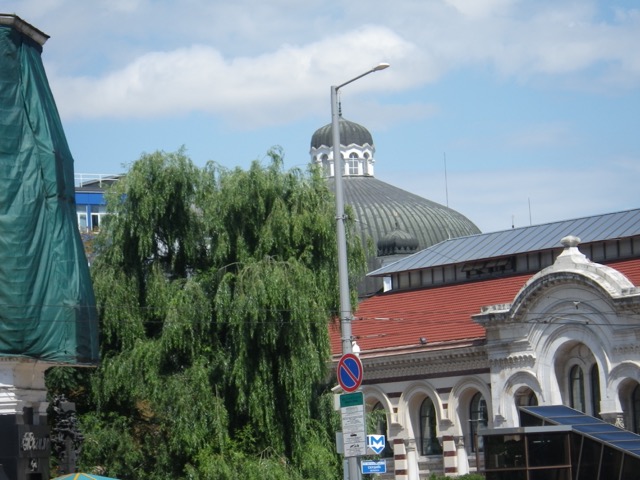
And here is the roof of the Sofia synagogue.

IMGP4929

So there is are an Eastern Orthodox and Catholic church, a mosque, and a synagogue all within sight of each other in Sofia, forming the “Square of Tolerance.” This was my favourite part of Sofia!

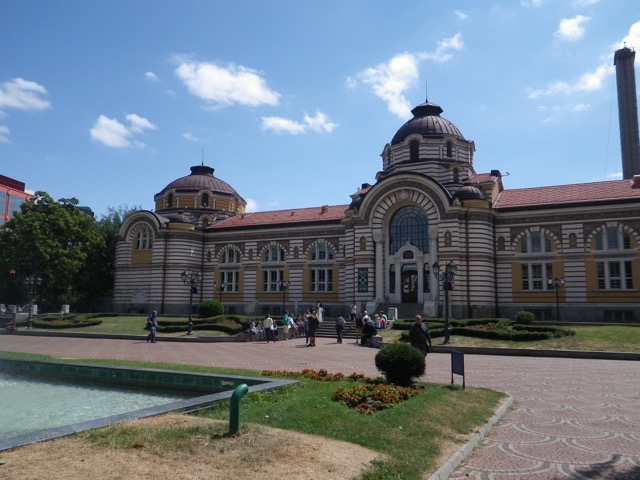
Next stop was the former bathhouse where people would come for a day to pamper themselves and chat.

IMGP4930

IMGP4931

IMGP4932


IMGP4934

IMGP4935

I didn’t have time to go in this weekend, but appreciated my guide’s reaction when I painstakingly read the sign and said, “Oh, it’s the Sofia history museum!”

IMGP4936

The bathhouse was left to fall into ruin, but was very recently made into the museum. The inside is apparently glorious. It’s on my list for my next trip!

Here is Nikola filling his water bottle at the mineral spring outside the bathhouse. The water is hot and very stinky!

IMGP4937

Now, we come to the three buildings I photographed the day before not realising their importance. That one in the middle used to have a big red star at the top where the Bulgarian flag now flies. It was the former headquarters of the Communist party and now has government offices.


IMGP4939

IMGP4940

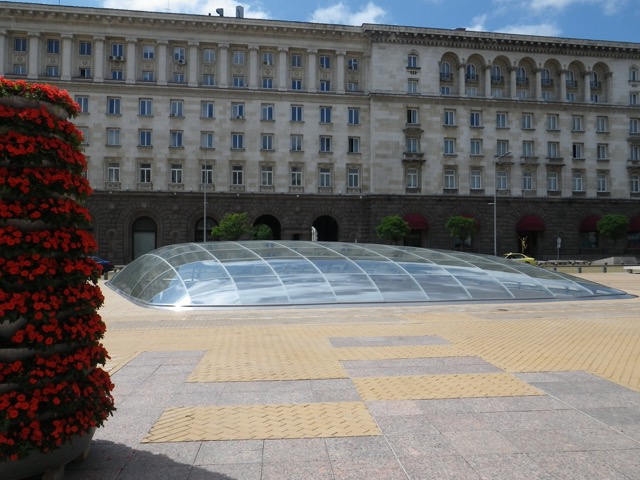
This is the Presidency Building and the one across from it is the Council of Ministers building. Now, we will go underground and see what that glass dome is covering!

IMGP4941

Tah-dah! More ruins of Serdica!

IMGP4942

IMGP4943

This is the eastern gate into Serdica.

IMGP4944

Guards standing in front of the presidency building. Let’s see if I can remember what Nikola had to say because it was hilarious. Something along the lines of, “There’s a changing of the guards you can see. It’s not Buckingham Palace, but it’s cute.” Bulgaria has both a president and a prime minister and the latter is the one with real power.

IMGP4947

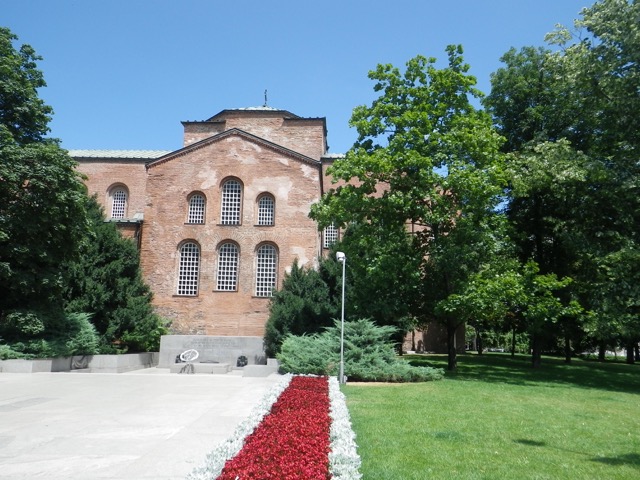
Behind the presidency building is a treasure, the Church of St. George, dating back to the 4th century. Apparently, it’s still the original roof?! The church is known for its frescoes, but I didn’t get to go in on this trip.

IMGP4948

This is the national theatre.

IMGP4949

I loved this building with its cheery colour!

IMGP4950

IMGP4951

This former police station became the royal palace…

IMGP4952

This is where we stopped to do a bit of a reenactment of Bulgarian governance in the 20th century, with members of the group reluctantly agreeing to be the German and Austrian who would each become a monarch of Bulgaria, the Italian who married the Austrian and produced the first true Bulgarian monarch in a long time, and the Bulgarian monarch. Once all these roles were cast, Nikola asked for someone to play the Communist. Yours truly promptly volunteered. 😀 As it turns out, “I” did better than all the others in governing Bulgaria the longest since “I” was able to transition into democracy. Fun fact about Bulgaria: it is (as far as I know) the only country in the world that democratically elected a former king to be its prime minster!

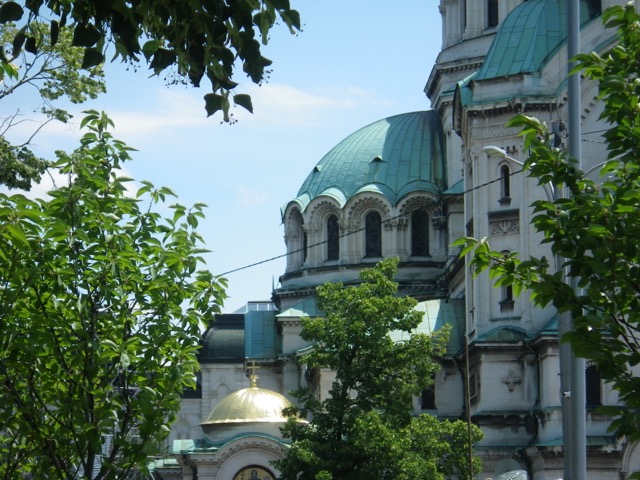
The tour ended with Sofia’s famous Alexander Nevsky Cathedral.

IMGP4953

IMGP4954

There was a wedding at the Saint Sofia Church, from which the city got its name, so we weren’t able to get good photographs of it.

IMGP4955

IMGP4956

IMGP4957

IMGP4958

The Alexander Nevsky Cathedral is amazing!

IMGP4959

IMGP4960

IMGP4961

IMGP4962

IMGP4963

IMGP4964

This is where the tour ended. I have not even come close to conveying all the information I got about Bulgaria and Sofia. This is a country with a very messy history and I couldn’t do justice to Nikola’s attempts to unravel it all for us. I will have more when I move to my review of the Communist tour.

Nikola gave me a discount coupon for their the Communist tour later that afternoon and then I headed off to find some lunch.

I found myself back the Council of Minsters building. I will have more to say about these buildings when I review the Communist tour!

IMGP4965

The pink building was not part of the complex, but was tied into it.

IMGP4966

These ramps are used to move goods up and down into the underpasses. Women also use them for their push chairs.

IMGP4967

These are really fancy. I saw some others that were just a metal rail going down the stairs.

IMGP4968

I went back and got more exterior shots of the Church of St. George.

IMGP4969

I thought this building was neat, with the way the windows were craved out of the corner.

IMGP4970

I wanted pizza for lunch, something that is so ubiquitous in Bulgaria that the guide on my next tour said that it’s practically “Bulgarian food.” So I had lots of options on Vitosha Boulevard and only had to try two restaurants before I got service. I ordered a large beer and Margherita pizza (sauce and cheese). I wish I’d had more of that tomato on it because, dang! The pizza was the real thing. Mmm…

13754494_10154396375628953_5317176913547690277_n

I’d walked for nearly three hours on the tour and knew the next tour would be three to four hours, so I decided to go all hog and order chocolate cake and an espresso after eating that entire pizza. I did not need to eat again all of Sunday, not even a before bed snack! So 15CAD for the meal, including a tip, was really good value!
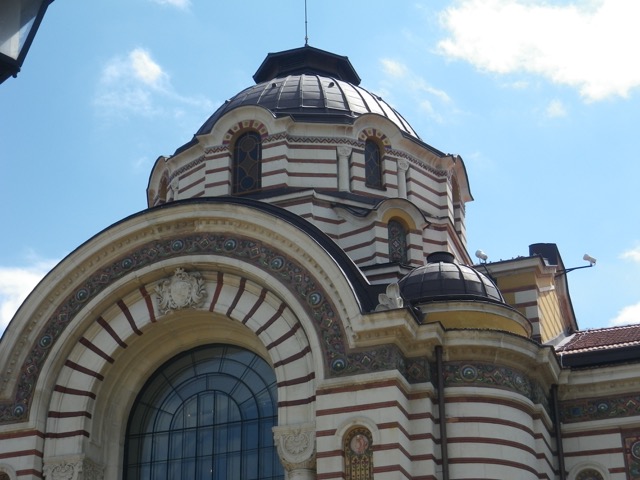
I like how the restaurant built its roof around this tree:

IMGP4971

So this takes us to about 3PM Sunday, with my next tour starting at 4PM. More after I do some work today!

First Weekend in Sofia, First Evening and Morning

This post will share some general thoughts about my weekend in Sofia and then I will do a couple more posts about the tours I did on Sunday. I did some wandering around on my own when I arrived Saturday and saw some things that I revisited on Sunday. So future posts will have more details on some of the things I photographed in this post, which covers up to 11AM Sunday morning, ie. my departure from Malak Izvor, the ride to Sofia, my arrival in Sofia, the hotel, my first evening, and my first morning.

So Max showed up as promised Saturday morning. We discussed a few things, then he left me to book a hotel before driving me into Yablanitsa to catch a bus. I was surprised by how hard it was to find a hotel. I’m past the point of wanting to sleep in a dorm or in a roach motel and all the reviews for anything affordable were offputting. I finally found something that had the right mix of location, price, and positive reviews. More on the hotel in a few paragraphs. 🙂

Max thought there was a bus at 1PM, but there wasn’t… There are a couple of signs around the plaza in Yablanitsa showing the schedule and one of them had the 1PM bus crossed out. Damn. I managed to decipher the sign and figured out that there should be another bus at 2:15, so I sat down on a bench for a long wait. An old man came to me multiple times offering me, I eventually figured out, a lift to Sofia, but I wasn’t that desperate. It was just too odd!

Thankfully, the 2:15 bus did materialise! It was a whopping 6BGN/4.50CAD to go to Sofia. I should stress that I’m being sarcastic!

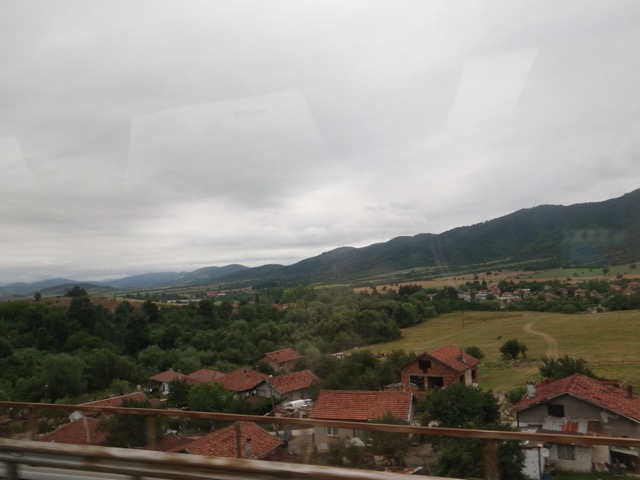
Off we went. At first, the scenery reminded me of the Okanagan.

IMGP4857

But then, it got greener and more lush.

IMGP4858

The villages all looked the same, white houses with orange roofs.

IMGP4859

All the signage on the bus was en français.

IMGP4860

I don’t know if all of Bulgaria looks like this, but, dang!

IMGP4862

See what I meant about all the villages looking the same?

IMGP4863

Approaching Sofia, we passed immense sunflower fields.

IMGP4864

IMGP4865

The bus had an ashtray!

IMGP4866

Coming into Sofia, I saw a restaurant menu that made me hungry. The third item is what caught my attention, пица — peetsa. 🙂

IMGP4867

I arrived at the huge and still fairly new Централна Автогара — Centralna Avtogara — the bus station. From there, I got a taxi to my hotel. I’d done my research on taxis and knew not to get in one without posted prices and a working metre. The price was 0.79BGN/KM and I’d calculated it shouldn’t cost more than 5BGN to get to my hotel… I was right! I was so pleased that taxis are as cheap as I’d been told they would be. Here is a map of my universe this weekend:

maps

So I stayed at Hotel Zenith. The location was absolutely fantastic, just 10 minutes or so walking from nearly anything you’d want to see in Sofia, but on a quiet street. The staff all speak English. I forgot to grab a picture of the outside, but it’s really unassuming, just a small sign saying “Hotel Zenith.” The carpet inside is ugly, but the hotel is new and clean:

IMGP4999

Here’s my room:

I hadn’t had lunch and it was almost 5PM by this point. Famished doesn’t even begin to describe my mood. I decided to head to Vitosha Boulevard, Sofia’s pedestrian street, as I figured it would be my best bet for finding food quickly.

I have no idea how I picked the restaurant I did, but it might have had something to do with the fact that someone asked, in English, if they could help me. I was seated and given a huge menu, in English, with pictures. It was more like a catalogue! They had everything from burgers to pizza to sushi!

I’ve been meat deprived since I got here, so I decided to take a chance on their bacon cheeseburger. I didn’t bother with the fries, but, damn, the burger was good! Look at that thick bacon! This was exactly what I needed. I asked for no mayo on the burger and it came with ketchup. Not my first choice, but mustard is not common here so I didn’t even try. I like dill pickles now, so I liked the added flavour in the burger. The meat was seasoned, too. A great burger by any standards.

IMGP4869

The restaurant served gelato and I wanted some for dessert, but had no luck getting a dessert menu. So I decided to settle up and look for ice cream elsewhere. I did a quick Google and learned “smetkata, molya,” which means “the check, please.” I then walked around a bit and discovered there were at least a half dozen other gelato places on Vitosha. I picked one at random and got a huge chocolate waffle cone, figuring it was my belated lunch. 🙂

I passed a telenor store and popped in to buy some top up cards for my phone. I have not, and probably will never, figure out their pay as you go system, so please don’t ask about it. 😀 As far as I understand it, it’s like in Mexico, where you put money on your account and buy various packages. Because I only use my phone when I’m in town, I’ve just been putting 10BGN on my phone and using it until I run out. Probably not the least expensive way of doing it, but it’s been working fine. I’ve only spent 36BGN for my phone since I got here, and that’s, I’m told, super expensive compared to having an actual plan. Of that 36, I still have money on my phone and I have a 10BGN top up card I still haven’t used. The folks in this store was fantastic and went out of their way to find someone who spoke a smidgen of English even if what I wanted could easily be done with a bit of miming and holding up fingers.

IMGP4870

It started to pour when I came out of the store. And I’d left my raincoat at the hotel! Thankfully, I was wearing my wonderful Ipanema‘s, so I didn’t care if my shoes got wet.

IMGP4871

IMGP4872

It ended up raining on and off for a bit longer, but I just got wet once the initial deluge was done.

I passed the courthouse (had to translate that from the French for a second — like in French, it’s a “palace of justice” in Bulgarian), and this would end up being an important landmark since the walking tours started from here.

IMGP4873

IMGP4874

I think I have an Irish pub radar. Remember that I found one in Mérida too!

IMGP4876

Bulgarians, like Mexicans, apparently like cream cheese in their sushi. *growls*

IMGP4878

Sofia has a tram system.

IMGP4879

Holy Sunday Church. We will return. 🙂

IMGP4880

I liked the paint job on this building.

IMGP4881


IMGP4883

I passed many Mac stores in Sofia, including one almost right next door to the hotel. Didn’t seen any PC stores…

IMGP4884

That’s about the same price as I paid for my 13″ MBA.

IMGP4885

Sofia is full of contrasting architecture like this.

IMGP4886

IMGP4887

Sofia has a fairly recent subway system that is expanding.

IMGP4888

This is the south end of Vitosha Boulevard.

IMGP4889

We will come back to this. 🙂

IMGP4890

This is the cultural centre where there are exhibitions and business meetings.

IMGP4891

IMGP4892

IMGP4893

Mount Vitosha. Wow! I knew it was close to the city, but not that close! Very popular for skiing in the winter.

IMGP4894

IMGP4895

IMGP4896

IMGP4897

IMGP4898

So many billboards atop buildings.

IMGP4899

This Starbucks is right by my hotel and I’m proud to say I did not make use of it even though finding other coffee was a challenge (there is coffee everywhere, but I haven’t yet figured out the etiquette for cafes).

IMGP4901

IMGP4902

IMGP4903

IMGP4904

IMGP4905

IMGP4906

IMGP4907

IMGP4908

I got in around 8PM Saturday night and went to bed around 11PM. I didn’t sleep nearly as well as I would have expected, considering how comfortable the bed was. I didn’t get up till 9AM on Sunday, with my tour being at 11AM.

I went to Vitosha Boulevard in search of breakfast. I ended up having all my meals there because it was the easiest option, if not the cheapest. I walked around for a bit until I saw a sandwich shop, Makis, that didn’t look too intimidating. They had a beautiful display of fresh sandwiches and a full coffee menu. I ordered a cappuccino and their Makis sandwich, which had ham and cheddar. It was a bit of a heavy meal, but I knew I’d be walking it off!

Let’s do a parenthesis here to talk about the value of learning to read Cyrillic before coming to Bulgaria (or Russia or Serbia or Ukraine or…). It is amazing how many words sound like English, especially on a menu. If you can read Bulgarian, you won’t go hungry. You might not get what you want, but you can very likely find something you like.

Examples:

бургер — burger

дунер — duner (donair)

пица — peetsa (pizza)

хот дог — hot dog

Чедар — chedar (cheddar cheese)

сандвич — sandvich (sandwich)

салам — salam (salami)

супа — soopa (soup)

салата — salata (salad)

I had fun reading everything I could see on Sunday and made out that this is the Sofia Hotel Balkan… then noticed the English next to it. LOL

IMGP4909 (1)

I thought this luggage was well designed. Notice the built in zipper lock:

IMGP4909

Pedestrians are controlled much like in London, with barriers to keep them from crossing streets where they’re not supposed to. For many “scary” intersections, there is actually a pedestrian underground passage, where you’ll find shops and restaurants.

IMGP4911

I had no idea how important these three buildings are. We’ll come back. 🙂

IMGP4912

McDonald’s was the first international company to take a chance on Bulgaria in the 1990s and it bought up the best locations in Sofia. There are now a lot of the restaurants around the city, but they’re not a popular chain.

IMGP4913

This is what the word Russian looks like in Russian. 🙂 This phrase is Russian, not Bulgarian, and it says “Russian Standard Vodka.” What did I tell you about learning to read one Cyrillic language being the key to the others? 🙂


IMGP4915

This is another Cyrillic font and it gives me a major headache! In this one, the m is the T sound (Т), the u is the I sound (И), and the g is the D sound (Д). WTFBBQ, as my best friend would say.

IMGP4916

Looking down Vitosha Boulevard to Mount Vitosha.

IMGP4917

Before I close up this novel and move onto the walking tours, here are some general thoughts on Sofia:

-The touristy part is very walkable and feels safe, but I was warned about pickpockets being abundant. I watched my purse! The city is pretty clean, but there is a lot of graffiti. I was struck by how varied the architecture is.

-I was warned by the Brits I know here that customer service in Bulgaria is very “European,” ie. there is very little. It was intimidating enough to go into a restaurant where I don’t speak the language, but being treated like a pest or ignored on top of that was a bit much. I did the path of least resistance thing my whole weekend. I just tried one restaurant after another until I got service. Makis sandwich shop was my favourite place as they were really nice. I ended up going again on Monday morning and the English-speaking guy wasn’t there, but the gal let me muddle through in Bulgarian and it was fine. It would be really nice to get someone to show me how to get seated at a restaurant since I passed a lot of nice little cafes where I would have liked to enjoy a coffee, but sitting myself down, saying “excuse me,” and trying to order at the bar did not produce results. The gelato place was also really good and even though they were more expensive than other shops, I went back several times. 🙂

-I found being in Sofia was exhausting because of how much work it was to do everything when you don’t really speak the language, but at the same time, it was easier than in Yablanitsa because there’s more of everything. I could wait until I found what I wanted, be it a bathroom, water, or meal, in an accessible and non-intimidating location. But for being a capital city in an EU country, I expcted a bit more effort to help tourists. I’ll do a write-up of my bus station adventure in a future post…

-Sofia is apparently the most expensive place in Bulgaria and Vitosha Boulevard is the most expensive place in Sofia. I found both to be inexpensive! I didn’t worry about prices at all.

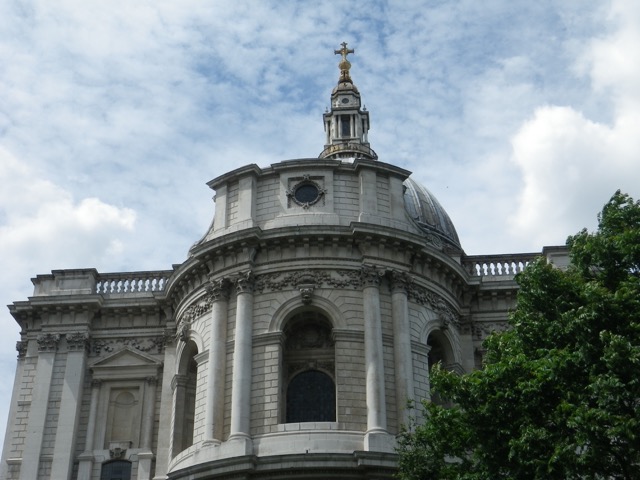
St. Paul’s Cathedral

Next stop today was St. Paul’s Cathedral. But on the way…

IMGP4739

First glimpse!

IMGP4740

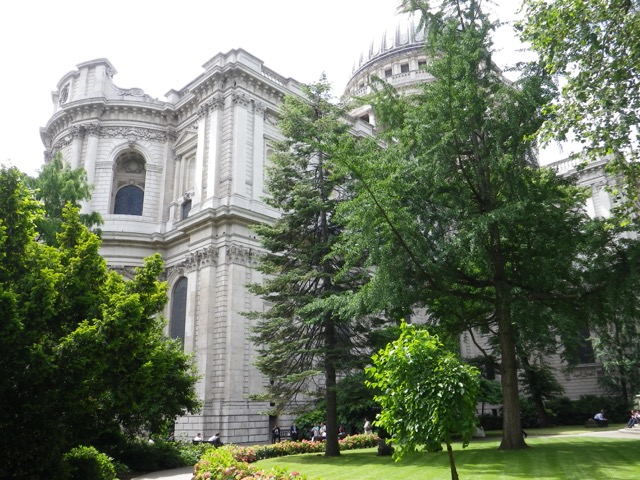
In the gardens at the rear.

IMGP4741

IMGP4742

IMGP4743

IMGP4744

IMGP4746

IMGP4747

It was only here that I realised that I hadn’t budgeted my time to include waiting in a long queue! Well, to my surprise, there was absolutely no queue!

IMGP4748

Photography is not allowed in St. Paul’s, so you’ll have to go here to see some of the wonders within. It was more beautiful than I could ever have imagined… The £18 entry fee included a very good audiovisual guide that let me explore at my own pace.

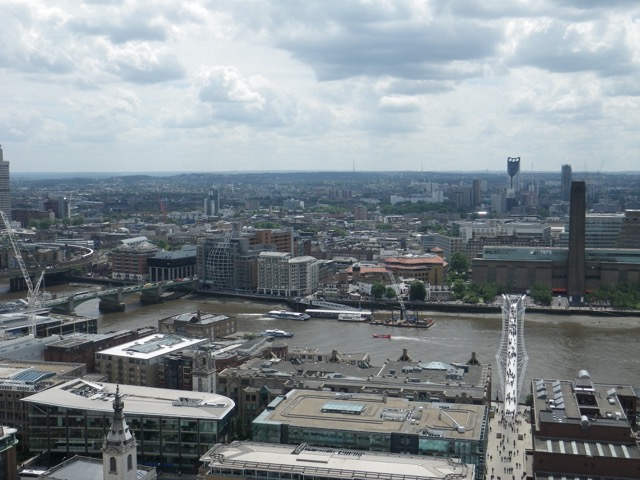
One thing I didn’t realise you could do was climb the dome! You start up a wooden spiral staircase to the interior Whispering Gallery, then climb to the exterior Stone Gallery through a narrow stone staircase. I thought the Whispering Gallery was alarmingly high up until I got to this first exterior gallery…

IMGP4749

IMGP4750

IMGP4751

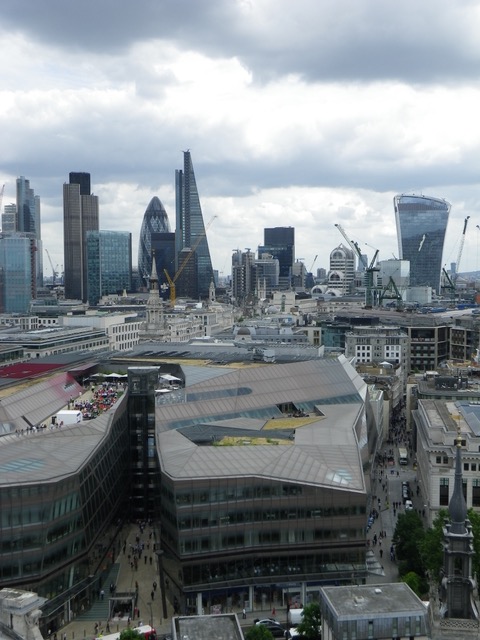
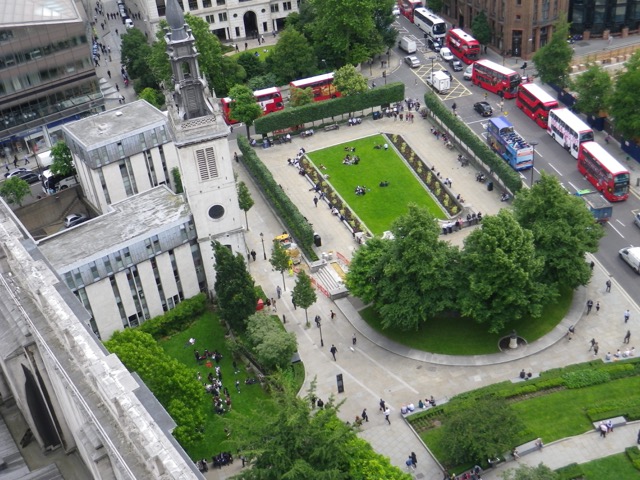
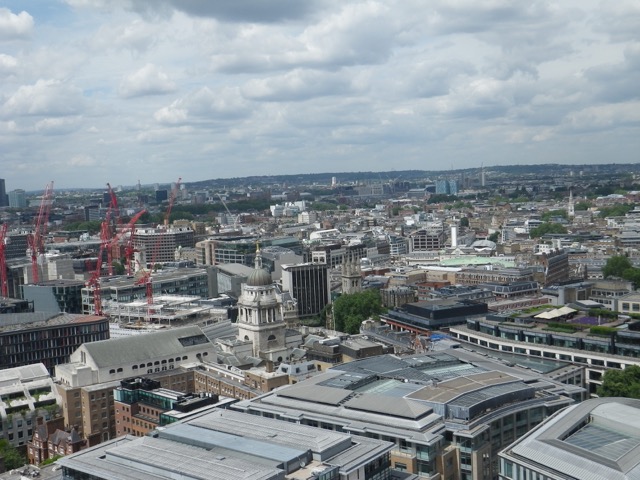
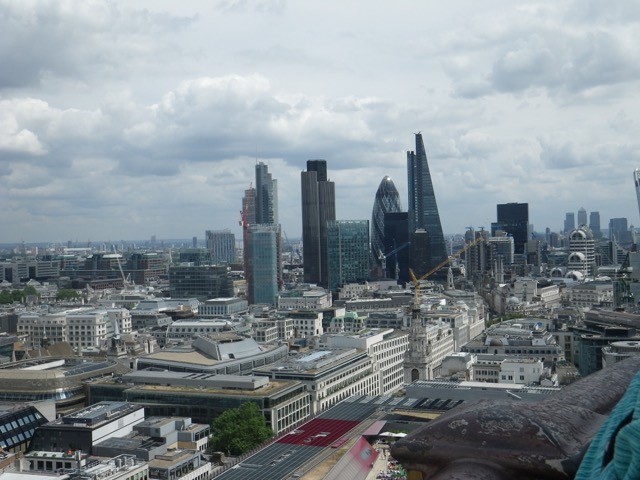
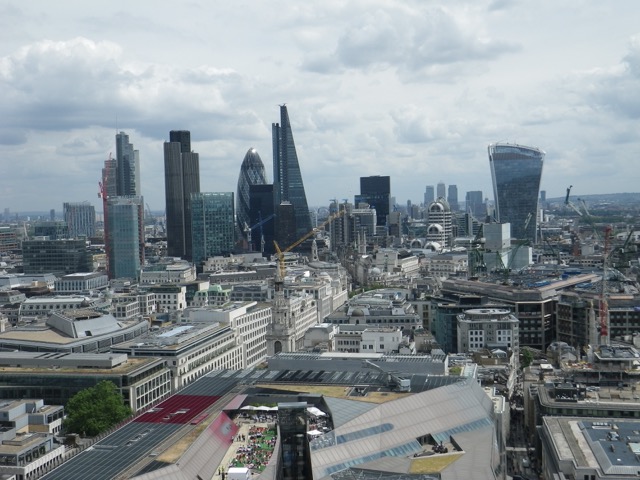
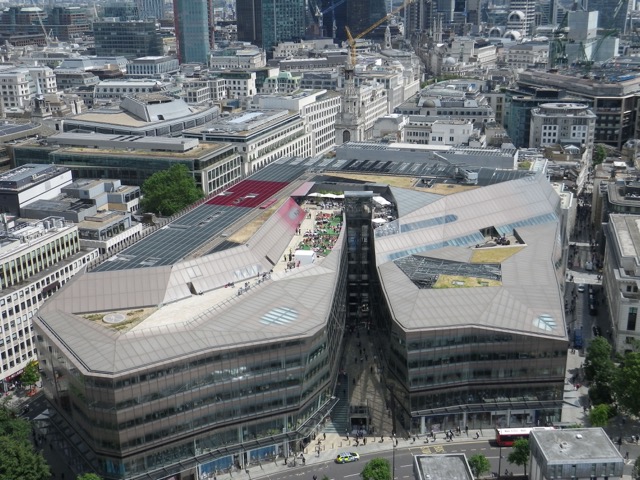
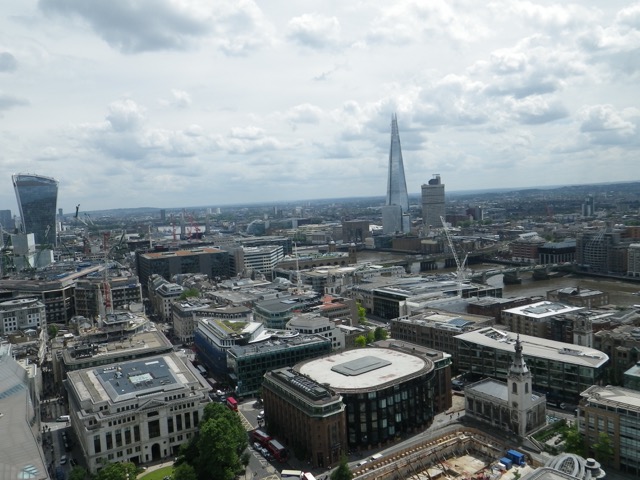
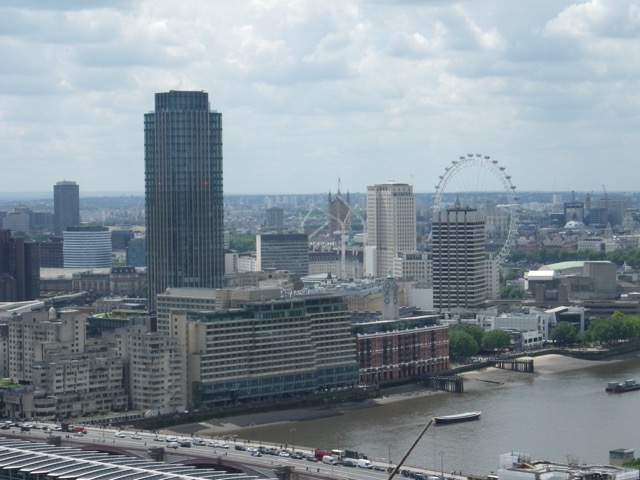
You then climb a series of metal spiral staircases to the Golden Gallery. Total steps from the ground: 527. OUCH. But the view!

IMGP4753

IMGP4754

IMGP4755

IMGP4756

IMGP4757

IMGP4758

IMGP4759

IMGP4760

IMGP4761

IMGP4762

IMGP4763

IMGP4764

IMGP4765

IMGP4766

IMGP4767

IMGP4768

The main things I took away from St. Paul’s:

-How controversial the design was for the day. The Protestants were used to Gothic architecture with its arches, not the domes of the Baroque style;

-This ornate church was more Catholic in style, but was very much tailored to Protestant practice;

-St. Paul’s survived the Blitz almost undamaged thanks to a fire brigade that patrolled the roof. Only one bomb got through.

-Almost nothing of ancient London survived the Blitz. This is why the city looks so modern and is so drivable as it was rebuilt after the Second World War.

Last glimpse!

IMGP4769

I had about an hour and a half to my tea reservation when I came out St. Paul’s. When I had set out in the morning, I regretted scheduling tea for midafternoon, but it wound up being perfect timing since I was famished when I came out of the cathedral!  I wandered around the area a bit, stumbled onto another major Sherlock shooting location that delighted me, and then took the Tube from St. Paul’s Station to Oxford Circus on the Central line, then I rode one block south on the Victoria line to Green Park.

IMGP4770 IMGP4776 IMGP4779

That reminds me that I forgot to give my Oyster update! A newsagent on the way to Kensal Green Station was able to sort out half of my Oyster problem, ie. putting money on the card so I could travel today and tomorrow. I’ll sort out the other half when the charges post…