A Walking Tour of Sarajevo

This morning, I took Neno’s free walking tour of Sarajevo. This was a really interesting tour as I got all the answers I wanted about Bosnian history. Neno remembers the war of ’92 to ’95 quite well since he was seven to eleven years old at the time and his family spent all 44 months in Sarajevo. But I’m betting ahead of myself.

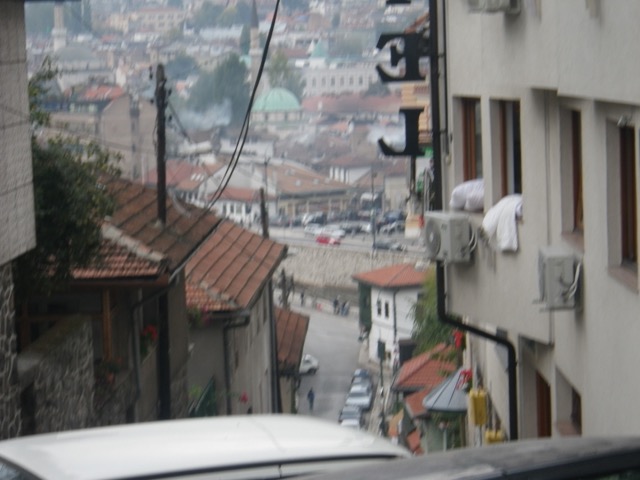
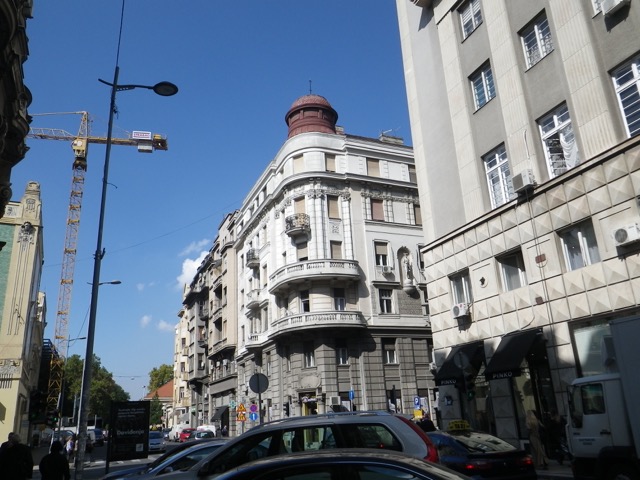
The tour starts in front of the National Theatre at Susan Sontag Square. I had no trouble finding it even though it was off my map of old town. En route, I passed a few things of interest, like this clothesline. Can you imagine a city or even suburban town in Canada or the US permitting this?! For all we think we are forward thinking, we are incredibly short-sighted.

imgp6409

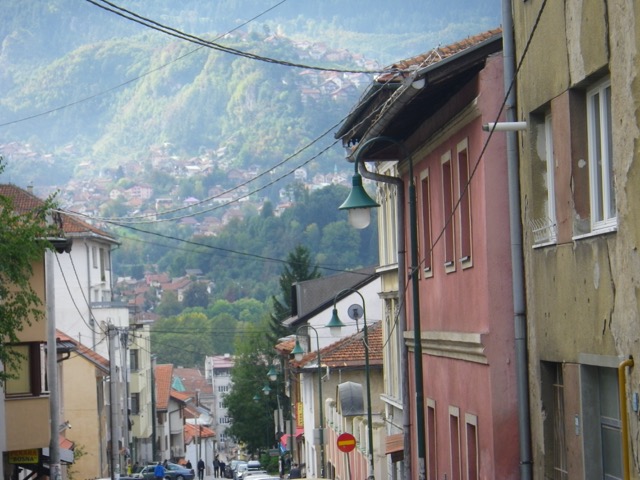
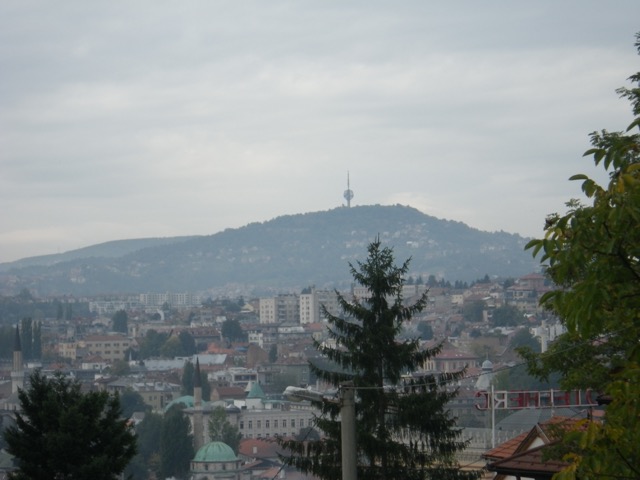
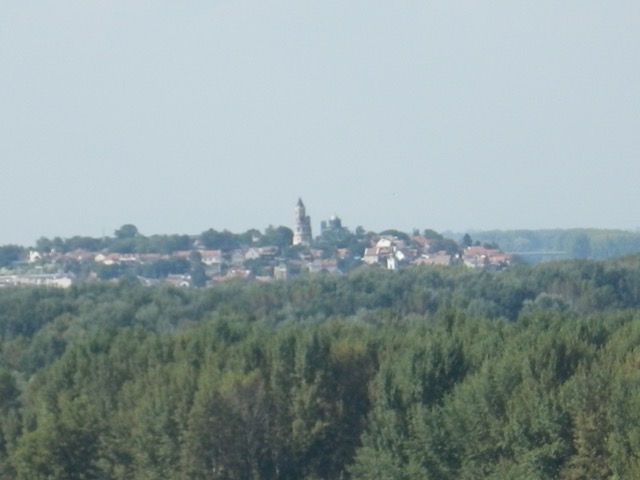
The hills on the other side of a river looked like a Hollywood backdrop, they were so beautiful.

imgp6410

Don’t they?!

imgp6411

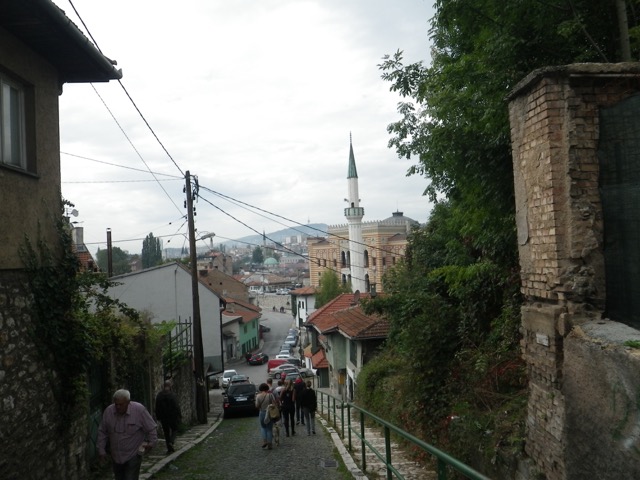
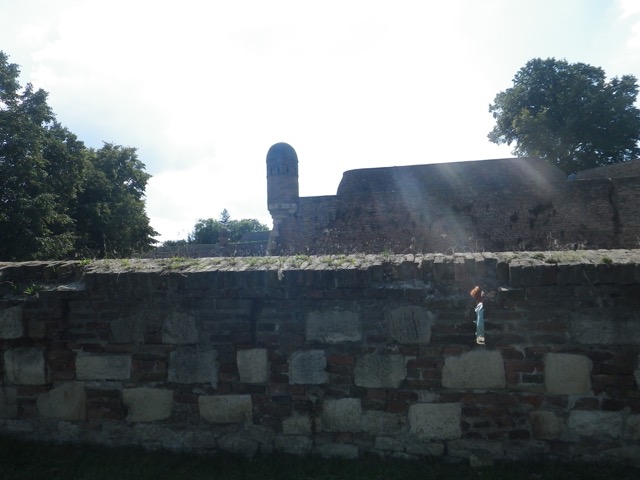
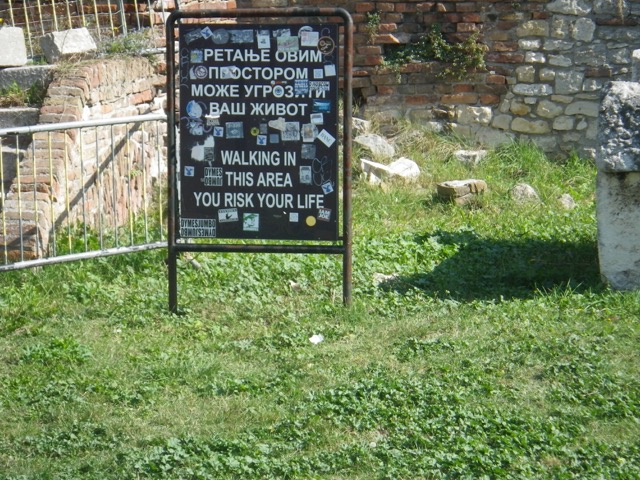
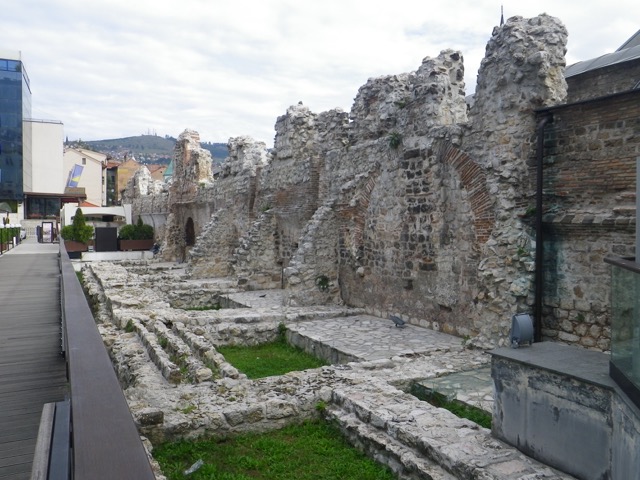
I wish I knew more about these ruins. There is a dearth of signage in Sarajevo, something Neno brought up. Part of the reason is that there are disputes about who should pay for signs.

Sarajevo comes from two Turkish words, Saraj, palace or seat of assembly, and evo, valley. As I said in another post, I find that Sarajevo’s position in a valley is unusual. It definitely limits its growth.
imgp6412

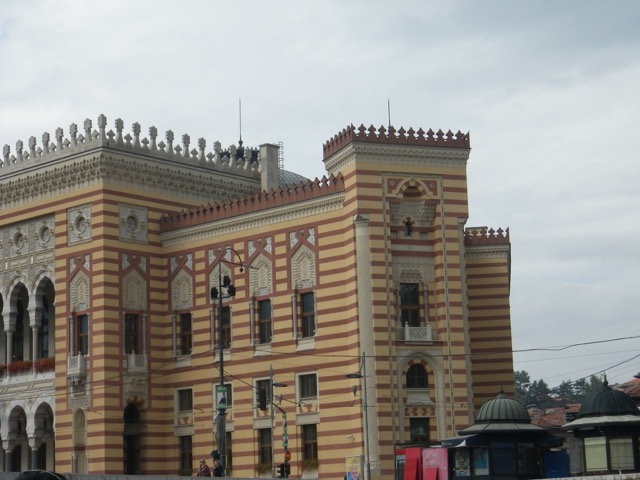
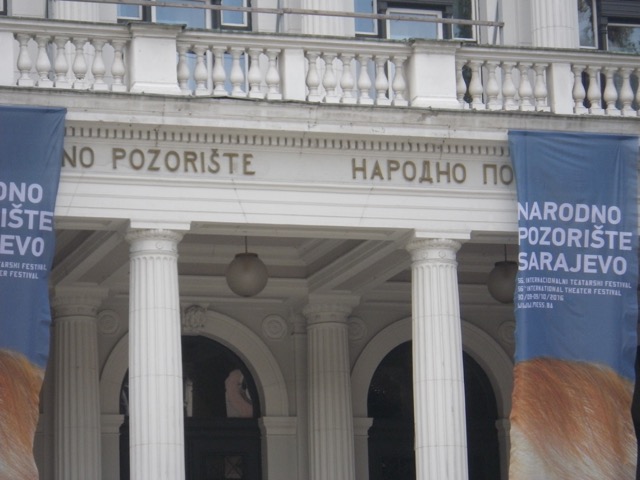
Here’s the National Theatre:

imgp6413

I was surprised to see Cyrillic. Neno would later explain to me that there is a part of Sarajevo, where the airport and East bus station are located, that is called Republika Srpska. It is a Serbian part of BiH and almost autonomous (think of Quebec in Canada, an example Neno brought up, not just my interpretation!). They favour the Cyrillic script while the rest of BiH favours the Latin script.
imgp6414

Neno started with a really comprehensive history of BiH. Surprisingly, it was a much easier narrative to follow than that of Bulgaria! In a nutshell:

The Ottoman Empire ruled here for  500 years, from the end of the 14th century to the end of the 19th century.

Austria-Hungary then came in for 40 years, which is when Sarajevo was modernized. Streets were widened, structures like the National Theatre were built, tram cars came in, street lighting was installed, etc.

After WWI was the first Yugoslavia, which was considered a period of stagnation. The capital was Belgrade and Sarajevo was neglected. There are no examples of Art Deco buildings in Sarajevo like you can see in Belgrade because there was barely any construction during the ’20s and ’30s.

After WWII came the second Yugoslavia, under the dictator Tito. Older Bosnians today think fondly of the ’60s and ’70s, remembering them as being more prosperous times. Tito died in 1980 and things went downhill over the next decade and a half, with the member states of Yugoslavia declaring independence one after the other.

The Siege of Sarajevo, “the longest siege of a capital history in the history of modern warfare” was started by the leadership of Republika Srpska, the Serbs, one of many ethnic groups in the area. They were vanquished by the Bosnians and Croats. The siege lasted 44 months, almost four years.

Neno comes from a mixed marriage, a Bosniak (Muslim) mother and a Serb (Orthodox) father. His father insisted on staying because Sarjevo was his home and, besides, there was no way the war would last more than a week… The family lives in “Communist blocks” about three kilometres from downtown on the eighth floor, so they rode out the war living in the basement of the building with their neighbours. Notice the tense I used at the start of that last sentence. It was not a typo. Neno still lives in the building in which he rode out the Sarajevo Siege.

He promised to tell us about how they got food and water later in the tour, so I will hold off on that, but said that they kept warm and cooked using firewood, essentially cutting down all the trees in their neighbourhood, then moving onto the furniture and books. He went to a makeshift school in the basement and his mother still put on a full face of makeup and nice clothes every day to go to work. Life went on.

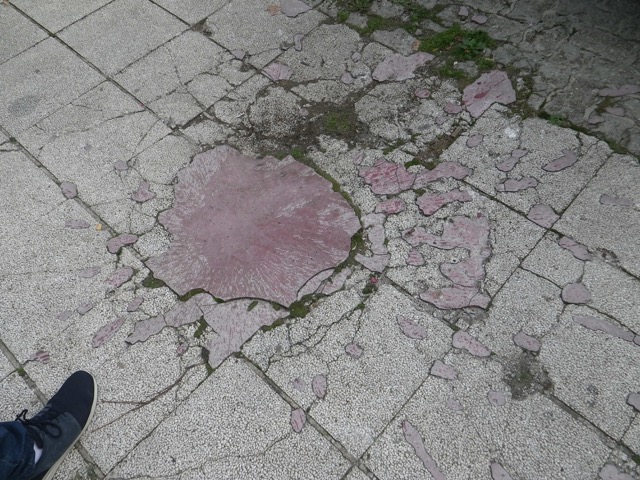
Our first stop was one of the “Sarajevo roses.” These are spots where mortar shells hit and which have been preserved by residents who feel that such little memorials are more significant than any statue. Neno poured water on it to make it stand out more. We are right by the National Theatre here. People died here.
imgp6415

Looking up to the hill where the bombings originated. It’s where the bobsled track from the ’84 Olympics is located. Which reminds me that Neno said that from his experience, people know Sarajevo for the Olympics, the assassination of Franz Ferdinand, and the Siege. I was rather ashamed that I did not know about the Olympics!


imgp6418

imgp6419

A very powerful message on this sign…

imgp6420

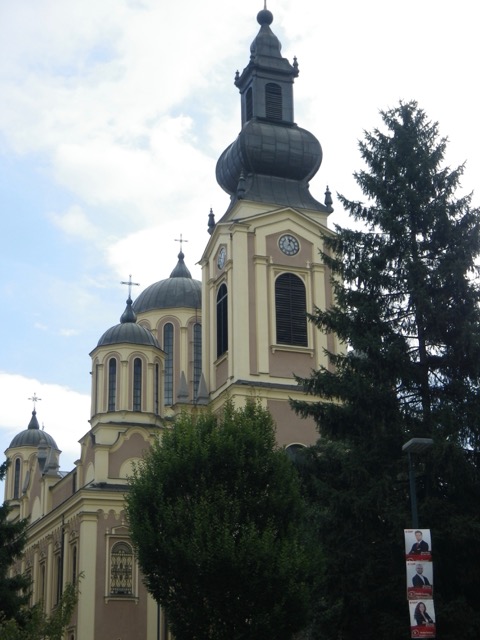
This is the older and largest Orthodox church in Sarjevo. It was recently renovated thanks to money that came from Greece (before its economic collapse).
imgp6422

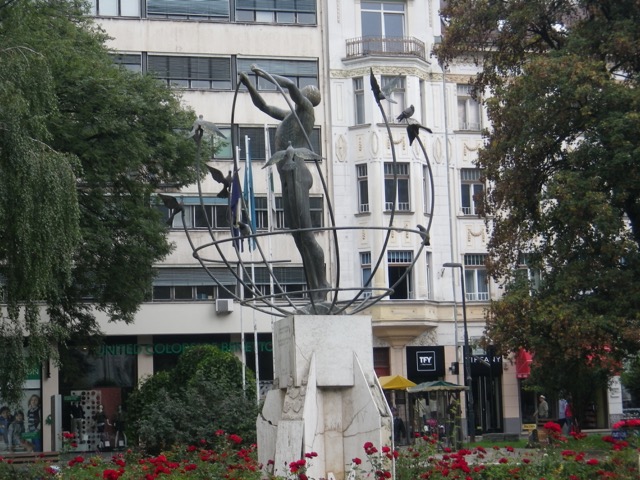
This statue was a gift from Italy after the war. The man is naked, so there was a lot of fuss made about it, similar to The Victor in Belgrade. Shortly after the statue was installed, someone put red pants on it!
imgp6423

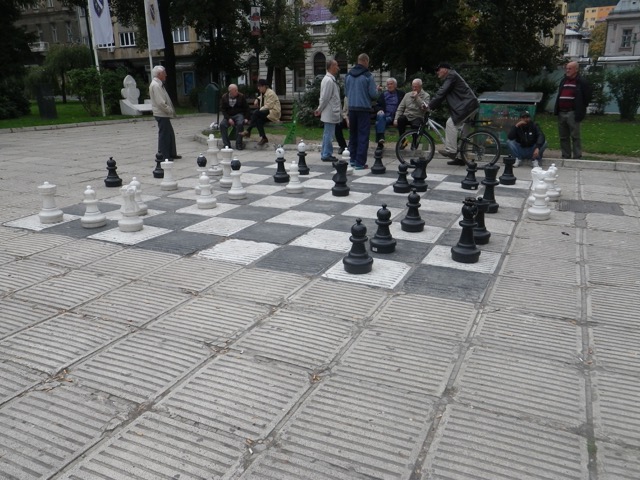
People play with this massive chess set every day, rain or shine.
imgp6424

Here is the only synagogue in all of BiH. It was originally built by Sephardic (Spanish) Jews and then Ashkenazi (German) Jews joined it later. BiH has a very small Jewish population, only 700 people, and the synagogue is barely used. The last wedding in it was 60 years ago!

imgp6425

imgp6426

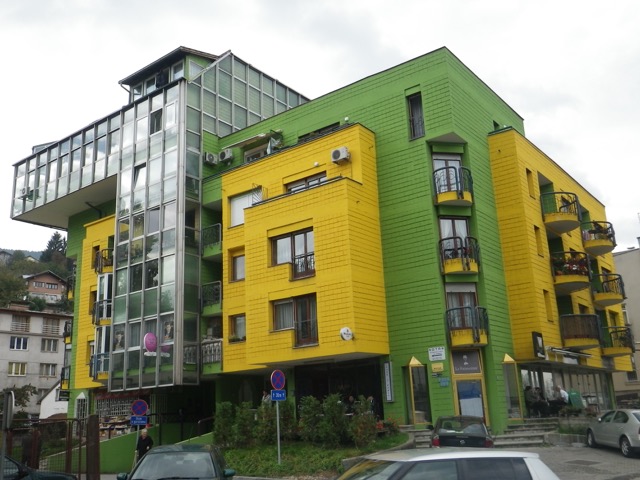
Next to it is the “ugliest building in Sarajevo,” an unusual piece of Communist architecture dating to the time of the Olympics. It is called the Parrot! Amusingly, rent in this monstrosity is a bit more than in the lovely Austro-Hungarian flats across the river because the view is better on this side.

imgp6427

imgp6428

imgp6429

imgp6430

imgp6431

Now, we get to the good stuff that made me so happy I took a tour. As it turned out, the assassination of Archduke Franz Ferdinand and his wife Sofia was NOT on the Latin bridge, but right at the corner of what is now the museum and what was then a café. Neno explained how it all went down and I could not help but think of the assassination of JFK.

The Archduke, in an open motorcade,  came down the road in the direction of this museum towards city hall. Members of the Serbian Black Hand group were positioned in two places to assassinate him. The first group left off a hand grenade that injured people, but did not kill the Archduke. The driver sped off and the second group did not get its chance.

The Archduke had his meeting and insisted on canceling lunch so that he could go to the hospital to visit the wounded. However, he forgot to inform the driver of this. So on the way back towards the hospital, the driver started to turn right here at the museum, which, again, was a café… where Black Hand member Gavrilo Princip was despondently pondering the failed coup. The car stopped and the assassin was able to kill the Archduke and his wife, which was the triggering factor for World War I. There is a definite sense of fate/destiny in the tale.

Because Princip was two weeks shy of his 20th birthday, the age of majority, he was only sentenced to 20 years in prison, rather than death as were the ones who made the initial attempt. He died four years later of tuberculosis.

imgp6432

imgp6433

imgp6434

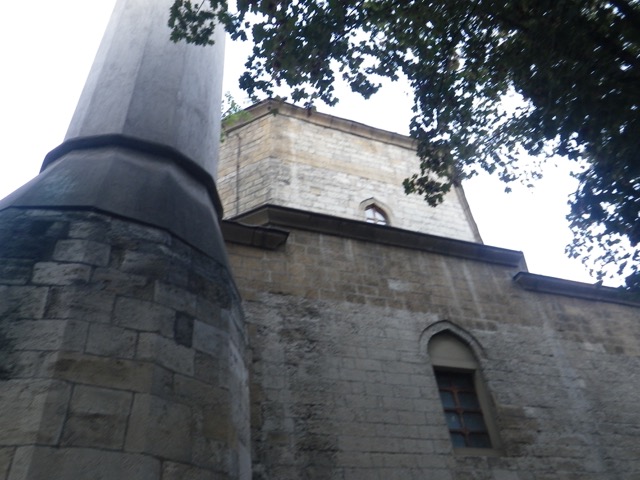
We then moved on to the oldest mosque in Sarajevo, also recently refurbished, this time with money from Turkey. There are about 200 mosques in Sarajevo and the vast majority of Sarajevans identify as Muslim, although not all are practicing.

imgp6435

We acquired a mascot on our walk. Can you see the plastic tag on the dog’s ear? This dog is a stray and that tag indicates that s/he was sterilised. The stray dog issue dates from the war and they are dealing with it through sterilisation. This dog was incredibly sweet and just about everyone on the tour adopted it!

imgp6436

Here’s that oldest mosque again:

imgp6437

And here is the largest Roman-Catholic church in Sarajevo, with a Franciscan monastery next to it. All are welcome to worship here. Neno identifies as agnostic and says that he comes here on Christmas Eve with his Muslim friends to enjoy the service!

imgp6438

Across from the church is a beer brewery.

imgp6439

This beer brewery  was critical during the war as it sits over a large spring of good drinking water. This is where Sarajevans got their water during the war. Food came from the UN, which had a protected landing strip at the airport. Neno said his parents never had to pay for food, but it was very basic and they couldn’t afford anything on the black market. He recalls that some months after the war, his mother traded her gold earrings for the first chocolate he’d had in years and that it was the best chocolate of his life. The lesson he learned there was to appreciate the little things as they can be the most precious.

There is a pub next to the brewery and I will make a point to have a pint there!

imgp6440

imgp6441

imgp6442

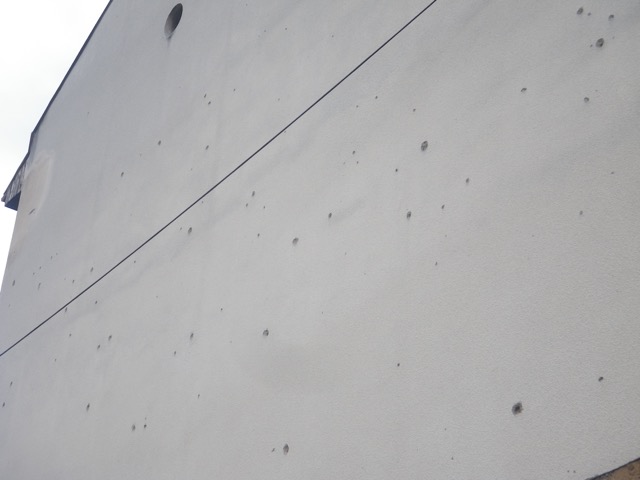
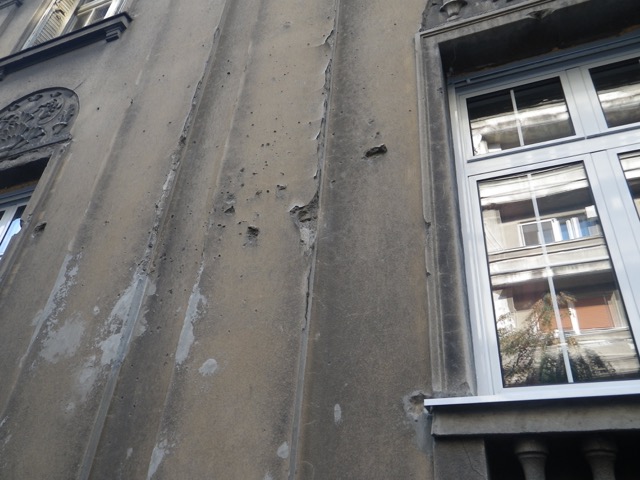
Continuing on, he pointed out buildings that still have shrapnel damage.

imgp6443

imgp6444

imgp6445

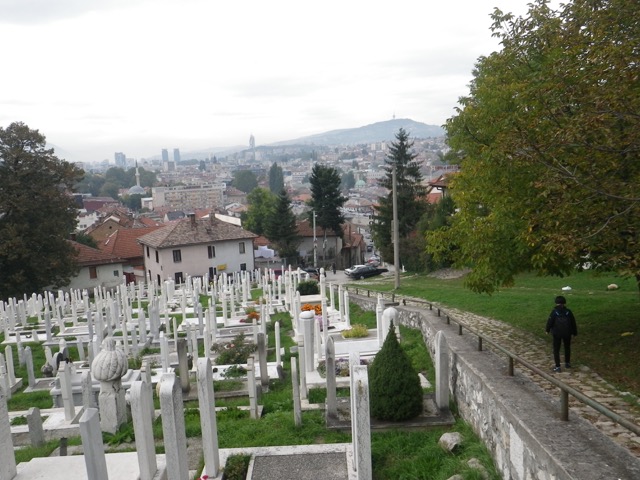
We went on to the oldest Muslim cemetery in the city.

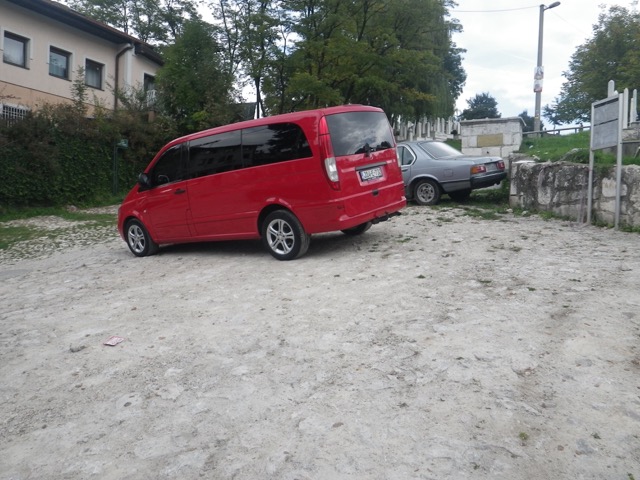
It’s kind of hard to see in this picture, but the slope of that parking lot was enough that I was seriously concerned about that van tipping over!
imgp6446

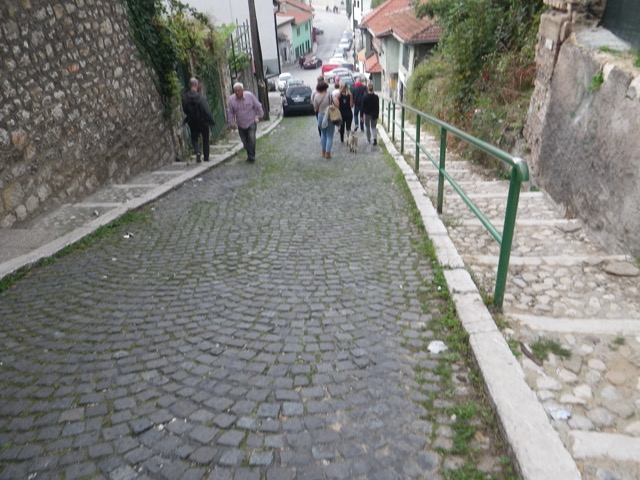
This is an ancient Ottoman road that led to Constantinople/Istanbul!

imgp6447

This is the oldest road in Sarajevo:

imgp6448

imgp6449

The Muslim graves show the head and feet, with the head pointing towards Mecca.

imgp6450

imgp6451

imgp6452

imgp6453

imgp6454

imgp6455

Here’s city hall:

imgp6456

imgp6457

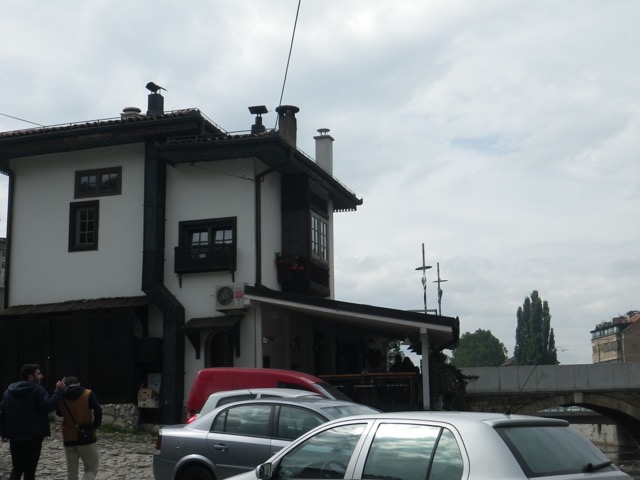
This is the Spite House. Eminent domain of sorts of practised to get the land on which sits the city hall. One owner said that he didn’t just want money, he wanted his house moved brick by brick across the river. It was and is now a restaurant!
imgp6458

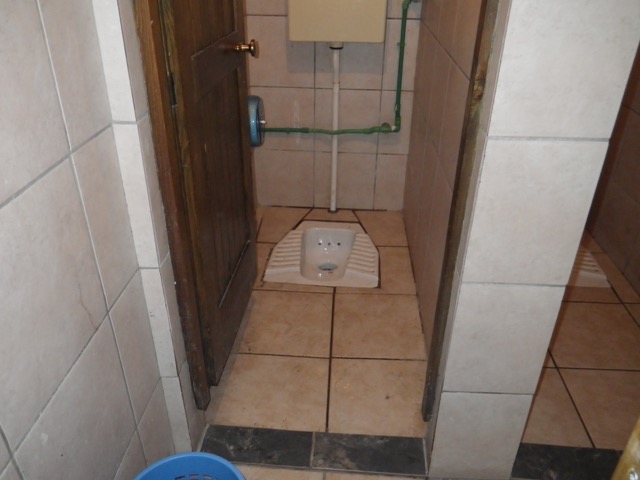
Our tour ended here and Neno gave us a map of eateries to try out in Old Town. I headed off in search of a bathroom and then lunch! A bathroom was surprisingly easy to find and cost 1KM to use. I was going into one of these stalls when the attendant yelled out, “No!” to me and then made a motion of “go around the corner.”
imgp6459

Where I found this. Personally, I would have preferred to squat and have toilet paper… 🙂

imgp6460

I found one of Neno’s recommendations for ćevapčići, Bosnia’s answer to the kebapche. I was the only tourist, no one spoke English, and the menu was entirely in Bosnian so I’m going to take his word that this was an authentic eatery! I pointed to the five-piece (kom) ćevapčići and asked for water. Unlike last night, when I got a bottle of water, I was brought tap water here (which was fine!).

imgp6461

Lunch underwhelmed me even though it was really tasty. I love the bread and the little sausages were actually more flavourful than kebache, but I could have used a little sauce, even if it was just ketchup. It was a cheap filling lunch after a long walk, but not something I’d want to eat regularly. I thought that  maybe I forgot to ask for something to go with the ćevapčići, but as I wandered around after and saw heaps of people eating it, I saw that that wasn’t the case. This is just how you eat it.

imgp6462

It was a little late in the afternoon for coffee, but I was in the mood. So after wandering around for a bit, I sat down at a cafe and ordered Bosnian coffee with a piece of hazelnut baklava. They had tons of different kinds, from Nutella and other chocolates to all sorts of nuts. I like pistachio the best and that was 2KM, which I was going to pay, then realised I’d never had it with hazelnut, which was only 1KM. So I decided to try something new! Like at lunch, pointing at the menu (which did have English) worked.

imgp6463

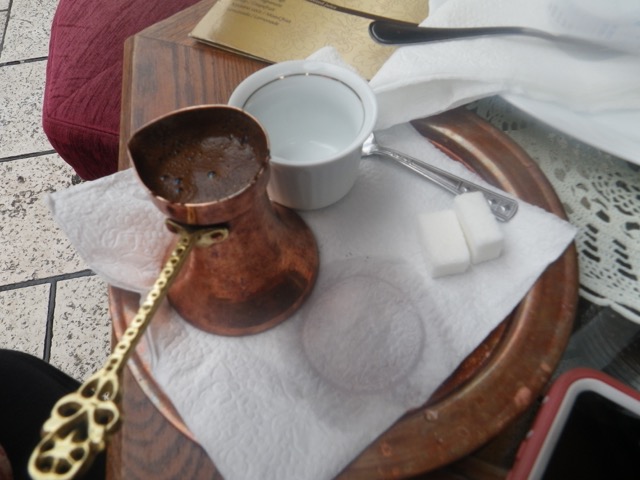
The coffee is simmered in this pot. I know I drank it wrong, but it was really good! I prefer milk to sugar in my coffee, but had the sugar for authenticity’s sake. Be careful as you drink as there is a lot of sludge at the bottom!
imgp6464

This is just what was in my cup and there was more in the pot. I poured some back into the pot to show on the cup walls how thick the sludge is.

imgp6465

I had a headache starting at this point and work to do, so I headed home for the afternoon. Now, I’m regretting not getting stuff to make dinner at home as it is pouring and cold outside. I think I’ll go through the pantry here and see if I can cobble something together!

It was a very informative day and I don’t feel nearly as emotionally drained as I would have expected. I’m hoping my tour tomorrow is a go, but I haven’t heard back. I think I will wander down to their office tomorrow morning and see if I can join the tour…

A Belgradian Miscellany

It was a bit of a rough start today after going to bed way too late. A have a client that is huge in terms of its importance on my portfolio. It’s not, say, Apple, but I say the name of this company and people have the same reaction as if it were. So when they informed me that they needed to formalise our relationship and sent me a bunch of forms last night, I felt it was imperative that I fill them out right away to show that I might be a one-person outfit, but I’m serious and I have all that information on-hand.

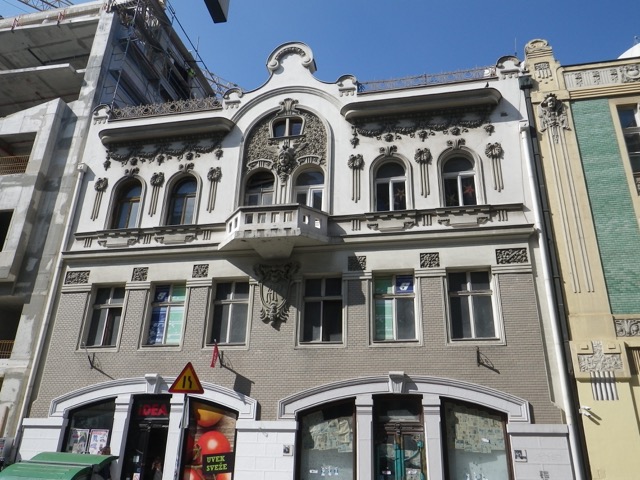
So I finally got up around nine this morning and didn’t get out the door till past eleven. I got as far as a cafe, where I enjoyed an espresso before setting off to find a post office. I passed this sign asking a question I’ve asked myself a million times…
imgp6111

I found the post office easily behind the National Museum. There was no English signage and several queues, so I popped some of the sign text into Google Translate until I found one that said something like “registration for letter mail.” I was rather impressed by the look of the post office, being much closer to what you find in Canada and he US than what I found in the UK and Bulgaria. While waiting for my turn, I Googled “postage stamp” and learned that it’s the same as in Bulgarian, marka.

The clerk spoke English and said that I had to buy a stamp at the “post shop in the hallway.” I went back out and noticed a small kiosk-type thing. I went to the cashier and asked for a stamp (Marka, molim), showing my postcard. She took a glance at it and went, “Ha, yes!” She found a stamp and put it on the card for me. The cost was only 75RSD, about 0.90CAD. She then started to gesture from the card towards outside and I realised she was trying to tell me where to mail the card (there were boxes out front). Wow! What great service! Who would have expected Serbia to have a less intimidating and more professional seeming postal service than Bulgaria, a member of the European Union, or the UK! Now, to see if the card arrives in Virginia!

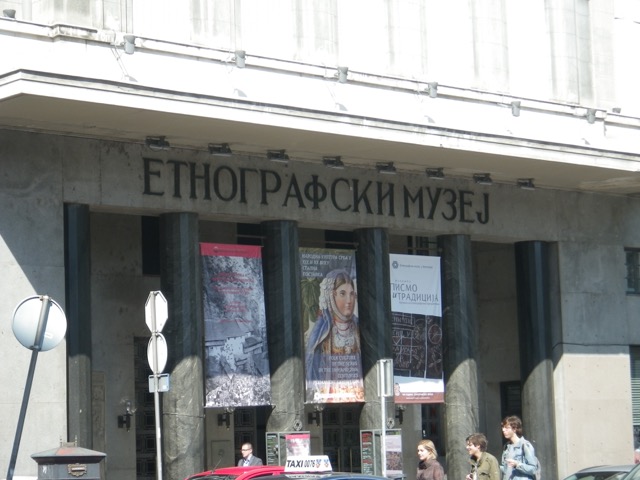
Next stop was the ethnographic museum, a couple of blocks away. Could that be it?

imgp6113

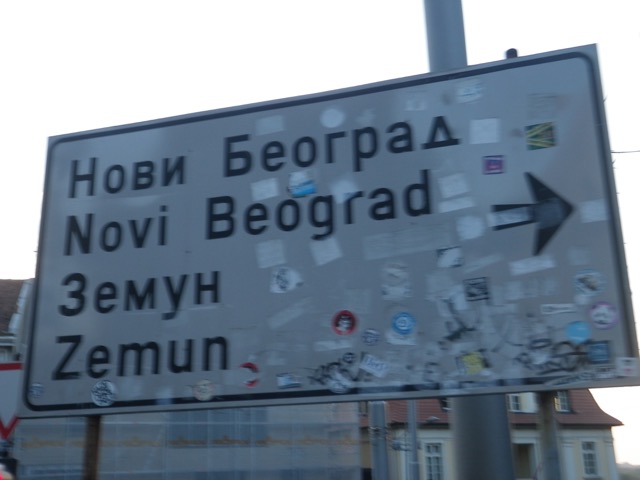
Yep! It’s here that I have to comment on something that baffles me about Belgrade. Serbia uses both the Cyrillic and Latin alphabets interchangeably. Like in Bulgaria, they make up tourist maps with everything written in Latin letters while the bulk of their street signage is in Cyrillic. So like in Bulgaria, I’m left wondering how tourists who don’t read Cyrillic manage to match their maps up to street signage and why in a country that favours Latin letters, they don’t use them for street signage… I remain grateful that I can go between the two alphabets, even with the few Serbian characters I haven’t learned yet!

imgp6114

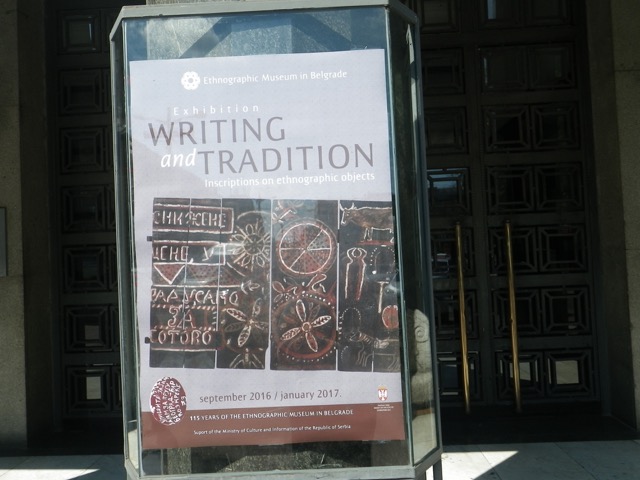
The ethnographic museum had a special exhibit on:

imgp6115

imgp6116

imgp6117

I really enjoyed the richly embroidered textiles.

imgp6118

And beaded objects.

imgp6119

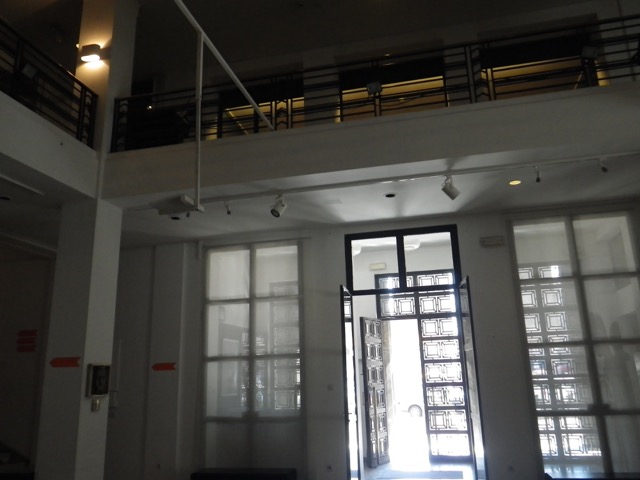
The building is quite remarkable and the museum is spread out over several stories. It’s much bigger than I expected and is basically a history of the Serbian people to the start of the 20th century.

imgp6120

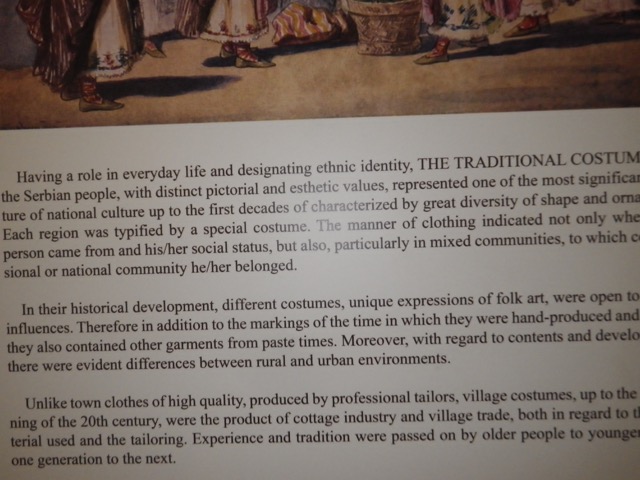
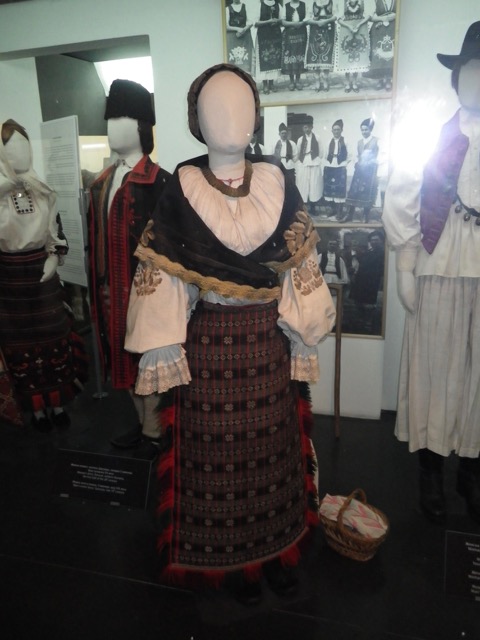
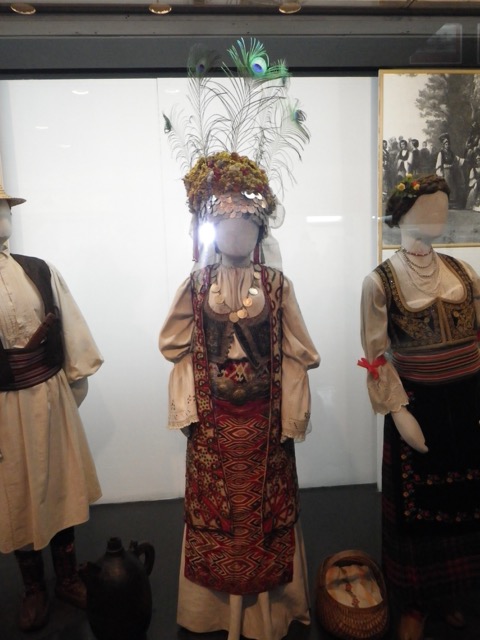
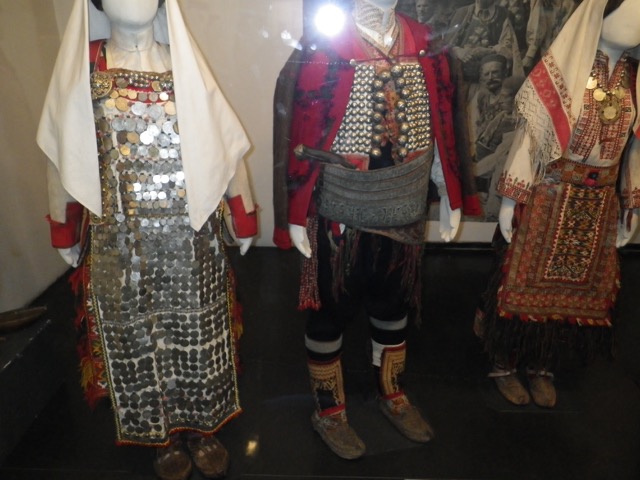
The first floor is dedicated to traditional dress in the area, not just within the boundaries of modern day Serbia, but neighbouring countries as well.

imgp6121

I’m rather sad that we live in a time where we don’t dress up. I could see myself wearing a number of these gorgeous costumes!

imgp6122

imgp6123

imgp6124

imgp6125

imgp6126

I really liked this photo showing real people wearing the costumes.

imgp6127

The dresses with the coins reminded me of Native American jingle dresses.

imgp6128

imgp6129

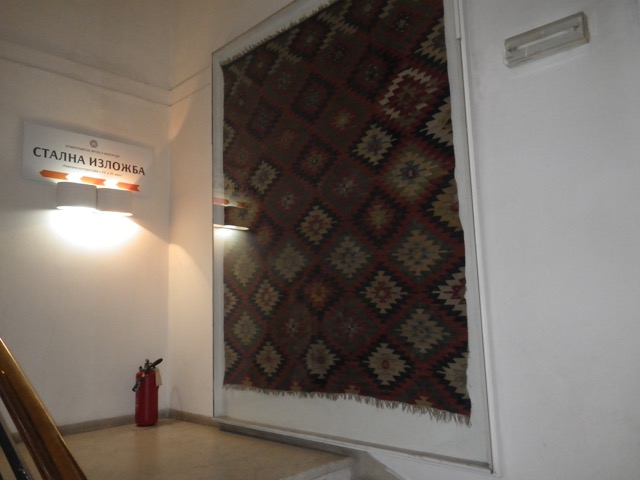
This reminded me of the rug in my room in Malak Izvor.

imgp6130

In the late 19th century, the region became to adopt Western European dress.

imgp6131

imgp6132

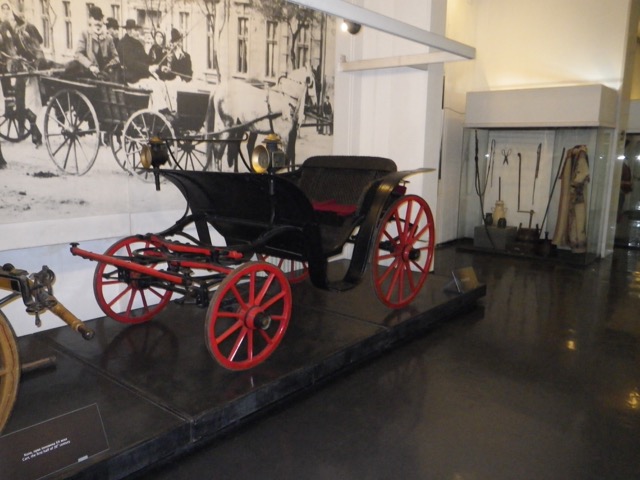
We then moved on to exhibits showing transportation, housing, and economic ventures.

imgp6133

imgp6134

imgp6135

The housing style reminds me a lot of what I saw in the more affluent parts of Mexico, being built with inner courtyards to have privacy from the street.

imgp6136

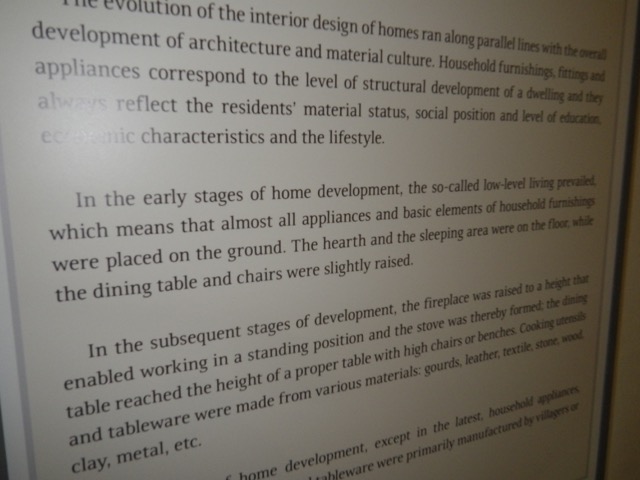
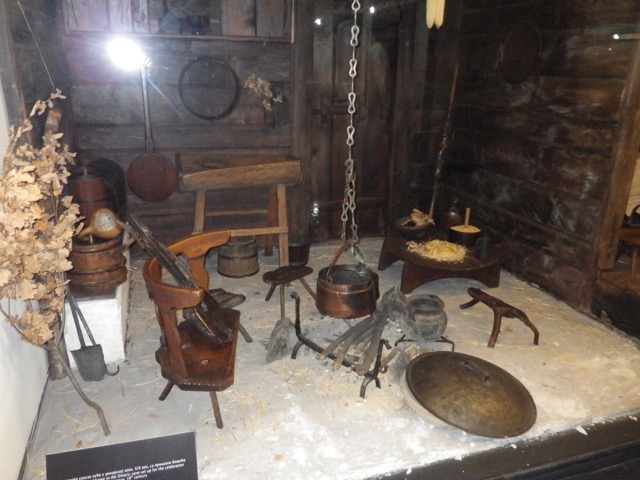
This panel absolutely fascinated me. All those years of studying history and anthropology and I never noticed that humans have gone from living low to the ground to gradually working their way upwards. For example, we’ve gone from kneeling before a cooking fire to standing at a hob.

imgp6137

Brandy distilling.

imgp6138

Some of the local industry included beekeeping, olive growing, viticulture/winemaking.

imgp6140

imgp6141

Cobbler’s shop.

imgp6142

One style of house that is almost like a North American log cabin.

imgp6143

And this one is made of stone. Two different areas, two different kinds of building materials.

imgp6144

I was surprised to learn about the tobacco growing. For some reason, I though tobacco was a New World crop!

imgp6147

I have to share a shot of the unexpected fancy bathroom!

imgp6148

There were models of different house styles, including this single-story house typical of Kosovo.

imgp6149

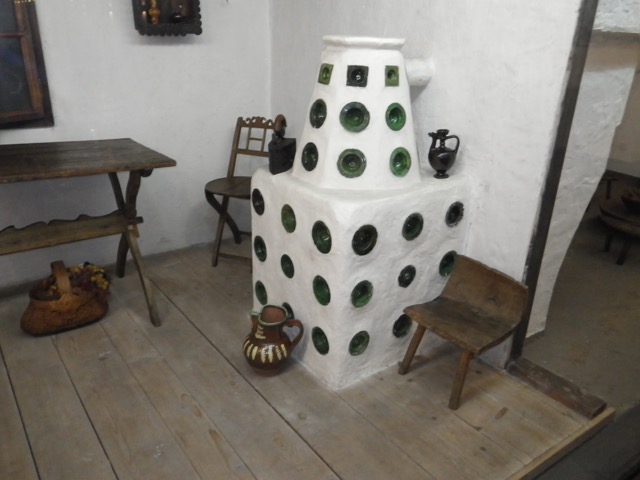
I thought this was a rather interesting looking hearth.

imgp6150

Wine cellar.

imgp6151

This was a very interesting little museum that gave me a lot of insight into the different classes of people in ancient Serbia.

It was one by this point, so I decided to go back to Burger House for lunch! En route, I passed some beautiful buildings.

imgp6152

imgp6153

imgp6154

My burger was great! Not as good as the first one, but that’s only because I was more reasonable and didn’t get as many toppings. The base was just as solid. Mmm!

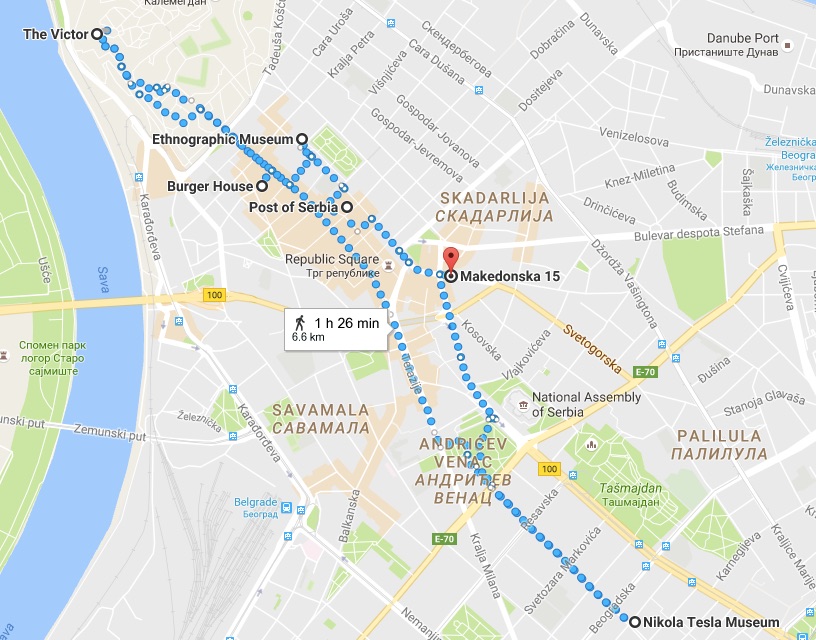
I then headed back to Belgrade Fortress to see some of the paid exhibits. Spoiler: I found plenty of ticket takers for the exhibits, but no vendors! I was appalled and disappointed by that. By the time I’d walked the site three times trying to find the elusive ticket vendors, I’d also learned that the exhibit I was most interested in was closed on Tuesdays, so I gave up.

But I did see lots of wonderful things in my amblings!

First, I stopped for an ice cream. The lady did not speak English, but I was, of course, able to say, “Chocolate hazelnut, please.” She pointed to make sure she had the right one and I said, “Yes.” Then she say, “65,” and, get this, I understood her perfectly! The numbers are super close to Bulgarian, but simpler. As she scrambled to find something to write on, I said, “It’s okay. Here’s 70.” The look of surprise she gave me was wonderful! I will never get as far with Serbian as I did with Bulgarian, but such small victories are truly precious!

imgp6155

I didn’t notice this cottage on my tour the other day. Looks like a private residence as there’s even a satellite dish out front.

imgp6156

imgp6157

imgp6158

imgp6159

imgp6160

I got to a good vantage point where I could see all the way to Zemun. I can’t believe I walked there yesterday!

imgp6161

imgp6162

The clocktower is one of the paid exhibits I wasn’t able to visit.

imgp6163

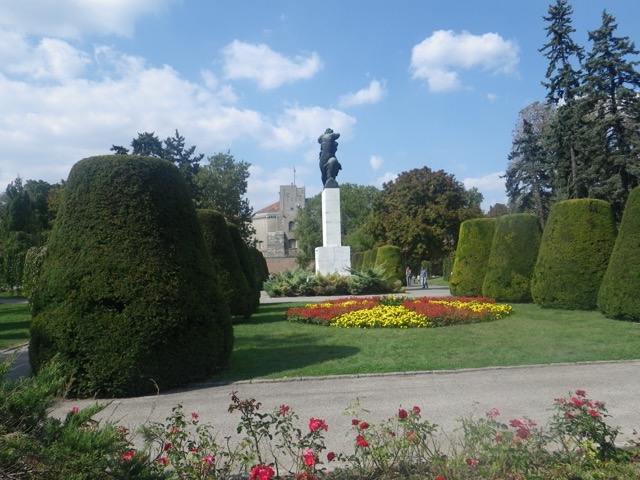
Here’s the Monument to Victory from the front.

imgp6164

It is called Pobednik (the victor) and “built to commemorate Serbia’s victory over Ottoman and Austro-Hungarian Empire during the Balkan Wars and the First World War” in 1928. He has his back turned away from the Ottoman Empire and is facing the Austro-Hungarian empire. He was put up on a pedestal because he is nude and that was considered scandalous. He measures 14 metres and is one of the most visible symbols and landmarks of Belgrade.

imgp6165

imgp6166

This is a tomb.

imgp6167

I was curious when I came across this archery range. I used to really be into archery some 20 or so years ago. So when I learned it was just 600RSD for lessons and 12 shots, I signed up!

imgp6168

I was rusty but got in a few good shots! This was definitely my favourite part of my day!

imgp6169

I loved these foundations barely poking out of the ground.

imgp6170

It was only mid-afternoon when I decided I’d had my fill of the fortress, so I decided to head across downtown to the Nikola Tesla Museum, which I knew my friend Bast would be interested in. Tesla was, of course, a great inventor who is credited with the invention of AC current and of wireless communication (post-humously winning the battle against Marconi for that claim). It’s interesting that his museum is in Belgrade since he was only here for three days, was born in modern day Croatia, and died in the United states.

imgp6171

It was around here that a young woman in her late teens or early twenties came up and asked me if I would buy her an ice cream. I much prefer to buy food or a beverage for a panhandler/homeless person than I do to just give change if I can afford it. There were tons of gelato vendors around, so I figured she’d take advantage of my generosity. Nope. She went to a convenience store cooler and picked out the cheapest treat that was ice cream, only 60RSD. I’m only sharing this to show that while this world gives us plenty of reasons to be cynical, it also gives us plenty of reasons to rue our cynicism. I will not miss 0.75CAD and I left her stunned that I’d done this for her. I wonder how many people she asked.

imgp6172

imgp6173

imgp6174

The National Assembly.

imgp6175

Here’s the big post office again.

imgp6176

imgp6177

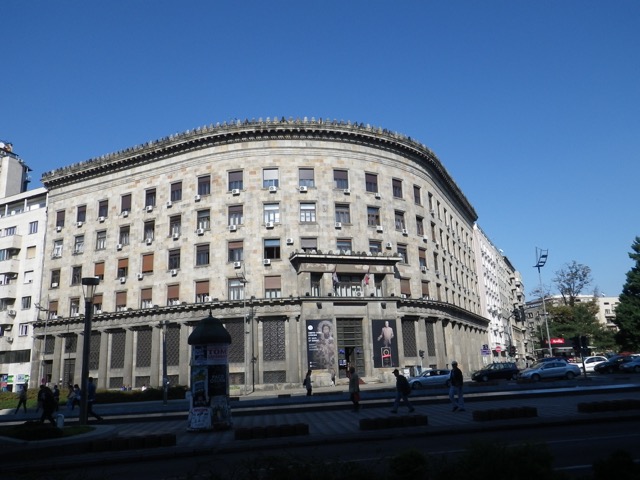
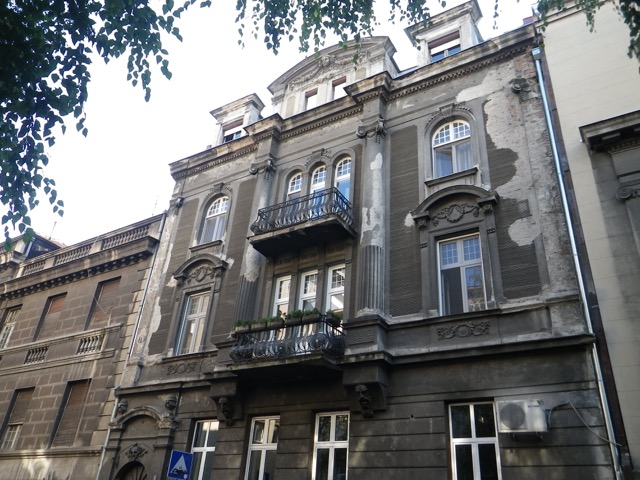
Another one of those buildings that would be impressive after a power washing!

imgp6178

imgp6179

imgp6180

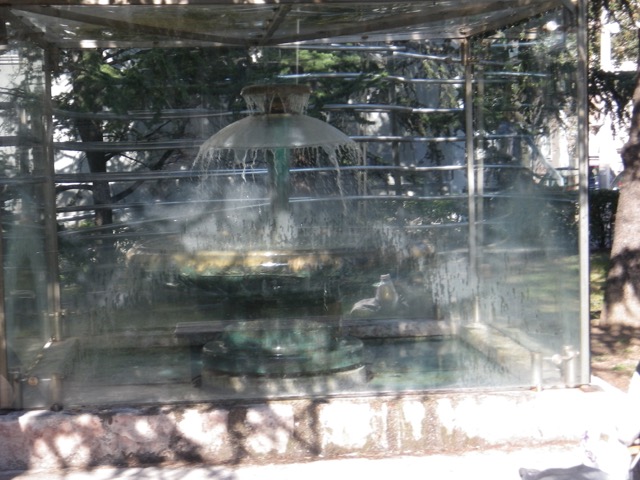
A fountain in glass…

imgp6181

Here’s the home of the Nikola Tesla museum.

imgp6182

imgp6183

imgp6184

imgp6185

The museum is tiny and does not in any way do justice to this genius and everything he invented, but if you can get an English tour, it’s worth a visit and is quite the experience!

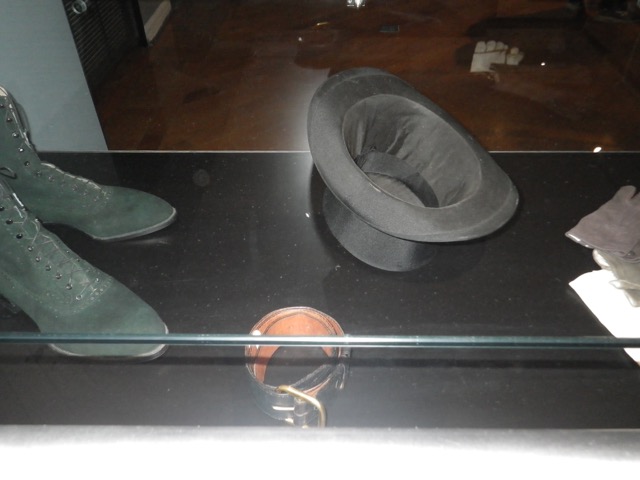
Some of Tesla’s articles of clothing.

imgp6186

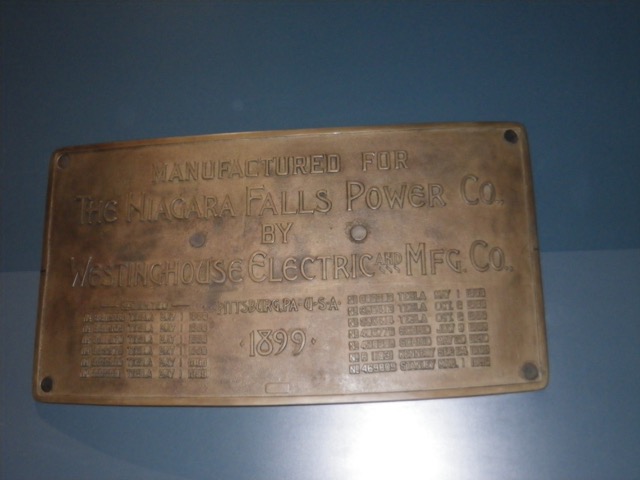
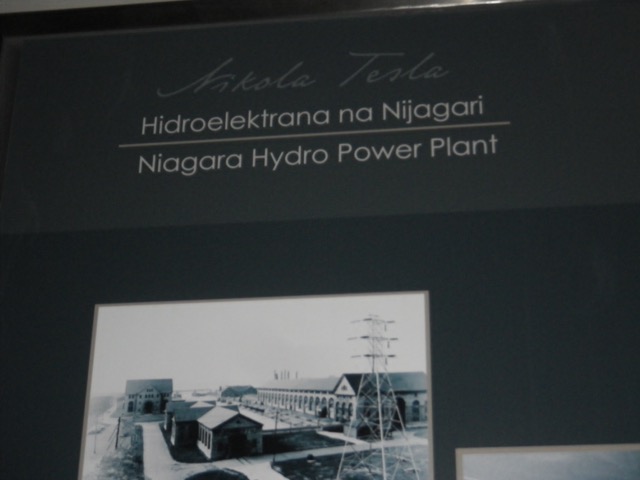
This plaque shows that the Niagara Falls power plant was mostly built using Tesla’s patents.

imgp6190

imgp6191

imgp6192

imgp6193

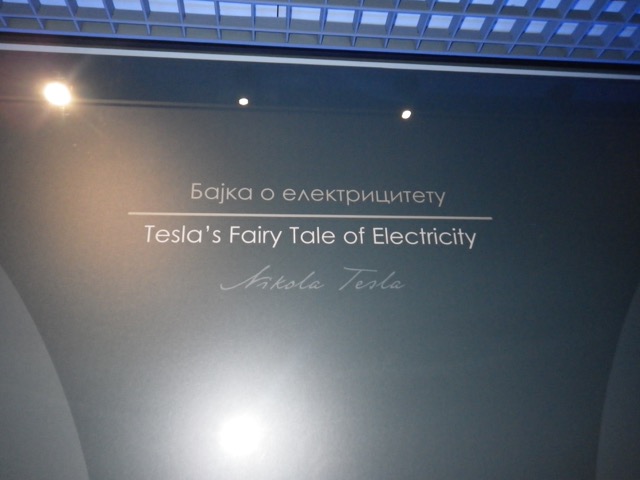
We watched a rather enthusiastic, but still very informative, film on Tesla’s life and work before the guide took us to recreate some of Tesla’s experiments.

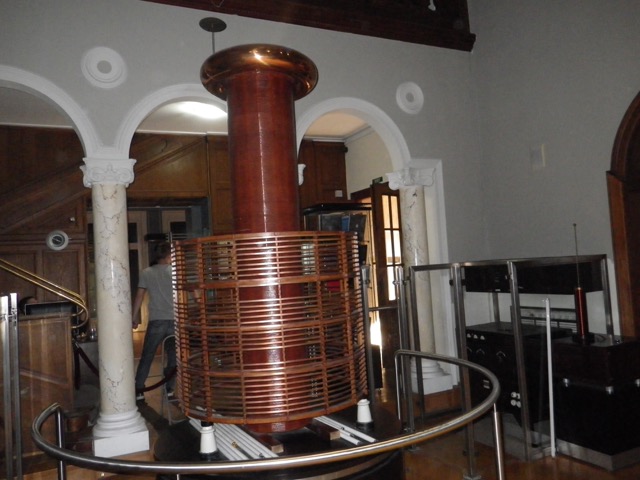
One of his many coils. This one converts 220V power to an output of something like a million volts.

imgp6194

When the machine is on, sparks shoot out of the top.

imgp6195

I was one of the chosen for this experience. I’m holding a standard fluorescent light tube.

imgp6196

It’s alive! My tube lit up with a bright green light that doesn’t show in this picture, although you can see that it is lit up, using me as a conductor! We all joked that we looked like we were holding lightsabers from Star Wars and the guide claimed that this is how the effect was done in the original movies…

imgp6197

He then showed us the “dragon” coil.

imgp6198

Which illuminates that light.

imgp6200

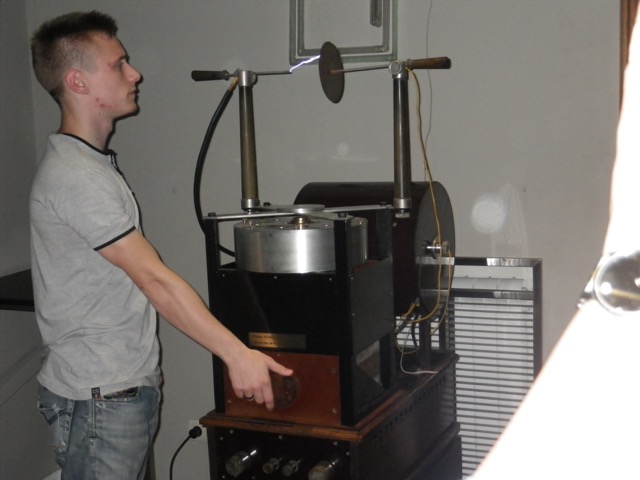
Then, we moved onto the baby coil, where folks were actually electrocuted, the shock being stronger the farther their hand was from the rod. This one also featured people holding light tubes that lit up and the highlight was that two people were used as conductors. Electricity is magic!

imgp6204

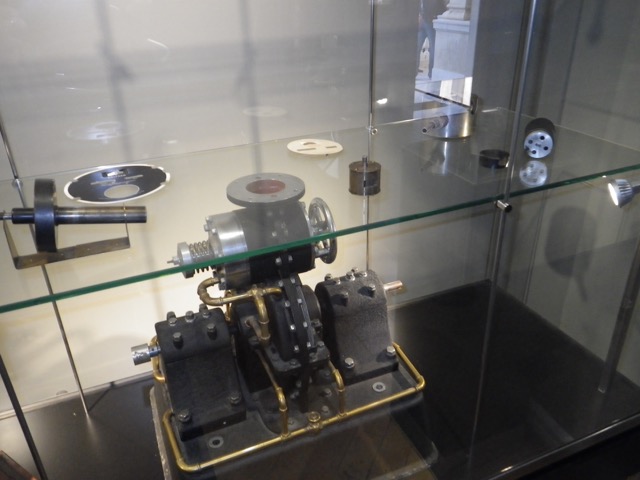
I then saw a few of Tesla’s patents.

imgp6211

And an urn that supposedly contains his ashes! Tesla died in New York, but his nephew, who owned this house (explaining why the museum is in Belgrade) had the body cremated and the ashes brought to the museum.

imgp6212

imgp6213

imgp6214

It was five when I was done and I was absolutely tuckered out. I found my way home without a map (I’m finally starting to get orientated!), stopping at a convenience store for a beer to enjoy with dinner. It was rather neat to join the throng of people heading home at rush hour and, like them, pop into a shop to get whatever I was lacking for dinner! I really missed out not getting urban living experience in Bulgaria.

map

I’ve got lots of work for tomorrow, so I probably won’t get any exploring done. Just a heads up! 🙂

First Day in Belgrade, and a Walking Tour

After returning home with groceries this morning, I did some research and then went out in search of lunch before the 2PM walking tour. As I turned onto Knez Mihailova Street I heard the amazing violin playing and discovered it was coming from this little girl:

imgp5786

She needs to be in a world class music school, not busking. 🙁

imgp5787

For lunch, still craving meat, a burger made sense and Burger House seemed like my best bet for an “American-style” burger. But this shot is more about the beautiful building at the end of the street!

imgp5788

Next door to Burger House, these were the pub’s specials of the day…

imgp5789

Burger House is a “build your dream  burger” joint. I asked for one patty with cheddar cheese, bacon, grilled onions, and honey mustard sauce, with a side of half-and-half — fries and onion rings.

imgp5790

This may be the best burger-fry combo in the world and that is not hyperbole. I am going back there before I leave!!!

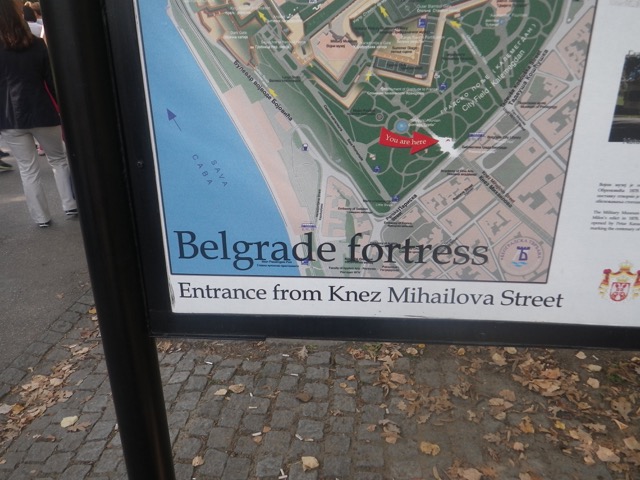
At the end of Knez Mihailova Street, you get to Belgrade Fortress. We’ll come back here later on the walking tour, but, basically, it’s a giant park that you can wander freely.

imgp5791

imgp5792

imgp5793

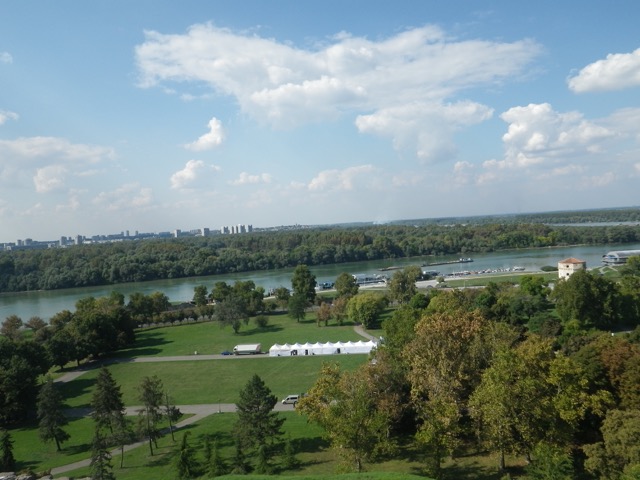
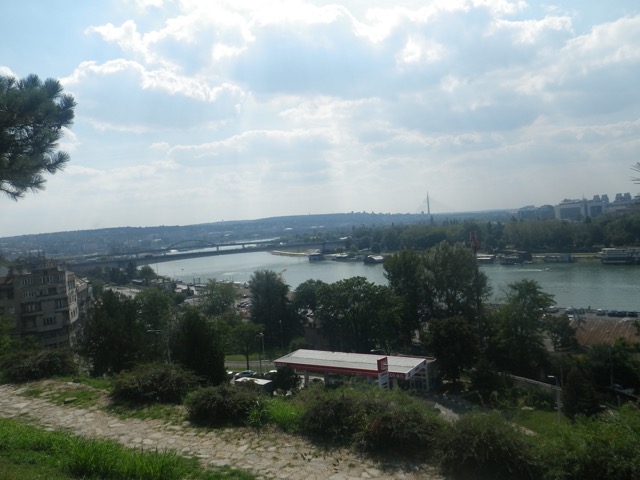
Looking down at the confluence of the Sava and Danube Rivers. The Danube!

imgp5794

Notice that bridge in the distance? It so reminds me of the Provencher Bridge in Winnipeg, which is also at the confluence of two rivers, that I wonder if there is a connection.

imgp5795

imgp5796

imgp5797

I’ve seen a lot of this graffiti with Nikola Tesla’s name and this date. I wish I had remembered to ask my guide about it!

imgp5798

One of the words I learned in Bulgaria is “pesh” (on foot). The word carries over to Serbian in that “peshachka” means pedestrian. My guide told me that Bulgarians and Serbians do not understand each other despite these similarities.

imgp5799

imgp5800

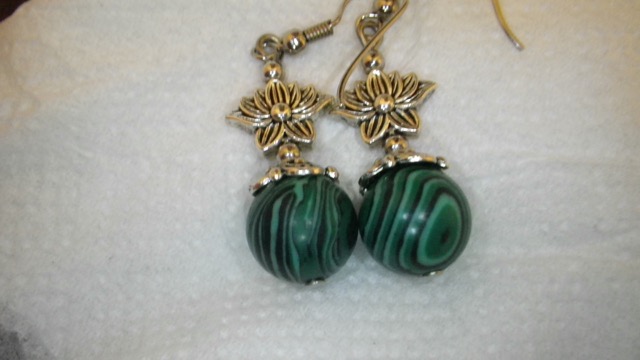
I got back to Republic Square around 1:50 to wait for the walking tour. Since I was a bit early, I walked up a side street beside the National Museum and found a jewelry vendor with lovely wares. I was really disappointed to leave Bulgaria without a pair of earrings, but I didn’t find anything I liked there, not even in Nessebar, and, really, I didn’t get a lot of opportunities to browse as I passed maybe five earring vendors total in the three months I was there. There just weren’t stalls and markets with them the way I’ve seen in Mexico. Here in Belgrade, in just the short span of time I’ve been here, I’ve seen heaps of such stalls, running the gamut of prices. I tend to know what I like and be quite impulsive in my earring purchases. These beauties spoke to me and were just 400RSD (5CAD):

imgp5847

I then went back to Republic Square to start the tour, but something weird happened. The guide said to me, “You’re looking for another tour. Go wait at the clock.” I didn’t question why I couldn’t join his tour. I’d done some research and knew there are several different walking tours by different outfits and that the 2PM tour didn’t really have much of what I wanted to know more about. So I took that as a sign to go home for a rest and try again at 4PM with a different tour.

I got back to Republic Square at 3:45 and the guide said we would start at 4:05. It was chillier than expected after the hot afternoon, so I said I was going to go home and be right back, which I was, fleece in tow!

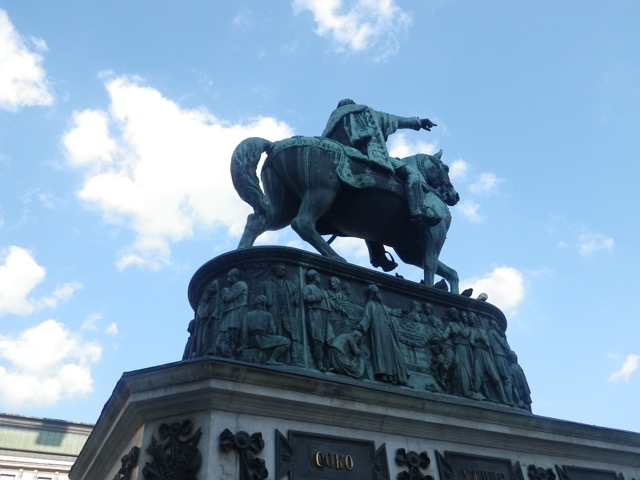
Republic Square is Belgrade’s anchor. People meet at “the horse,” even though the person on the horse (Knez Mihailova — Prince Michael) is more important. But the statue has been called “the horse” since at least the early 19th century.

imgp5801

I learned that the National Museum has been closed for ages and that the reopening keeps getting delayed for lack of funding. 🙁

But the National Theatre has been in continuous operation since it was built in the 19th century, its programs running even through all the wars.

imgp5802

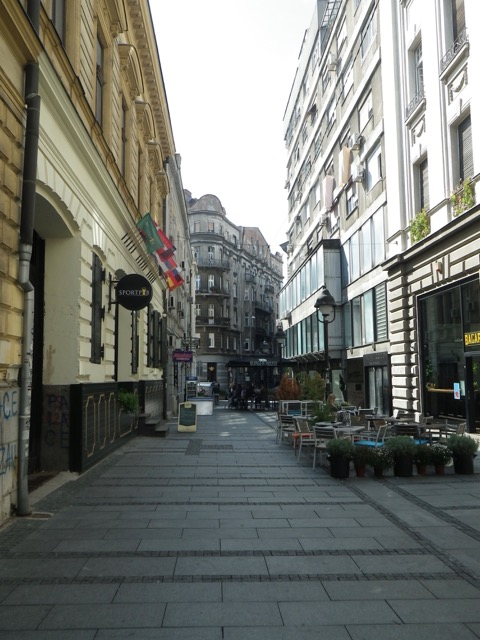
We headed off to the Bohemian Quarter, Skadarlija or Skadarska Street. Let me pause here to say that, like always, my review of a city tour is in no way going to encompass everything I learned. There’s just too much to remember!

imgp5804

This street is lined with pubs and “kafanas,” the Serbian answer to the pub. It’s a drinking district. I asked if it’s safe for a single woman to be out after dark and have a few drinks and our guide, Luba, said absolutely and that Belgrade does not have any “bad” neighbourhoods. The worst that will happen is you will get scammed by a taxi, something that even happens to locals!

I am definitely going to come back here to have a drink!

By the way, it was here that I learned that Serbia is the only European country to have two writing systems that are used equally and interchangeably. Most Serbians favour using Latin letters.

imgp5805

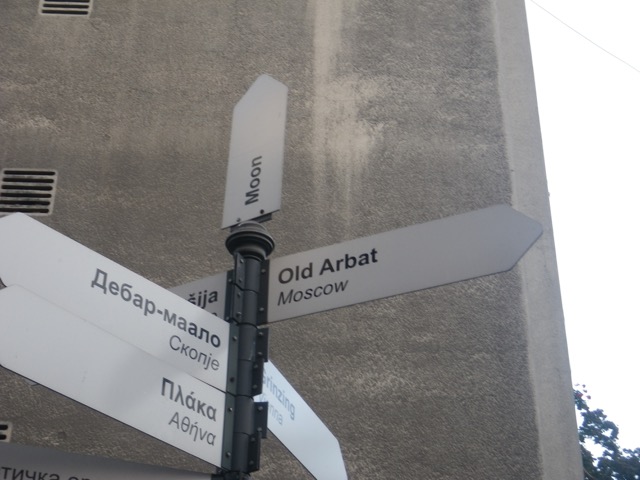
Since it is a drinking street and people have a hard time staying on their feet, this helpful sign tells drunks that the moon is that way, so, obviously, the ground is the other way…

imgp5809

These are kafanas. They have booze, coffee, light local fare, and live music past 8PM. I think they are best described as a cross between a bistro and a pub.

imgp5810

This is where Luba pulled some rakia (fruit brandy) out of her bag for all of us to try!!! I had rakia in Bulgaria, where it is also popular. This was honey rakia and it was really lovely!

imgp5811

This is a statue of a famous Serbian poet outside the house he shared with his wife and ten children. He wanted a house on the drinking street and died from an alcohol-related disease at the age of 40. What a shame. He was actually lauded in his lifetime, so he must have been very good!

imgp5812

This is a chimney from an old beer brewery owned by a Czech.

imgp5813

We continued on and stopped here to talk a bit about the history of Belgrade in terms of armed conflicts and the geo-political situation. Way too much there to get into in this post! The damage on this wall apparently dates back to WWII! Luba explained that Belgrade has such a hodgepodge of architecture — Turkish, 19th century, and Communist, among others, is that every time a building was destroyed in a bombing, a modern building of the day was erected in its place.

imgp5814

This is the Museum of Vuk and Dositej. From Wikipedia (echoing what the guide told us!): “one of the most important memorial museums in Belgrade, the capital of Serbia. Founded in 1949, it depicts the life, work and legacy of Vuk Stefanović Karadžić (1787–1864), the reformer of the Serbian language, and Dositej Obradović (1742–1811), a writer who was the country’s first Minister of Education. The museum is a crucial site for understanding the revival of Serbian culture at the time of the First Serbian Uprising against the Ottoman Empire.”

imgp5815

imgp5816

This is where I won a prize for being the tour member who has made the most progress with the Serbian language! Really! LOL This is a special glass for drinking rakia. I’m wondering if I can find a place in my luggage for it as I really would love to get it home…

imgp5817

Here’s the minaret of the last remaining mosque in Belgrade. Most of Serbia’s Muslim population is in the south.

imgp5818

imgp5819

We then made our way to Kalemegdan Park, which is open 24/7, and which is also the site of the Belgrade Zoo and the Belgrade Fortress. The zoo boasts the oldest known alligator in the world!

The fortress is a series of fortifications, but there’s no castle in it or anything like that, as such construction kept getting destroyed and so there was no point to making the effort to build anything. The fortress is on prime real estate to protect the city and so has been a prized treasure during many conflicts.

imgp5820

imgp5821

imgp5822

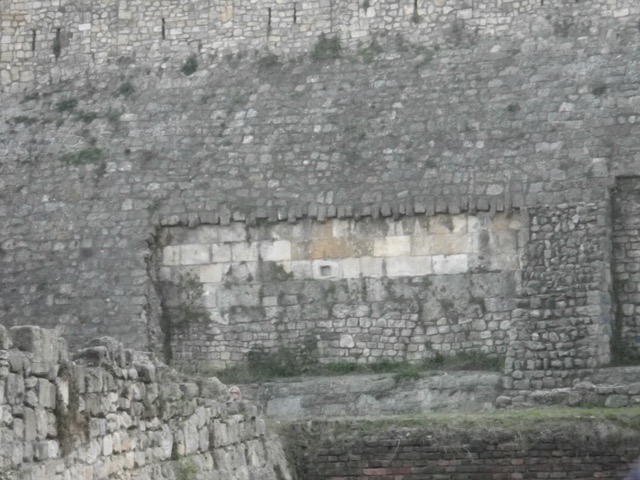
Here, you can see some of the original Roman limestone that once surrounded the city and gave it is name, ie. “the white city.” Beo is white and grad is city. I forgot to ask how Beo became Bel in English and French.

imgp5823

imgp5824

imgp5825

Looking again at the confluence of the Sava and Danube Rivers.

imgp5826

This is the Sava.

imgp5827

imgp5828

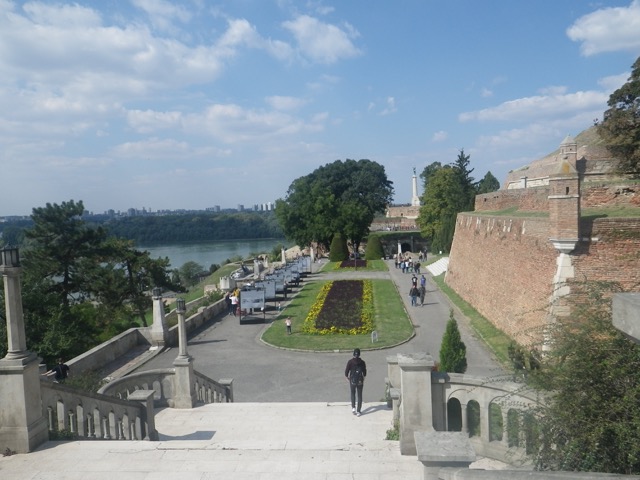
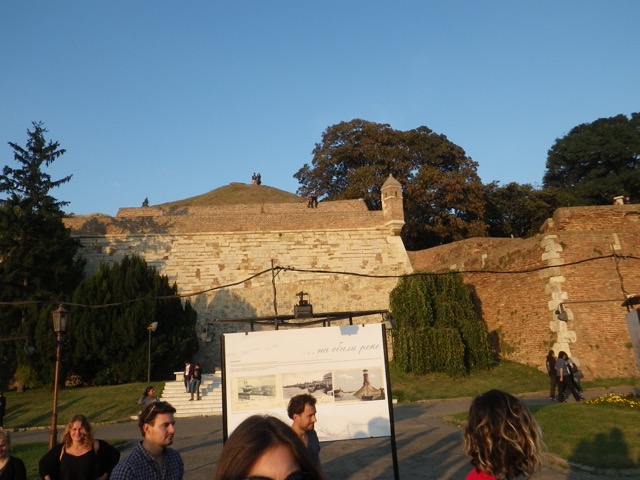
This giant statue of a naked man represents victory.

imgp5829

Looking out to New Belgrade, which was built after WWII on reclaimed marshland. It’s mostly a residential and business zone and Luba told us it’s not worth a visit by tourists.

imgp5830

As we finished our tour of the fortress, Luba spoke some more about conflicts in Belgrade, including the 1999 NATO bombings. I’m exactly 10 years older than her and was 20 when that was going on, so I have a pretty clear memory of news reports about the bombings. It was fascinating to hear what it was like over here compared to the media coverage in Canada. The bombings were announced and were strictly on infrastructure, so there was little loss of life and not much disruption to daily activities. Serbia has yet to recover financially from the bombings.

Again, there is way too much history to go into here, but Luba emphasized that the bombings had nothing to do with the conflicts going on in nearby areas, including what is now Bosnia and Herzegovina, but were in response to Serbia’s relationship with the disputed state of Kosovo. This is a part of the world with a particularly convoluted and complicated history and 20 years beyond peace, it is obvious that there are still tensions that keep Serbia from moving forward.

imgp5831

We then headed out to our final stops. While we were told that New Belgrade isn’t worth a visit, we were advised to try to make it to Zemun, an old community that dates back to the days of the Ottoman Empire and which is now part of Belgrade.

imgp5832

I wish I could remember what this building is all about, beyond it being the home of the mother of Knez Mihailova.

imgp5833

This is the top of the largest Orthodox cathedral in Belgrade.

imgp5834

I learned that each country has its own Orthodox church with its own leader. There is no central Orthodox leader like the Pope for Catholics. This is the seat of the Serbian Orthodox church.

imgp5835

This is the palace of Princess Ljubica.

imgp5836

An example of three styles of architecture side by side:

imgp5838

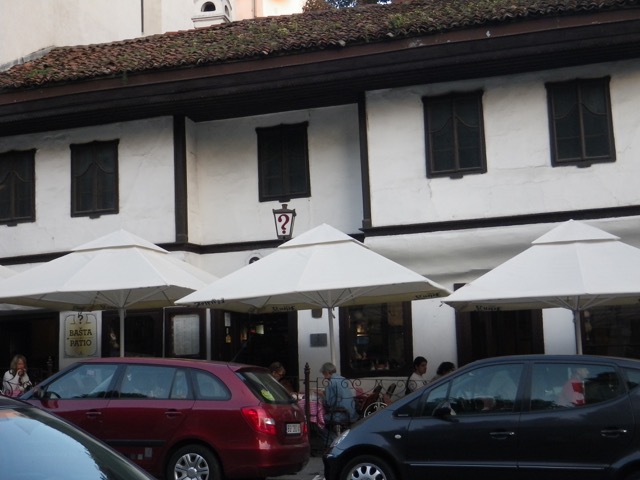
The Question Mark kafana. It was the kafana by the church, but the priests complained to the authorities. The owner removed the sign and put up a question mark while he searched for a new name, but the question mark stuck!

imgp5839

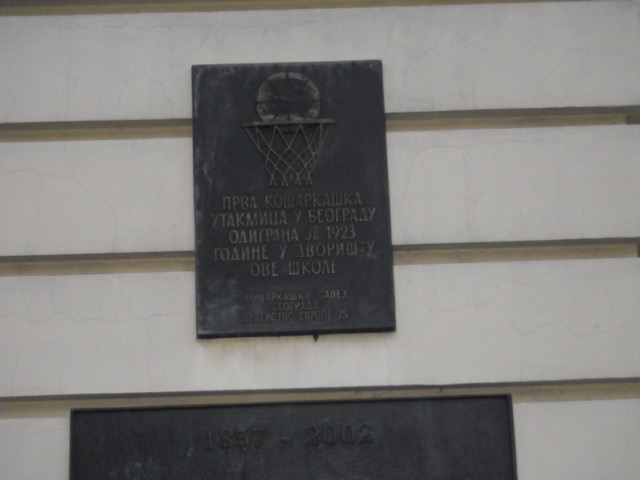
Our last stop was a school where basketball was first played in Belgrade.

imgp5840

imgp5841

This is where we learned about the time that Bulgarians were billionaires, during a period of hyper inflation. This was around the mid-1990s and Serbia’s hyper inflation was second only to Zimbabwe’s. We all got one of these bills!

imgp5842

The tour was free, but a tip was welcome. I thought 500RSD would be fair and that turned out to be the suggested tip. This was an amazing tour! Luba was very knowledgeable and her English was excellent. I did not come close to doing justice to all that she taught us!

It was just past 6:00 at this point and I was done for the day. I just wanted to unwind with a beer and then get a takeaway to eat at home.

Going down the pedestrian street, I was amused to hear a bagpiper!

imgp5843

In my comings and goings from home today, I had spotted a kafana, Zora, on the opposite side of the block from where I live (basically across the street) and decided to check it out since they make their own beer. I went in and the bartender spoke English, so I was able to ask for recommendations. He said they do a number of fruity beers, but he recommended their lager. That sounded good, and it was! It was a bit cloudy and citrusy. I nursed it for almost an hour, enjoying American music from the ’90s (interesting, that’s what frequently gets played in Bulgaria, too), especially the Bon Jovi! A pint of good beer here was 200RSD (about 2.50CAD). Wow! A pint of average commercial stuff in Canada is about 5CAD and it’s about  7CAD in London!

imgp5845

I then headed across the street to get a slice of pizza. They were down to the dregs, but this looked good, and it was! The salami was super spicy, but the sesame seeds on the chewy crust were inspired. Pizza out here in the Balkans has yet to disappoint! But like Bulgarians and Mexicans, Serbians put mayo, ketchup, and sometimes hot sauce on their pizza and look at you funny if you decline!

imgp5848

It has been a really full and great first day in Serbia’s capital. I will do a few museums tomorrow since they will be closed on Monday. I’m not sure yet what the rest of the week will look like and it will depend on my work load.

map

A Very Full First Day In Plovdiv

It was a pretty good night at the hostel. Other guests were quite noisy until about midnight, then it went quiet. The bed was very comfy and the temperature good thanks to the fan. I didn’t get enough sleep, but it was better than expected and I was surprisingly raring to go this morning.

First order of the day, find breakfast. After wandering for close to an hour here in Plovdiv and my experience in Sofia, I came to the determination that Bulgarians don’t eat breakfast. Oh, you’ll find them drinking teeny cups of coffee and smoking in cafes, but you don’t see anyone actually having a meal. Those who are are having a pastry and coffee to go.

I ended up at a Costa Coffee, which I knew would be expensive, but would at least have a good sized cup of coffee. I went to the cashier and said in Bulgarian, “Please, I would like a not small, not big Americano with very little milk and a croissant with jam.” The lady rang me up, gave me my order, and then said in perfect English, “Have a nice day!” *shakes head*

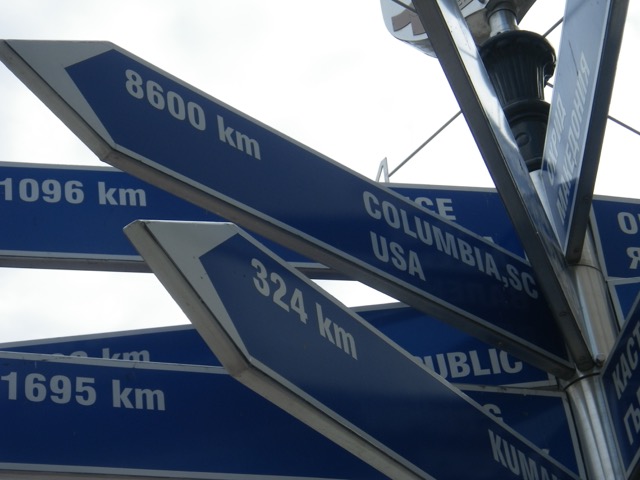
I passed this sign post near the central post office:

IMGP5222

I am more than the equivalent of a round trip to Maz from Haven away from the East Coast of the US!

IMGP5223

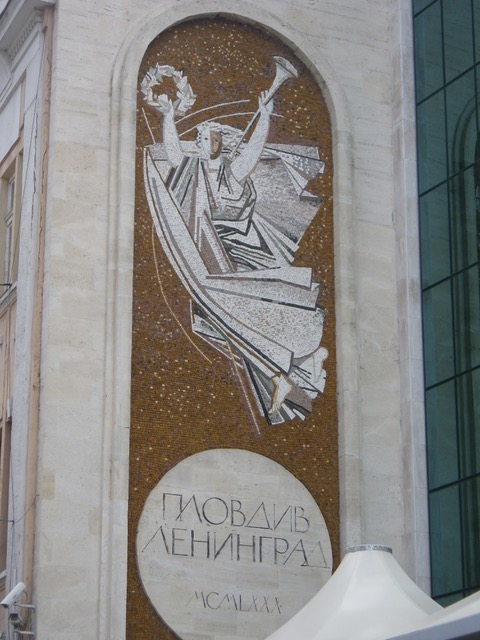
I asked a couple of people today about this mosaic, but no one could tell me what it means. First line is Plovdiv, second line is Leningrad. I think the date is 1980?

IMGP5224

I went back to the hostel and did a bit of work and translation before heading out for a few hours. I decided to check out the history and archaeology museums as they are right by each other. So I headed towards the Maritza River.

IMGP5226

Like Sofia, Plovdiv has pedestrian underpasses for crossing busy boulevards.

IMGP5227

My first ice cream of the day! I was asked how I deal with the heat. Ice cream. Lots of ice cream. I have small portions (sometimes multiple times a day!) and get it in a cup if I can. This is Kit Kat flavour.

IMGP5228

Plovdiv is difficult to get around as it is laid out in what I consider the exact opposite of a grid pattern, so there is a lot of signage in the touristy part of town!

IMGP5229

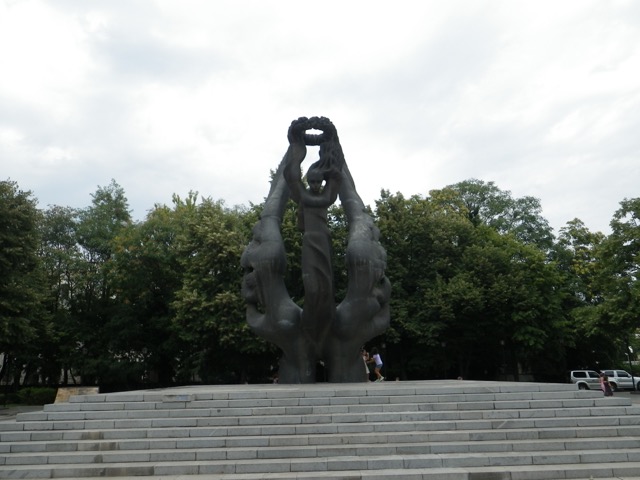
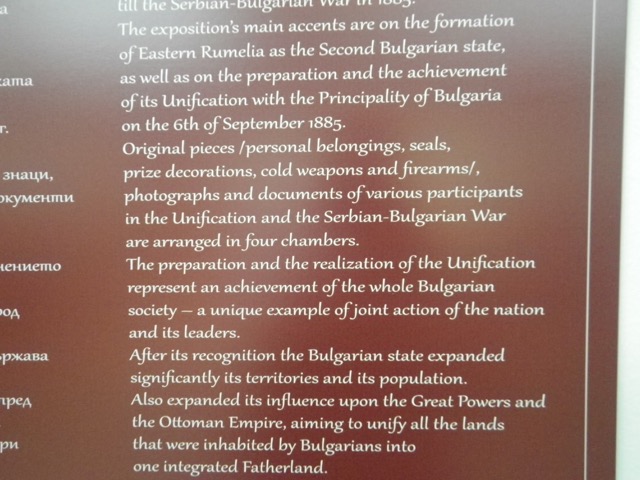
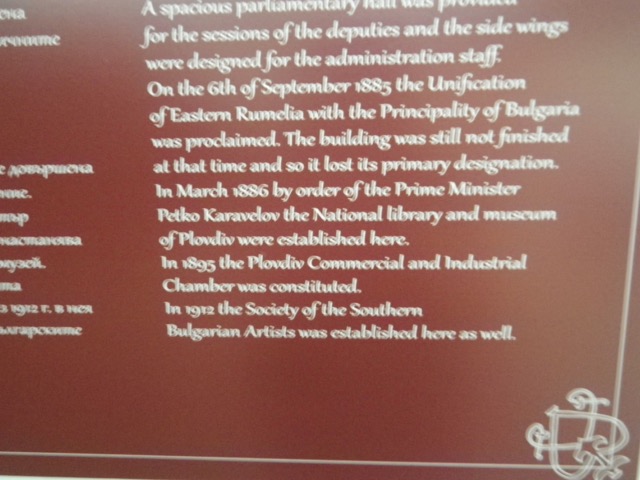
This is the monument to the unification of Bulgaria, outside the unification museum.
IMGP5230

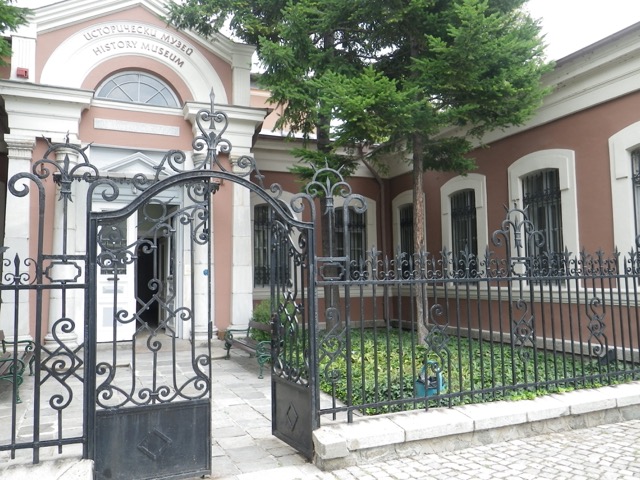
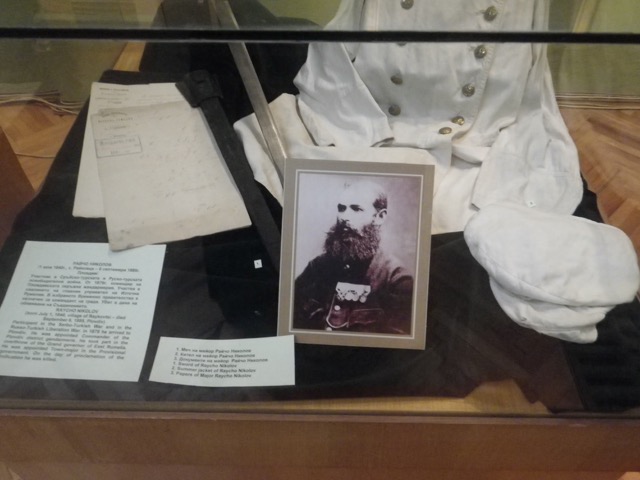
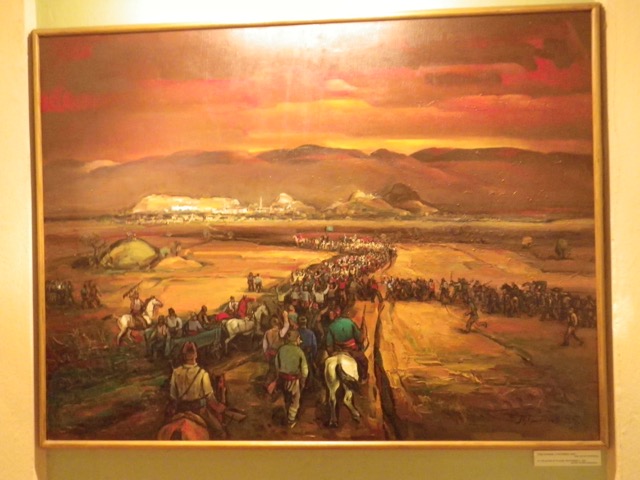
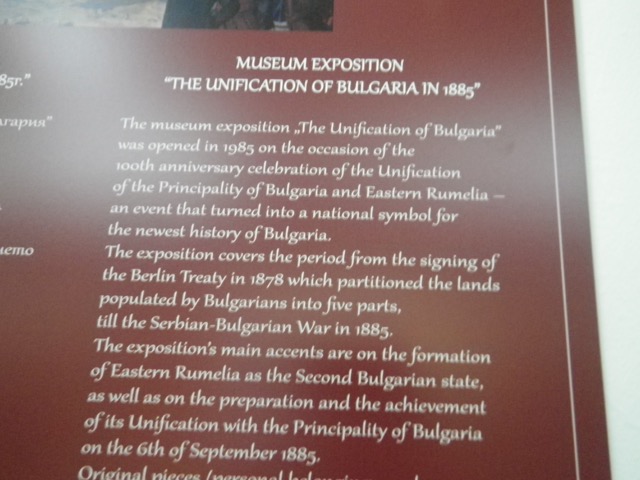
This says history museum, but that’s really misleading as it’s strictly about the unification of Bulgaria in 1885.

IMGP5231

IMGP5232

I was greeted in English and shown where to start, then was left to my own devices. A decent chunk of the museum had good English translations and I spent some time reading quite a bit of the Bulgarian (got in lots of practice with the lower case script). I am definitely picking up some vocabulary.

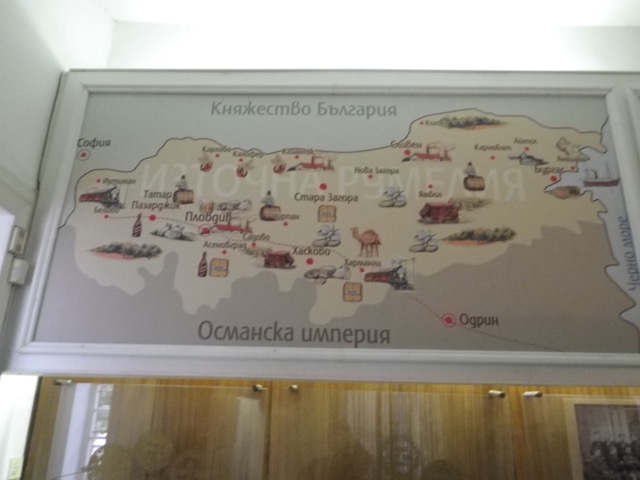
This appears to be a map of trade routes:

IMGP5233

A bunch of stamps:

IMGP5234

Plovdiv’s original name:

IMGP5235

IMGP5236

What I got from this is that it’s about a bank safe:

IMGP5237

Yeppers. 🙂

IMGP5238

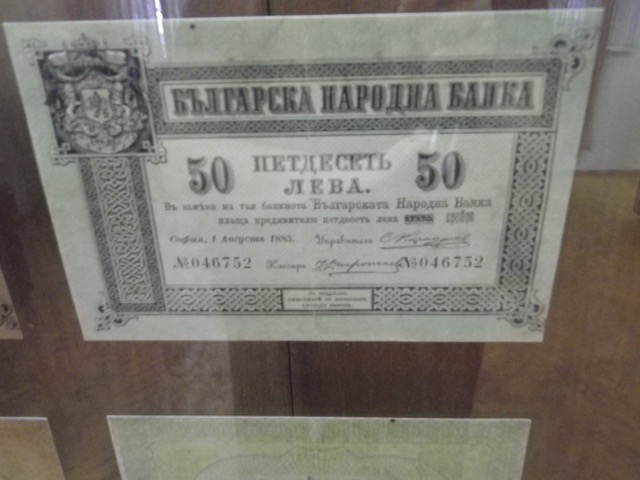
Old currency.

IMGP5239

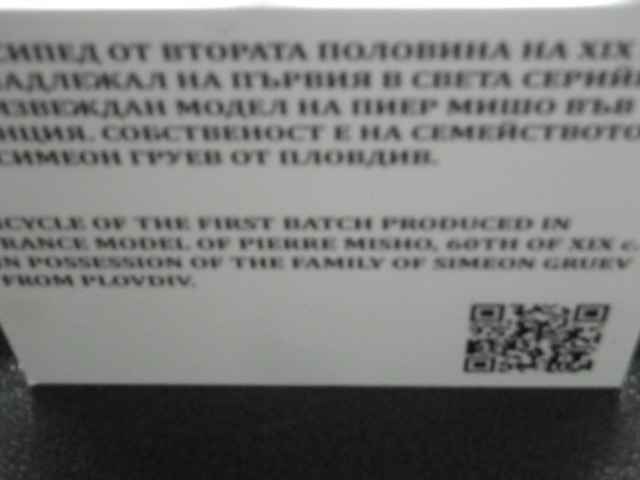
Bicycle produced in France:

IMGP5240

IMGP5241

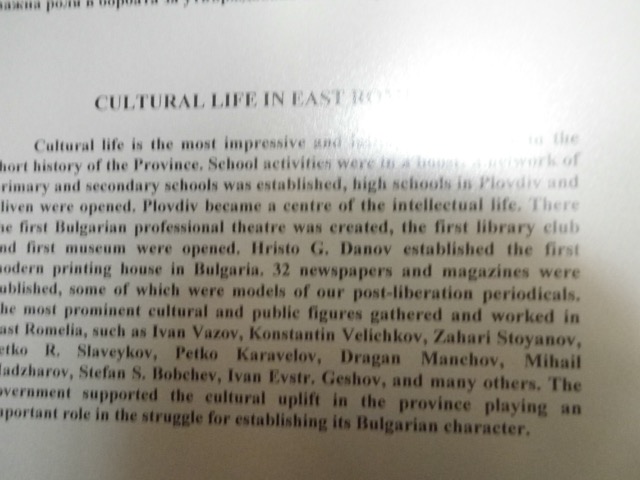
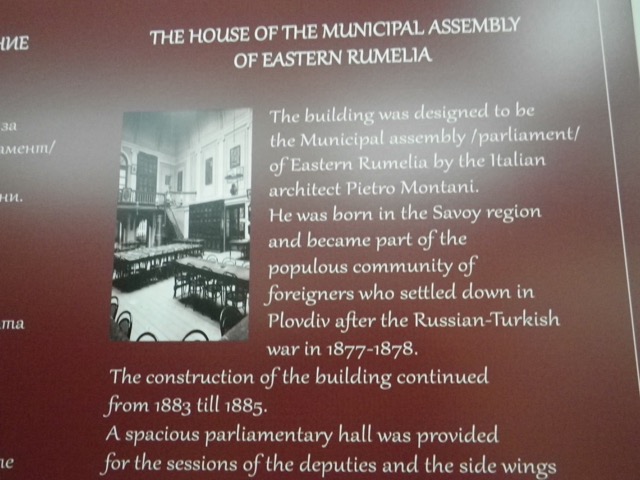
Cultural life in East Rumelia, one of the provinces that would become part of the state of Bulgaria after Unification.

IMGP5242

This newspaper is called Maritsa, just like the river that divides Plovdiv.

IMGP5243

Administrative organization of East Rumelia:

IMGP5244

IMGP5245

The establishment of the province of East Rumelia. It lasted seven years until Bulgarians showed they had the potential to manage their own affairs.

IMGP5246

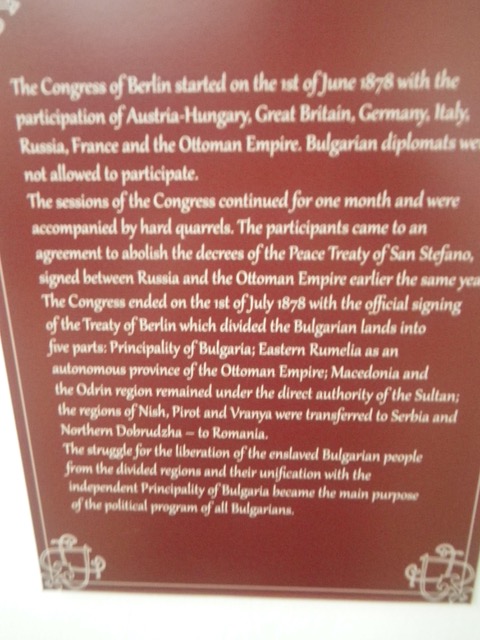
The Congress of Berlin is what split up the original Bulgarian state, in 1878.

IMGP5247

IMGP5249

IMGP5251

IMGP5252

IMGP5253

This is the only man who was killed after unification. According to the guide on the walking tour yesterday, he went into a post office to send a missive about unification and the post master, scared of who knows what, chased this man into the street and shot him dead!

IMGP5254

“At the gates of Plovdiv, September 5, 1885.”

IMGP5255

IMGP5257

IMGP5258

IMGP5259

This is a turtle shell. I think it was turned into an ink well.

IMGP5260

Army medical supplies.

IMGP5261

Manifesto for the Bulgarian People: Bulgarians… and that’s as far as I got. 🙂

IMGP5262

Map of the route of the movement of the Bulgarian army from the southern to the western border during the Serbo-Bulgarian War.
IMGP5264

It was only on my way out that I found the English signage explaining the point of the museum!

IMGP5265

IMGP5266

IMGP5267

IMGP5268

IMGP5269

IMGP5270

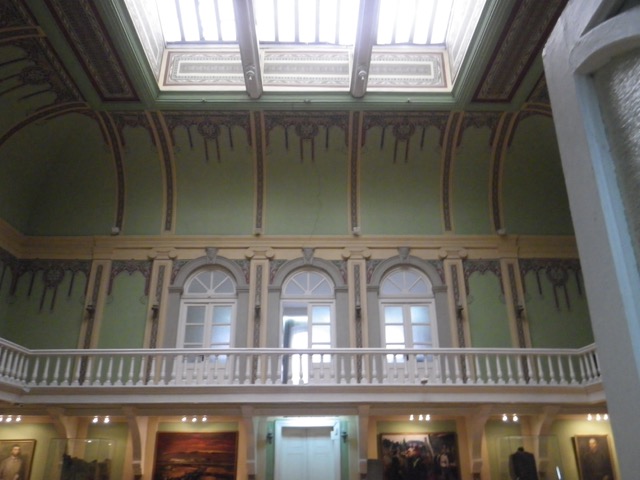
And here’s a bit about this gorgeous building:

IMGP5271

IMGP5272

IMGP5273

This was my first Bulgarian museum and I’m surprised by how much I got out of it! Little did I know what awaited me next door at the Archaeological Museum…

IMGP5274

This museum did not allow photographs, which is unfortunate because it was one of the best museums I’ve ever been to! I went through twice and spent the whole time saying, “WOW!” under my breath. It covers the history of Plovdiv from prehistory to the Middle Ages and is very professionally done with flawless English translations. I made a note on my map of some of the incredible things I saw.

In the prehistory section, I really liked the ancient pottery and tools, which ranged from flint knives to Bronze Age hatchets. The room about the Thracians, a collective of ancient peoples with no written tradition, had ancient giant safety pins that looked rather like modern ones. I immediately envisioned that the Thracians wore some sort of toga-like garment.

There was a small room about the history of the museum and the building, how both fell into ruin and were restored. This room also had some old coins.

There was a large room about Plovdiv in the classic and hellenistic periods, featuring black on red pottery, ornaments, and weapons. Nothing I’d never seen before, but the first time I’d seen them in their point of origin! Off of that was a tiny room about the coins of Philippopolis. They were tiny! This was the first currency of the region.

And then… what I will remember as the mosaic room, but which is the ancient Philippopolis room. It had lots of other things besides the mosaics, but that’s what I remember best. This is a representation of one that you can see from outside the museum:

IMGP5276

This is a very important piece as it is the first (and only) proof of an ancient synagogue in this region!

The final room, Plovdiv in the Middle Ages, had some belt buckles that look strikingly like modern design.

I highly recommend the Plovdiv archeological museum. I suspect visiting it will be one of the top highlights of my Bulgarian summer!

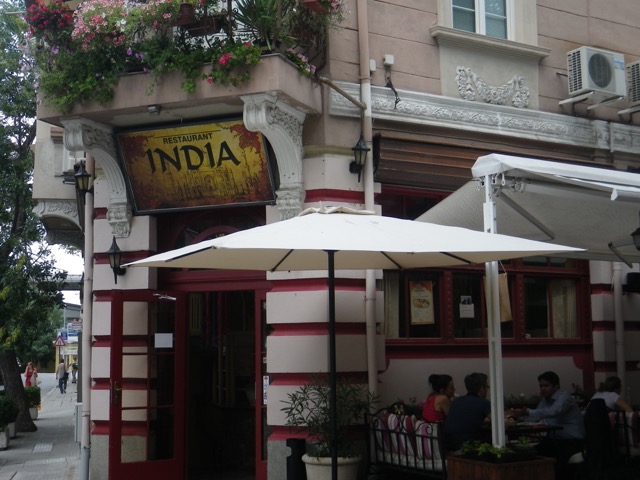
The restaurant where I wanted to have lunch was right behind the archaeology museum, so I considered that a sign: Restaurant India! For someone who didn’t like Indian food most of her life, I’m making up for lost time!

IMGP5277

Beautiful decor inside. I wanted to eat outside, but there were no tables.

IMGP5278

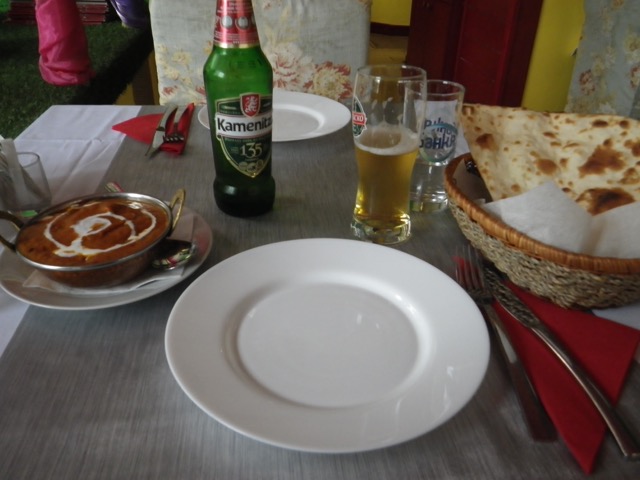
This is the first menu I’ve seen in Bulgaria that I found to be expensive (reviews support that impression). I just went with a beer, butter chicken, and plain naan. I would have liked rice to go with all that sauce, but just this represented 20BGN with the tip:

IMGP5279

Thankfully, the food was wonderful! I was asked how spicy I wanted my meal and said, “A little.” The chef understood that perfectly and I got just enough heat to make my nose run, but not so much that I couldn’t taste my food. After a couple of months of my cooking, these still exotic flavours really hit the spot! Shame it’s so expensive, but it was a worthwhile treat.

Then, since I was right at the Maritza River, I crossed it using the pedestrian overpass. It was like a sauna in there!

IMGP5282

The Maritza River.

IMGP5283

Starting to think it’s impossible to get a picture of a city in Bulgaria without a McDonald’s being in the way! I thought the house to the left was quite interesting.

IMGP5285

See the RV?

IMGP5286

The archeological museum had inexpensive post cards, so I bought one for Bast. The central post office is right by button plaza, so I headed there to mail the card. What a contrast to my post office experience in Sofia! All the necessary signage was translated (badly, but let’s not quibble) into English so I knew which room to go into and then which wicket. I said to the lady in Bulgarian, “I would like a stamp please.” She looked at my card and said in fluent and bored sounding English, “One lev and 40 coins please.” There’s so much English in Plovdiv! After I got my stamps I went outside to post the card, but was puzzled that there was no mailbox, until I saw this:

IMGP5289

I was pretty sure my post card didn’t warrant priority, so I put it in that “forein countries without priority” slot. Hope it gets there!

I then wandered up the hill back into the Old Town, soaking in the atmosphere of this truly ancient city.

IMGP5290

IMGP5291

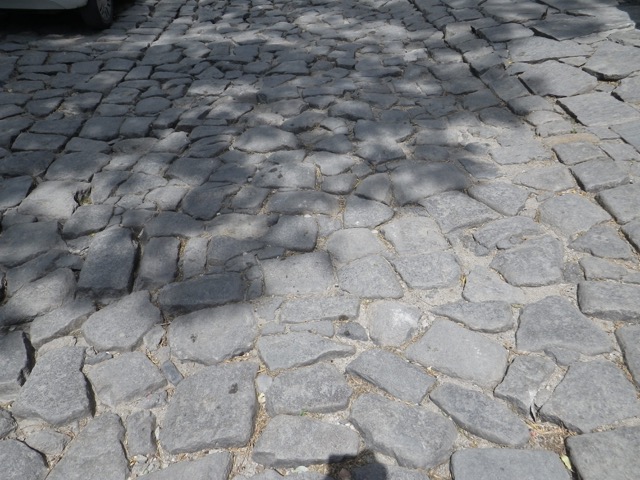
The cobblestone streets are the worst I’ve ever seen. I can’t believe cars drive on them. This is a good patch!

IMGP5292

This translation amused me.

IMGP5293

My Mexico dresses would not look out of place in Bulgaria!

IMGP5294

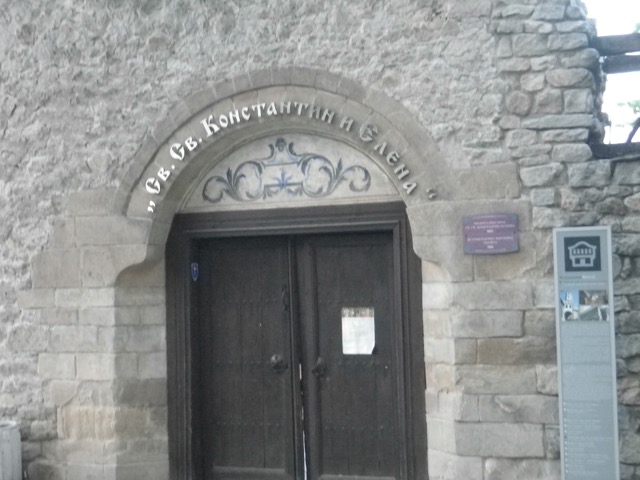
Here’s the exterior of that St. Constantinople and Elena church we passed on the tour yesterday:

IMGP5295

IMGP5296

IMGP5297

More bad cobblestones!

IMGP5298

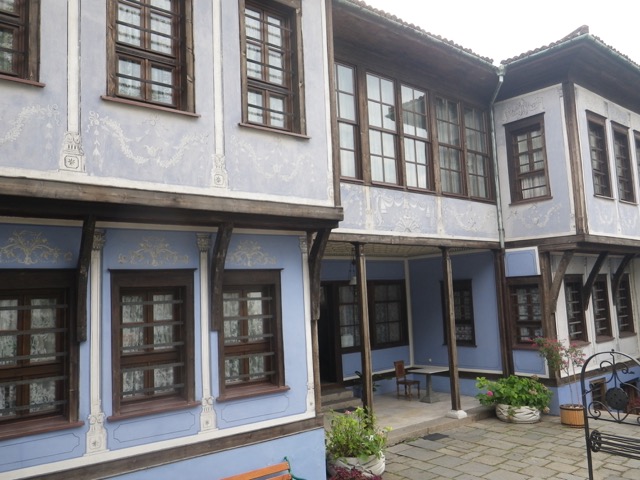
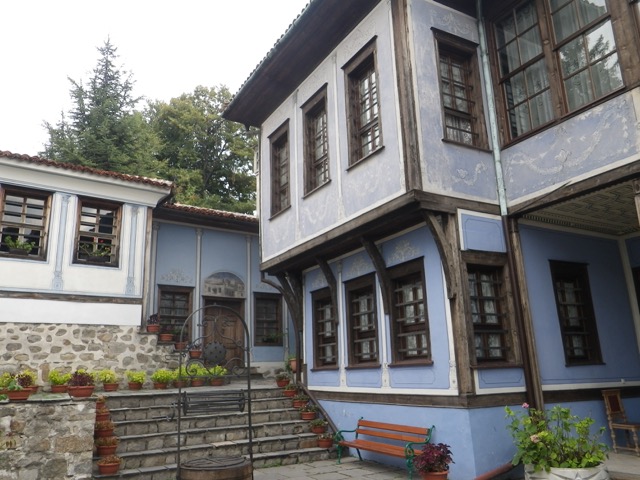
Our guide had told us to visit the Hindlyan House to get an idea of 19th century Bulgarian architecture.

IMGP5299

I love these narrow passageways. They remind me of Edinburgh.

IMGP5300

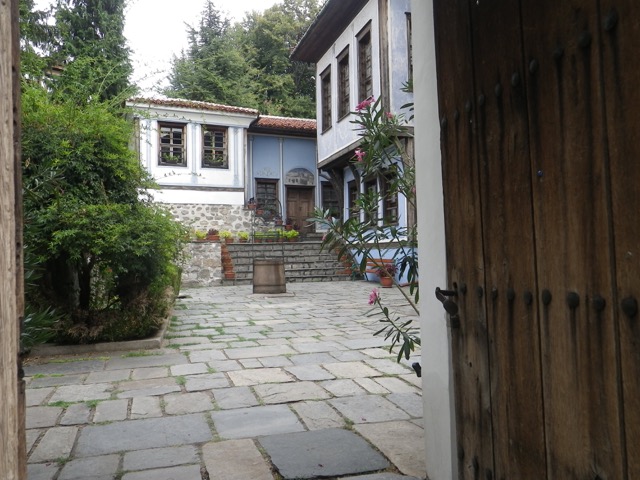
The house is behind another one and down a bit:

IMGP5302

IMGP5303

IMGP5304

The information panel for the house was in Bulgarian, English, German, and French. I can’t speak as to the quality of the Bulgarian and German, but the French had more info than the English! The house was built between 1835 and 1840 and is about 2,000 square feet over two stories. It was restored in 1974, but the exterior paint and frescoes are all original. It is the only  house with a well preserved bathroom that had hot and cold running water.

This was the bathroom!

IMGP5307

IMGP5308

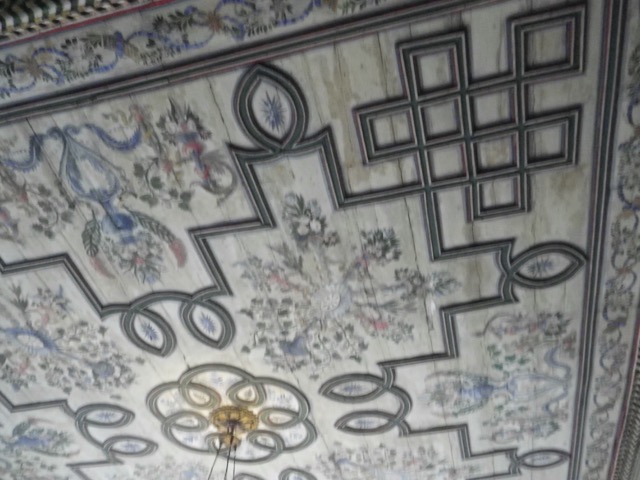
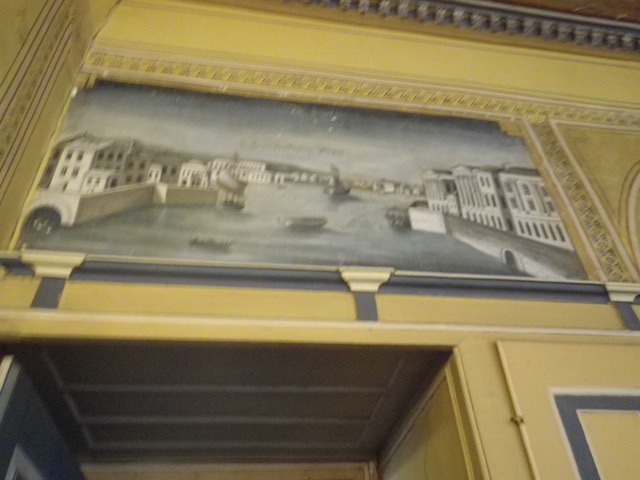
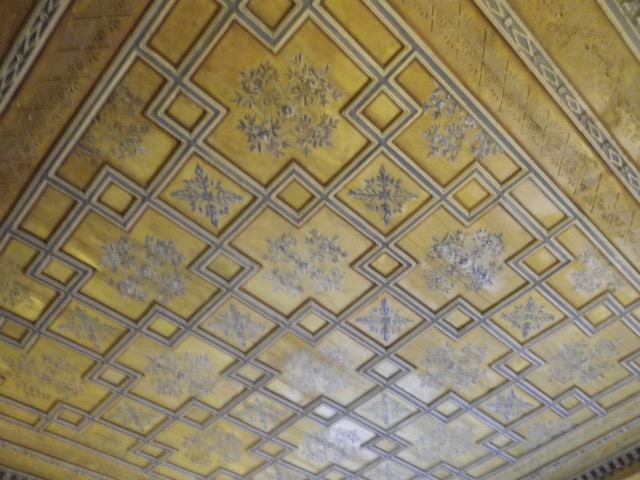
The ceilings in all the rooms were works of art:

IMGP5309

IMGP5310

IMGP5311

IMGP5312

IMGP5313

IMGP5314

This was a fortified storehouse:

IMGP5315

IMGP5316

IMGP5317

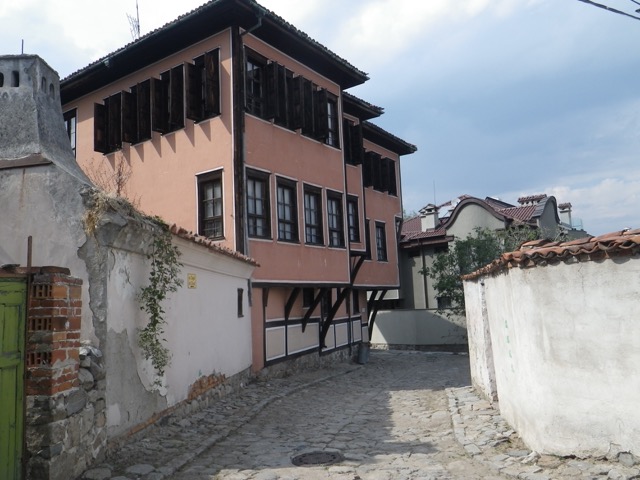
I continued wandering around. So much beauty!

IMGP5320

IMGP5321

IMGP5322

Remains of Byzantine fortress walls!

IMGP5324

IMGP5325

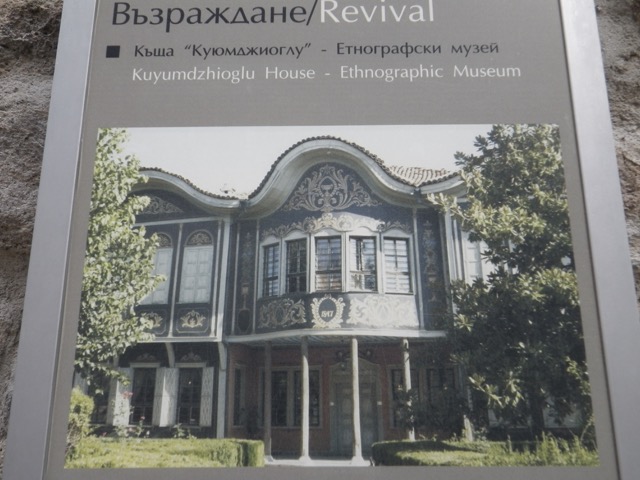
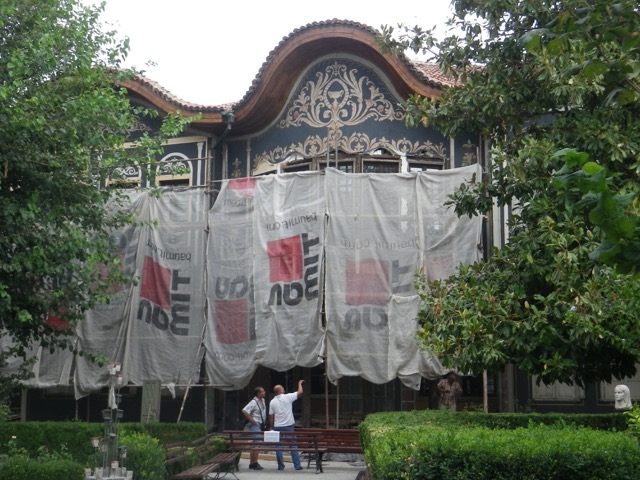
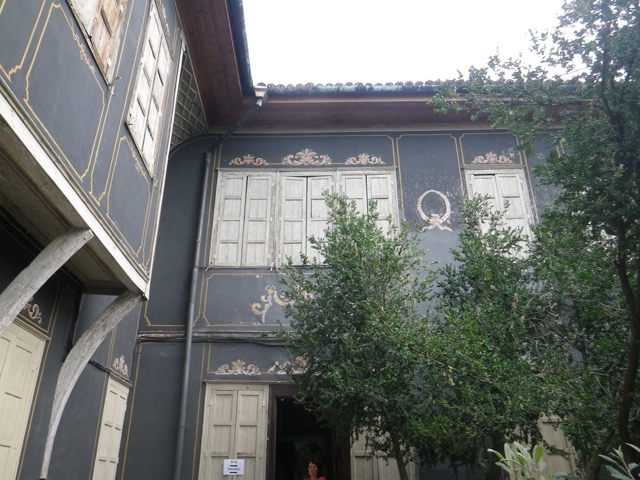
Unfortunately, the ethnographic museum was closed because of renovations. It might be open tomorrow. This is what the exterior looked like:

IMGP5326

Today, there was a lot of demolition going on!

IMGP5327

Here’s the back of that gossip tower from the tour yesterday:

IMGP5328

IMGP5329

IMGP5330

IMGP5331

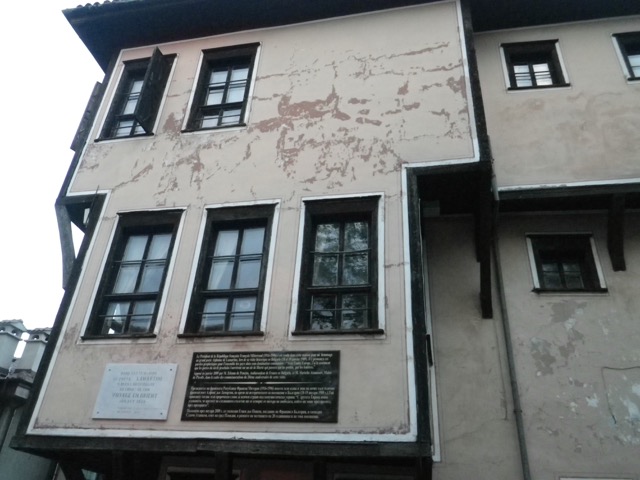
I went back to Lamartine’s house and ogled:
IMGP5332

I found my way back to the Roman amphiteatre and dropped! The full heat of the day was upon us at this point. I had no idea I could move this slowly, but there I was, just slinking through the streets of Plovdiv’s Old Town and trying not to melt!


IMGP5333

IMGP5334

IMGP5335

And back to Lamartine’s house, but not by design!

IMGP5336

Is that perhaps a chimney?

IMGP5337

IMGP5338

IMGP5339

Another bronze statue, no idea of whom:

IMGP5340

IMGP5341

IMGP5342

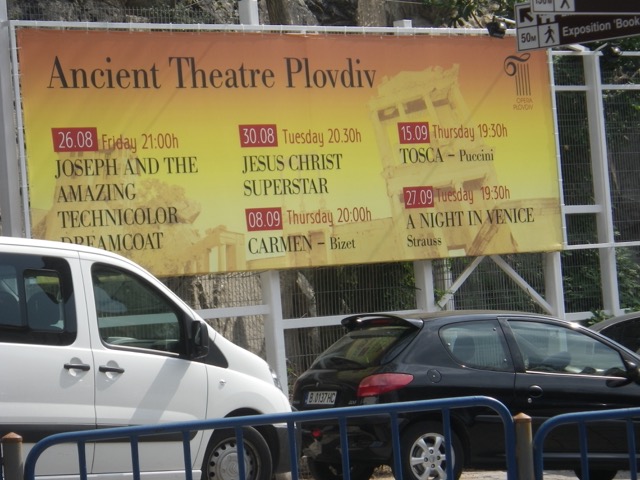
I wish I could come back to see Tosca at the Ancient Theatre before I leave!

IMGP5343

Here’s a map of the tourist part of Plovdiv:

IMGP5344

I headed back to my hostel for a mid-afternoon break, stopping at this fountain right by the hostel to get a cold drink to fortify me for the climb up to my room!

IMGP5345

I cooled off and rested for a bit, writing my post about the walking tour and trying to decide where to go for dinner. I came up with two possibilities. While all of this was happening, it began to rain, which I hoped would cool things down!

Around six, I headed straight up to the Old Town again, right to the summit of Nebet Hill, to check out a Bulgarian restaurant I’d spotted yesterday. It ended up not being that appealing, so I headed to my second choice in The Trap. I have to say that I’m shocked by how little of an effort that climb was, especially since it wasn’t as hot. All my dog hiking is paying off!

My second choice for dinner was the Italian restaurant Maramao.

IMGP5348

I loved the bricks outside of it:

IMGP5349

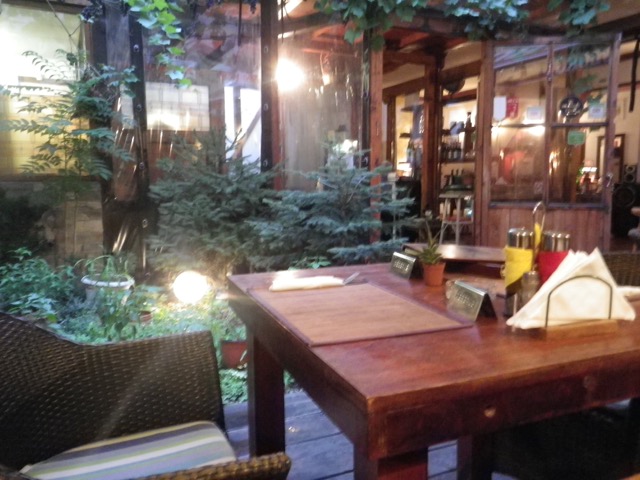
I was greeted warmly in English and took a seat in their covered courtyard. The menu was in Bulgarian, English, and Italian. I settled on a glass of white wine and a main, but was tempted by one of their appetizers. I asked the server about the main portion size and if he thought it would be too much for an appetizer. He asked what appetizer I had in mind and when I told him, he said he was pretty sure that it wouldn’t be too much for me as the appetizer was quite light. So I ordered it!

Here is my roasted pear with gorgonzola (blue cheese), balsamic vinegar, and walnuts. *drools at the memory* This would have made a good dessert for me!

IMGP5350

I took some pictures of the courtyard while waiting for my main and drinking my crisp cold Bulgarian white wine:

IMGP5351

IMGP5352

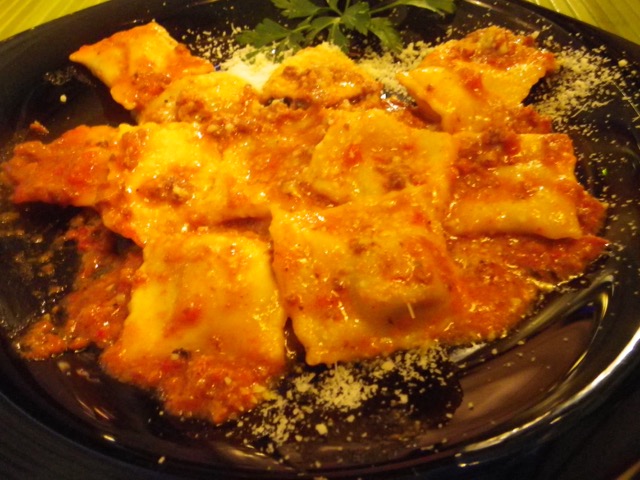
And here is my main. These are “tordelli,” a type of ravioli, with a ragú sauce that had cinnamon or maybe nutmeg in it. Very good!

IMGP5354

With the tip, my meal was just 3BGN more than lunch,which really shows how expensive my lunch was. Every other time I’ve spent around 20BGN for food, I’ve had a main with an alcoholic beverage and either an appetizer or dessert.

I headed back to the hostel after dinner and was just two blocks away when it started pouring! I was rather glad to have an excuse to call it a night!

Free Plovdiv Walking Tour

I was feeling pretty burnt out by late afternoon yesterday, but really wanted to do the free Plovdiv walking tour straight away from 6PM to 8:30PM as a) it would be cooler than between 11AM and 1:30PM and b) so that my time would be my own on Thursday. I knew about this tour because I did the free tour in Sofia.

My post from yesterday left off just before the tour, but I forgot to mention something. As I headed for the tour, I started to feel a bad headache coming on, a combination of too little sleep and too much heat. There are several pharmacies along the main pedestrian street (Knyaz Alexander) so I decided to try again to find some nurofen (ibuprofen). Every place I’d been to so far had at least some service in English, so I asked the pharmacist if she spoke English and she said no! A little taken aback, I then said, “Nurofen?” and she replied, “Yes! Express?” I figured that had to be the fast acting formula, so I said yes. I examined the box she handed me to make sure it was ibuprofen, which it was. It was about 5CAD for 10 gel tablets, which sounds expensive to me, but I was in pain! I then went to sit by the fountain to scour the informational pamphlet in the box to find the dosage. It was all in Bulgarian, of course, but I could recognise numbers as they are written like ours and also the words “hour” and “day.” So even if I couldn’t understand anything else, I knew I was at the dosage section and that I could take one tablet every six hours, with no more than three tablets per day. So I took one and it worked almost immediately. I was really impressed!

So now, the tour. First off, there is no way I can do justice to everything I heard yesterday. Bulgaria’s history is incredibly long and convoluted and each one of you has a different amount of world history knowledge. I got a lot out of the tour, more than can convey here. I hope you will enjoy the pictures and go do your own research if you want more in depth information. I will say that Plovdiv claims to be the longest continually inhabited city in Europe. That’s contested, but what is not is that Plovdiv is 6,000 years old. I can’t even wrap my brain around that! Plovdiv was built over and around seven hills, but there are only six left, with the seventh one mined for building materials. The city was once known as Philippopolis (city of Phillip) and it is the second largest city in Bulgaria.

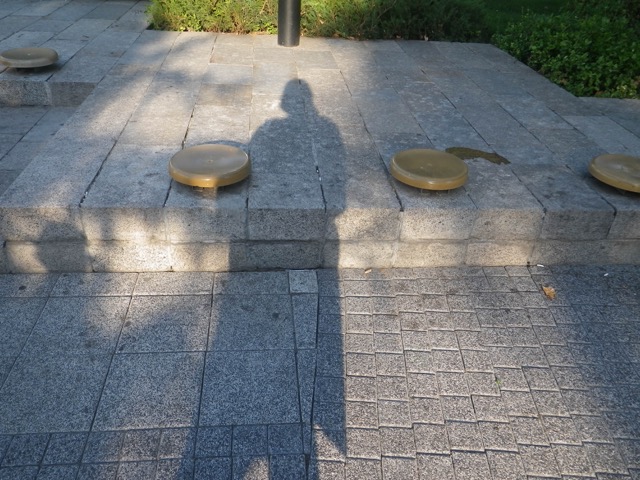
Our tour started in front of the municipality building at button plaza. These seats are supposed to represent buttons. Our guide, Lora, admitted that she had yet to have a group that saw buttons out of these things!

IMGP5174

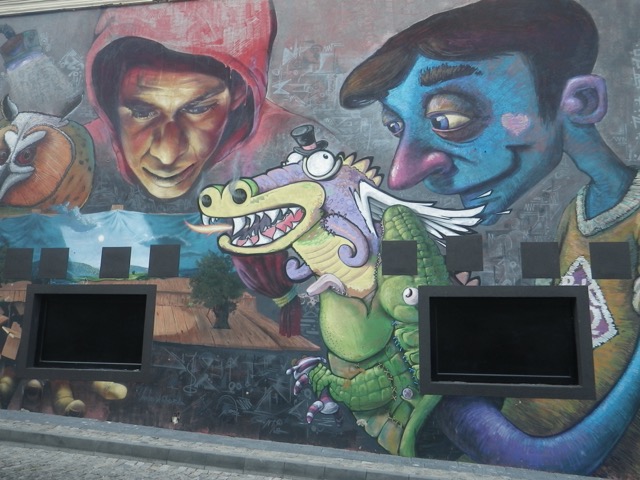
We then went to one of Plovdiv’s seven hills to look at some commissioned graffiti. You can see that there are a lot of faces, and these are all important figures of Bulgarian history. I was rather amused that the artist claimed to have been inspired by Mount Rushmore.

IMGP5175

Across the street is more commissioned graffiti.

IMGP5176

This is Vanga, Bulgaria’s “Nostradamus.” Apparently, a lot of her predictions have come true and recently the news here proclaimed that she foresaw that Barack Obama would be the last US president…

IMGP5177

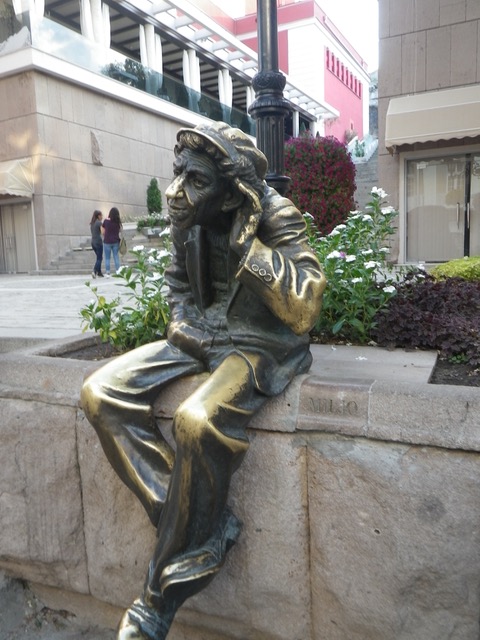
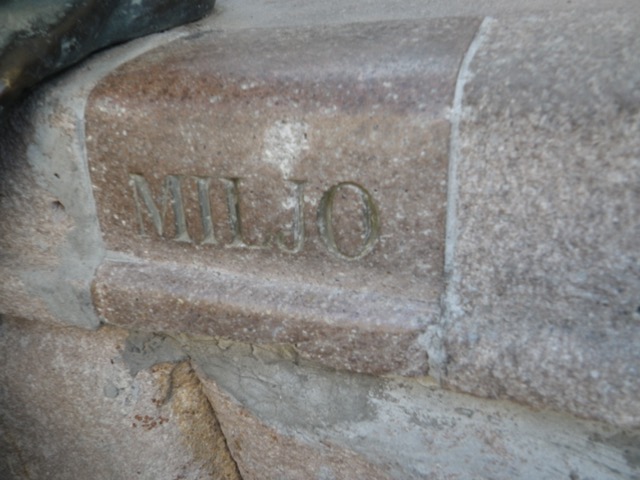
We then headed back down to Knyaz Alexander. This staircase is across Knyaz Alexander from the street my hostel is on. This is a statue of local vagrant Miljo (Mil-yo). He was rather well loved figure in Plovdiv, a little deaf and not right in the head, but very funny. I think it says a lot about the character of the city that he was immortalised in bronze. His knees are shiny because local lore is that if you rub them as you whisper a wish in his ear, your wish will come true!

IMGP5180

Interesting spelling. They’ve used the Serbian J for the “y as in yoyo” sound.

IMGP5181

Here’s the mosque again. I asked yesterday if anyone could tell what’s unusual about it and why and I didn’t get any guesses. The answer is that the mosque is not round and does not have a dome. This is because it was built on the ruins of a church.

IMGP5182

This is a miniature representation of the ancient Roman stadium (not to be confused with the theatre!). It was discovered sometime in the 20th century and excavating the whole thing would have been too costly because of all the construction above it. So only the very end (the rounded bit) is excavated.

IMGP5183

Amazing!

IMGP5184

We then went into a neighbourhood called The Trap (Kapana). This used to be an area full of shops, way back in ancient times. The buildings were all appropriated by the government during the socialist era and trying to sort out ownership after 1989 and the fall of Communism was such a mess that many of the buildings were left to ruin. Now, efforts are being made to revitalise the neighbourhood since money is being pumped into Plovdiv as it was named European Capital of Culture for 2019. There are two guesses as to how the neighbourhood got its name. One is that it is very easy to get lost in it. The other is that there were so many shops it was impossible to get out without spending money!

IMGP5186

IMGP5187

IMGP5188

We then started to climb UP to the old part of the city.

IMGP5189

IMGP5190

This is one of two tourist information centres. The building you see on the right is the Ethnographic Museum (more on that later).

IMGP5193

Eastern Gate.

IMGP5194

This is a “gossip tower,” where ladies would gather to watch what was going on in the streets.

IMGP5195

The Ethnographic Museum was highly recommended to us by our guide, but, spoiler, when I went today it was closed because of renovations.

IMGP5196

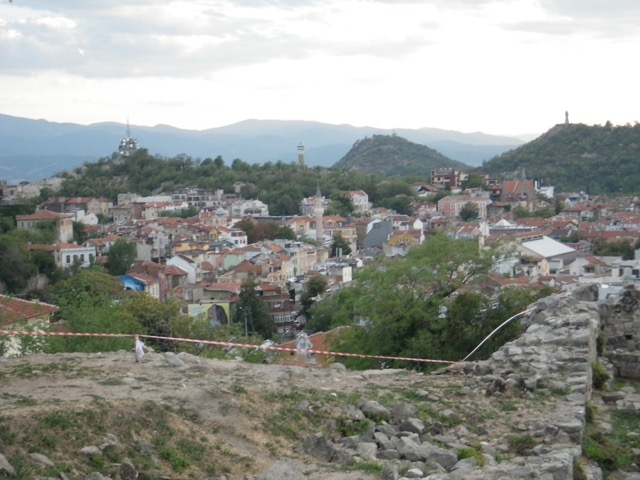
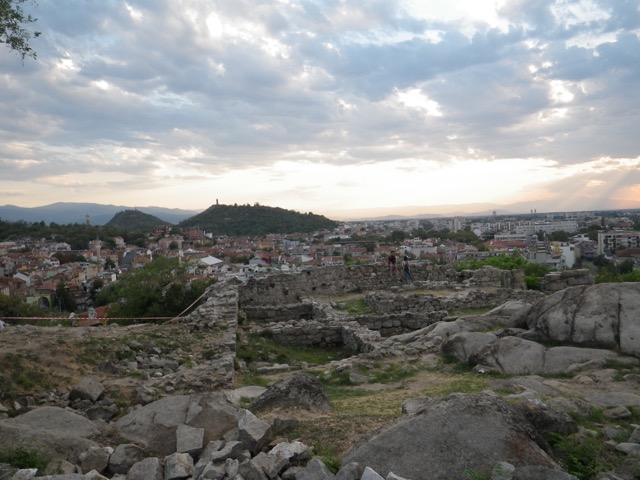
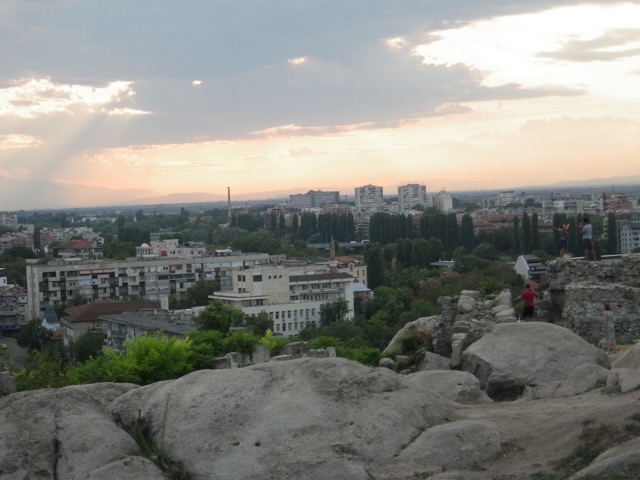
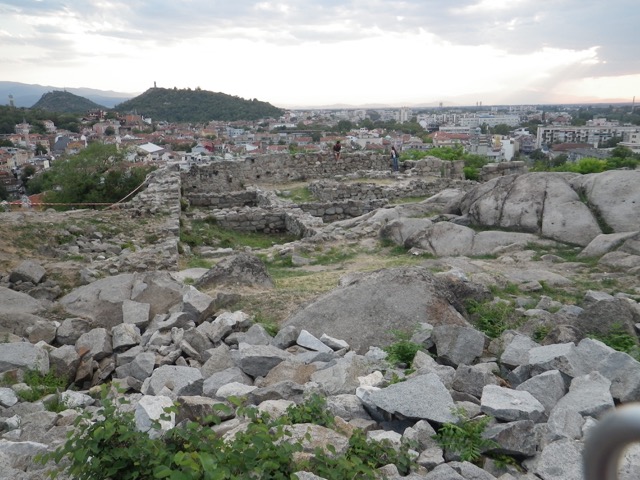
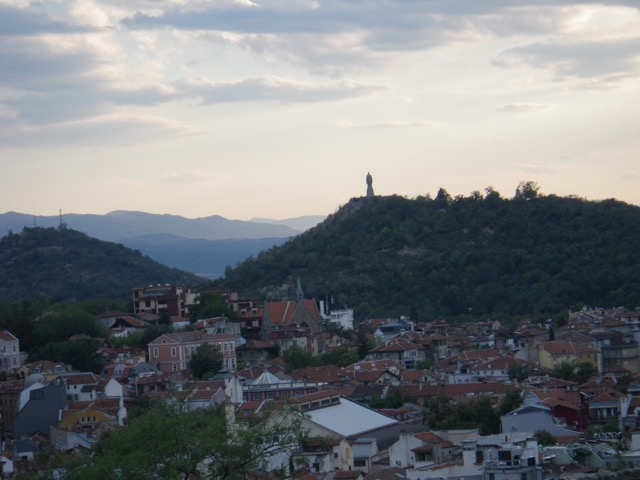
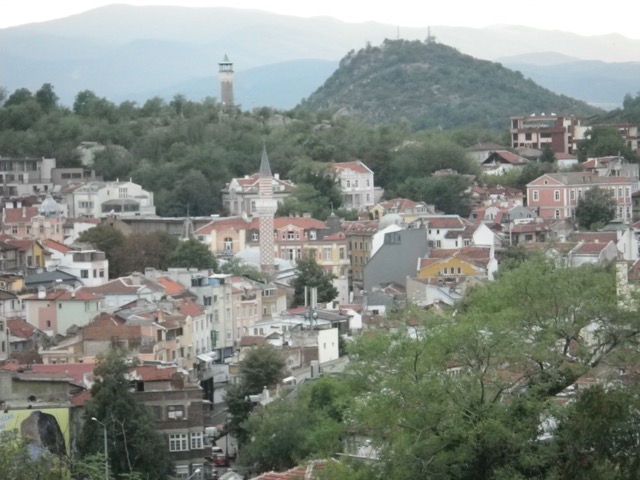
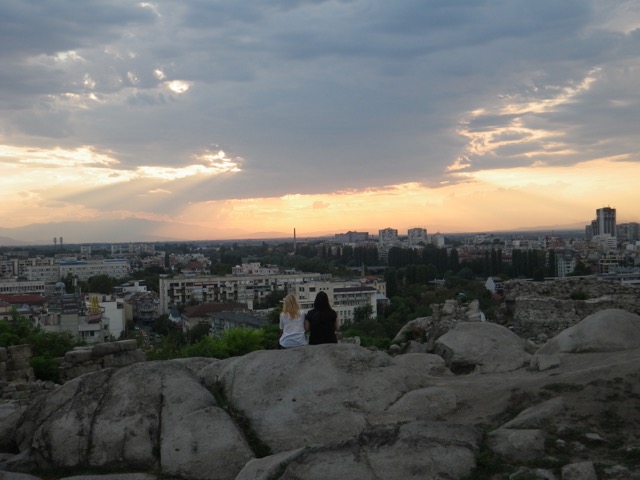
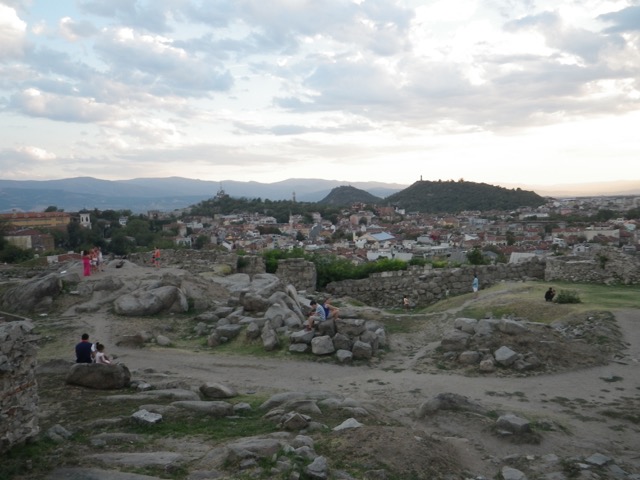
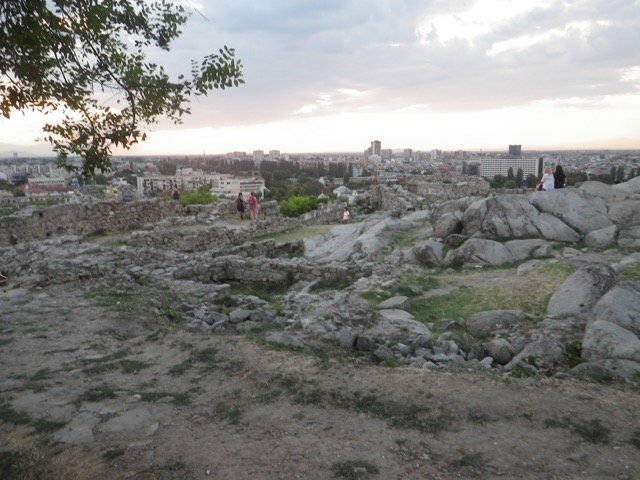
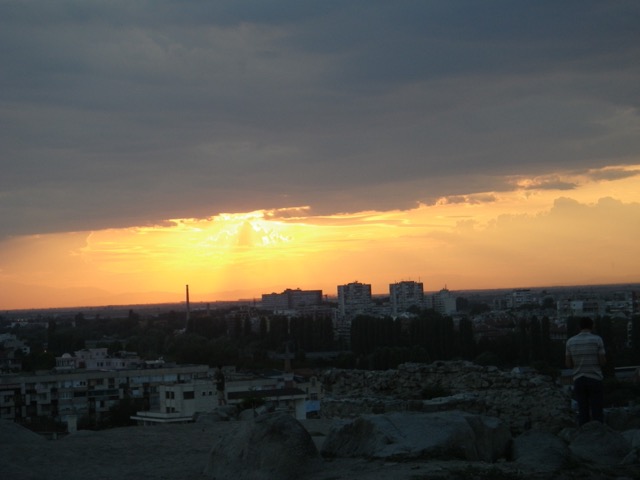
We went to the top of Nebet Hill to watch part of the sunset and to see some of the other hills. On the left here you can see Clock Tower Hill (all the way to the left are the TV satellites and almost in the middle of the picture is the eponymous clock tower). The other hill was considered a wild place full of snakes. To the right of that is another hill with a giant statue on it.

IMGP5197

Looking across the Maritza River to “new Plovdiv.” My guide told me not to waste my precious time in Plovdiv going over there.

IMGP5198

IMGP5199

IMGP5200

IMGP5201

IMGP5202

IMGP5203

IMGP5204

IMGP5205

IMGP5206

IMGP5207

IMGP5208

An interesting hole in the ground. 🙂

IMGP5209

IMGP5210

IMGP5211

IMGP5212

We came back down the hill and passed the church of St. Constantine and Elena. We will return here. 🙂

IMGP5213

I then completely geeked out when we stopped at the house where famed French poet Lamartine stopped for three days on his way back to France from the Orient. He is one of my favourite poets!

IMGP5214

IMGP5215

I immediately emailed my mother to share these pictures and this is what she had to say (translated):

“Plovdiv is 2,400KM from Pars, 23 hours by car on highways. Can you imagine the time spent traveling in the olden days? In 1833, we were on boats and horses, on bicycles and some richer countries had trains, never mind all the walking that was done.”

I replied, “We travel fast today, but do we really see anything?”

IMGP5216

Right before the ancient Roman theatre, we stopped in front of this statue. I wish I could remember his name. He was a violinist and irreverent comedian who had no fear of speaking out against the socialist regime. He was made to disappear to a labour camp, where he survived 11 days. His statue is meant to represent all those artists and cultural icons lost to this dark period of Bulgaria’s history. I have to say that I am impressed by how Bulgaria does not shy away from the darker side of its history

IMGP5217

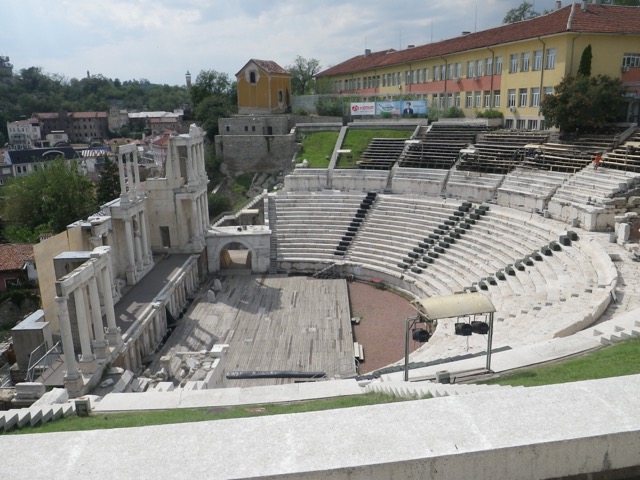
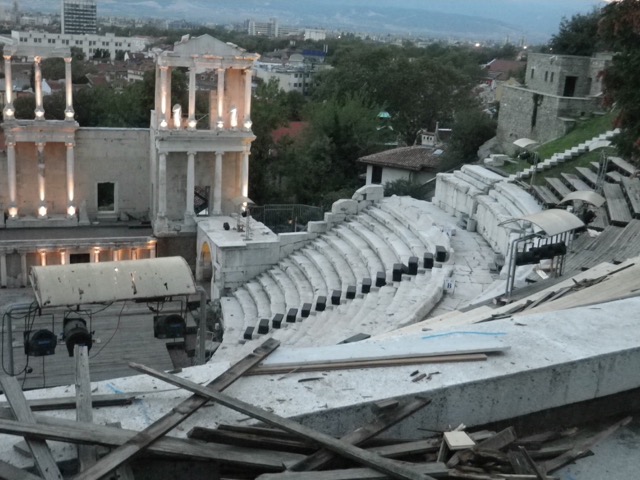
The ancient Roman theatre at last! This venue is still used for concerts. Our guide says that the acoustics are amazing and you can’t even hear the traffic from the boulevard down below when a show is going on!

IMGP5218

IMGP5219

I had seen this house from below and was glad to get a closer look at it.

IMGP5220

We finished our tour at a church where we learned a bit about the reunification of Bulgaria in the 19th century. More on that later as I went to the reunification history museum today.

IMGP5221

From this church, it was a very short walk back down to Knyaz Alexander. I was famished, but also exhausted so I just wanted something quick and maybe an ice cream. Earlier, I’d spotted a donair place across from the sushi restaurant, so I headed there. I ordered a small donair on “Arabic bread” for a mere 2BGN. The cashier asked me if I wanted tomato and I made a motion that everyone I’ve made it to has thus far understood to be, “Give me everything.” My sandwich was really good! Just the right size, with lots of seasoned chicken, fresh veggies, and the right amount of garlic sauce. Yum! I then got a strawberry gelato for the two block walk back to the hostel.

My first few hours in Plovdiv were very positive. I’d read many times that Plovdiv is more tourist friendly than is Sofia and has more to recommend it. I tried to go to both cities with as open a mind as I could, but I have to say that I agree with those critiques… Plovdiv just felt more welcoming. More in my next post!