Housekeeping in A Dusty Humid Climate

(Post 139 of 263. Thanks again to those who participated in the Fundrazr. As I mentioned in the post announcing Bast’s passing from COVID, I thank everyone for your generous donations to the original Fundrazr campaign, which resulted in sponsored 263 posts. I will continue to honour the commitment to write those 263 posts, but I will not commit to more. The link above is to a new campaign to help Bast’s family.)

I’ve never been much of a housekeeper and I don’t think I worried about dust in my home a day in my life until I moved here. But here, dust will not be ignored. Mérida is a very dusty city — some blame the climate, some blame the lack of vegetation, some blame city maintenance. Whatever the reason, when you live to the open air like I do, dust will invade take over your house. But as if that wasn’t enough, add in the humidity and dust will mould and eat into your belongings (especially leather). A once-a-week visit from my house cleaner isn’t enough. You have to clean a lot (ideally once daily) here. The only way to make that task less onerous, especially in a house the size of mine, is to choose furniture with clean lines, to not have a lot of needless decorative items, and to keep what you can behind closed doors. I figured that out for my books and decorative items (glass-doored bookcases are great in this climate!), but it took me way too long to figure it out for my shoes!

This is where I’ve been keeping my shoes (well, sandals), most of these years.

Every time I want to wear a non-daily pair, I have to clean a layer of crud from it.

It finally occurred to me that I needed a shoe cabinet. The kind with the drawers that tilt out would take up the least space.

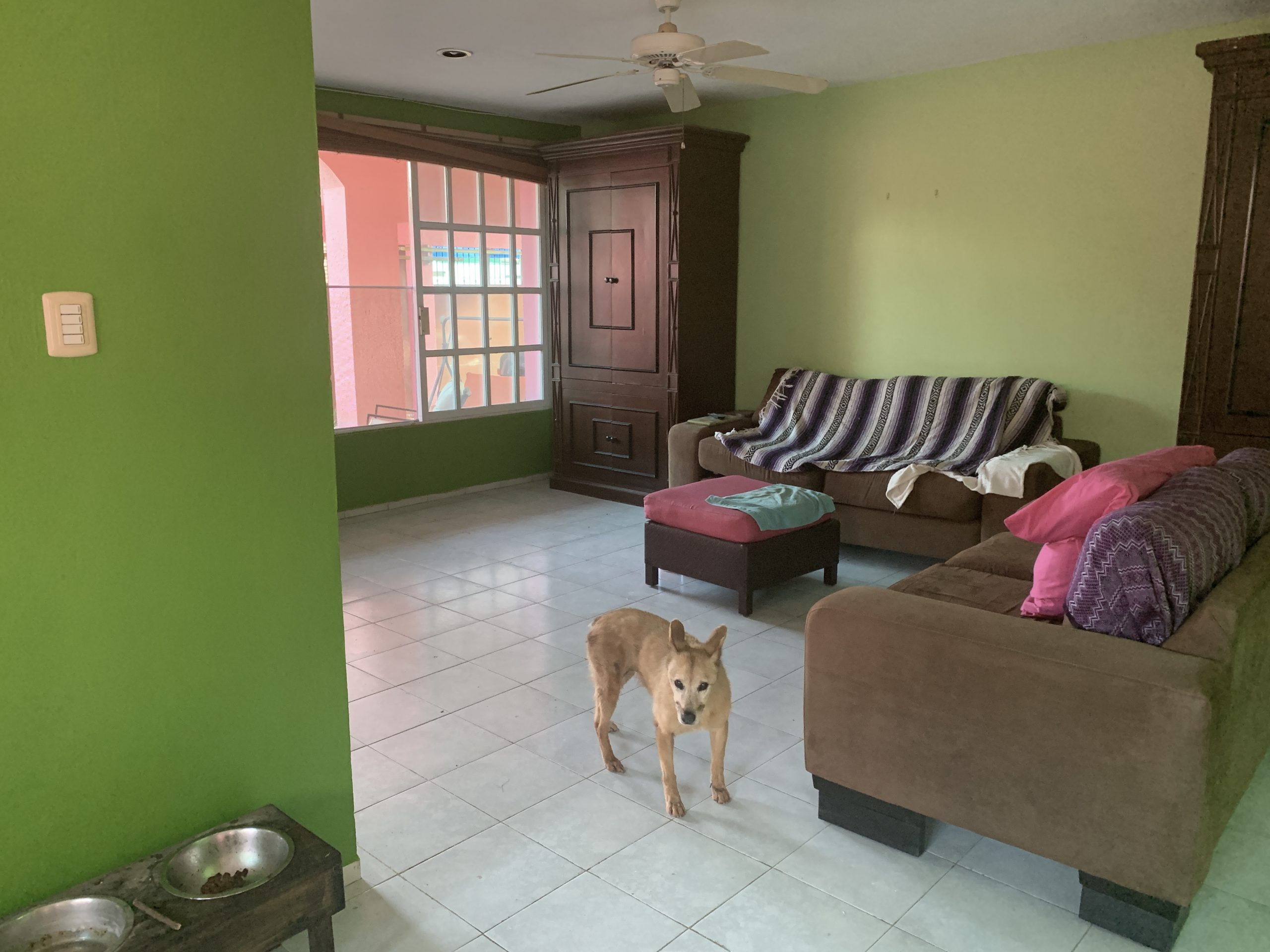
It still cracks me up that I lived in this house for YEARS before I noticed that the two light switch plates are different colours!

There wasn’t an abundance of choice for such a cabinet. I was hoping for dark brown to match my TV stand and armoires. It was about this time last year that I bought a cabinet for my kitchen from Elektra at a deep discount. I decided to try there and, to my surprise, found exactly what I wanted at a fraction of full price. At a quick glance, you could almost think it was part of a set with the TV stand.

What an improvement! But look at the front door. Oh my goodness. I’m off to go dust it!

A Heads-Up for 2021-2022 Snowbirds (and Digital Nomads)

(Post 138 of 263. Thanks again to those who participated in the Fundrazr. As I mentioned in the post announcing Bast’s passing from COVID, I thank everyone for your generous donations to the original Fundrazr campaign, which resulted in sponsored 263 posts. I will continue to honour the commitment to write those 263 posts, but I will not commit to more. The link above is to a new campaign to help Bast’s family.)

The Mexico of old where entitled tourists could come and go as they please is gone.

With reopening have come immigration crackdowns, with deportations and entry denials happening daily for those who have been gaming the system for years, applying for back–to-back 180-day tourist entries by doing a quick overnight border jump.

Sonia Diaz, a trusted “fixer” in the San Miguel area, has her finger on the pulse of all the immigration reforms. Her Facebook page has updates and clarifications straight from INM and should be a daily visit to anyone planning to come to Mexico in the next few months. The fact is that Mexico is defining the line between tourist and resident. One post in particular summarizes recent statements by a senior INM official about the clarification of rules and expectations.

INM’s new computer infrastructure is making it easy for Mexico to now track entries and exits. If you are a snowbird who has repeatedly flaunted the rules, overstaying your 180 days, you can expect to meet friction upon your arrival this year. Be prepared, like you would for any other country, to show a return ticket and proof of where you will be staying while enjoying your winter in Mexico or you may find yourself granted only a 10-day entry.

The most incredible thing that is coming out of this is that Mexico has officially recognised digital nomads and is offering them temporary residency! Coming from a country that is incredibly hostile to this lifestyle, I am so grateful to have been a pioneer in this new economic reality. I was granted my residency visa in 2017 as a digital nomad, even if the term had not been formalized yet. If you’re planning to come here to work remotely, Mexico expects you to have a temporary residency visa for the duration of your stay. It’s only to your advantage — you can stay up to four years with unlimited entries and exits, and as long as you are not earning money in pesos here in Mexico, then you have no tax obligations (something that I’ve now had confirmed at least four times by different branches of government).

I have to say that being a resident is not without its frustrations as there is seemingly no concept of being an “immigrant”, but I suspect that these new rules are going to smooth out that process. I mean, you can’t command a whole group of people to become residents of a country and continue to treat them like tourists, which is how I’ve felt when banking in this country. I suspect that my ease at opening my new bank account had as much to do with the new INM rules as it did with my conversion to permanent resident status.

All this to say, stay current. Be careful who you take advice from – I’m still hearing folks spouting regulations that date back to the old F-type visa days that haven’t been relevant since I’ve been coming to Mexico, and that’s been seven years. Be respectful and accept that you’re coming to a foreign country that does not owe you anything.

I remain so grateful to Mexico for all the opportunities it has afforded me. Come on down — the locals are friendly, the weather is wonderful, and the food is probably the best in the world. 🙂

So Far so GREAT with BBVA

(Post 137 of 263. Thanks again to those who participated in the Fundrazr. As I mentioned in the post announcing Bast’s passing from COVID, I thank everyone for your generous donations to the original Fundrazr campaign, which resulted in sponsored 263 posts. I will continue to honour the commitment to write those 263 posts, but I will not commit to more. The link above is to a new campaign to help Bast’s family.)

I’ve only been with BBVA a few days and what a breath of fresh air it has been! Ride share and food delivery platform payments go through nearly instantly, I was able to just scan the barcode on my power bill for all the payee info to be inputted for a payment (and the payment went through!), a global money transfer came in a day earlier than it would have with HSBC, and transfers in from other Mexican banks happen near instantly, not a few hours later. I still have a lot of tests to put the account through, but I can already tell the switchover is going to really reduce stress in my daily life.

There are so many advanced features to my account that I still haven’t discovered them all. My current favourite is “apartados” — partitions. You can separate your account into up to seven partitions to help with budgeting. So let’s say I get a payment of $60,000 and I want to remove my mortgage payment from my main account balance as well as start saving for a car. Let’s say all of that totals $45,00. I can move amounts to my “mortgage” and “car” partitions and then my main account balance showing available funds for debit and automatic payments is just $15,000 even though I still have $60,000 in that account. That sure beats having to open up a bunch of separate accounts, the way I know a lot of people budget. The only disadvantage is you can’t tell an automatic payment to come out of a partition, so you have to set reminders to move the money into the main partition when needed. So I think the greatest use of this system is with short-term savings where you’re not concerned about getting interest.

This is an example to show what it looks like in the app. My balance showing in the account is minus this $5,000 that I’ve set aside.

I have been using software to do this for years and it is a real headache to balance accounts. You really have to trust your data entry to be able to trust the software balance as your real “available” balance versus what the bank says it is. Having this feature built right into my main account for daily use is going to simplify my bookkeeping so much. That’s the kind of thing you get excited about when business is booming and bookkeeping is starting to be a real chore!

Do NOT Open an Account at HSBC Mexico

(Post 136 of 263. Thanks again to those who participated in the Fundrazr. As I mentioned in the post announcing Bast’s passing from COVID, I thank everyone for your generous donations to the original Fundrazr campaign, which resulted in sponsored 263 posts. I will continue to honour the commitment to write those 263 posts, but I will not commit to more. The link above is to a new campaign to help Bast’s family.)

I have been banking with HSBC Mexico for four years now and it has been a nightmare that I’m glad to finally start to put behind me.

I’m getting entrenched here and the banking system is going more and more digital — I need a reliable electronic payment method. HSBC’s debit system goes down frequently and it is always denying my online and debit purchases, refusing automatic payments to services, cancelling bank transfers after telling me they went through (to the point that I’ve been accused of being a thief/scammer by a Marketplace seller), and even denying me cash withdrawals at ATMs. It wasn’t until very recently that I finally had the good sense to talk to Mexicans about this and see if I just have unreasonable expectations or if HSBC is a bad bank. The consensus is that HSBC is the bank you go to if no one else will have you…

The last major debit outage was my last straw. I’ve got a bit of a “HSBC is a crap bank” support system on Twitter and everyone told me to give it about a week and then move to another bank as there was going to be a flood of folks wanting out in the days after the outage. All the advice I got was to move to BBVA, Mexico’s most technologically advanced bank. As it turned out, an ATM-only location nearish me just finished a remodel and is now a small full service location that is easier access and much less intimidating than the main branch all the expats go to. Today was the day I had all my paperwork in order and was ready to go.

Today is also the day that HSBC rejected payment requests from my internet and power providers, would not allow me to transfer money from my savings account to my chequing account so I could pay my mortgage, kept timing out when I tried to pay at the dentist, and would not let me take out all the money I wanted at an ATM. Just a normal day banking with HSBC Mexico! They’re like the Hotel California, happy to take your money but not let it leave!

I did not have an appointment at BBVA, but decided to try to open an account as a walk-in. No problem, they weren’t busy, and I was promptly served. What a difference being a permanent resident makes — my being a foreigner wasn’t an issue. Quick interview (including that I have no tax obligations to Mexico) and I was offered the right product for daily needs, told to come back in a month or two once I’ve fully closed out HSBC so I can open a new investment/savings vehicle, and was advised that I should plan on coming back in six months for a credit card, something HSBC keeps offering and then denying me. The agent said that I was one of several dozen people he’s switched from HSBC in the last couple of weeks and that he cannot believe that they won’t give me the time of day considering the amount of money I put through my account every month. He was appalled that I’ve been here four years and still have no credit history. He’s hopeful that six months after I get my credit card (so a year from now), BBVA will consider refinancing the house mortgage in my name so I can take control of it. Fingers crossed!

I’ve started the labourious process of switching everything over to BBVA. I had initially thought to keep HSBC as a “backup,” but based on today, that’s a laughable thought. I’ll make sure all my preauthorized debits have transferred to the new account and that I’m able to successfully transfer money in, and then I’ll go close the HSBC account. As a backup and to help with budgeting, I’m going to use a fintech account, a digital account that you can load with small amounts for daily use. I’ve had one for ages but HSBC won’t let me make transfers to it (but of course!) so it has had limited use. I like the idea of being able to transfer a set amount per month to use with food delivery and ride share services to keep me on budget.

Other advantages of BBVA include that the app is much easier to use since it doesn’t make you jump through hoops to get a “token,” the app generates disposable debit cards for one-time purchases, you can make withdrawals without your card at ATMs (as long as you have your phone), you can create virtual partitions in your accounts (rather than have multiple accounts) for budgeting purposes, and you can “turn off” your card on your own if you notice any weird activity on your account. I also like that if you have to go in person, they have a numbering system and chairs so you don’t have to stand for hours if they are busy.

I had to take a photo for facial recognition by the app (separate from Apple’s Face ID) and it was probably the first time in my life I was happy to have my picture taken. Can you tell why?

Yep, BRACES ARE OFF!!! 🙂 Took twice as long as we’d hoped, but it was so worth it. I never thought I’d be happy to show my teeth! I get a week’s respite and then I have to start on the retainer, but at least, eating is going to get easier again!

Today was another Good Day.

Visiting Pomuch, Campeche, to Witness Hanal Pixan Rituals

(Post 135 of 263. Thanks again to those who participated in the Fundrazr. As I mentioned in the post announcing Bast’s passing from COVID, I thank everyone for your generous donations to the original Fundrazr campaign, which resulted in sponsored 263 posts. I will continue to honour the commitment to write those 263 posts, but I will not commit to more. The link above is to a new campaign to help Bast’s family.)

Today was pretty darn special as I took my first trip since lockdown! It was to the village of Pomuch, Campeche, to view traditional Hanal Pixan (Day of the Dead) Rituals. Please note that this post does have photos of human skeletal remains and that those photos were taken with permission to share.

I’ve been on a very late schedule these past months, often not waking before 8:30, so my 5:45 wakeup call this morning was a tad brutal even though I tried to get to sleep early! I turned on every light in the house, so I didn’t even have to go wake up Bonita so we could have some time before I left — she knew what the lights meant!

We were scheduled to leave from the “Remate” at 7AM, so I called an Uber for 6:30 and it was right on time, so I was super early. We were a small group of about 14. Before I knew it, we were headed out of town, a long drive south on Calle 50. There is rarely a good way to get to the periférico (ring road), but at least there was no traffic at that hour.

I could not believe it was foggy.

We had a stop for the bathroom and coffee.

Fog!

Crossing the state line was a lot of fun. Folks were not being stopped at this one. Where I crossed from Campeche to Yucatán in 2017 was more like an international border crossing!

I haven’t seen cornfields like these since Serbia!

Note La Huachita; it will be important later.

First view of Pomuch, which is a pretty typical small town with a pretty centre around a square and more rustic outlying streets.

Our host family was up all night preparing “pibs” for themselves and us. The full name is mucbipollo or sometimes pibipollo, hence “pib.” It is a hearty stew cooked inside masa in an underground “oven,” similar to a tamal.

These are ready to go into the oven when the oven is ready. It has been raining so much in Pomuch that the ground is saturated, so there was a fear the pibs would not cook properly. So ours were taken to the La Huachita bakery to be baked in wood ovens.

We then got a lesson in how to make the pibs. The “col” (stew) was made first, boiling “recado rojo” (a mix of spices including achiote) with tomato, onion, bell peppers, garlic, chicken and pork. We then saw how the masa (corn meal and lard) is shaped, filled, and then sealed in banana leaves. Some of the group members assisted, but I felt that there were enough cooks so I just watched.

Meanwhile, they were heating the stones over wood. The wood would eventually burn through and become ash while the hot stones would fall into the hole.

The meat is not prepped before it is stewed, so it goes in with gristle, bones, and other bits you need to pick out. So, spoiler, you’re supposed to eat pib with your hands.

This is epazote, a local fragrant herb. It is usually added to beans.

Making the “lid.”

The rocks have fallen.

Hot chocolate (to be revisited!).

While the stones continued to heat, we headed to the cemetery to witness the ritual of the washing of the bones. I could write a whole book just about this ritual, which is unique to this part of Mexico. The most surprising bit of trivia is that this is not from the Mayans but rather can be traced back to… Celtic rituals. Bodies here are buried for three years, exhumed, and then the bones are visited once a year to be cleaned and to change the cloth on which they rest. This is a way to stay closed to your loved ones, and the ritual can take all day, depending on the number of generations you are caring for and how many people are involved. Today, children assisted like it was the most natural thing to do. It was lovely to see. The bones belong to the grandfather of the lady with the blue sleeves. I was surprised by how casually the bones were handled, although the skull was very carefully placed back on top with the mandible.

Ordinary paintbrushes are used to brush dust (mostly crumbling bone) and cobwebs from the bones.

I had to laugh when I saw one of the crypts had the same tile as my new bathroom!

Grandparents (elders) never die, simply make themselves invisible. They are still with you. You just have to listen to them with your heart.

We spent quite a bit of time at the cemetery. I caught a bit of discussion about how altars are made with the deceased’s favourite foods and then there is a ritual for everyone sharing in the offerings.

We then headed back to put the pibs in the oven.

First, all the whole pieces of wood are removed as they can negatively affect the taste, then the stones are evenly distributed.

Side note to say that my dream after I finish paying for my city house is to have a simple country house with a backyard like this as a weekend escape!

Once the pibs are placed on the stones, they are covered with leaves, which will impart flavour.

The leaves are covered first by a tarp and then a sheet of metal, then dirt is piled up until no smoke can be seen. Then, the pibs cook up to 2 hours.

We were getting hungry, so it was time to go to “downtown” Pomuch to visit the La Huachita traditional bakery and get the pibs meant for our lunch.

These small towns tend to have all the basic services. I saw both a Willy’s and Dunosusa, small grocery stores with the essentials.

Different state, different vocabulary. All of us fluent in Spanish had no idea what most of this meant!

I was surprised that they let us into the back to see the wood ovens. Check out the loooooong paddles!

And I thought my Kitchenaid was impressive!

Cake flour meant to make the bread of the dead (pan de muerto).

I did not leave empty-handed since we had a cooler in the van. I bought a “pinchon chico,” a giant baguette filled with ham, cheese, and jalapeños, which long-time readers will recognize as one of my favourite sandwich fillings here. I sampled it while hot, but saved it for supper and lunch tomorrow! I’d hate to see what a grande looks like! All for $80, a cheap way to feed a small family!

These are the pibs we picked up.

SURPRISE, beer materialized! A cuartito (190mL bottle) was the perfect treat to not knock me out!

Pib was exactly what I expected it to be, hearty, greasy, and a bit bland. I think the local habanero sauce would perk it up, but it’s served as-is, although a few Mexicans ate whole habaneros with it, but there were not enough to share.

I ate a full portion as I tend to eat a large meal like this once a day and one or two smaller ones, but don’t snack. I loved how tender the meat was, falling off the bone, and the top was a little thinner and a bit caramelized, my favourite part. This seems to be an inexpensive way to feed a large crowd in a special fashion.

Dessert was hot chocolate, made from scratch with cinnamon. I love Mexican hot chocolate!

It was then time to dig up the other pibs. Some guests ordered one to take home, so we had to wait for them to cool down a tad.

We ended up heading home a lot earlier than expected, which was fine with all of us as we were a tad cooked and drowsy from being so well fed! We thanked our generous hosts and piled back into the bus. I soaked in more of the greenery, realising that once I get a car (an active project) I’ll be able to get back to nature more frequently.

Some fellow adventurers were heading to Progreso, so they offered me a much appreciated lift home. As I expected, Queen B had spent the day sleeping and had to be rousted!

What a great day! I got out of town, learned more about the culture of my new home, met some lovely people, enjoyed good food, and took a proper day off, something I haven’t done in way too long. This was the first activity organized by this group and I hope to attend more!