
via IFTTT
North America
A Mexico Shopping Tip
I have some pretty big and likely shocking news for readers who have never travelled outside of the US and/or Canada in the sort of way that you actually had to live at your destination: the US and Canada are oddballs in the world in the way we live and shop.
Frequently when I find myself unable to sleep, I’ll go down the YouTube rabbit hole and start watching videos by expats in other countries to see how they live. Without fail, they will post a five (or even ten) most shockingly different things about that country’s customs that are not the norm in the US or Canada, but which are absolutely the norm in most of the other countries I’ve lived and, apparently, most of the other countries I haven’t lived.
I’m talking things like not having dryers in the home, having small fridges, poor access to mega stores of the Walmart ilk, locals walking everywhere, no hot running water in the kitchen, and people live in small homes and/or with multiple generations.
What I find gratifying about having had a chance to travel a bit before settling in Mexico is that I’ve seen that so many aspects of life here are also how things are done in the rest of the world. Specifically related to this post, one of those things is…
Shopping at specialised stores.
That’s my Mexico shopping tip for you. I’m as guilty as the next expat of dreaming of going to a store like Walmart and doing all my shopping there, but that’s not how to get the best deals, selections, or prices here, never mind how to find speciality items.
This post stems from the questions I see asked on the various Mérida “hunt” forums. I don’t know how many people I’ve met in Mexico, even really long-timers, who firmly believe something doesn’t exist here because their favourite big box retailer doesn’t carry it.
Here are just some of the things that I or others have tried to find in Mérida where a big box store wasn’t the answer:
-Looking for the freshest and least expensive cashews (nueces de la India)? Go to a store called Nueces de la India (really — it’s up the street from me).
-Looking for vegetarian products like soy mock meats or vegan egg replacer? Go to a health food store.
-Looking for special shoes for walking on the beach? Go to a beachwear or divewear store.
-Looking for meds for your pet that you can trust aren’t expired? Go to a vet or a pet store (depending on the product).
-Looking for a turkey? Go to a market and buy one from the lady whose family raises them.
-The pita at your supermarket is dry and barely edible? Why not buy fresh pita early in the day from the bakery that makes it? And while you’re there, grab some tahini made right there by Lebanese people who know what it’s supposed to taste like instead of taking a chance on an imported brand that’s twice the cost and has been sitting so long on the supermarket shelf it has had time to go rancid.
-Need a special baking pan? You’re going to strike out at places like Walmart, but a store that only sells bakery supplies will likely have what you want.
-How about some soft lead pencils for artwork? How many big box and office supply stores are you going to visit before going to a dedicated art supply store that has more choice than you could dream of?
-Tired of the usual mass produced beers? How about paying a visit to a little shop that carries craft beers?
-Having a craving for breakfast sausage? Try the Sausage Lady at the Saturday market near your house (been meaning to hit her stall since I found out about her in July — this coming weekend is IT!).
I’m as guilty as the next expat of believing that prices in these speciality shops will be higher than they would be at a big box store (if you can even find the item there), but that’s actually rarely the case. In the case of the cashews above, the lady I did the recon work for said that they were about half the cost and twice the quality of the best she could buy in her large city in the US!
What about online shopping? Online shopping is slowly taking off in Mexico, but it’s not yet a “thing” here the way we’re used to in Canada and the US. Delivery can be pretty slow (but is generally reliable, at least where I live in Mérida). With the new really good shipping rates on some products from Amazon, it is really hard for me to not make that my first stop. But then, I realise that I might have to wait up to a month for my item and that really motivates me to get off my butt and find a local source for it.
I know, I know, the language barrier can get some people. But surely you can find a picture of what you want and learn how to ask a neighbour and/or shopkeeper, “Do you know where I might be able to find this?”
And, yes, I know, I know, not everyone wants to have to make multiple stops or turn shopping into a treasure hunt. But the thing is that once you find your source for a product, you have it and you can then work a visit to the store into your routine. If you’re not willing to put in the work, then please don’t whine about not being able to find things here and please do not tell people something isn’t available here because you are definitely not qualified to be the judge of that!
And if you are in the throes of culture shock and/or completely jimmied by the language barrier, find yourself a Spanish-speaking expat who will be glad to take an hour out of their week to help you buy a turkey or cashews or find out where to get those meds for your dog. As long as you don’t come with a chip on your shoulder about having to stray from your safe zone of Sam’s Club/Costco, Chedraui, and Walmart, I’m sure you won’t have any trouble finding such a person. 🙂
I’m off to start making a list of all the supplies I need to start oil painting again now that I found a store in centro that looks like a painter’s idea of heaven. The easel selection alone, from a few hundred to a few thousand, pesos made me swoon!
POLL in the comments!
via IFTTT
Buying a Stove in Mexico
Well, I finally bought a stove and what a journey it’s been. I hope that this guide might help newcomers to Mexico successfully purchase a stove here and avoid any surprises. That said, I have to include a disclaimer.
This is guide is based on my own experience shopping for a stove here and reflects my own values and biases as well as the way I cook. Your needs and experience could be very different.
Background
Mexican stoves are nothing like you’d expect in Canada or the US (I’ll used “NOB” for that from now on — north of the border.). This is interesting because it’s not the case with fridges and washing machines. Sure, you get what you pay for, but a low-end fridge here is just like what I’d expect a fridge at that price point to be in Canada. An inexpensive washer here might be semi-automatic, but good quality. So why is it that to get a stove that comes close to NOB expectations and norms, you have to shell out a lot of pesos and stay away from one of Mexico’s most popular brands?
It has to do with different cooking customs.
Mexicans simply cook using different methods and tools than we expats do and they don’t really use ovens. Instead of baking a cake, they go to a bakery and buy one. Instead of roasting meat, they’ll throw it on the grill.
This is evidenced by the fact that any expat who has shopped for cookware in Mexico will have noticed two things:
- Except for perhaps a cast iron comal, cookware sold in regular stores is generally very lightweight;
- There is a dearth of baking supplies unless you go to specialty shops.
So what’s the deal with the average low to mid-range Mexican stove?
- They’re very lightweight;
- They scratch easily;
- The enamelled burner grills cannot withstand regular contact with heavy duty cookware without the finish coming off;
- Ovens do not hold a specific temperature and have poor seals (leaking heat can mean melted control knobs!). They also never have a broiler.
I have yet to meet an expat who doesn’t have a horror story to tell about their experience with a low-end Mexican stove, be it one that came with a rental or one they purchased on a lot of assumptions and which betrayed them.
I’ve been researching my stove for months and learned how to shop for one that would meet my standards and not be a huge hit on the pocket book. I did consider going the Mexican route and moving to a cooktop, outdoor grill, and toaster oven, but knew I’d be unhappy. I’ve been cooking a certain way for 30 years and am all equipped to cook that way. The last thing I want after over a year of cooking in other people’s kitchens and on a crappy hot plate is to have to relearn how to cook using new methods.
Questions to Ask Before You Buy
Gas or Electric?
This is an easy question to answer because the standard here is gas, namely propane. I don’t recall seeing a single electric range, but I have seen electric cooktops in higher end stores. So keep that in mind if you decide to bring a stove here from NOB — if you come down with a natural gas stove, make sure you have the conversion kit to run it on propane.
Cooktop or Range? Ie. Do You Actually Need an Oven?
If you don’t really use an oven, you can get a much better cooktop for the price of a range.
Ovens is where I got quite an education. The low-end average oven in Mexico works a bit like cooking over an open fire. You control the heat by opening and closing the door. There’s no actual thermostat. To get an oven that operates more like you’re used to up north, you have to make sure that there are degrees marked on the oven control knob, but even then, you’re more likely to hit a range than an actual exact temperature. This doesn’t bother me much because I’ve been cooking for almost ten years in an RV oven where temperatures are quite approximate, but I know it can be an issue for bakers.
Another thing is that a broiler (asador) is a luxury item here. This feature was a must for me and put me in a different class of stoves on its own. As is typical with gas stoves, a broiler is on the very bottom of a stove, either behind a door or in a drawer.
Narrow or Wide — How Many Burners Do You Need?
Stoves here come in two widths, 20″ or 30″. The skinny ones have four burners. The wider ones have six burners! On these wider stoves, a very common feature is for there to be a comal, griddle, to set over the middle burners and which is meant to be used on low heat, mostly to reheat tortillas. I don’t think I’ve ever seen a higher end 20″ stove but then again, I wasn’t looking for one since I have a 34″ space for a range and really wanted six burners and a comal!
Enamelled or Cast Iron Burner Grills?
Low-end stoves in Mexico have enamelled burner grills, which are very suitable for the average cookware here. They are no match for my heavy cast iron pots and pans, the finish coming off after just weeks of daily use. So I knew I would go with cast iron burner grills. These aren’t nearly as much of a luxury as they seem and are the first “higher end” feature you’ll encounter as you go up in price and quality. Just because the stove has cast iron grills doesn’t mean you have a good oven or a broiler.
How Much Do You Use an Oven?
I use my oven a lot. I haven’t moved to grilling on a BBQ yet. I like being able to pop meat or a casserole in the oven and then let it do its thing while I finish up my work day. I also like a broiler for browning cheese and meat and cooking fish. My experience with three Mexican stoves of varying quality by the same brand was that they leaked heat so much as to be unusable and even melted the control knobs. The two less expensive ones would explode at lighting and set the wall behind the oven on fire. Good times!
Built-In or Floor Model?
You will notice some stoves that seem quite short. These are the empotrable style meant to be built into your cabinetry. A regular floor model with feet is de piso. Since I was buying for a rental property, a built-in model didn’t make sense.
Vocabulary
Asador — broiler
Capelo — lid/cover (many ranges here have a tempered glass (cristal) cover to keep the range clean when not in use)
Encendido — ignition (usually push-botton electronic ignition, electrónico de botón, or with a match/lighter, cerillo or manual)
Jaladera — handle, as in for the stove. If you see toalla next to it, it’s the kind of handle that can double as a dish towel holder
Parillas — burner grills, either enamelled (alambrón — literally wire) or cast iron (hierro fundido or fundición) (The word also refers to just a cooktop or a grill.)
Perillas — control knobs
Quemadores — the actual burners (usually made of aluminium)
What To Look For
So I came into this stove buying experience with some pretty harsh biases against Mexican ovens even before taking into consideration that it’s hard to get one that reaches a specific temperature. I knew that some things I needed to look for were a better quality brand, metal control knobs not directly above the door, and a solid metal range rather than one that’s painted.
What’s confusing is that even a lower end stove can look really good at first glance, in its silvery colour, glass lid, and shiny knobs, never mind all those burners! But then, you’ll see that range is very lightweight, parts are made of plastic, and the finish is painted on very lightly.
Brands
As I started shopping, I determined that there are three main brands of stoves here. This list is not extensive, but these are the three most common:
- Mabe;
- Acros (which becomes Whirlpool as you increase in quality);
- Koblenz
You can also find Frigidaire, LG, Bosch, and more, but those are the three you’ll find at any store that sells stoves. The range of quality will vary from store to store — one store might carry only low to mid-range Mabe and Acros, while another might have only high-end Acros/Whirlpool and Koblenz.
When I started shopping, I knew that the price point didn’t matter, I wasn’t getting a Mabe. I’ve cooked on three of varying quality and each one was a nightmare. I’ve also only met one expat who has anything genuinely nice to say about Mabe (and I’ve learned to take his opinions with more than just one grain of salt). I find it super telling that at no fewer than three stores I mentioned that I was looking for a good quality range with the above requirements and was told to avoid Mabe…
I have nothing against Mabe in general — I just bought one of their mid-range washing machines and absolutely adore it. I’ve also used one of their fridges for almost a year. But their stoves are made for Mexican needs and as they increase in quality, it’s the things that matter to Mexicans that improve, not their ovens.
Next step up is Acros, which at the lower end isn’t much better than a Mabe. The quality goes up exponentially, though, and I was sure that I’d end up with a high-end Acros, which is a mid-range stove here. As soon as you get to the models with cast iron grills, you get a stove that feels quite solid. Acros eventually becomes Whirlpool, a well recognized international brand.
Finally, you have Koblenz. Oh, those are lovely ranges, but pricey! I really wanted one, but their models with broilers start in around the $16,000 range. If you don’t want a broiler, though, there are real deals to be had for less than $9,000. I have heard one report of someone with a Koblenz who has had nothing with trouble with it, which brings me to best tip for buying any appliance:
Get the best basic unit that serves your needs and avoid “bells and whistles.”
I didn’t want any electronic parts on my range and would have been just fine with no light in the oven or manual ignition. The more gadgets you have, the more likely you are that something will break.
Where To Buy a Stove
Like with my fridge and washing machine, I shopped at many stores to get an idea of pricing and what brands are carried.
Online is a great way to see the range of models a manufacturer has and what stores usually stock. I haven’t found it a great place to get the best deal, though. With all three appliances, I did much better doing a ton of online research and then using that research to guide me in my boots-on-the ground search for the best deal. That deal is rarely found on a price tag — you really need to speak to a sales clerk.
Coppel had low to mid-range stoves only. Nothing with cast iron grills or a broiler.
Home Depot had the widest selection, from super low-end Mabes to the very fancy upper level Koblenzes.
Walmart and Bodega Aurrera didn’t have much when I finally got there, just some super low-end Mabes and Acros. I’m convinced I’ve seen better stoves there in the past, though, so maybe I was shopping at a time when they were due to restock.
Chedraui, Mega/Comercial Mexicana, and Soriana had a similar range to Coppel. Still a dearth of broilers.
Liverpool is a high-end department store that I have no idea why anyone would shop at as their “deals” are regular price anywhere else. The staff were very snobby too. I had a $9,000 budget which while low for what they carry was a very high budget for a stove in Mexico, but they didn’t give me the time of day.
Similar story at Costco, which only carries super high-end expensive appliances and you can find better deals on elsewhere.
Sears had a good range of models and prices and the most helpful staff.
Narrowing It All Down
After doing so much shopping and research, I finally had a list of Acros, Whirpool, and Koblenz stoves that fit my needs and which were in a high range of prices, from about $6,000 to $15,000. It was then a matter of finding just one locally at an awesome deal. I really didn’t want to pay more than $7,000 or $8,000, dreamed of paying around $6,000, but mostly wanted to get as good a deal as I got on my fridge and washing machine .
I found my stove on the Sears website after visiting just about every physical store I could think of and striking out. I was surprised to be going with a Whirlpool, but by this point, I was sure this was the best deal I was going to find and I almost ordered until I saw the $500 delivery charge and 15-day delivery window. Instead, I came to my senses and apply what I knew about shopping here — I went to Sears to see if what I could wrangle from a salesman.
I was a quite surprised to end up at Sears as I tend to favour Mexican stores. So this was my last stop and where I ended up getting the best customer service! I found a salesman who truly listened to what I wanted rather than pushing something he wanted to sell. He laughed at my stories about Mabe and actually said he wasn’t surprised by them. In the end, he offered me the online deal, but waived the $500 delivery cost. He was also able to show me a stove in store that was just a bit cheaper full price so that I could have an idea of what I was buying and see how the one I was ordering was better quality as it would be solid stainless steel instead of painted.
So I got a $13,000 stove for $8,000 (that is now $10,500!). I’d been shopping for so long that I knew that a $5,000 discount with free shipping, even if I was looking at 15 days for delivery, was as good as it was going to get and that I should count my blessings and pay up!
I’m so very glad I did because Liverpool was selling the same one for $15,000 on sale for $12,000 (…) and, to my immense surprise, just after I bought the stove at Sears I found it at Comercial Mexicana for $13,000 regular price (same as Sears), on sale for $10,000 ($2,000 more than Sears)!
I wasn’t looking forward to waiting the 15 days, but Sears surprised me by delivering the stove in just two days!
Installation
I was surprised that delivery only included unpacking, not installation. I went to my neighbourhood Facebook group and put out a call for a stove installer. The first guy who responded ended up sounding very competent compared to others because of the questions he asked, which made me realise that installation wasn’t straightforward like plugging in an electric stove. There are several ways of connecting the stoves to a gas supply, such as connecting to a small portable tank or, in my case, connecting to the house gas plumbing hooked up to a fixed tank on the roof. So the stoves don’t come with the materials necessary to connect them to a gas supply.
It was quite late on Friday night when I made contact with the installer and he was just around the corner from my house, so he asked if he could come over to take some measurements and get a deposit for buying materials. This is not something I would have done in Canada — let a strange man into my house and give him cash with no expectation of a receipt — but it’s just how “it’s” done here. He was super polite and respectful and put me at ease. I pointed out that the outlet near the stove doesn’t work and he said he’d do what he could with it when he came to install the stove as running an extension cord was not ideal. He also said that if Sears delivered before 3PM on Saturday, he could come by and install right away. Otherwise, I’d have to wait until Sunday.
Sears delivered at 11AM on Saturday and I texted the installer to let him know I was ready for him and would be home all day. I knew he had a job until about 1PM and he showed up right around there with a helper — his young son. First thing he did was fix the outlet (the wiring had a poor connection). Just from how he handled the electrical work, I knew I was in good hands. He then showed me the connector and hose he’d bought to hook up the stove — he’d bought the best available and the total cost for the parts was $270. Labor for the outlet and installation was a further $490, for a total of $760 (I rounded up to $800 so his helper could get a little money of his own). He said that just hooking up the stove with lower quality parts is normally around $400.
So here is my stove:
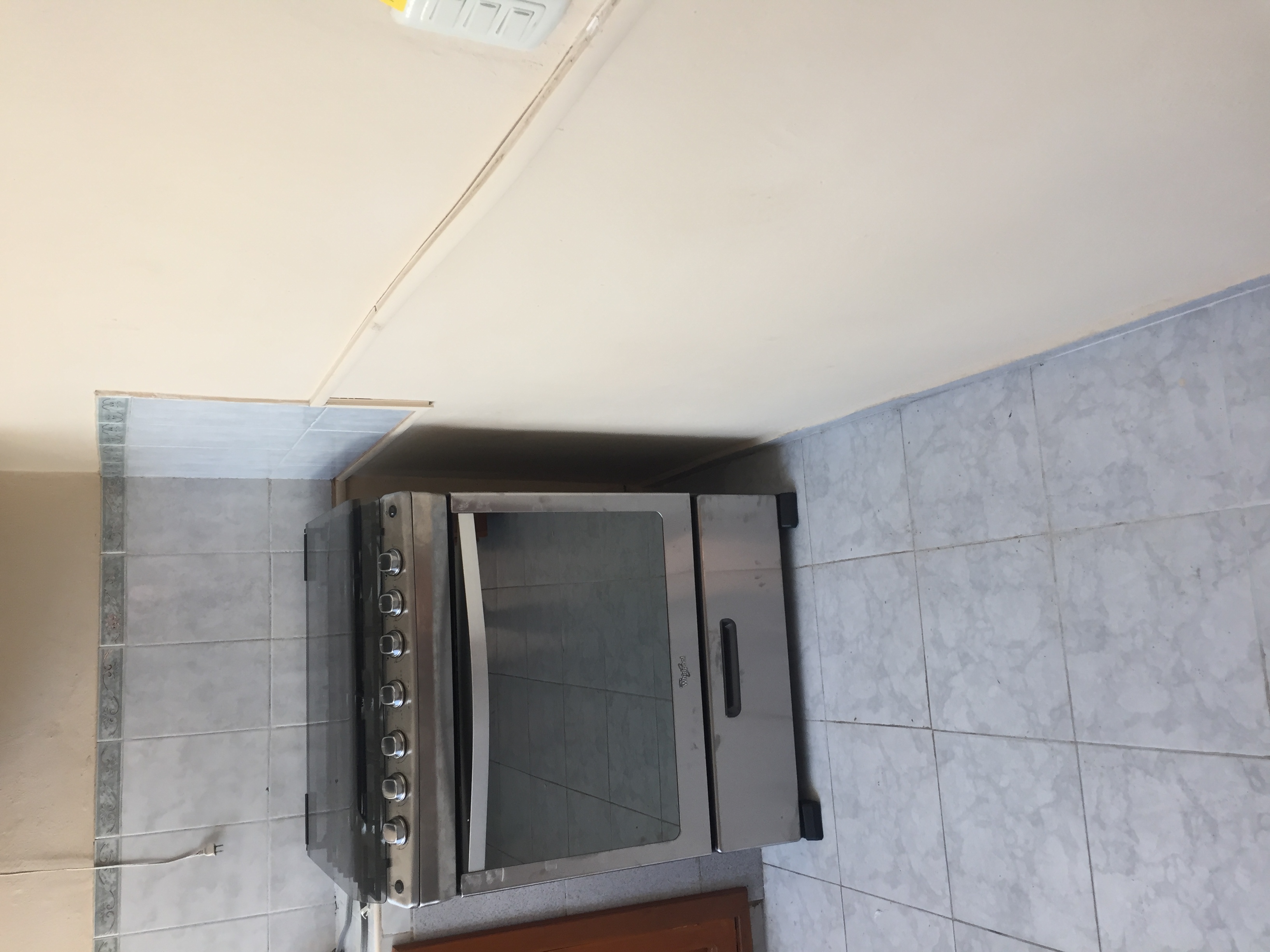
Click on the image to get a bigger version and then click again a few times to get a real close up of all the details.
What strikes me is how cheap even a higher end stove looks here. It’s obvious the stainless steel isn’t the best quality and I expect the writing on the control knobs to rub off very quickly.
But there are clues that I have a good unit that will serve me well. I love how all the burners are closed, which will make clean up a snap. The burners all have electric ignition — I turn on the gas, push a button, and they light. Let’s see how long that lasts!
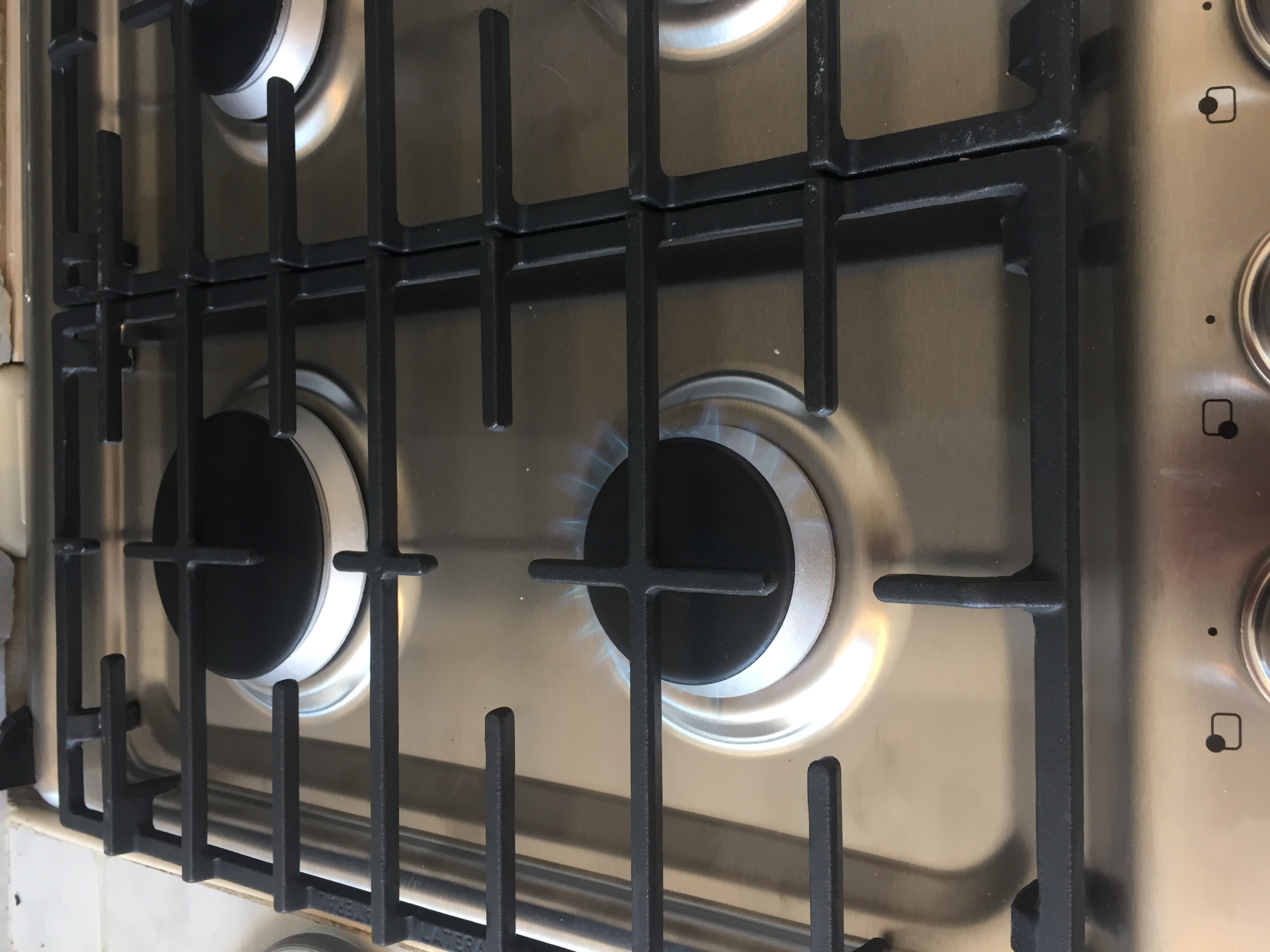
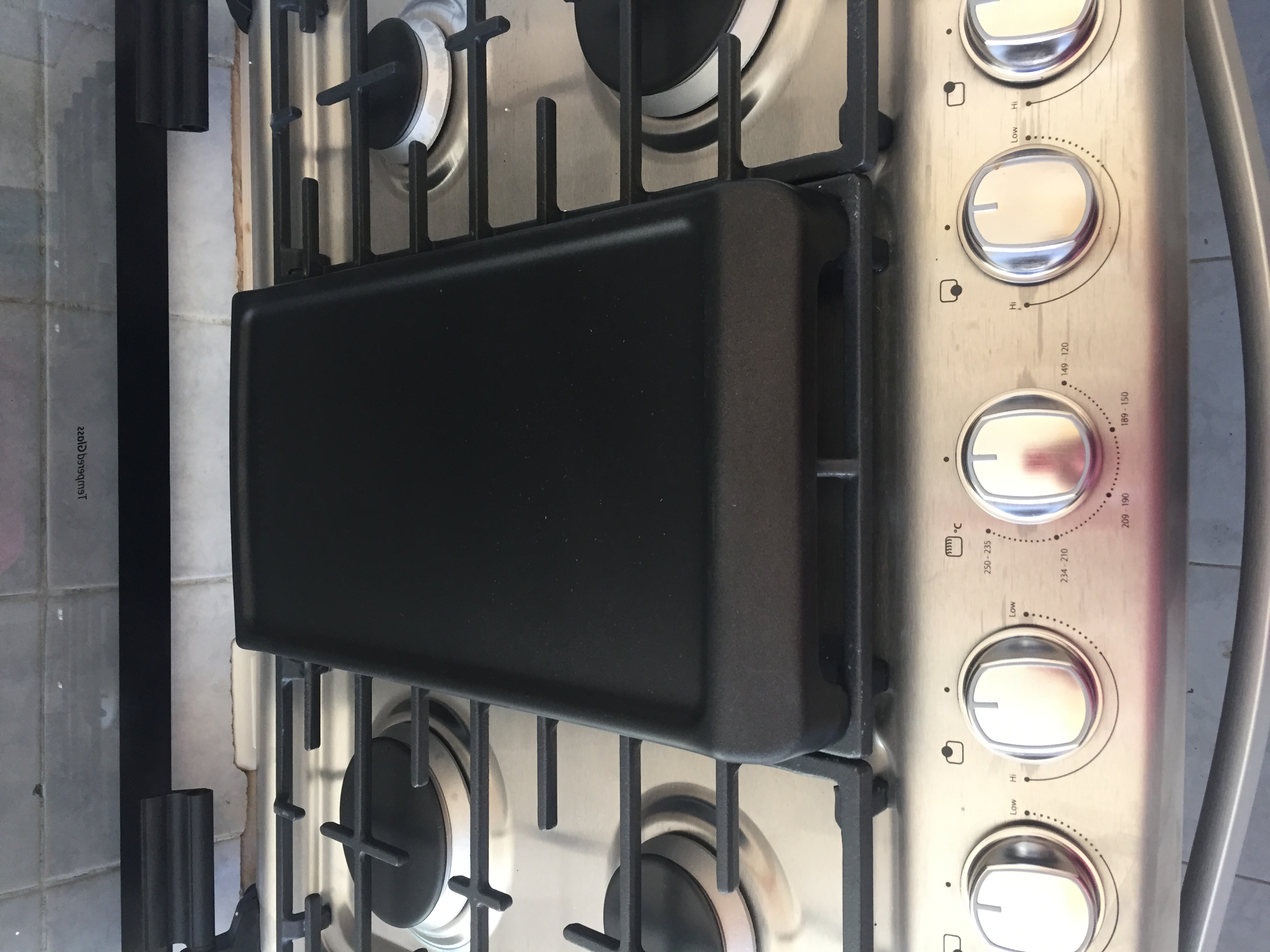
And this is by far the nicest comal I’ve seen on a stove that cost less than $20,000! I also like how the metal knobs are above a “lip” so that even if heat wicks out of the top of the door, they are protected.
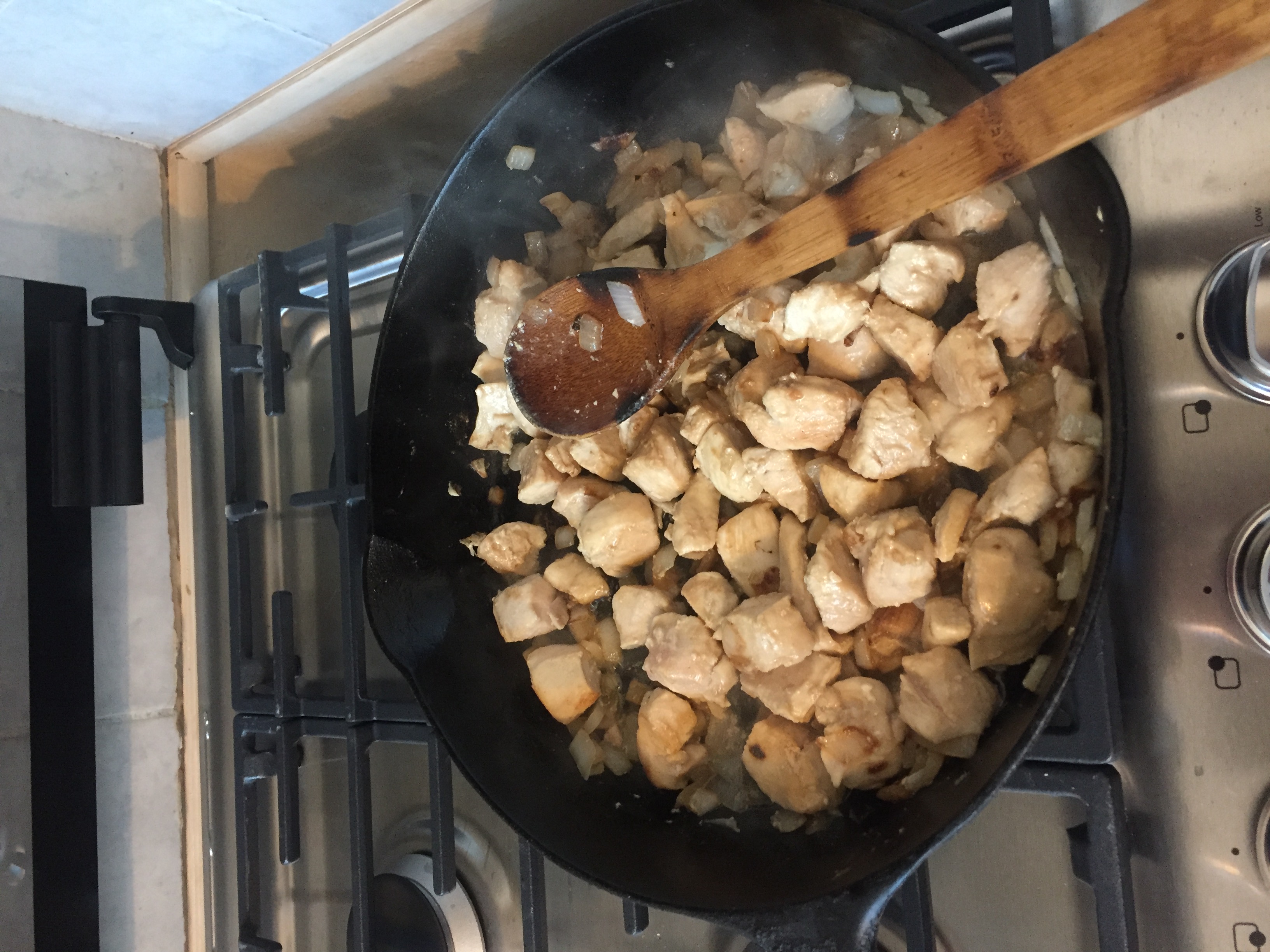
It was then time to try out the stove and I had the perfect dish for that as it would need high heat on the stove as well as the oven and the broiler. It’s something I concocted myself and call “basil chicken,” a super simple pasta and chicken dish that unlike most pasta and chicken dishes seems to improve with age and is even better as leftovers.
I’ve been cooking on a cheap hot plate since July that couldn’t even heat my cast iron pans enough to properly caramelise onions and sear chicken. So I was happy to see a lovely Maillard reaction happen in no time at all on my stove top. I was just a little disappointed that my “jumbo” burners are on the right side when they would be more convenient on the left since I have counter space there.
Once the chicken was done, I added the other ingredients and popped my pan in the oven at the setting that claimed to be equivalent to about 350F. The stove has manual ignition, so I used a BBQ lighter to light it, something that is like a secondary reflex to me as that’s what I had to do with my RV oven.
The stove has a light, a luxury I’ve done without for a decade, so I decided to turn it on. To my surprise, the mirrored finish on the door turned see-through!
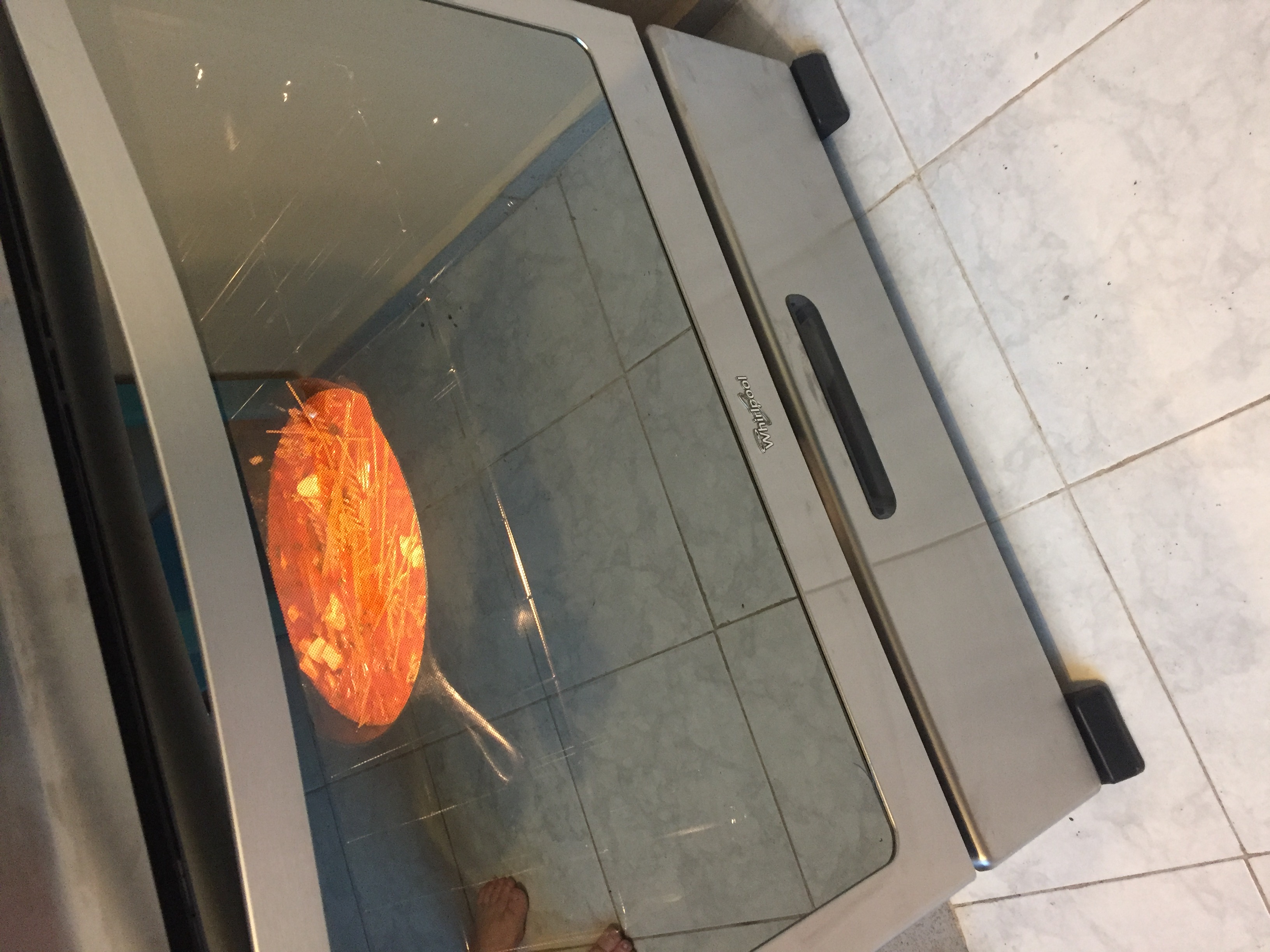
I quickly ascertained that, as expected, the temperatures on the knobs are complete bunk. I had to put the knob at a much higher setting than expected to get my casserole to actually cook. This dish comes out a bit gummy if it wasn’t cooked at high heat that allows the sauce to actually boil. I finally got there, but the slow start meant that the end result wasn’t quite perfect. It was however, close enough to make me believe that like with my RV oven, I’ll figure out the best setting on this one. The only thing that really disappointed me was how much heat leaked out of the oven — the door handle was almost too hot to touch!
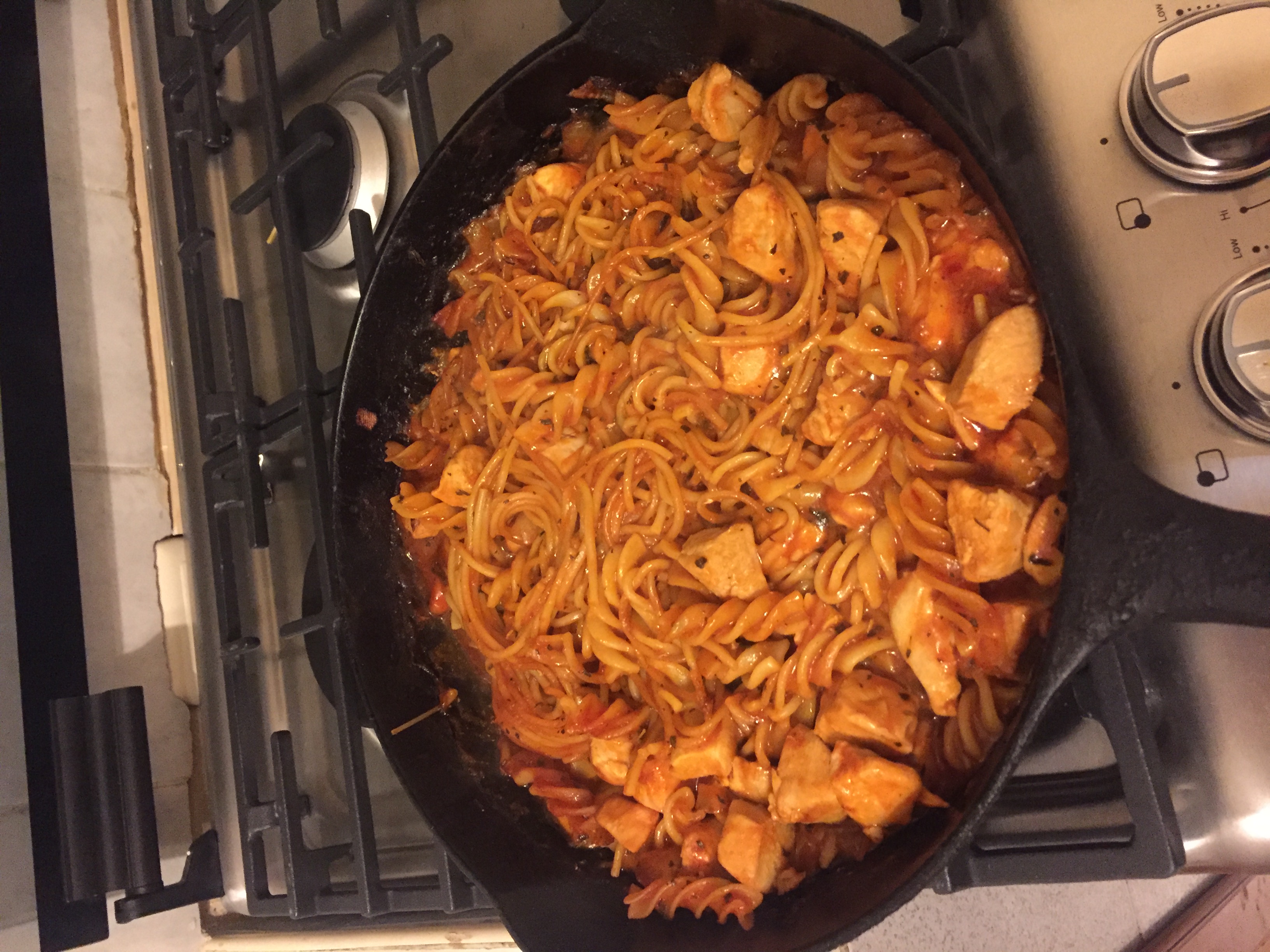
Finally, it was time to test the broiler, which is the pull down door at the very bottom of the stove. I knew this was going to be a pain since I have such bad knees and the cast iron is very heavy, but I really loved browned cheese and will do what I need to do to get it. I was a bit worried that the cheese wouldn’t brown since it was so far from the flame, but my broiler worked its magic!
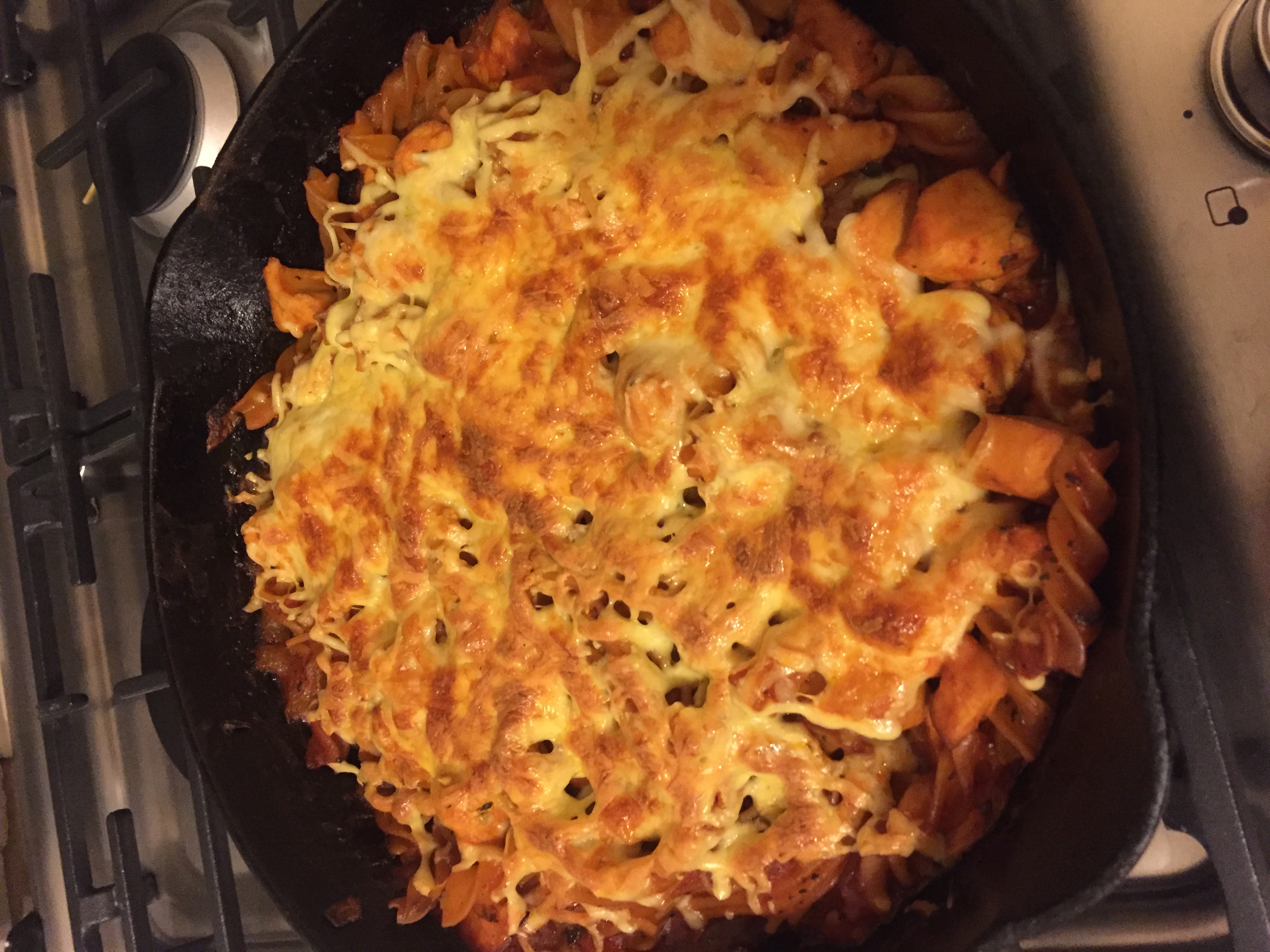
I actually preferred how this broiler worked compared to others I’ve tried in the past because, being further from the food, it took its time instead of incinerating the food — I didn’t have to stand there and constantly check it.
Based on this one test, I’m optimistic that my new Whirlpool range is going to serve me well. If I was a baker, I’d have a lot of reservations, but for the type of cooking I do, I should be just fine. I worked really hard to find a range that would suit my lifestyle and believe I got the best that would suit my needs within my budget. I hope this (admittedly very long) post will help you do the same.
One of the many reasons I came to this part of Mexico…
via IFTTT