A Taste of Bandelier National Monument

Bandelier National Monument lies just an hour or so northwestish of Santa Fe and is huge open country of mountains and mesas scattered with archeological ruins, cave dwellings, and petroglyphs. So pretty much my idea of heaven. I knew I couldn’t do justice to the more than 70 miles of hiking trails in the monument, but decided to at least go do the main day hike that would occupy a few hours.

The monument is named for Adolph Bandelier, a Swiss-born scholar who came to the southwest at 40 to fulfill his dream of studying the native peoples of the area. He learned many of the local native languages and in 1880 was the first person to report on the peoples of the Frijoles Canyon, where the monument that bears his name is located.

There was a lineup of cars ahead of me that took the same picture.

There was a lineup of cars ahead of me that took the same picture.

The scenic lookout was... scenic.

The scenic lookout was… scenic.

I love the mesas.

I love the mesas.

The shadows were impressive.

The shadows were impressive.

By the time I arrived around 11:00, the place was packed. A ranger guided me into an overflow parking spot I was certain I could not get out of and then told me to go into the visitors’ centre to register my annual pass, then come back and hang my pass from my rearview mirror. Without a pass, access is $12 per carload, good for a week. If you want a trail guide for the two day hikes, they are $1 and $1.50 each. Please don’t be cheap and not get them, otherwise you won’t get much out of the hikes. After two Japanese tourists kept asking me, “What’s that?” I gently told them that they needed to go back for a guide, they did, and they thanked me for it.

The hike I did today is called the ‘Main Loop Trail’, with the addition of the Alcove House spur. The literature say that this should fill about two hours and it took me closer to three because I read everything and went up every ladder. Every ladder? Read on. Those with a fear of heights may wish to stop here. 😀

The visitors' centre is built into what was once a guest ranch.

The visitors’ centre is built into what was once a guest ranch.

I'm really falling in love with this style of architecture.

I’m really falling in love with this style of architecture.

The visitors' centre.

The visitors’ centre.

I thought this exhibit about not leaving any trash was quite clever.

I thought this exhibit about not leaving any trash was quite clever.

The 'Latin names' were the best.

The ‘Latin names’ were the best.

Depositus nonreturnii.

Depositus nonreturnii.

Proboscus wipus was my favourite.

Proboscus wipus was my favourite.

Starting the hike.

Starting the hike.

You start the hike on the floor of the valley and then climb up to the cliff dwellings.

Frijoles Canyon means Bean Canyon.

Frijoles Canyon means Bean Canyon.

Kiva.

Kiva.

Lovely contrast of textures.

Lovely contrast of textures.

Village ruins.

Village ruins.

Looking to the cliff dwellings.

Looking to the cliff dwellings.

Another kiva.

Another kiva.

Approaching the cliff dwellings.

Approaching the cliff dwellings.

Take the longer path is my motto.

Take the longer path is my motto.

Only enter caves that have ladders? This is going to be fun!

Only enter caves that have ladders? This is going to be fun!

Stairs carved into stone.

Stairs carved into stone.

First ladder.

First ladder.

Small cozy cave.

Small cozy cave.

It would have been a lot of work to excavate the caves using only tone tools.

It would have been a lot of work to excavate the caves using only stone tools.

Looking into a reconstructed ruin; the architecture is quite sophisticated.

Looking into a reconstructed ruin; the architecture is quite sophisticated.

Look at that masonry!

Look at that masonry!

I like how the vigas (beams) stick out.

I like how the vigas (beams) stick out.

It impresses me that they built structures with several stories.

It impresses me that they built structures with several stories.

The layout of the village below becomes clearer.

The layout of the village below becomes clearer. The first floor had 240 small rooms and there is evidence that there were several stories above.

Impressive rock formation.

Impressive rock formation.

Looking back to the masonry.

Looking back to the masonry.

Pictogram of a snake, a major feature of these people's religion.

Pictogram of a snake, a major feature of these people’s religion.

Ladder into the larger home.

Ladder into the larger home.

Just room after room. All of us in it kept joking about what prime real estate it was.

Just room after room. All of us in it kept joking about what prime real estate it was.

"Oh, look, another bedroom!"

“Oh, look, another bedroom!”

View to the village below.

View to the village below.

Makes you realise that European and Native American development really wasn't that far apart.

Makes you realise that European and Native American development really wasn’t that far apart.

So much living happened in this cave.

So much living happened in this cave.

"I think this was the dining room. I mean, look at that view!"

“I think this was the dining room. I mean, look at that view!”

"Nah, maybe the living room."

“Nah, maybe the living room.”

More cool rocks.

More cool rocks.

More twisty narrow stone steps.

More twisty narrow stone steps.

Climbing into the reconstructed caveate.

Climbing into the reconstructed caveate.

Anchor points for the looms.
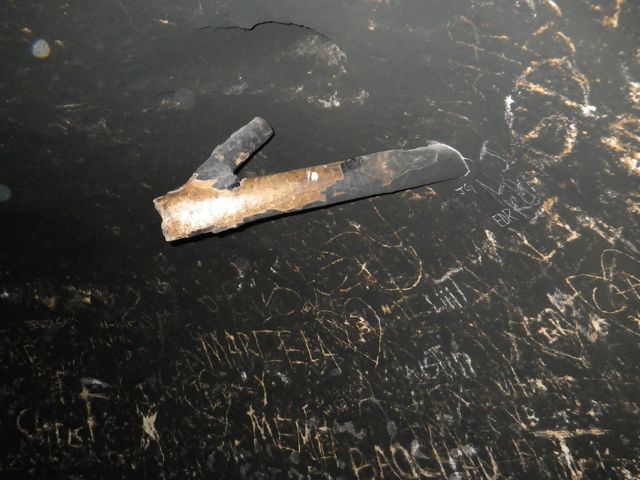
Anchor points for the looms.

Not original soot. They have to smoke the room every few years to get rid of the graffiti.

Not original soot. They have to smoke the room every few years to get rid of the graffiti.

The view is growing on me. I think I want to move to a cliff dwelling.

The view is growing on me. I think I want to move to a cliff dwelling.

Path to a campground. I did not follow it. This used to be the only way into the valley to get to the ranch where the visitors' centre is located.

Path to a campground. I did not follow it. This used to be the only way into the valley to get to the ranch where the visitors’ centre is located.

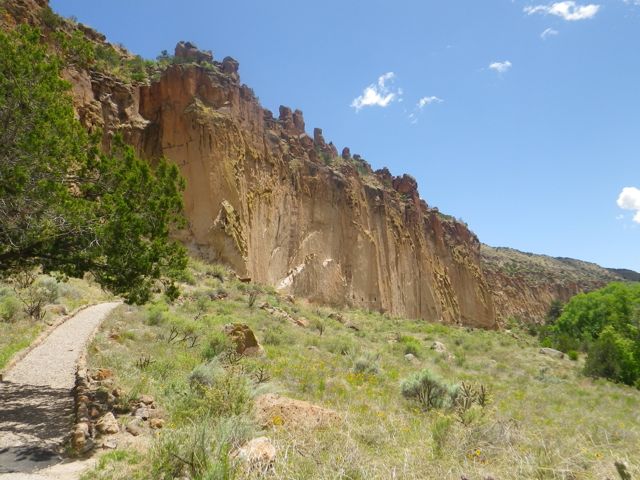
Towering mountains.
Towering mountains.

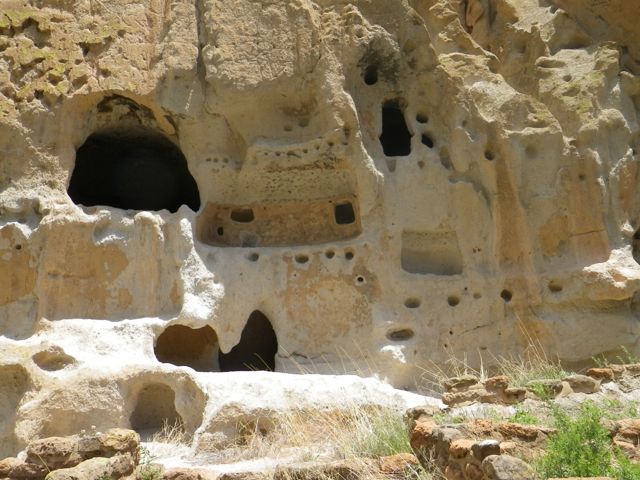
It's like an apartment complex.

It’s like an apartment complex.

So many foundations.

So many foundations.

The holes represent a floor. Can you see the petroglyph in between?

The holes represent a floor. Can you see the petroglyph in between?

This painting was found behind layers of plaster.
This painting was found behind layers of plaster.

Looking back to the cliff dwellings.

Looking back to the cliff dwellings.

In bad weather, you have to turn back at the end of the cliff dwellings and go back the way you came. In good weather, you can walk back down to the valley and do a loop back to the vistors’ centre. You have to cross the river several times if you end up doing the Alcove House Spur.

This guy was very nice and posed for several pictures.

This guy was very nice and posed for several pictures.

2012 floodwaters reached this level.

2012 floodwaters reached this level.

The damage from the flood is still visible.

The damage from the flood is still visible.

These 'bridges' brought back memories of the Chilkoot Trail!

These ‘bridges’ brought back memories of the Chilkoot Trail!

I eventually came to the point where I had to make an important decision.

Time to decide if I'm doing the Alcove House spur...

Time to decide if I’m doing the Alcove House spur…

140 ft of vertical ascent not suited to those with fears of heights? I'm over my fear of heights (mostly) aren't I? Let's go check it out!

140 ft of vertical ascent not suited to those with fears of heights? I’m over my fear of heights (mostly) aren’t I? Let’s go check it out!

The spur is through forest. There are so many ecosystems in this small section of the monument.

More debris from the flood.

More debris from the flood.

It was all moved out of the way.

It was all moved out of the way.

More cliff dwellings.

More cliff dwellings.

More flood damage.

More flood damage.

Impressive contrast of colours and textures.

Impressive contrast of colours and textures.

Yet more cliff dwellings.

Yet more cliff dwellings.

Last warning.

Last warning.

In case the signage hasn’t been clear, it’s four ladders, a few staircases, and 140ft straight up a cliff to check out Alcove House…

Oh, I can do this. Up I go.

Oh, I can do this. Up I go.

That looks doable.

That looks doable.

I had to wait at the second ladder for a terrified man to come down. It took ages. Everyone at the bottom told him great job, way to go, you should be so proud of yourself, etc., but he just looked down in shame, focusing on the fact that he was afraid, not that he had conquered his fear. 🙁

This ladder’s challenge was that it’s slightly tilted, so you feel like you might slide off.

That doesn't look so bad.

That doesn’t look so bad.

I made it!

I made it!

Down is starting to look far away.

Down is starting to look far away.

Okay, that's pretty tall, but I've come this far.

Okay, that’s pretty tall, but I’ve come this far.

I should have taken a short break before doing that third ladder, the longest of the four, as my legs got shaky midway, but I pushed on. I wasn’t afraid, just tired.

Pfft, that's nothing.

Pfft, that’s nothing.

Almost there!

Almost there!

A few steps and...

A few steps and…

A kiva is the first thing I take a picture of?!

A kiva is the first thing I take a picture of?!

Ah, now, THAT was worth the climb!

Ah, now, THAT was worth the climb!

Wow!

Wow!

I'm obsessed with kivas, apparently.

I’m obsessed with kivas, apparently.

So worth the workout!

So worth the workout!

Looking back as I head down.

Looking back as I head down.

It looks really bad from that angle!

It looks really bad from that angle!

The ladders were all anchored, so they felt safe. The super long one felt interminable to climb down, but the others were fine. It would have been easier if the rungs had been a bit closer together. I wasn’t even apprehensive. How far I’ve come!

My knee had had just about enough abuse by the time I got to back down, but the climb up was so worth it! And it was such fun. I love trails like these!

It was then time to head back to my truck.

More flood debris.

More flood debris.

Magnificent.

Magnificent.

They still have signage that call the local peoples Anasazi, a word of Navajo origin that has fallen out of favour because it means something like, 'Our bitter enemies.'

They still have signage that call the local peoples Anasazi, a word of Navajo origin that has fallen out of favour because it means something like, ‘Our bitter enemies.’

Wish this path was part of the trail.

Wish this path was part of the trail.

Back at the visitors' centre.

Back at the visitors’ centre.

Thankfully, the car next to me was gone when I was ready to pull out, so I had only had to do a little manoeuvring to get out. It was a rare case where I would have been better off to nose into a spot and back out of it, but it all worked out in the end.

My taste of Bandelier National Monument was delightful, but not quite enough. I’d love to come back and do a full day hike next year!

Santa Fe, NM, to Walsenburg, CO

I’ve decided to split my day up into two posts. The more interesting one will follow. 🙂

Unfortunately, I got to bed very late last night, a combination of having dinner with John (I cooked and he can attest to the fact that I can cook, even with a very limited pantry! 🙂 ) and the File From Hell that would not finish. So it was a slow and molassy kind of morning for me. My to-do list felt daunting — finish packing up the fifty billion bags I brought into the rig, schlep them all the way to my truck and repack it (John fixed my tailgate again, btw, THANK YOU!!!), and then clean the rig and throw on laundry. Of course, it all came together very quickly. I was ready to pull out at about 9:30, an hour and a half later than I would have liked, but still a half hour ahead of my ‘this is the absolute latest I want to leave’ hour.

John and I both tried to figure out how long I’d been there and drew a blank. I later figured out it was 12 days!!!. My Santa Fe stay really felt like a moment out of time. I am really grateful to have been there as it enabled me to recharge my batteries and my bank account a little as well as do loads of touristy stuff. It was definitely time to move on, but John said I was welcome to return if I wanted to tonight since my day’s fun was to be had not very far down the road. It’s nice to feel that welcome. 🙂

After getting fuel, it was time to head to Bandelier National Monument, the subject of my next post.

It's unbelievable the places my life takes me...

It’s unbelievable the places my life takes me…

IMGP1828

Right to Bandelier!

Right to Bandelier!

IMGP1979

After several hours of fun that I am convinced Disney World couldn’t rival, I decided to go to Los Alamos for lunch and a bit of tourism.

Los Alamos has great significance for me. Judy Blume’s book Tiger Eyes was one of the defining stories of my adolescence. I must have retreated to this story set primarily in Los Alamos more than a hundred times. It painted a world that was absolutely alien to me and I promised myself that if I ever was in the area, I would check out the town and its environs.

I thought I’d done my research and that Los Alamos is now open, with no more guard houses and plenty of museums and other touristy things to do. So imagine my surprise when there was a checkpoint coming into the town. A surely woman asked me where I was going. I told her the truth, going downtown to have lunch and visit the museums. “You’re on government property. I need to see your ID,” she replied. I handed her my passport and she told me to turn around and go the way I came. So, that was that for Los Alamos. Can’t say I didn’t try. 🙂 But I did see the canyons that Judy Blume paints so well with words and they were exactly as I expected. I’m not disappointed about not seeing the town as I doubt it would have borne any resemblance to the the 1970’s town she described.

It was then time to head northeast.

Last chance to go back to John's for the night!

Last chance to go back to John’s for the night!

IMGP1982

IMGP1984

I put Mount Rushmore into my GPS and it plotted out the same route I had to I-25 and beyond, so I followed its directions, heading northeast through mountain passes. Traffic was very slow through the tourist town of Taos and I had no desire to stop.

Quesnel Road! I wonder how they pronounce Quesnel here.

Quesnel Road! I wonder how they pronounce Quesnel here.

From the mountains, I eventually emerged into a plateau as I entered Colorado. I went to three places in 1996, Quebec City, Colorado, and New York City. If I had known then that of the three, Colorado is the first one I would return to a second time, I would not have believed it.

IMGP1988

Colorado was looking a lot like Florida the last time I was there. :)

Colorado was looking a lot like Florida the last time I was there. 🙂

Snow capped peaks in the distance.

Snow capped peaks in the distance.

I didn’t want to drive too much today and hoped to stop around 4:00. But motels were far apart and expensive. I decided that I was stopping in Walsenburg, CO, no matter the prices. By the time I got there around 6:45, I’d seen about four roach motels wanting more than 80CAD a night. Google told me that the average price in Walsenburg was about that. So when the first place I stopped in was clean, neat, and 60CAD, my maximum budget, I was done for the day! BTW, it’s cold and rainy; not truck camping weather at all!

Having done so much exercise today, I needed a proper dinner, so I walked the block to a sit down Mexican restaurant. I ordered a beer (Budweiser!) and wasn’t asked for ID. Mexico officially aged me! 😀 The menu was uninspiring, just your typical ‘Mexican’ and American fare, so I ordered the two enchilada special (opting for chicken with green sauce). It was tasty enough, spicy as hell, and a good deal for the price ($7). The beer brought the tab up to $10.30 with the tax, still a very reasonable price. The enchiladas were topped with cheese, lettuce, tomato, and… black olives. Strange. I started to eat olives last summer and haven’t had them since I left home, so I tried one and didn’t hate it, so I ate them all. 🙂

It was a good day on the road. I could easily get to Mount Rushmore tomorrow, but I’d rather split it up into two or even two and a half days. We’ll see how the weather is. 🙂

Pecos National Historic Park

John pointed out to me yet another national monument/park just a short distance from Santa Fe, the Pecos National Historic Park. Yesterday promised to be, and was, a gorgeous day, so I decided to go check it out. I got a late start because I was working on the project from hell (most projects of that type would have taken me three hours and it took seven), so I only arrived around 12:45.

The website made it seem like there was a lot to do, with two trails and two tours, but they were still on their winter hours and their Civil War trail was closed. There was a tour at 1:30 of a ranch house owned by Academy Award winner Greer Garson, a benefactor of the park, but that didn’t interest me. Despite that, even if I had had to pay the $3 admission fee, I would have come out of there feeling that I got my money’s worth. If you like history and are interested in ruins, Pecos is a must-do for Santa Fe!

The drive there felt longer than it was because there was a bike marathon thingamabob along a good part of my route to I-25 and instead of being able to drive 50MPH, I had to drive 25MPH. But I eventually got there!

Made it!

Made it!

Look at what I found in the parking lot, a car with a license plate from ARGENTINA!

A license plate from *Argentina*!!!

A license plate from *Argentina*!!!

I’ve heard that Argentinian Spanish is very different from European and Mexican, but this was too interesting to ignore, so I went up to the couple and said in Spanish, “Wow, big journey! How long have you been traveling?”

This is Spanish speaking territory, so they weren’t shocked by the Spanish and replied, “Two years!”

We then had a bit of a chat about their trip. They are arriving in Alaska this summer. I gave them some suggestions (do not miss Dawson City!) and answered their questions about the Alaska Highway. We could understand each other just fine! And just as I was leaving some time later, they came to grab me to act as an interpreter because they were having trouble with a Ranger’s accent. I’m really starting to feel like I speak Spanish now that I’ve communicated with folks from four different Spanish speaking countries (Spain, Mexico, Chile, and Argentina) and been understood. So cool!

But enough about that, you want to hear about Pecos!

Pecos is one of the most important Native pueblos of the area, home to some 2,000 people.  Archeologist Kidder found here perfectly preserved layers of history that enabled him to sort out timelines, tribes, and categorize pottery with methods that are still used today. He considered Pecos the place that helped to make sense of the until then scattered and conflicted information about the peoples of the region and work out a plausible chronology.

A 16th century report of the pueblo describes it as the “greatest and best” of the Indian pueblos, and is, “most thickly settled.”

You learn all of this in the visitors’ centre little museum, which does a good job of setting you into the context of Pecos. Then, you head outside to see the ruins.

From the visitors’ centre, there is a trail (accessible) that takes you around the ruins of the pueblo all the way to the ruins of 17th century and 18th century churches built by the Spaniards determined to bring Christianity to these ignorant savages.

I was surprised by how much there was to see. The pueblo had been like a large fortress, made of 700 rooms, four to five stories high, around a central courtyard, with the upper stories linked by balconies and walkways. It must have been quite a sight!

The pueblo would have had a wall all around it.

The pueblo would have had a wall all around it.

IMGP1730

The church in the distance.

The church in the distance.

The trail is a bit of a treasure hunt if you are loaned the trail brochure, several sheets of laminated paper with tons more information than you find on the sparse placards scattered throughout the site. I had fun looking for all the numbered markers.

I was loaned this trail guide.

I was loaned this trail guide.

Snow in the distance.

Snow in the distance.

Wheelchair accessible path.

Wheelchair accessible path.

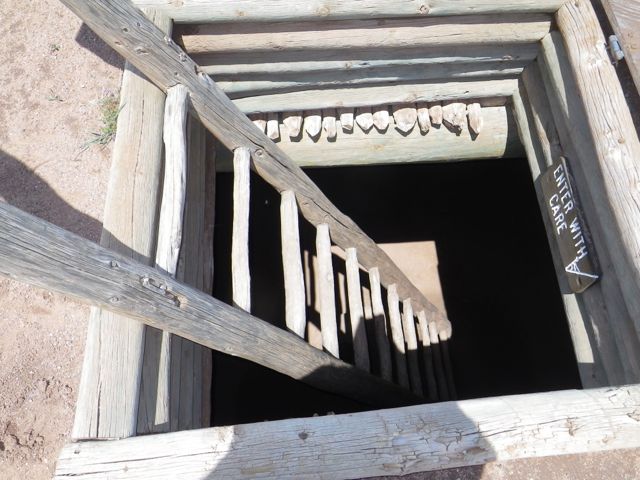
Kivas were circular holes in the ground accessible via ladders. The entrance led to a ceremonial chamber where much of daily living, including weaving, was done. There are two kivas on the tour that you can actually enter!

Entrance to a kiva.

Entrance to a kiva.

Hey, you can really go down!

Hey, you can really go down!

I can never resist stuff like this.

I can never resist stuff like this.

Surprisingly light down there.

Surprisingly light down there.

Ceiling.

Ceiling.

This hole represents the journey of the Pecos people to this world.

This hole represents the journey of the Pecos people to this world.

Masonry of the kiva walls.

Masonry of the kiva walls.

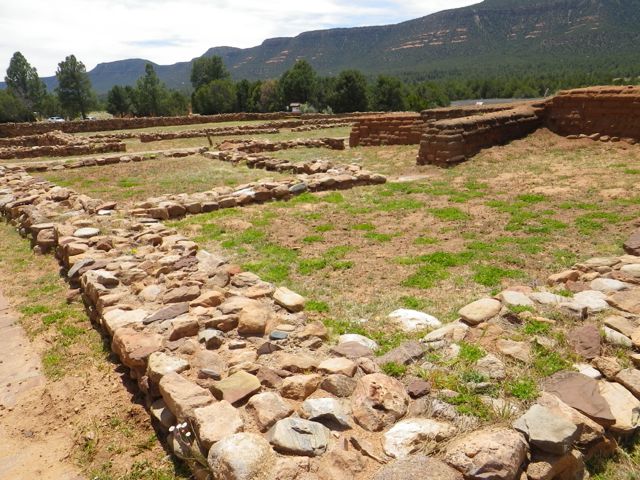
Foundations are all that remain of what were four or five story buildings.

Foundations are all that remain of what were four or five story buildings.

Kivas.

Kivas.

There was a trash heap here.

There was a trash heap here, a goldmine for archaeologists.

So much open country.

So much open country.

You could have seen all around from up here.

You could have seen all around from up here.

More snow in the distance.

More snow in the distance.

This sign made me laugh.

This sign made me laugh. See how uneven the word uneven is?

Up a few stairs for a view!

Up a few stairs for a view!

Looking from the top of the stairs across another kiva.

Looking from the top of the stairs across another kiva.

Contemporary descriptions make it sound like a medieval castle, both in its construction and occupation, with all manner of trades, such as weaving and pottery, being practiced, and there being music.

What the pueblo might have looked like.

What the pueblo might have looked like.

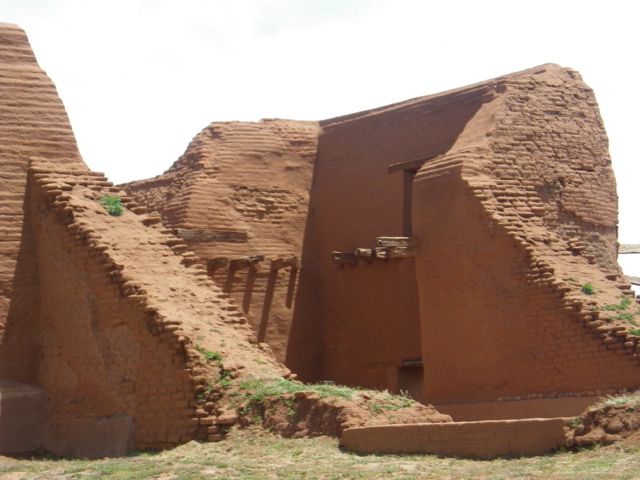
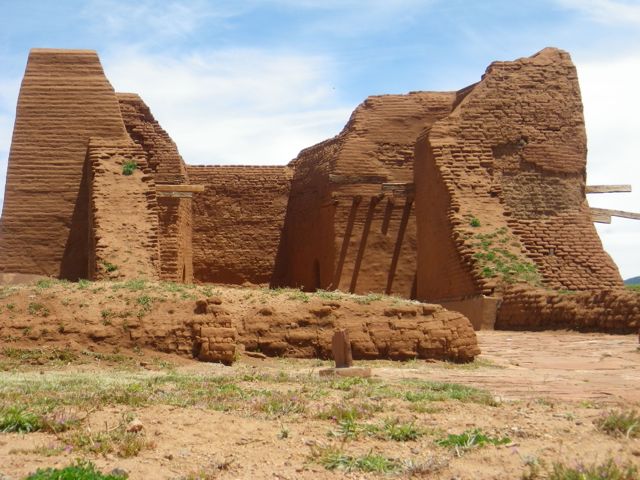
Then, you get to the churches. What we see are the foundations of the 1625 church and the ruins of the 1717 church walls. The first church was destroyed in a 1680 revolt by the Natives, but they didn’t keep their independence for long.

Approaching the church.

Approaching the church.

What remain are bits of the newer church.

What remain are bits of the newer church.

It would have been white washed.

It would have been white washed.

Foundation of the older church.

Foundation of the older church.

You can see a lot of details of the construction.

You can see a lot of details of the construction.

The grass is trying to reclaim it.

The grass is trying to reclaim it.

The Pecos leaders gave each pueblo a knotted rope. Each knot represented a day. When there were no more knots, it was time to attack the Spaniards.

The Pecos leaders gave each pueblo a knotted rope. Each knot represented a day. When there were no more knots, it was time to attack the Spaniards.

I was shocked that we could enter the ruin and walk around! This is where I spent most of my visit, admiring the architecture.

I couldn't believe I could go in!

I couldn’t believe I could go in!

More foundations of the old church.

More foundations of the old church.

Entering the newer church.

Entering the newer church.

Narrow passageway...

Narrow passageway…

...into a courtyard.

…into a courtyard.

Another doorway to explore.

Another doorway to explore.

And another.

And another.

Look at the two angles of the masonry joining together.

Look at the two angles of the masonry joining together.

This buttress is perfectly preserved.

This buttress is perfectly preserved.

I like how the park uses these wooden fences to gently corral guests.

I like how the park uses these wooden fences to gently corral guests.

I should have asked if the flagstone is original or at least a replica of what would have been used.

I should have asked if the flagstone is original or at least a replica of what would have been used.

Also curious about the stairs.

Also curious about the stairs.

You can really see the detail of the masonry work here.

You can really see the detail of the masonry work here.

Vigas (wooden ceiling beams).

Vigas (wooden ceiling beams).

The construction is just like that of a medieval keep, with a flared base to distribute the weight of the building (and I thought my medieval history degree was never going to be useful in the real world!).

The construction is just like that of a medieval keep, with a flared base to distribute the weight of the building (and I thought my medieval history degree was never going to be useful in the real world!).

Two-toned masonry.

Two-toned masonry.

This drain is original! The holes in it are perfectly round!

This drain is original! The holes in it are perfectly round!

Oodles of foundations.

Oodles of foundations.

Another kiva.

Another kiva.

What is it with me and pokey places?

What is it with me and pokey places?

Oh, just like the other one.

Oh, just like the other one.

This would have been a turkey coop, with a cobblestone floor for easy cleaning.

This would have been a turkey coop, with a cobblestone floor for easy cleaning.

The directional signs made me laugh.

The directional signs made me laugh.

This would have been a 16th or 17th century residence or part of a farm.

This would have been a 16th or 17th century residence or part of a farm.

One last glimpse of the church.

One last glimpse of the church.

Pecos’ last inhabitants left the pueblo in 1838 and joined up with related tribes nearby in Jemez, where their descendents live to this day.

This boardwalk goes over the Santa Fe trail.

This boardwalk goes over the Santa Fe trail.

The visitors' centre had lovely architecture.

The visitors’ centre had lovely architecture.

Pecos pueblo taught me a lot about the geography of the region, the local peoples, the influence of the Spaniards on the development of the region, and more. I am leaving Santa Fe with a much better understanding of the history of this region and how it ties in to the history of my part of the continent. Thanks for another great recommendation, John!

Now, it’s time to move on. Work kept me up very late, two hours past my bedtime, last night, so I am up very late this morning and nowhere near ready to hit the road yet, but I am going! Next stop is Bandelier National Monument and then I’m pointing Moya towards South Dakota. I doubt I will get out of New Mexico today, but tomorrow will be a driving day.