Skopje Walking Tour

I awoke to a downpour. The forecast promised a clearing during the time of my walking tour, but I wasn’t holding my breath and was glad it wasn’t cold. I got up fairly early so I could get a bit of work done before the tour, but actually lost track of time and before I knew it, it was 9:30, with the tour being at 10:00 and a 20-minute walk away!

I managed to get out the door in about five minutes since I was dressed. It’s a good thing I’d scoped out the starting point of the tour yesterday, Memorial House of Mother Teresa, and knew a fairly direct way to get there. I also knew that these tours never start on time so I would be fine. Sure enough, I arrived around 9:48 and found a dry spot to wait for the tour to start.

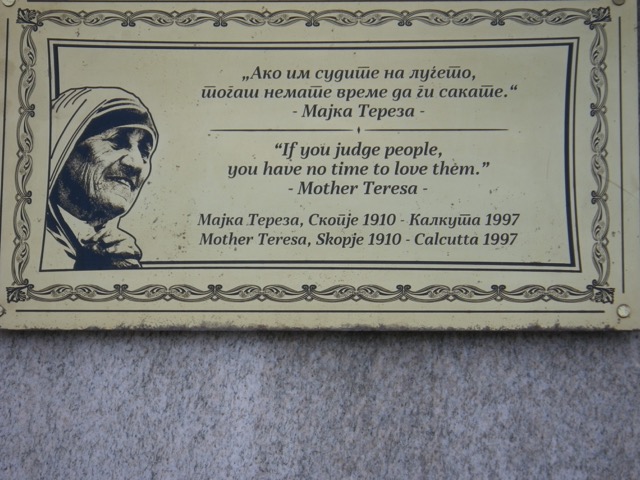
Mother Teresa is thought of as being Albanian, but she was born in Skopje and lived here till she was 18 before going to Ireland to learn English. More on her later in the tour as this was not our first stop.

imgp7405

imgp7406

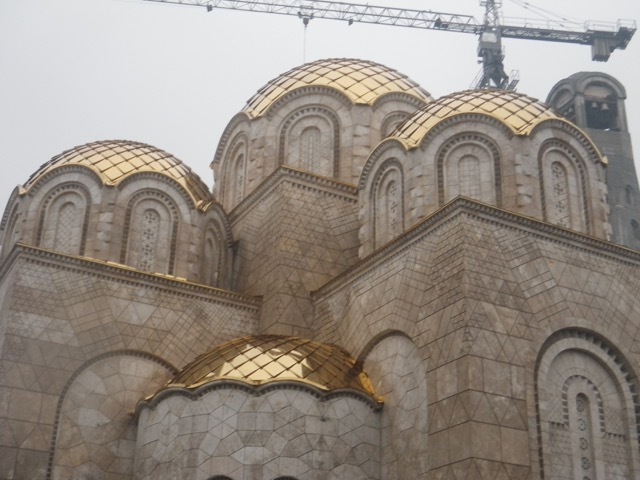
This church is brand new.

imgp7407

imgp7408

imgp7409

Our guide, Miho of Skopje Walks, was a little early and asked a gal from London and me if we’d mind waiting a bit to see if anyone else turned up. A gal from Poland working in Skopje did and then just as we were ready to set off, two Portuguese gals came running.

Our first bit of information was about the pedestrian street we were standing on, Macedonia Street. It is a fairly new street, about 100 years old, and was built to carry the last Ottoman ruler of Macedonia from the old railway station to the new one. An old housebound lady with a balcony overlooking this street saw her address change four times in ninety years, depending on who was running Macedonia. Even yesterday, when the weather was good, the street was deserted, nothing like the pedestrian zones of Sofia, Plovdiv, Belgrade, or Sarajevo.

imgp7412

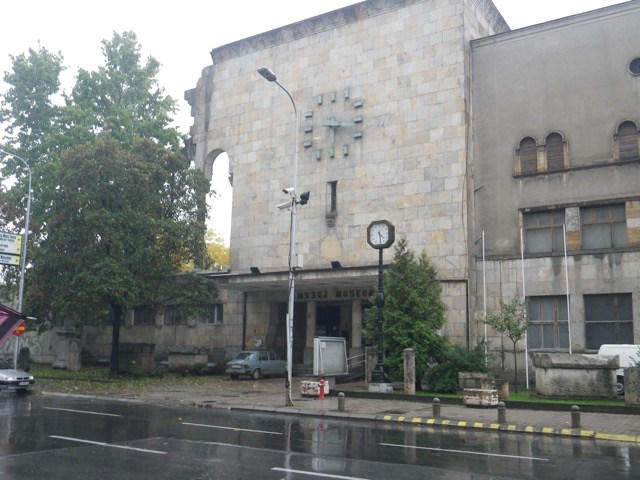
This is the old railway station and now a museum.
imgp7414

The derelict look is intentional and along with the clocks commemorates the last major earthquake in the city, dating back to 1963. Skopje has had three major earthquakes in its recorded history and it was completely demolished in each one. So there is very little that is truly “old” in Skopje and perhaps this is why it has no identity of its own. Miho calls the problem with Skopje “copy/paste syndrome” in that the city is full of things copied from other cities. I said that it reminds me of Las Vegas and Miho said that it’s 100 times worse because Vegas, where he has been, only has the Strip that is full of kitsch while the whole of Skopje looks like that!

imgp7415

This clock shows the time of the earthquake, just past 4:30AM.

imgp7416

Miho pronounced Skopje “Skopie-ya,” rhyming it with Sofia. It is Скопје in Macedonia Cyrillic, which does not have the “backward R” for the “ya” sound (я), which is the last sound in Sofia. I’ve been saying and hearing “Skope-ye.” So I suppose there are different ways of saying it.

Miho was not afraid to express his embarrassment of the city and the mismanagement of funds for the “Skopje 2014” project that saw heaps of money put into statues and monuments when the money could have had better uses. There is no rhyme or reason to where the statues have gone up. Take this bull, for example, a common symbol in front of stock exchanges all over the world. In Skopje, it is in front of a shoe store and a few blocks away from the Skopje stock exchange.

imgp7417

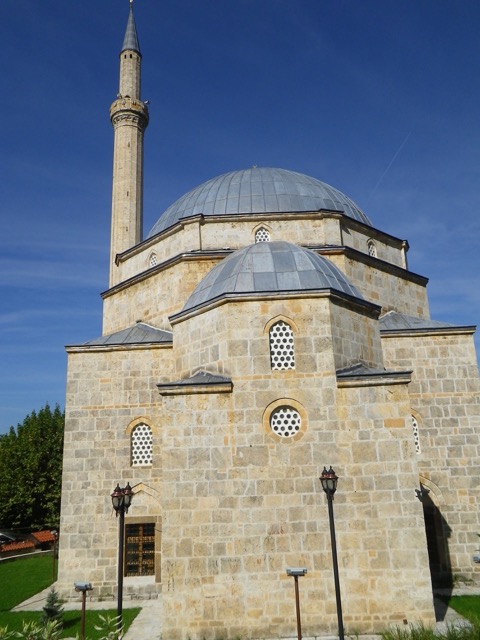
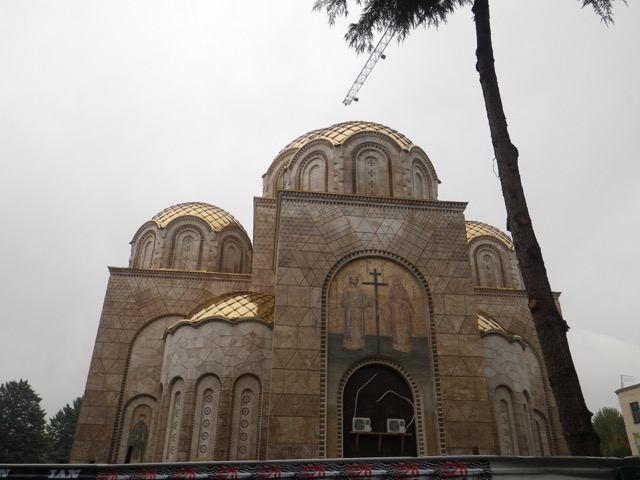
We headed back to the Memorial House of Mother Teresa and I finally noticed the front of the church. I have to say that this building is really beautiful!
imgp7418

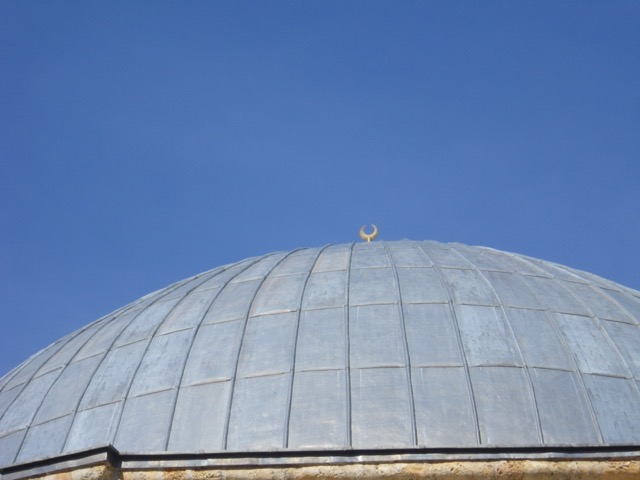
I really love the “scales” on the domes.

imgp7419

Miho took us through this door so we could have a laugh. I wasn’t able to get a good shot of the area, but it’s not closed in! That door does absolutely nothing.
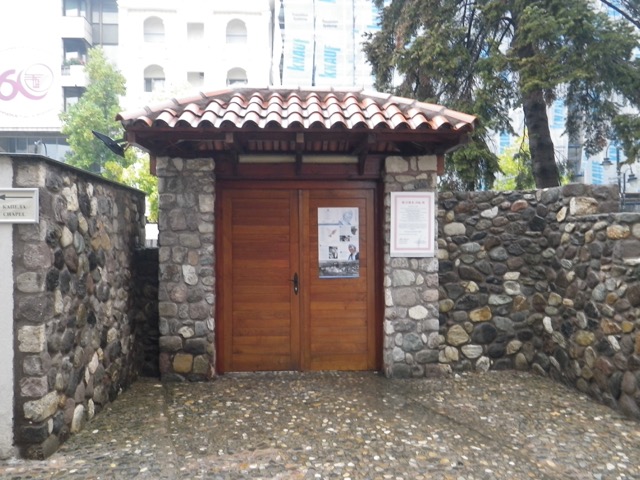
imgp7421

We went inside and the curator gave us some information about Mother Teresa. This is a model of what her childhood home would have looked like. There is plenty of evidence that the family was well off.

imgp7422

This is a letter she wrote in English, the language of her religious order.

imgp7424

She officially became a saint last month.

imgp7425

This is a copy of her Nobel Peace Prize certificate.

imgp7426

We went upstairs to the chapel with its unfortunately leak roof. The filigree design pays tribute to the artistry of the Ottomans and if you look closely, you can see doves and fish in the design.

imgp7427

We then headed towards the main square and passed two statues that make Miho angry. One is a monument to the shoeshiners of Skopje.
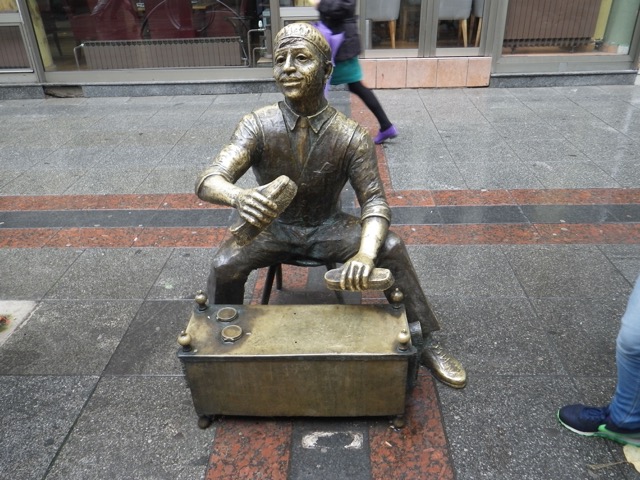
imgp7428

The other to beggars. Each cost something like 35,000 Euros! As he said, that money could have been put to much better use.

imgp7429

This is one of the few truly “old” buildings in Skopje, dating back to… 1920. It was built by a pharmacy baron and is now retail and office space.

imgp7431

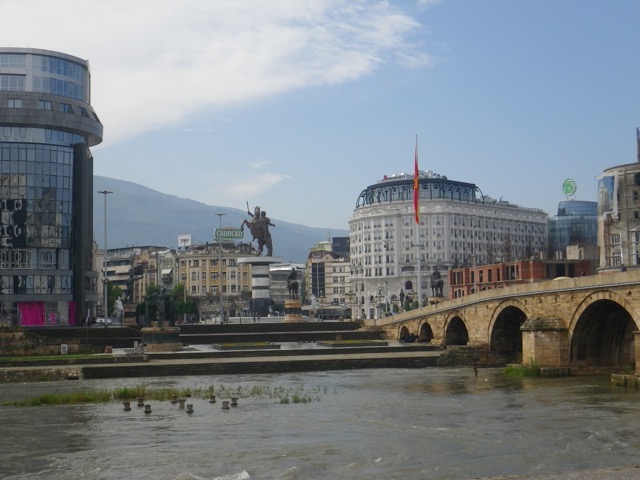
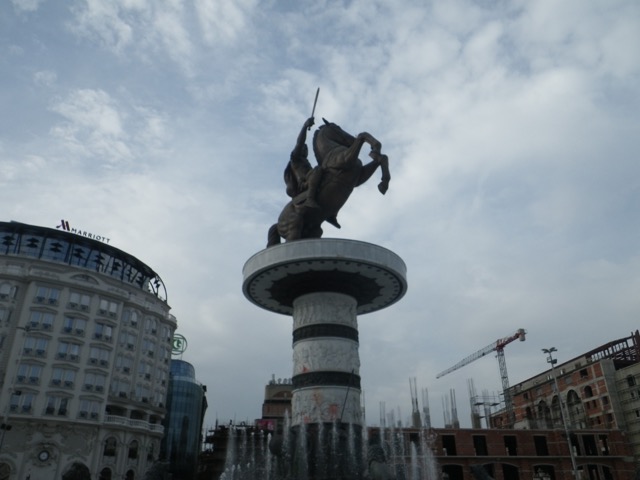
While this is known to be a statue of Alexander the Great, the official title is Warrior on a Horse.

imgp7432

Just off of it, these markers show the site of where Mother Teresa’s childhood home was located. It was destroyed in the earthquake of ’63. I found these markers well done.

imgp7433

imgp7434

imgp7436

Here is a good example of copy/paste syndrome, just a random arch of triumph not symbolising anything in particular and in a random location.

imgp7437

imgp7438

We then got to the river. This pirate ship, too big for the river, embarrasses Miho as well. This was the first time that he actually flat out said rather than implied that he’s embarrassed by something the city has built.

imgp7439

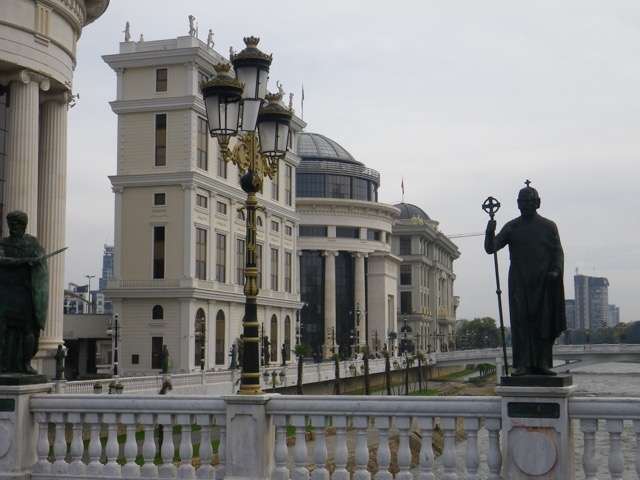
This is the Museum of Archeology, one of the rare things he got really excited about, so I decided to visit it after the tour if I had time. I agree with him that the mix of neoclassical and modern architecture is stunning. This is one of the few buildings Skopje got right.

imgp7440

imgp7441

This is the Bridge of Civilisations, built in 2013. So many statues…

imgp7442

Skopje is running out of place for its statues, so it’s putting them on roofs and ledges. I am not being facetious.
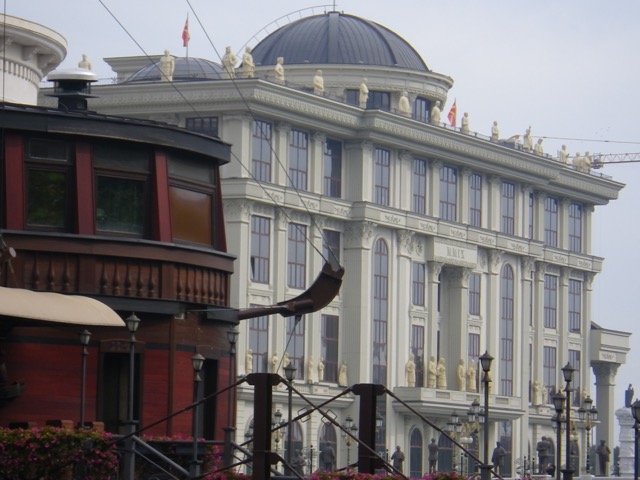
imgp7445

This is the Stone Bridge and actually very old, dating back to 1451. It has been added to and repaired, but is essentially original.
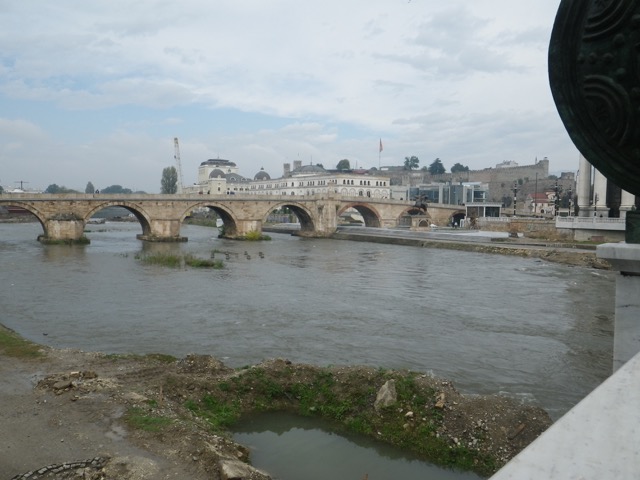
imgp7446

imgp7447

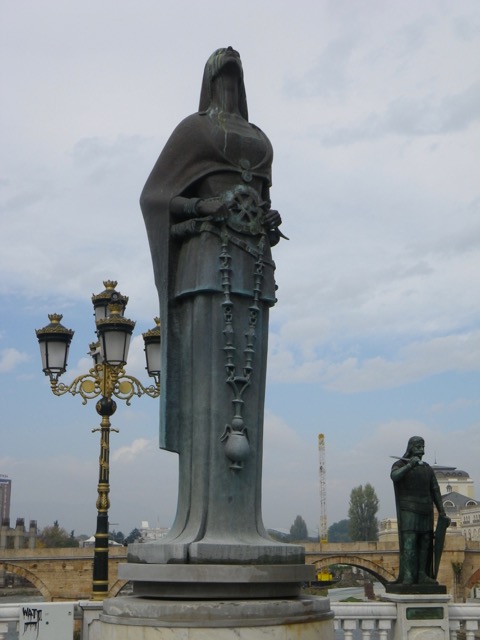
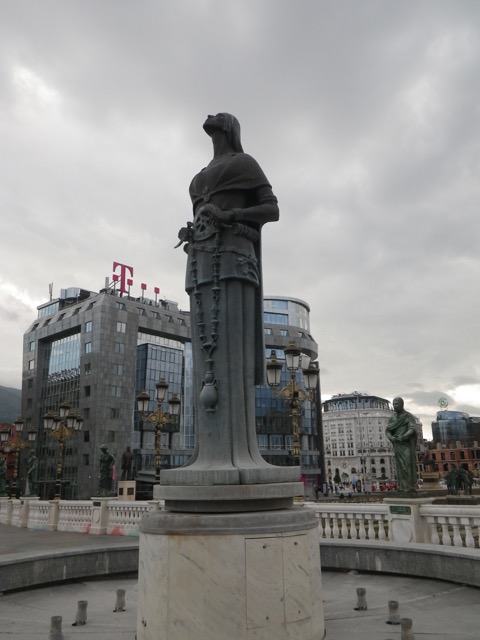
This was the only statue that spoke to me. It is of a Paeonian Priestess.
imgp7448

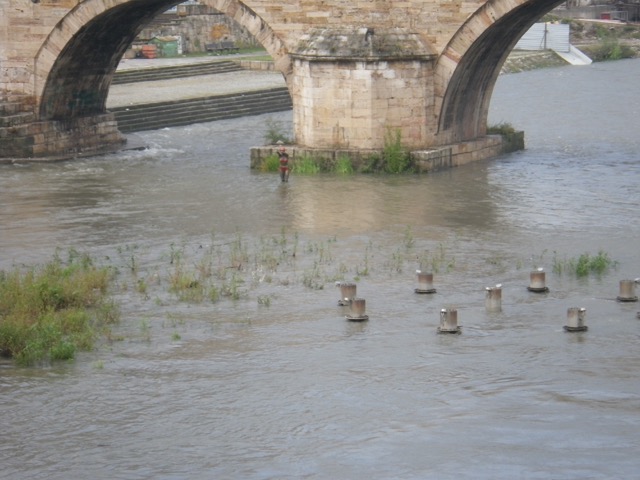
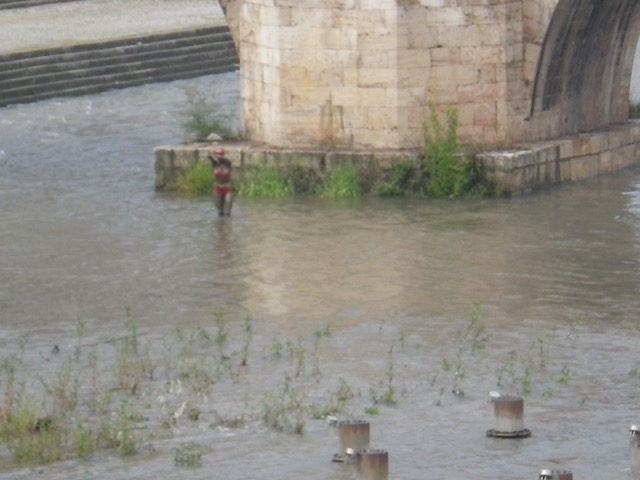
There is even a statue in the filthy river, commemorating that there was once a beach there.
imgp7449

Yes, that is a woman in a red bikini. Which reminds me, all the statues in Skopje have clothes.
imgp7450

imgp7451

imgp7453

imgp7454

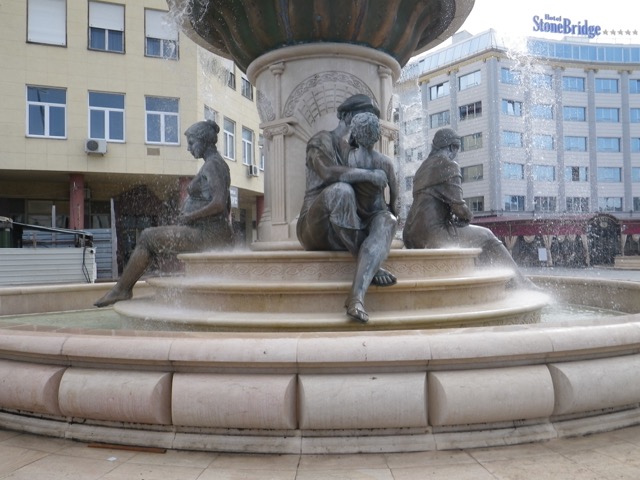
This was my least favourite stop. To keep birds from crapping on the fountains in the area and also discourage stray dogs, there is a very high pitch whistle playing constantly. I could hear it clear as a bell and it rattled the fillings in my teeth.

This is a monument to the mother of Alexander the Great, showing him while she was pregnant, he was a newborn, she was breastfeeding him, and when he was a toddler.

imgp7455

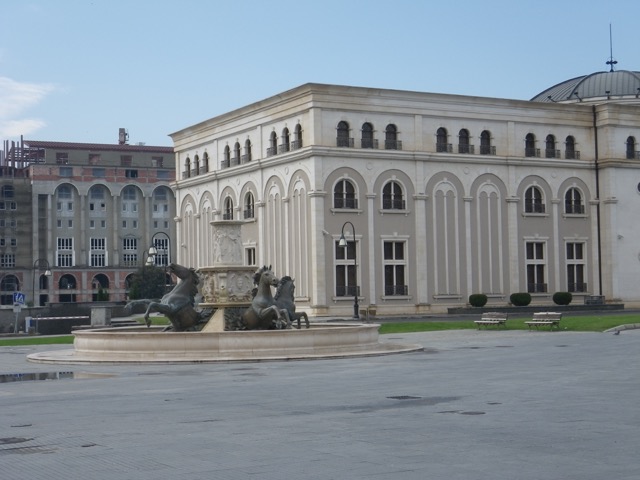
Behind it is another fountain, with horses. This city really has no rhyme or reason to it!
imgp7457

Here’s another angle on that mother of Alexander the Great fountain.
imgp7458

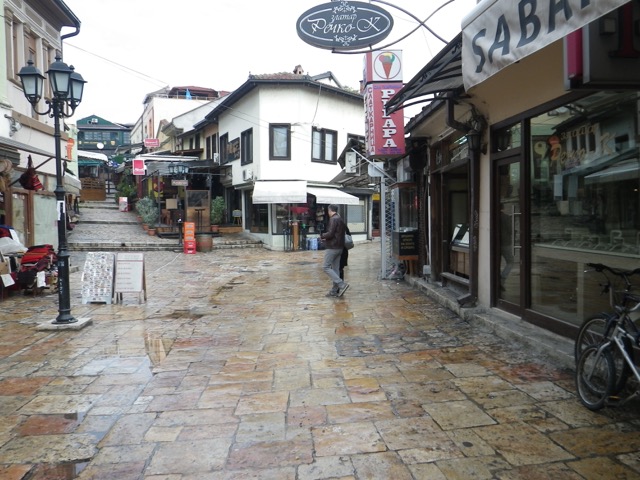
We then went into the “Old Bazaar,” which is what passes as the Old Town in Skopje. It was apparently a pretty lively place once upon a time, but now a good amount of it is deserted and what isn’t is full of shops selling tourist tchotchkes. We were advised to have lunch here as it is, surprisingly, the less expensive part of town to eat at. Which reminds me, Miho confirmed that Skopje (not sure about Macedonia in general) is about as expensive as Western Europe, which explains why I feel like I’ve been bleeding money with nothing to show for it.

The flagstones are actually old. I forget how old, but I think they date back to the Middle Ages at least.
imgp7459

He took us to a little bar/restaurant for a rest. I had to go up and down these steps to use the bathroom. They are very common all over the Balkans and Max had them in the main house.

imgp7461

The other guests barely touched their complimentary glass of rakia, but I downed the whole thing. This reminded me of one I had in Bulgaria as it was very peaty and Scotch-like.

imgp7462

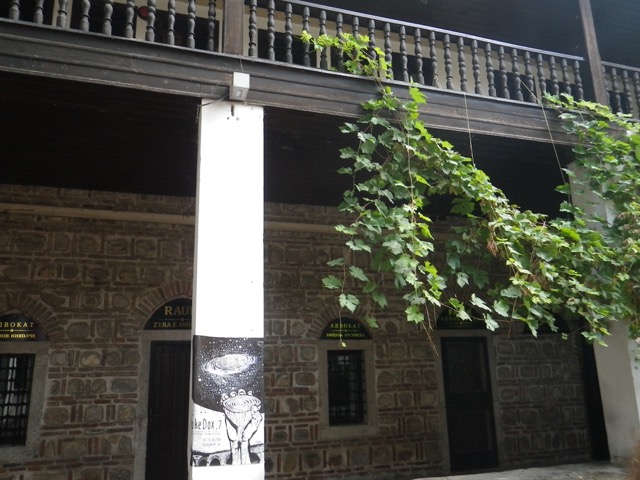
We then went into something I should have gotten the spelling of, but let’s go with “Ahn.” Think of it as an Ottoman roadhouse with lodging and food.

imgp7463

There would have been a fountain in the central courtyard.

imgp7464

This one has gone through many different lives, including being a jail, hence the bars on the windows. Now, there are a lot of lawyers offices and cafés.
imgp7466

imgp7467

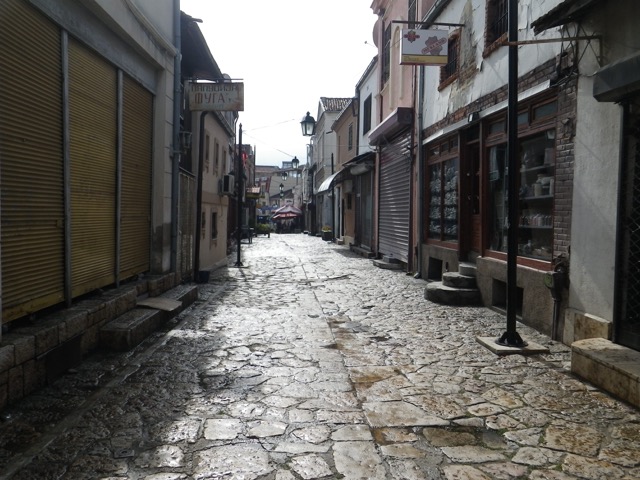
The Old Bazaar would be easy to get lost in. I am shocked that I had zero desire to wander around in it after my tour, a case of having seen much better Old Towns like these in my travels.

imgp7468

imgp7469

So much of the area was deserted, just like every other part of Skopje I’ve visited so far.
imgp7470

I’ve kept meaning to grab a picture of these address number plaques, white on a dark blue background. I have seen them everywhere I’ve been in the Balkans and can’t believe I forgot to ask a guide if they are issued by the government or something.

imgp7471

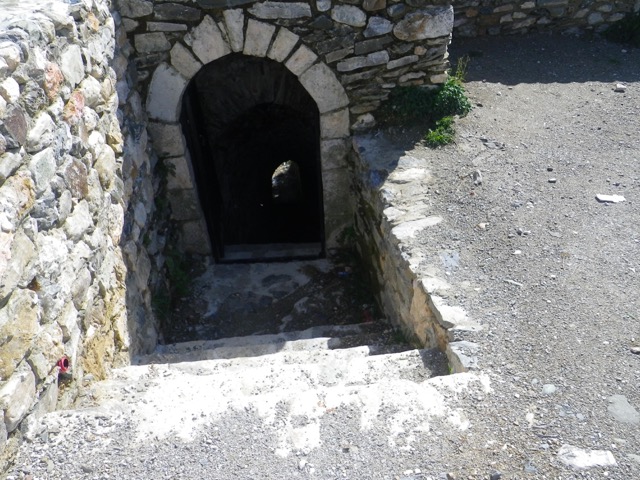
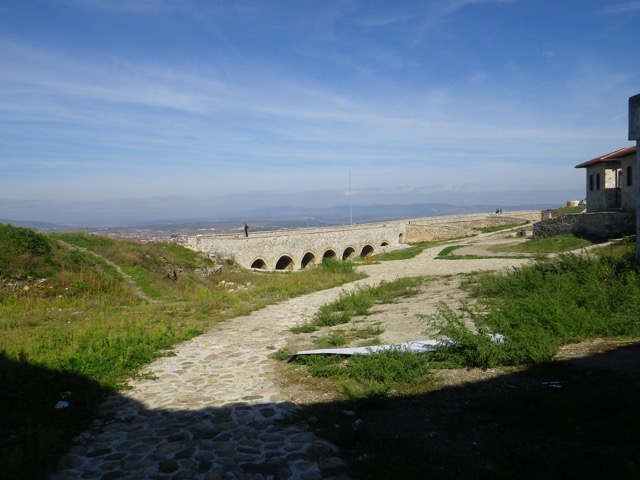
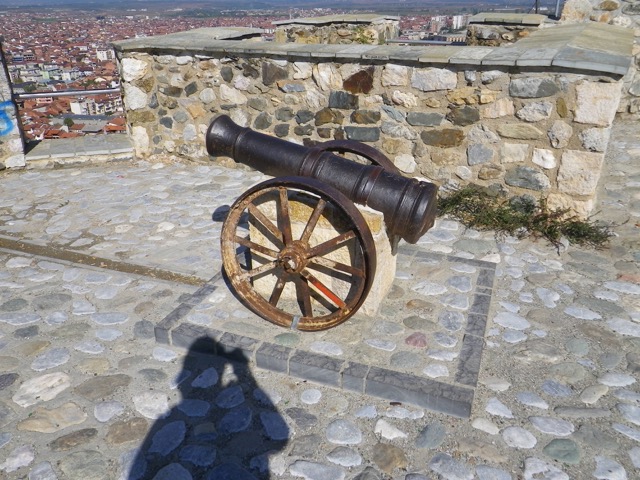
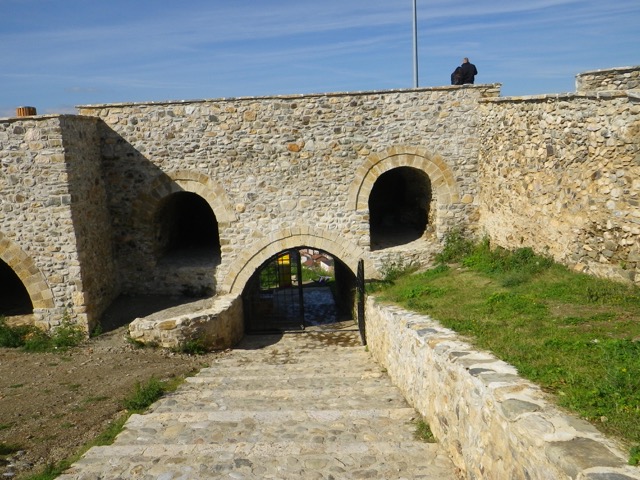
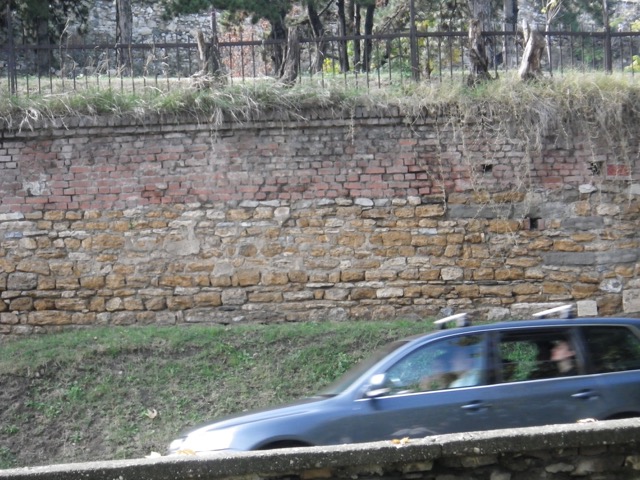
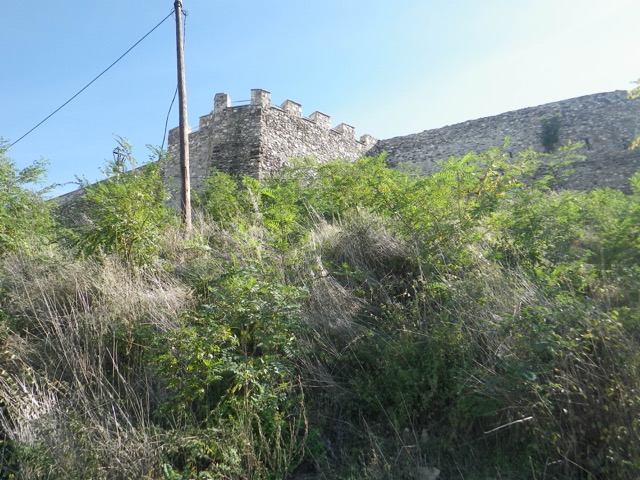
When we started the tour, Miho said we would not be able to go up to the fortress because it was storming. The fortress is the highest part of the city and he worries about lightning strikes up there when people are carrying umbrellas. But, thankfully, the rain let up fairly early on in our tour and the sky was clearing by the time we approached the fortress. So we were able to head there. First, though, he explained how there are three levels of walls to the city and that they are more symbolic, to show that people were headed into the administrative part of Skopje, than for fortification purposes.
imgp7472

imgp7473

imgp7474

imgp7475

imgp7476

imgp7477

imgp7478

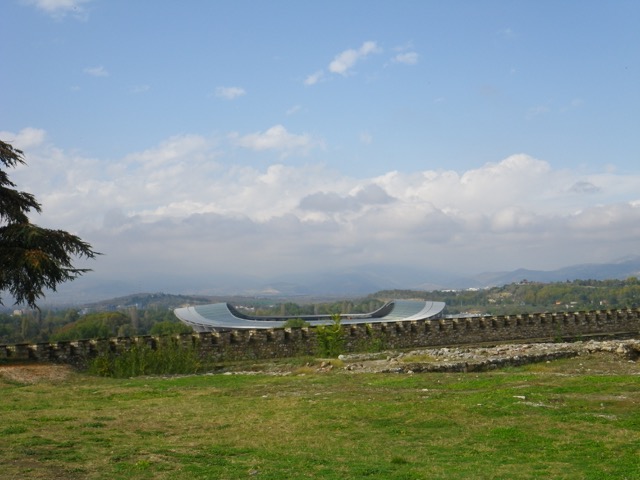
This is a football stadium.

imgp7479

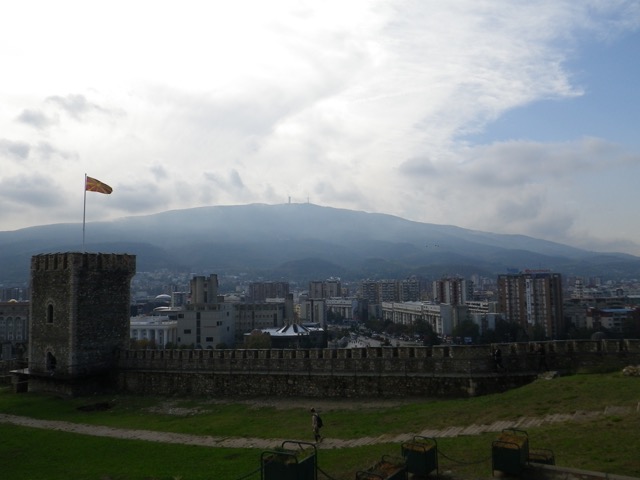
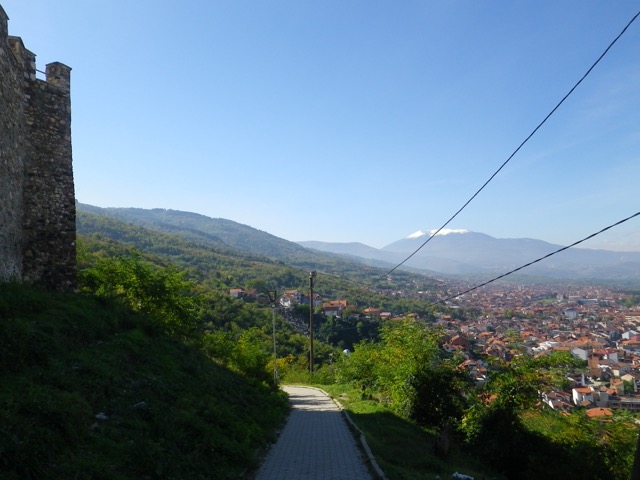
After the first recorded earthquake, Skopje was moved about 5KM from its original location, which is that hill in the distance.

imgp7480

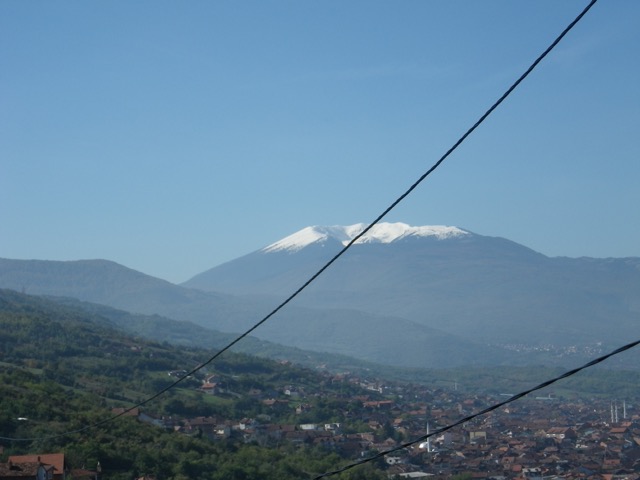
There is a giant cross on top of this hill, just about twice as tall as the statue of Christ in Rio de Janeiro.
imgp7481

imgp7482

imgp7483

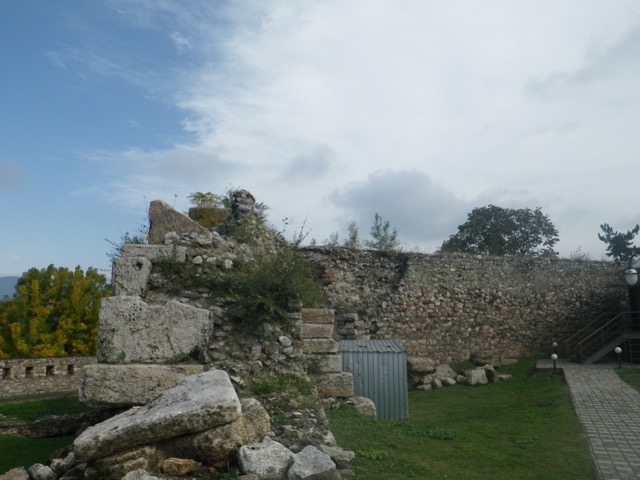
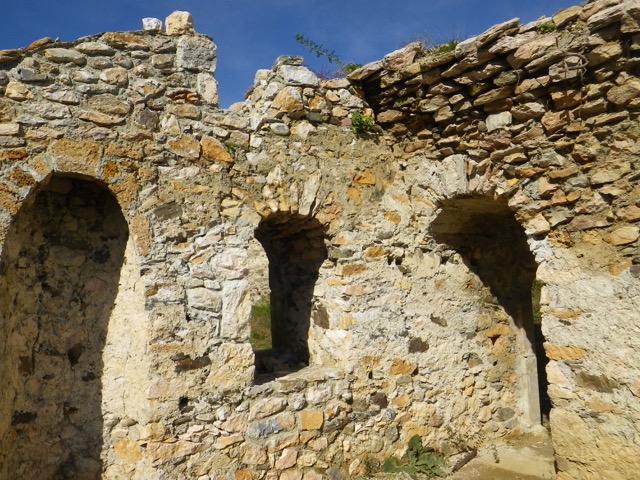
The fortress is large, but there wasn’t much to access. Having frolicked in a lot of ruins recently, I was not temped to return after the tour.

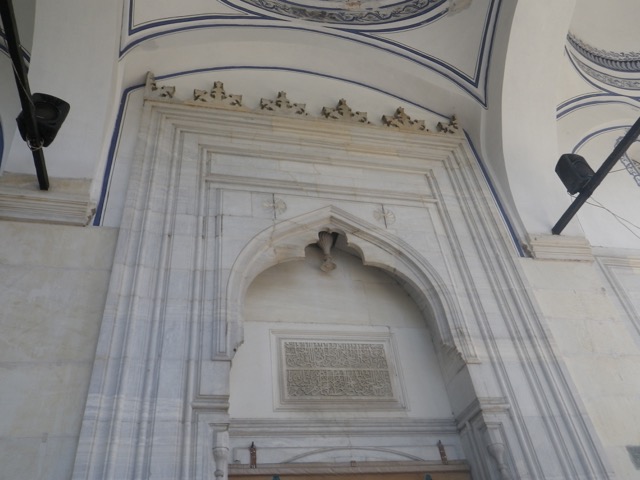
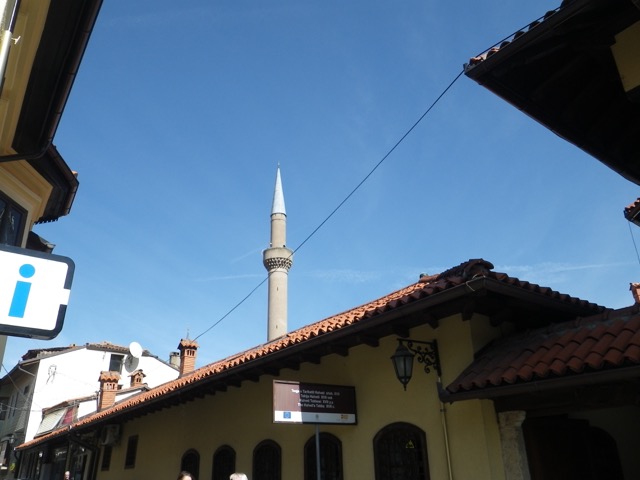
We then headed to this mosque, which was once one of the most beautiful mosques of the region.

imgp7484

We went inside and were told we could take photographs.

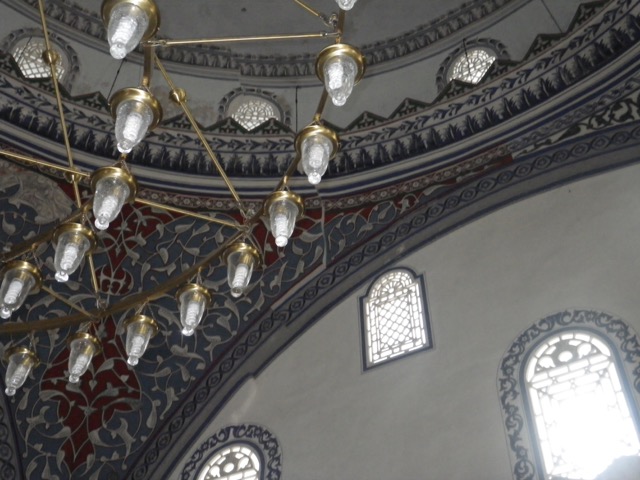
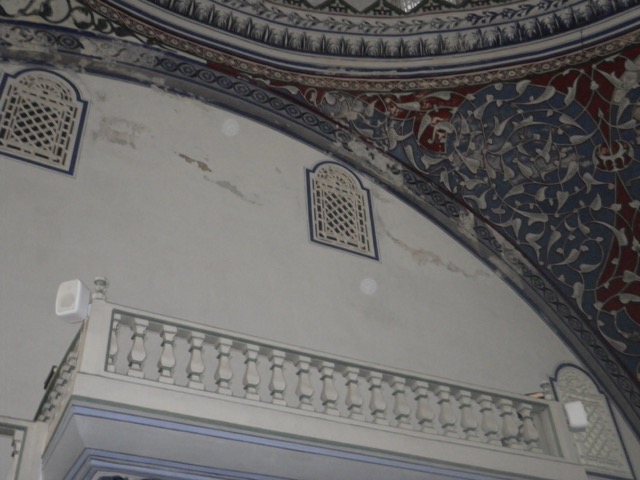
After the last earthquake, the dome was damaged and had to be rebuilt. We’ve lost the knowledge of how to build a perfect dome so, as you can see in this picture, there is an imperfect joint.
imgp7485

imgp7486

imgp7487

imgp7488

imgp7489

imgp7490

imgp7491

imgp7492

Getting in and out of our shoes was tricky as we had to step out of them on the stone part while bringing our feet onto the carpeted part.

The imam was not present when we went in and so the dress code wasn’t strict. Miho said the imam is actually pretty laid back and doesn’t make ladies cover their hair or shoulders, just their legs. Because of the weather, we were all covered from the neck to our feet anyway!

imgp7493

There are high tech bollards that lower for two hours a day to allow delivery vans access to the area.

imgp7494

This is where we finished our tour, a full hour later than expected. Miho had said the tour would take 2.5 to 3 hours and it ended up being a full 4! We finished by a church he told us to visit, but, frankly, I’ve had my fill of churches. I gave him a 300MKD tip since these “free” tours are tip based and then headed off to find an ATM so I could afford to buy lunch. I cannot believe how fast my money has gone here.

Finding an ATM took ages! The first one I tried was out of money and then I had to go back to the main square and poke around there to find one that was working. I took out another 2000MKD (50CAD) and went back to the Old Bazaar to get lunch. The first place I passed served pizza and that worked for me. I hadn’t eaten since about 8AM and had had that shot of rakia, so I really needed food and wasn’t in the mood to hunt for something else, especially when I saw that this joint had a wood fired oven.

The pizza was very good, just needing maybe one more minute in the oven to crisp up the crust, but the sauce, cheese, and sprinkle of oregano were spot on. I will miss Balkan pizza!

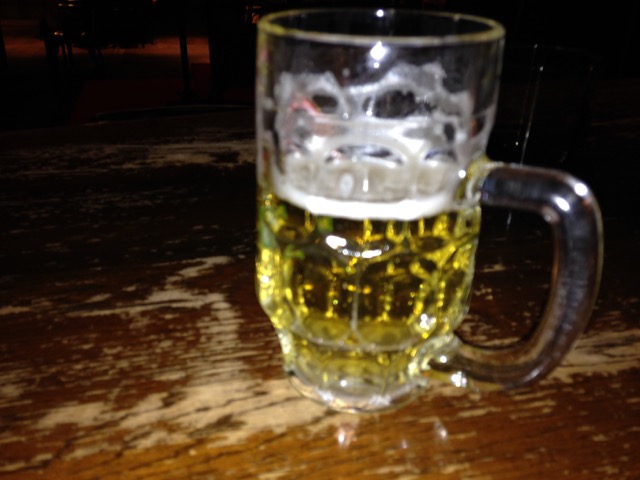
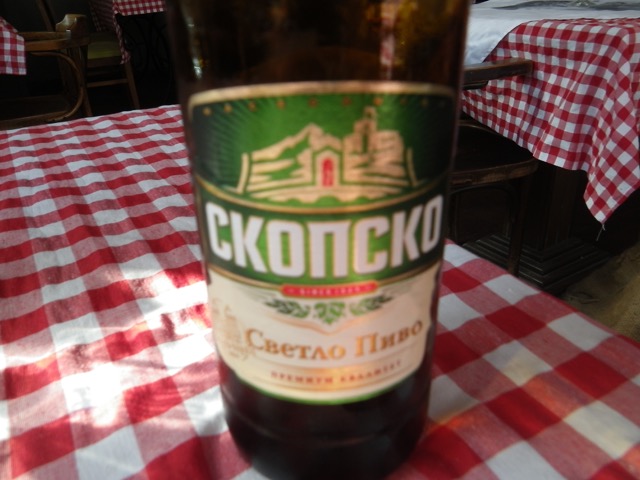
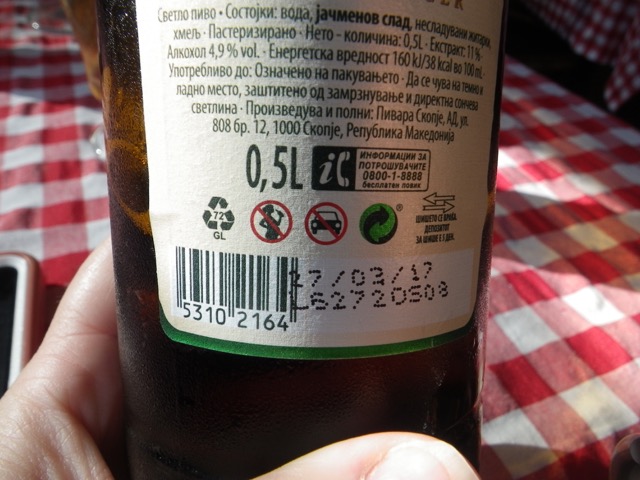
I had this Macedonian beer with it. The price of the pizza, 150MKD or 3.75CAD, was very reasonable for the amount I got and felt pretty close to what I paid in Serbia and Bulgaria for a comparable amount. But the beer was a whopping 3.25CAD! I would never have ordered a beer had I known it would be that expensive.
imgp7496

imgp7497

I was happier when I paid the ice cream vendor I went to next as the cost was just 0.50CAD for a small ice cream that I would have paid 1.50CAD for in Kotor. I went with straight up hazelnut and it was really yummy!

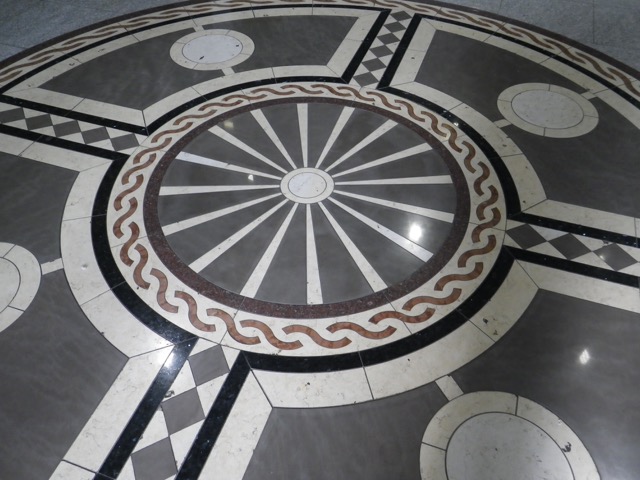
It was getting really late, so I then hoofed it to the Museum of Archeology, where you are only allowed to take pictures inside the lobby.

imgp7498

imgp7499

Admission to the museum was 300MKD (7.50CAD), very steep compared to other museums I’ve been to. But holy smokes! I finally found something in Skopje to wholeheartedly recommend! What an incredible collection of artifacts! As a history major, I’ve read so much about this part of the world and how people lived, but to see actual artifacts from here was surreal. The rooms were themed, with coins, jewellery, pottery, glassware, weapons, and more. There were also beautiful paintings depicting scenes of everyday life. There wasn’t quite enough signage in English though. All the artifacts had English labels, but there were large informational panels that did not have a translation, which was a bit frustrating as I could pick out just enough to get an idea of what the panel was about and be curious to know more. I kicked myself for having deleted my Bulgarian dictionary app from my phone.

Which brings me to the unpleasant part of visiting the Skopje Museum of Archeology — I got followed by security guards the whole time. The second I pulled out my phone to look for the dictionary, one rushed me and said I could not “make pictures.” The attention made it very difficult to relax and truly enjoy my visit. But all that aside, this museum is the only part of Skopje I really want to remember besides my flat!

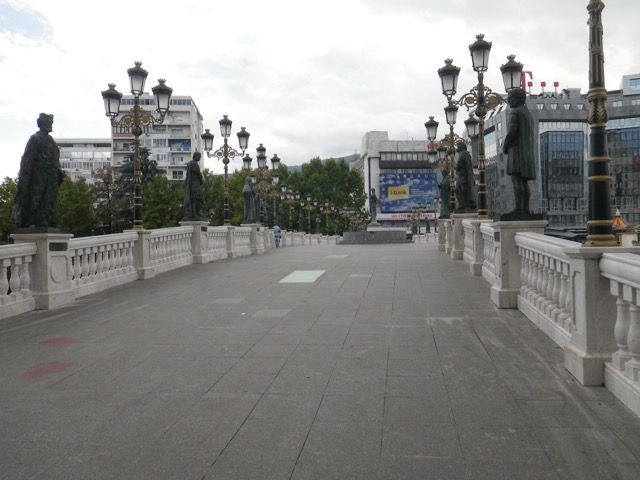
It was starting to spit when I came out of the museum, so I took that as a sign that I should head home. I crossed the Bridge of Civilisations again.

imgp7501

It would make more of an impact if it wasn’t one of several bridges and was in a more central location. And wasn’t surrounded by 50 billion other statutes, monuments, and fountains.
imgp7502

But I really do like her a lot. There was more about her in the museum, including the actual artifacts she’s holding… and her skull.
imgp7504

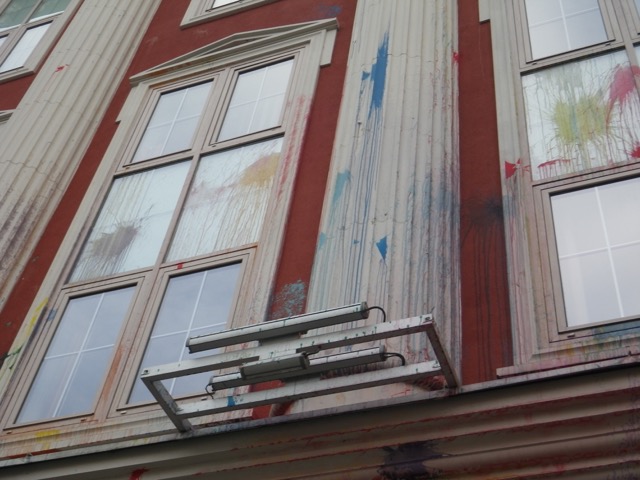
There have been a lot of “revolutions” in Skopje, with people protesting the government. The latest one had folks filling balloons with paint and then throwing the balloons at monuments built for Skopje 2014. So all that paint over the monuments isn’t artistic expression, it’s a tantrum. What a waste. Miho had stronger words to say on this subject.

imgp7505

Here’s that “old” building in full.

imgp7506

I am really glad I did the walking tour today as I got a lot of context about Skopje and Macedonia. Miho was a fantastic guide! But unlike with other walking tours I’ve done that left me itchy to explore on my own, I’d had my fill of Skopje by the end of this one. This is not a city I would recommend. There is no point to it, it’s filthy, and it’s expensive. It’s fine for a day or two if you’re flying in and out of Macedonia, but I really wish I’d had time to go to Ohrid instead.

As it turns out, I’m flying out at 6PM tomorrow, not 16:00 (4PM) and have the apartment till 2PM. I’ll have some work to do in the morning, then we’ll see if I feel like venturing out to see more of Skopje… It is surreal to think that I’ll be in Barcelona tomorrow night. I’ll be there in just about 26 hours.

Skopje Fails To Make Much of an Impression

I wish that my deadlines this weekend would have allowed me to take the tour of Skopje rather than tomorrow because this city feels like a hard nut to crack.

I slept quite well last night thanks to the really comfy bed and woke up realising that I’m reaching travel burnout in that all I wanted to do was spend the day working in my jammies. I had zero desire to go out and explore. By about 1:30, I’d done the pressing work for today and forced myself to dress and head out.

My flat is located in a neighbourhood about 1KM from the centre of Skopje. The neighbourhood feels very liveable, being quite well kept and full of restaurants and shops. I decided to head to the centre to orientate myself ahead of tomorrow’s proper sightseeing.

This is the bakery where I stopped for lunch yesterday, Silbo.

imgp7392

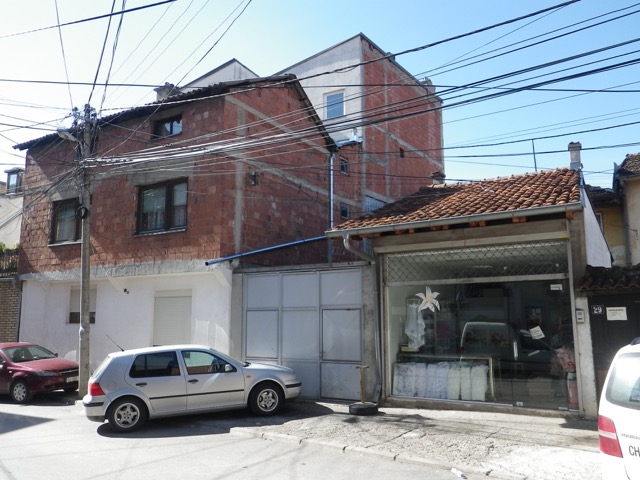
Across from it is this structure, which is a bit of a landmark for me. You can see it is quite run down.

imgp7391

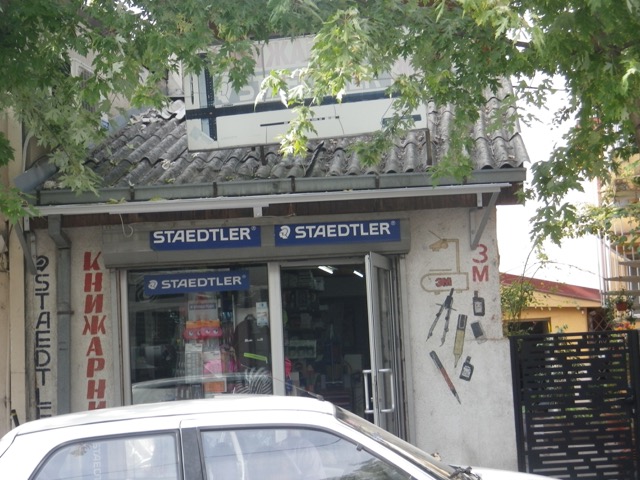
As a stationary and office supplies nut, a store devoted to Staedtler and 3M products made me drool!

imgp7393

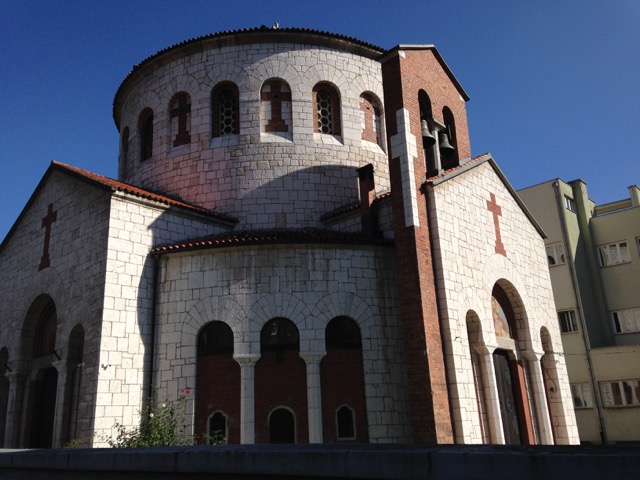
Yet another church. I’ve seen so many churches and mosques since I got to the Balkans!

imgp7394

The city felt dead. There was very little open. I wanted a cheap fast food joint, like a pizza place, for a late lunch but I met one shut door after another. This is the first city I’ve been in that appears to shut down on the weekends. I hope tomorrow won’t be a wash… I finally found a hamburger joint that was open. The owner quickly switched to English and apologised for not having an English menu. He was delighted that I was able to handle the Macedonian menu without needing help. I asked for onion rings inside of fries and he upgraded me for free! I’m sad to report that was the highlight of my day. *wry grin* Lunch was very expensive, on par with what a fast food burger combo is in Canada, 8CAD, and I wish I’d noticed the prices before committing, even though my meal was very tasty. But it ended up being the only non sit down type restaurant I found in two whole hours of ambling, not counting bakeries, and I’m rather sick of puff pastry. So, really, it was that or my leftover pasta from last night and then I would have had to find dinner food…

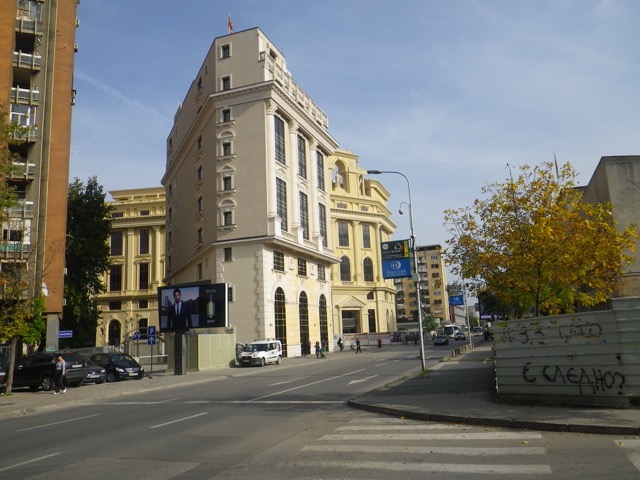
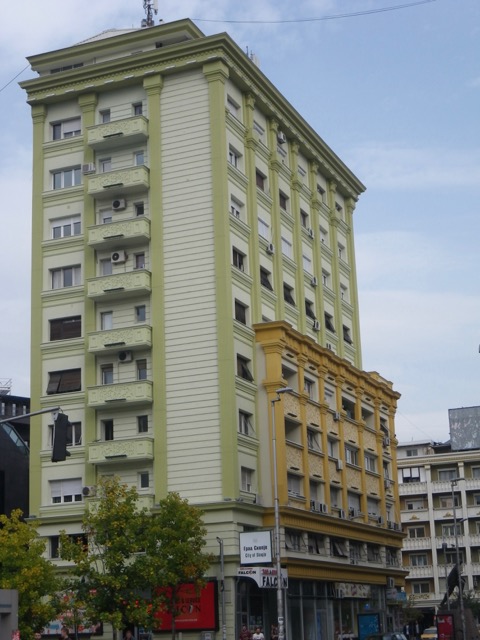
There are some nice buildings in Skopje, but I have yet to see anything that I know is genuinely old.

imgp7395

I thought that the colours add a lot of panache and visual appeal to an otherwise ugly building.

imgp7396

imgp7397

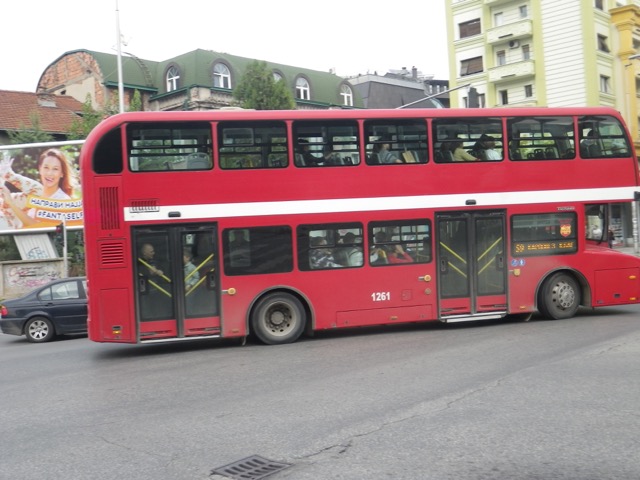
The red double decker buses really made me laugh.

imgp7398

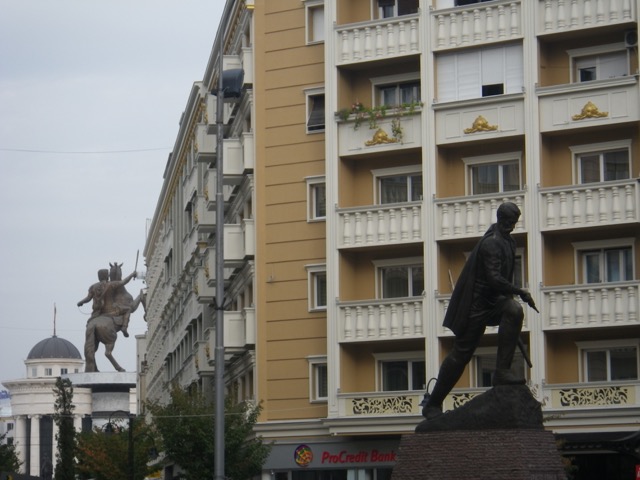
Some of Skopje’s MANY statues. I will explain about that after my walking tour tomorrow. If said tour doesn’t happen, I’ll cobble together something from my internet research. 🙂

imgp7399

*squints at label* This is Hristo Uzunov, a Bulgarian revolutionary.

imgp7400

Some of the nicer graffiti I’ve seen in my lifetime.

imgp7401

Or maybe the building was designed that way? A question to ask a guide.

imgp7402

imgp7403

Here’s Skopje’s famous Alexander the Great statue.

imgp7404

That’s all I saw of note today after two whole hours of walking. Skopje is really gritty to the point of looking and feeling absolutely filthy. I didn’t enjoy the bit of the downtown pedestrian zone I encountered and was not tempted to stop for a beer or coffee. I really hope that the tour happens tomorrow and that it will leave me wishing I had more time to give this city. As things stand right now, I don’t feel that I would have missed much by not coming. However, I do want to stress that everyone I’ve encountered has been welcoming and friendly and done their best to serve me as well as they could despite the language barrier.

I’m off to get some more work done so that I can focus on exploring tomorrow!

A Stopover in Lovely Prizren, Kosovo

Kosovo is another area that was recently under major conflict and that has negative connotations overseas. It is also a disputed territory in that while it declared its independence in 2008 and is recognised as a nation by many, it is seen as still part of Serbia by Serbia, Russia, and others. I wanted to travel here to see what it’s like and how it differs from Serbia, but I did not want it to be another “conflict tour.”

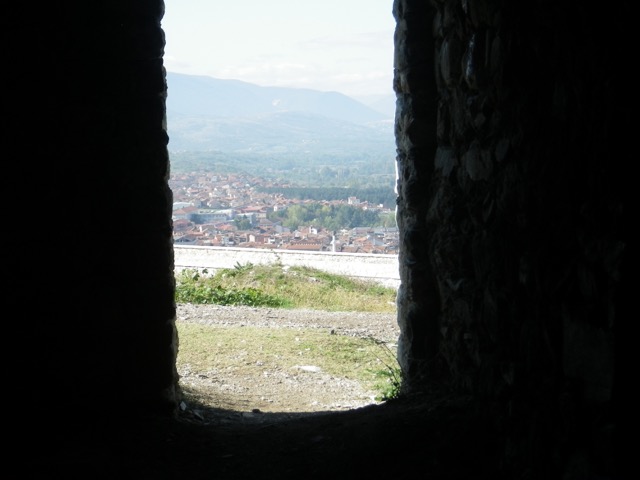
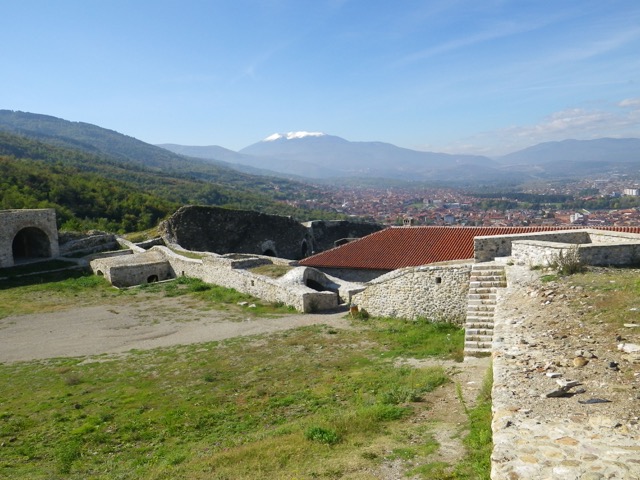
I picked Prizren, a small and ancient town that is considered an underrated gem, because it is en route between Kotor and Skopje and also because a day here would be sufficient. So today was all about enjoying the sites and sounds of Prizren without delving into any bloody history. There aren’t any museums to speak of or many attractions besides many mosques and a fortress high above the city. So what a perfect place to spend a day after a very, very late night. 🙂

I was up by about 9:30 this morning, tired but thankfully not hung over. I went down to the lobby area hoping to get a map of town or at least some basic directions and pointers, but there was no one at the desk. I chose to wait a bit since there was a nice book about Prizren for me to leaf through.

One of the staff came in after a few minutes and asked if I wanted breakfast. Yes, breakfast was included. OMG! He brought me a coffee, a basket of lightly toasted bread, and a plate with a lutenitsa-type spicy red pepper spread, a small dish of sour cream, a wedge of cheese, a few slices of sausage, and a dish of a hazelnut-chocolate spread (not like Nutella, the two flavours are separate). It might not sound like much, but it was quite the spread! I loved the pepper spread mixed with the sour cream.

When I was done, he had me settle up my bill (13 euro per night!) and then pulled out a map with all the highlights on it. I decided to start by going up to the fortress so I could walk off some of my breakfast.

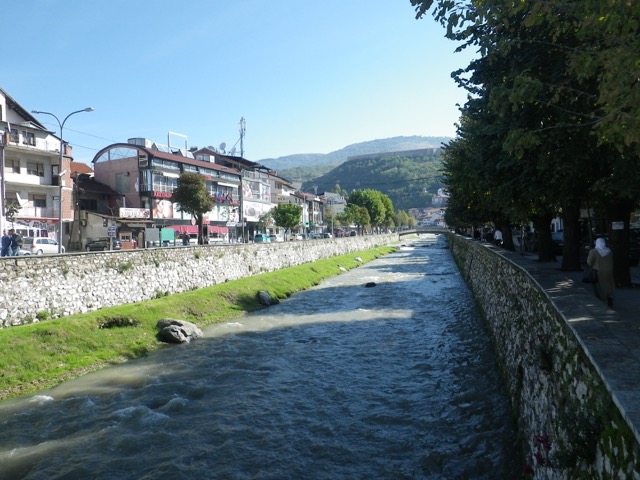
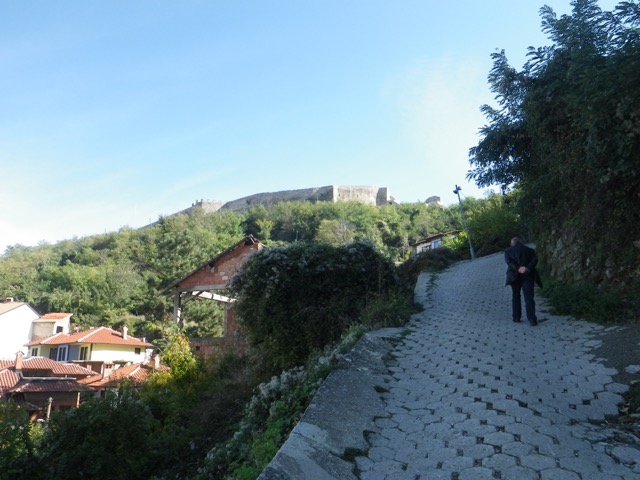
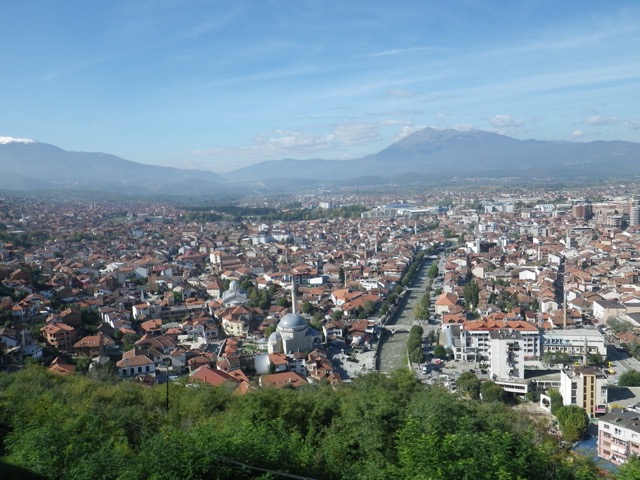
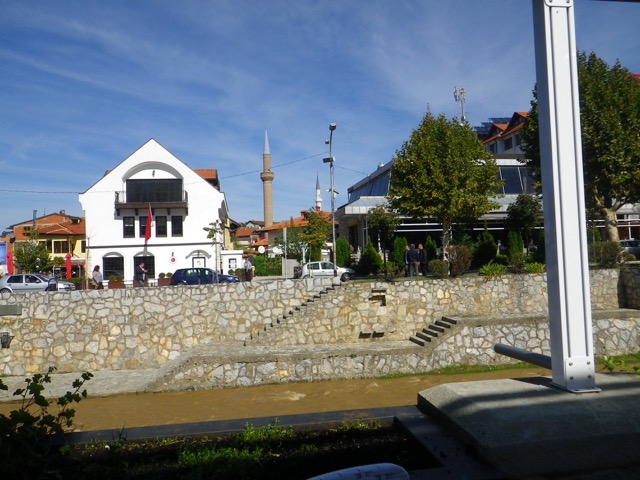
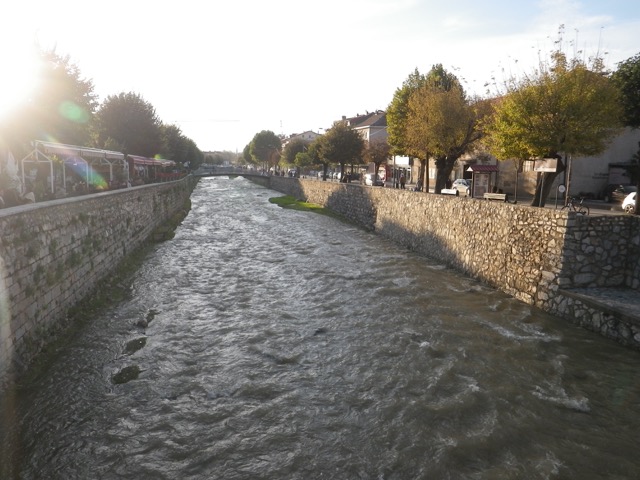
Prizen’s touristy core is small and is divided by a river. You can see the fortress in the background at the top of the shorter mountain.

imgp7167

imgp7168

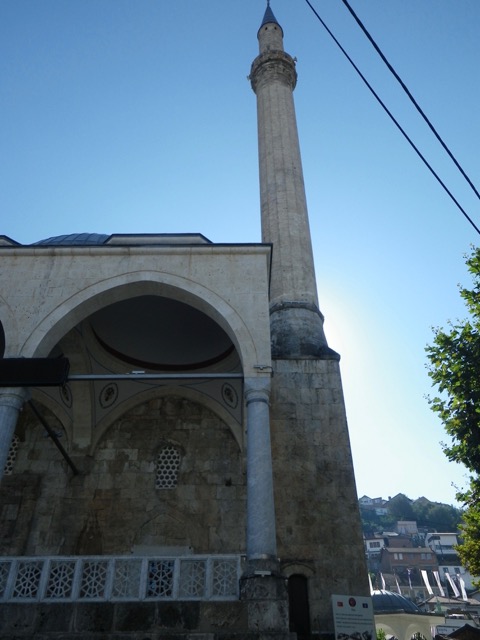
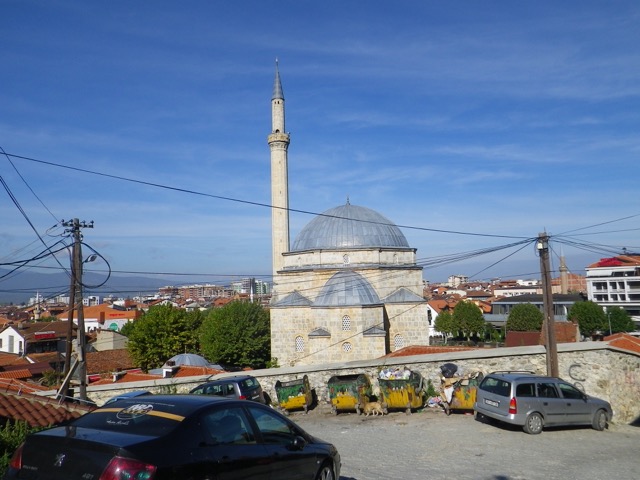
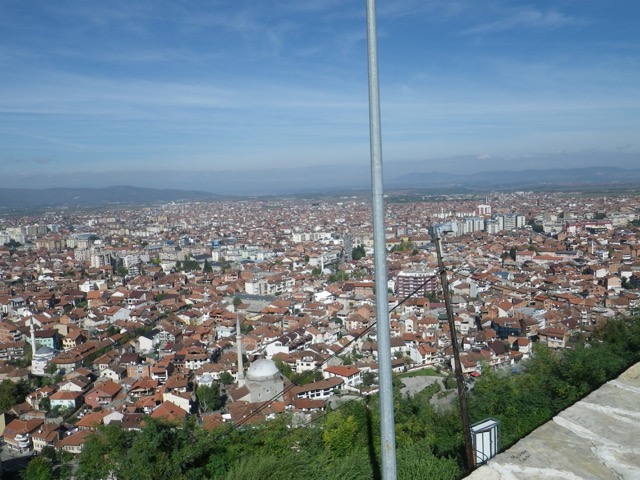
Like Sarajevo, this is a city of mosques.

imgp7169

imgp7170

imgp7171

This is where we had dinner last night. The TripAdvisor reviews are pretty negative, but I had a great time and good meal. I think it’s because I ate what the local people eat.

imgp7172

imgp7173

imgp7174

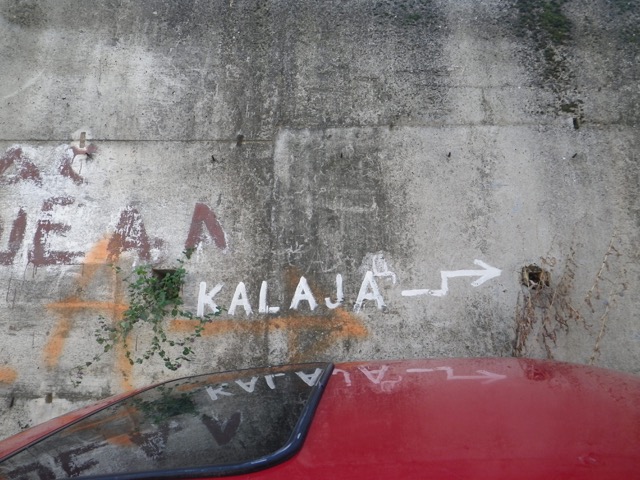
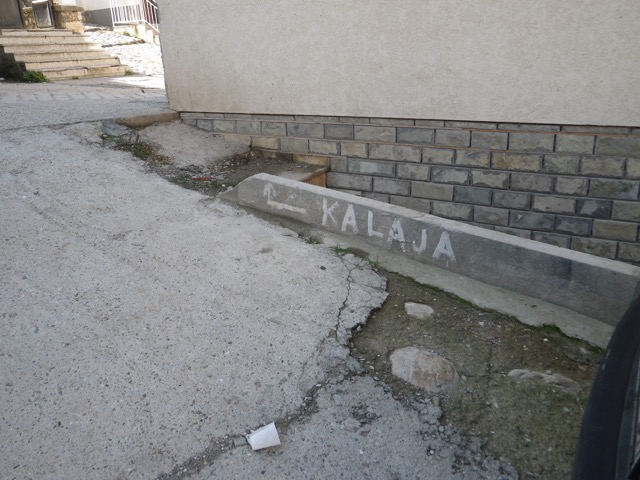
I found the road up to the fortress and was amused that someone had graffitied some directional signage.

imgp7175
imgp7176

imgp7177

imgp7178

imgp7179

imgp7180

It was a very steep climb! This man didn’t seem to break a sweat, just taking tiny steps until he got there.

imgp7181

imgp7182

imgp7183

imgp7184

imgp7185

imgp7186

imgp7187

imgp7188

imgp7189

imgp7190

imgp7191 imgp7192

imgp7193

imgp7194

imgp7195

imgp7196

imgp7197

imgp7198

imgp7199

imgp7200

imgp7201

This was the first really sunny day I’ve had since my first morning in Sarajevo and I was so happy to pull out my sunglasses!

imgp7202

imgp7203

imgp7204

imgp7205

imgp7206

imgp7209

imgp7210

imgp7211

imgp7212

imgp7213

imgp7214

imgp7215

imgp7216

imgp7217

imgp7218

imgp7219

imgp7220

imgp7221

imgp7222

imgp7223

imgp7224

imgp7225

imgp7226

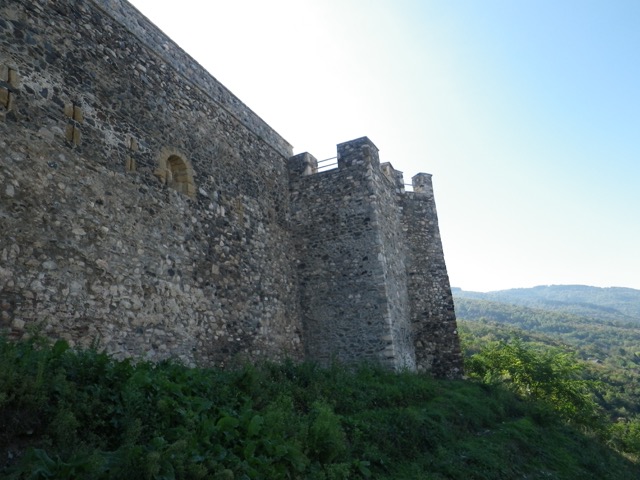
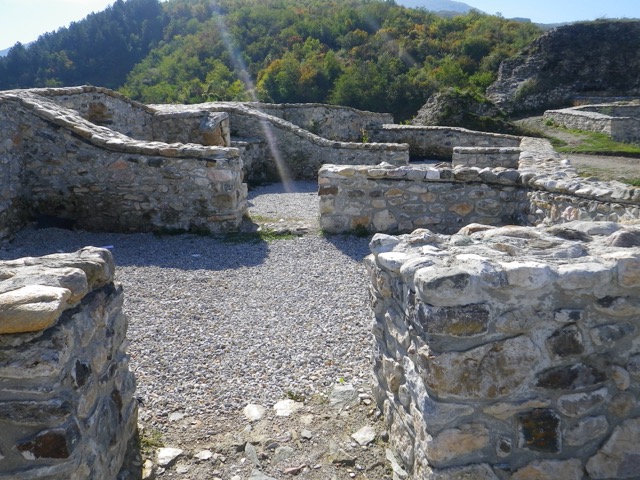
It was so much fun to poke around the old ruins! There were workers on site doing restoration, so I suspect that there will be a lot more to this place in a few years.

imgp7227

imgp7228

imgp7229

imgp7230

imgp7233

imgp7234

It was a very steep walk back down!

imgp7235

imgp7236

Someone had a fire recently.

imgp7237

This is the ubiquitous skip you see all over the Balkans, but this was the first time I’ve seen one painted!

imgp7238

imgp7239

imgp7240

This is what I mean about Albanian obviously having some Romance language roots. In Mexico, this sign would read Restaurante Familiar Verona…

imgp7241

imgp7242

imgp7244

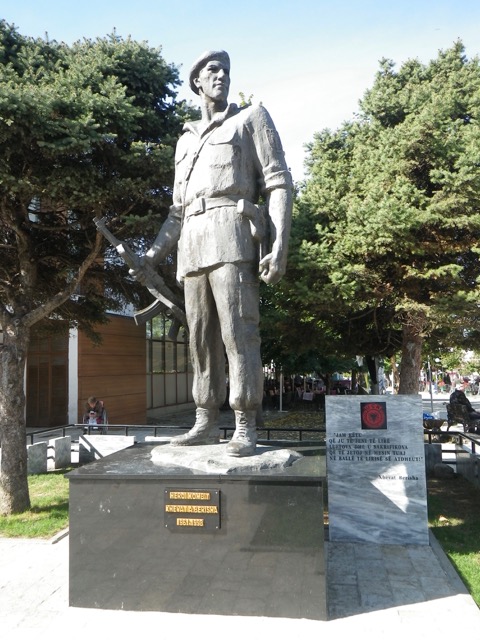
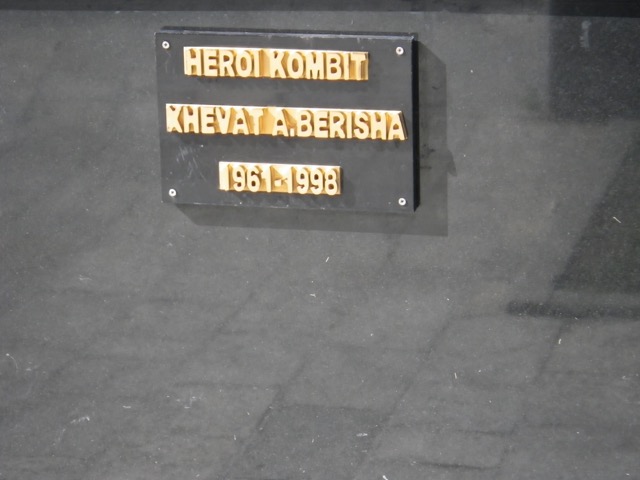
This is what Google Translate has to say about this: “I am here for you are free struggled and sacrificed to live among you at the forefront of the freedom of the motherland!”

imgp7245

I stopped for a coffee by the river at a place with no English speakers or menu for me to point to. Do I know how to pick ’em or what? I guessed, correctly, that coffee would be “kah-fay” in Albanian and the server said, “Espresso?” Yay for Italian, the universal language of coffee. 🙂

imgp7246

imgp7247

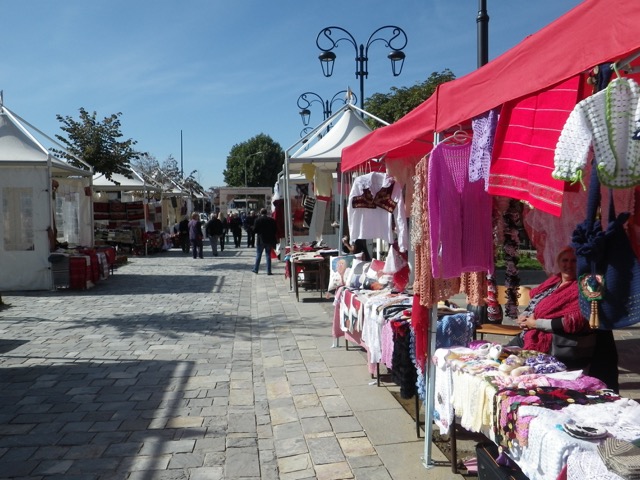
I then walked across the river and found a little temporary artisan market. Lots of pretty things! Thank goodness I’m committed to traveling light.

imgp7248

imgp7249

imgp7251

I continued walking and met Mr. Zanzi, a shoeshiner who wanted me to tell you about him! He spoke very good English and knows many other languages, including Spanish! He told me to put a foot up onto his shoeshine stand. I was wearing my Keens and so curious as to what he wanted to do with them. Well…

imgp7252

Over the course of about 15 minutes, he talked my ear off about the people he’s met over the years (including a Mountie who came to have his shoes shined daily!), and how he lost everything in the war and now has to shine shoes to support his diabetic wife. While he was telling me all this, he was brushing my shoes and applying what I’m assuming is polish to the rubber part before spraying a sealant over everything.

I could not believe what he did to my sandals! Look at how new they look!

imgp7253

I’ve covered a lot of miles in these and so the rubber was dulled and the fabric was dingy. I am absurdly pleased with Mr. Zanzi’s ministration to my Keens. The price was what I was willing to pay. I had 3 Euro in change and I know that was a lot based on how grateful he was and what 3 Euro can buy here, but that’s what his work was worth to me and I was happy to pass on some of the generosity I have received.

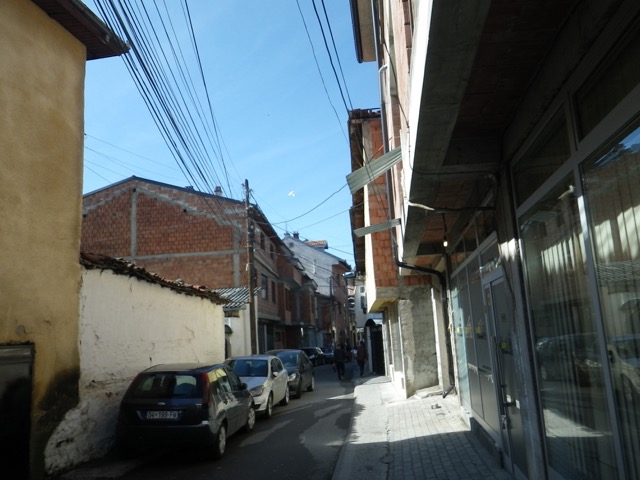
I then wandered into the non-touristy part of town and was fascinated by the mix of new and old construction and the narrow streets. Like Sarajevo, the size of Prizren makes it very walkable, but there are few sidewalks.

imgp7254

imgp7255

imgp7256

The license plates here have RKS on them, further separating Kosovo from Serbia, which has SRB on the plate.

imgp7257

imgp7258

imgp7259

imgp7260

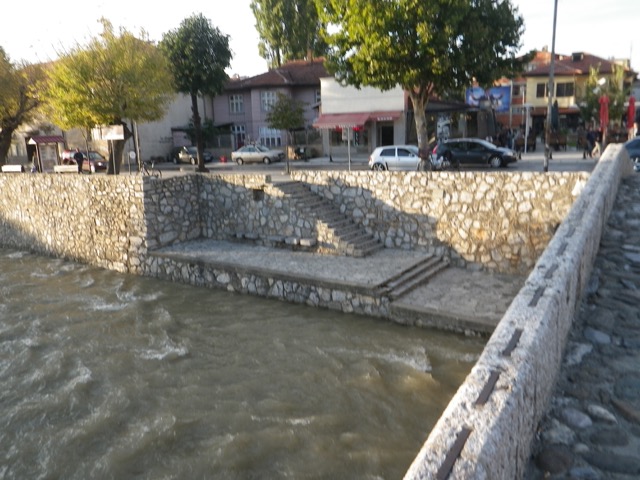
My host keeps referring to this one as the Stone Bridge.

imgp7262

Turns out that is its name, not just a description.

imgp7263

imgp7264

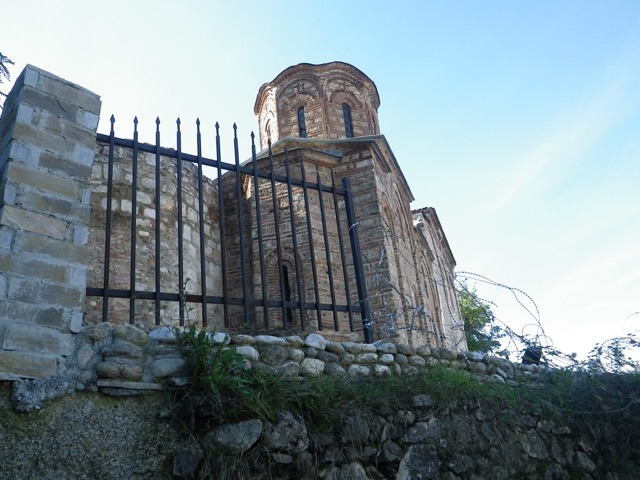
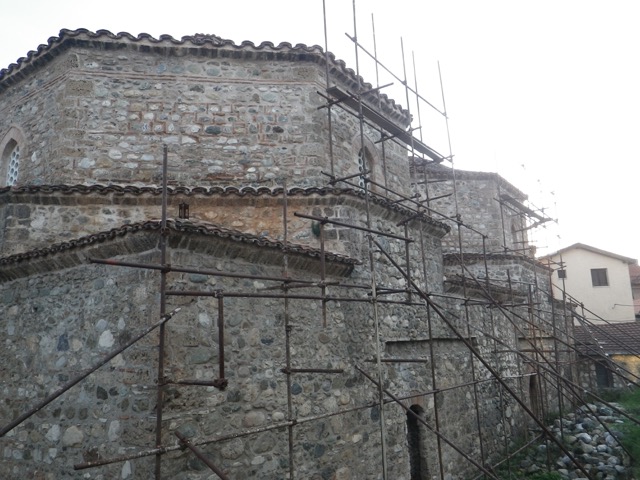
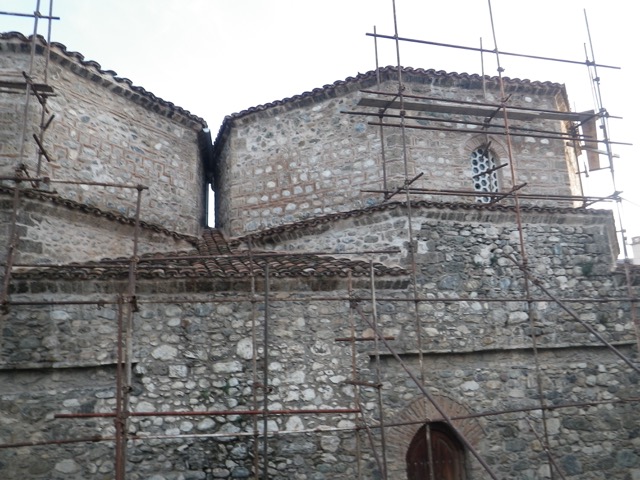
This church is a UNESCO protected site and appears to be undergoing renovations.

imgp7265

imgp7266

imgp7267

imgp7268


imgp7270

This is a clocktower.

imgp7271

imgp7272

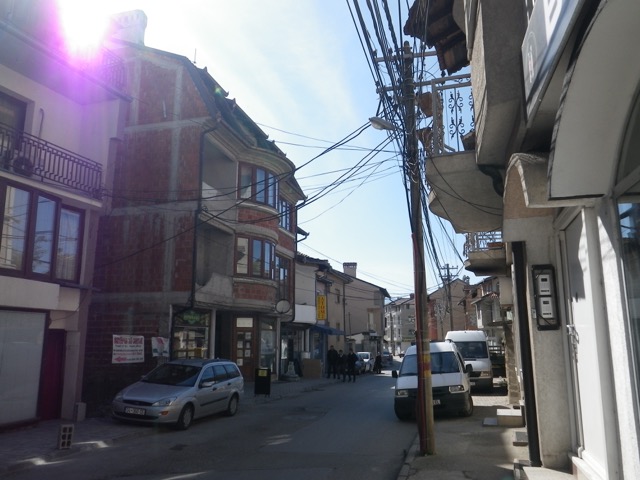
The amount of overheard wiring in the Balkans astounds me.

imgp7273

imgp7274

imgp7275

imgp7276

imgp7277

Look at the odd little bubbles on the domes.

imgp7278

imgp7279

imgp7282

I made my way back to the area of the Stone Bridge to find a light lunch, ideally a burger.

imgp7284

imgp7285

imgp7286

imgp7287

This is the bar where we went out last night. And I didn’t notice when I took this picture that the guy in the background, right at the window, is one of the guys I met there!

imgp7288

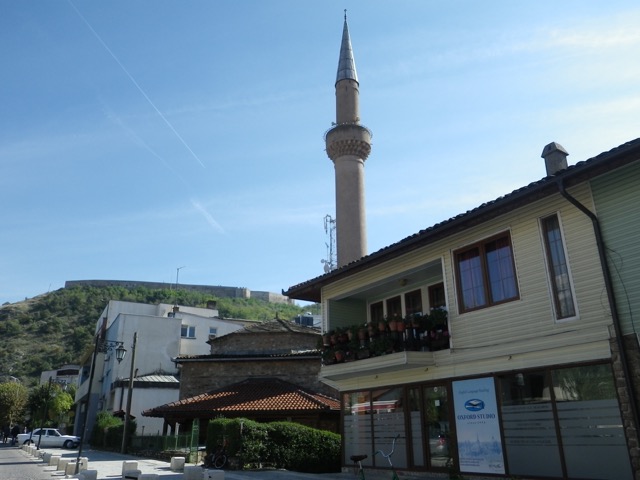
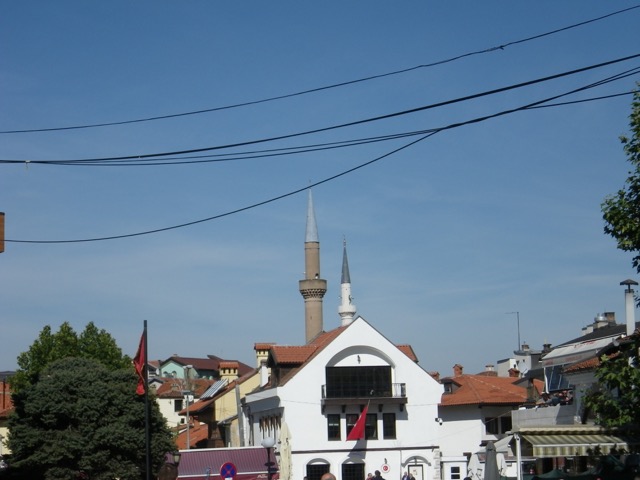
I don’t think I’ve ever caught two minarets in one shot before.

imgp7290

I found a burger joint! It wasn’t a fantastic burger like I had in Belgrade, but it hit the spot. I liked that it had sweet bread and butter pickles in it, a flavour I’ve missed! The cost was only 1.80 Euro (2.75CAD).

This is a traditional house style:

imgp7291

imgp7292

I went back to the hostel for the rest of the afternoon to rest, work on the blog post for yesterday, and find my accommodation in Skopje. Around 5:00, I went downstairs to get a recommendation for dinner and then headed out again.

imgp7295

imgp7296

imgp7297

imgp7299

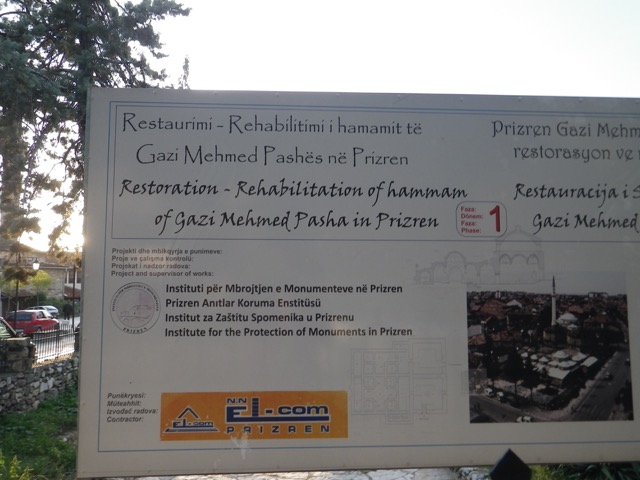
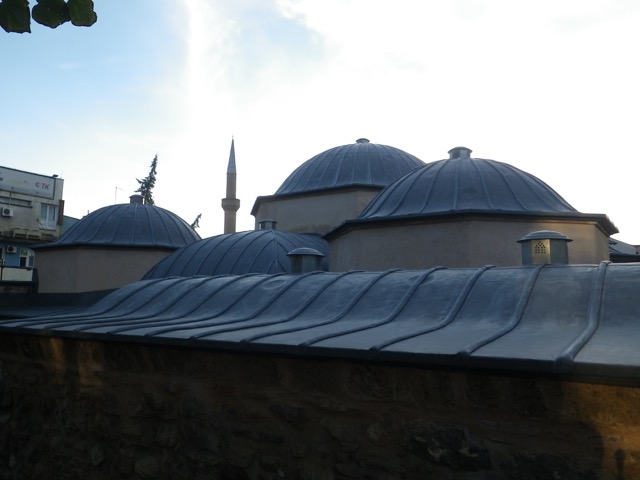
This is the hammam (Turkish baths), but they are not functioning.

imgp7301

imgp7302

imgp7303

imgp7304

imgp7305

imgp7306

imgp7307

imgp7309

imgp7310

I loved this display of rubber stamps in a shop literally attached to the hammam.

imgp7311

imgp7312

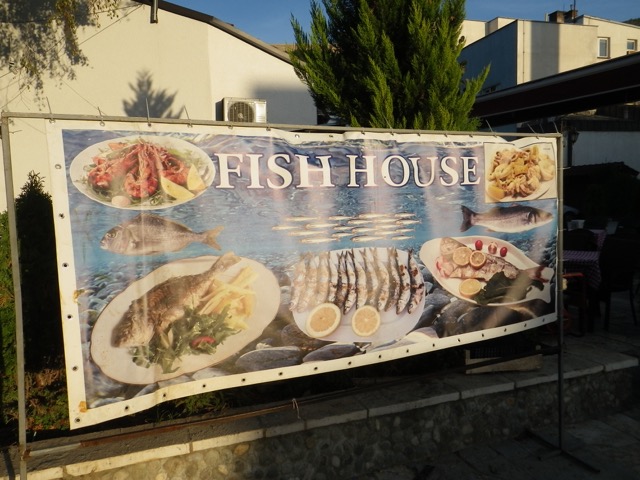
My host recommended the Fish House restaurant, especially the trout, which sounded good. I love trout, but rarely have occasion to have it.

imgp7313

They only had a half litre of wine, not just a glass. It was very good!

imgp7314 imgp7315

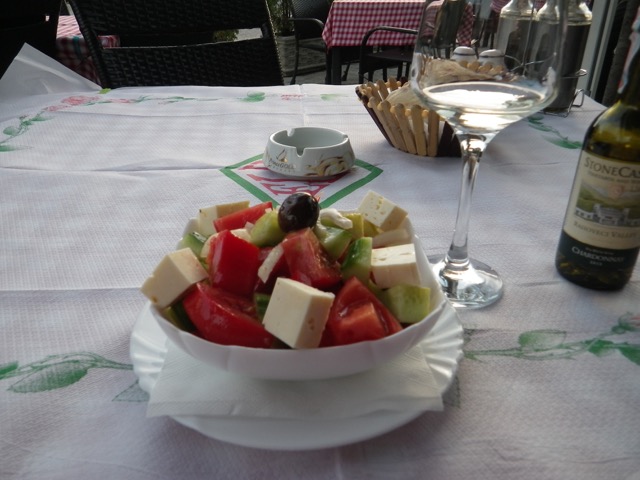
I ordered the Greek salad because I knew that the trout would be just trout. I wish they had crumbled the cheese over it, but otherwise, yum! I am going to miss the produce out here so much.

imgp7316

And here’s dinner. I bet Croft and Contessa are drooling. 🙂 It was so good! I haven’t yet mastered how to eat a whole fish, though, and how to deal with the bones so I must have looked like a savage. I had a bite of the potatoes, but they were cold and not to my liking (I’m really starting to give up on potatoes in my advancing age) and instead had some of that bread. I actually ate some of the fish skin, something I’ve never done before!

imgp7318

As I was finishing up, I heard, “Hello, my friend from Canada!” I looked up and it was Mr. Zanzi waving at me as he walked by!

Now the bill. Y’all might want to sit down for this one.

imgp7323

Yeah. That’s just under 11CAD!!!

I was initially put off by the price of accommodation in Prizren (there wasn’t a single hotel that was less than what I’d pay in Canada, hence why I went with the hostel) and almost didn’t come because I thought everything would be expensive. Nope!

I have to be out the door early tomorrow for a 9:00 AM bus, so I decided to call it a night, pausing to listen to the adhan from this minaret and to watch the sunset.

imgp7325

Sarajevo City Hall, Downtown, and Brewery

I awoke to a super cold, grey, foggy, damp day. Yuck. Last thing I wanted to do was go exploring and I was so grateful I had heaps of work to do! By 12:30, I’d put in a full day of work, could call off with only one hour more to do in the evening, and the sun had come out! Talk about timing!

It was only 10C outside (brr!), so I pulled out my jeans for the first time and paired them with a long-sleeved top, fleece hoodie, and my cosy Tiek flats, my expected “fall weather” attire.

My first thought as I headed out was lunch and I wanted to try burek, “Bosnian pie.” I’d had no interest in it, but so many people told me I was nuts for not having had it and also pointed me to Buregdzinica Sac that I decided to try the experience today. I made a few wrong turns but eventually found the restaurant. The server spoke English and told me she had meat or potato, cheese, and spinach. So heads up, my vegetarian readers, there’s a burek for you!

I went with the meat and accepted sour cream, which was unfortunate since she drowned my pie. I ended up scraping it all off and only having what had soaked in. But you can’t really ever have too much sour cream, so my complaint is only that you didn’t get to see this pretty thing in all its glory. 🙂 It’s basically phyllo pastry that is assembled in a spiral and has filling mixed in.

My meat burek tasted like the  Bosnian answer to tourtière, with heaps of savoury and perfectly seasoned meat mixed in with caramelised onions. Absolutely amazing. I might not have been a fan of Bulgarian and Serbian food, but Bosnian is great!

imgp6548

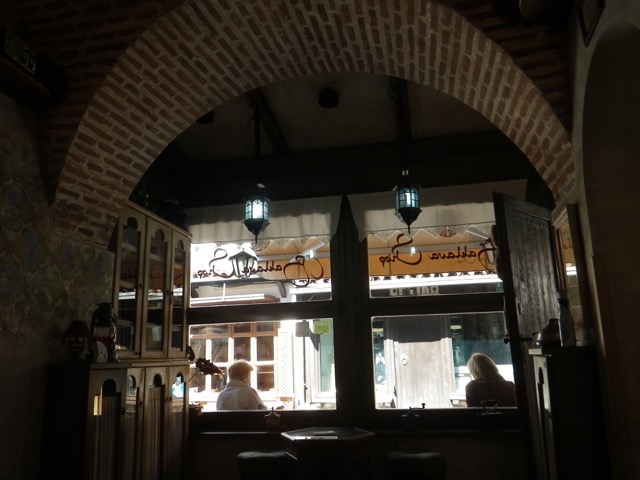
Then, I went back to the Baklava Shop to try their Nutella baklava and have the coffee I’d been craving all morning. The interior of the shop is so pretty. (pauses to listen to the adhan)

imgp6549

imgp6550

imgp6551

Love the alarm clock collection.

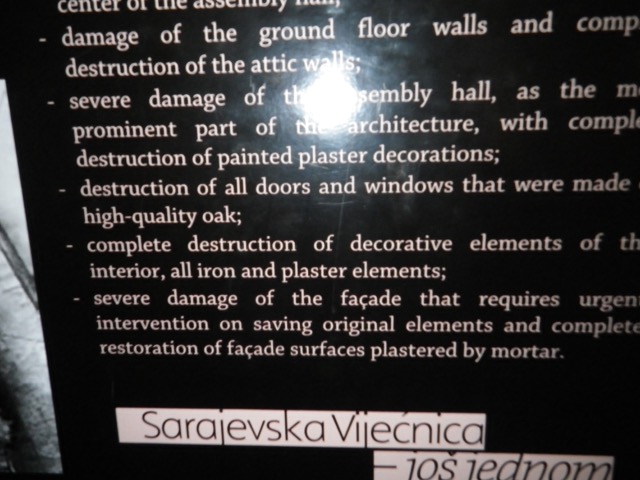
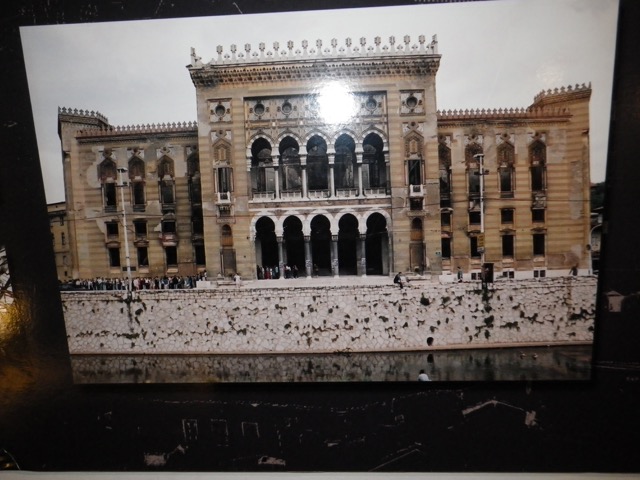
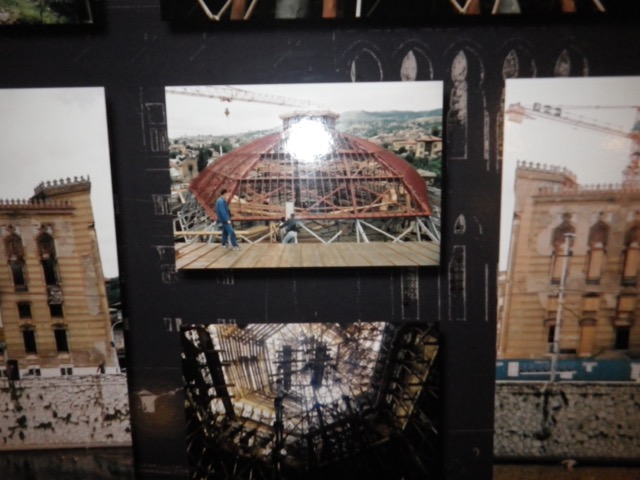
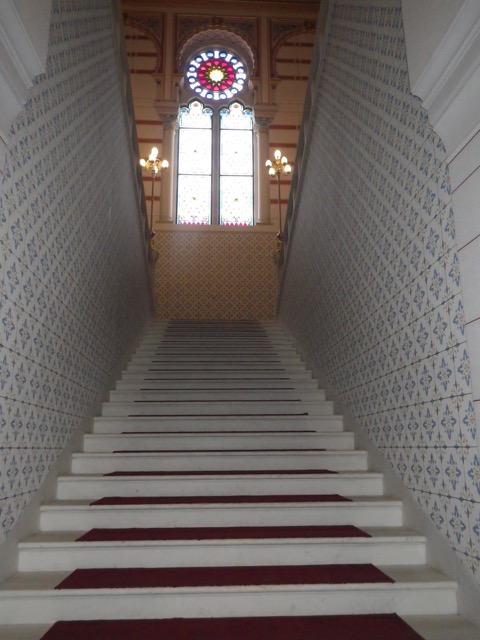
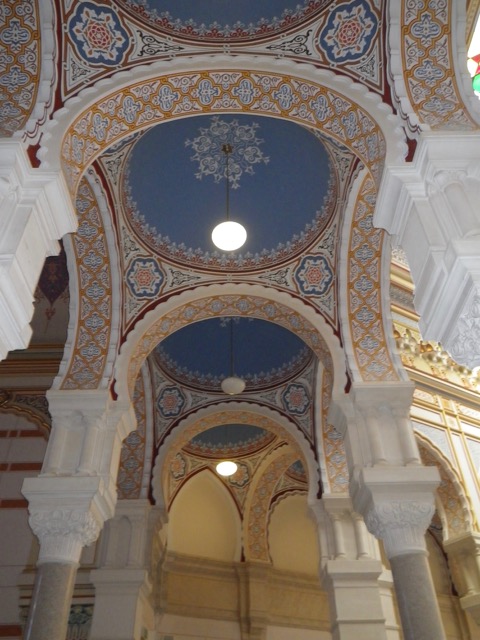
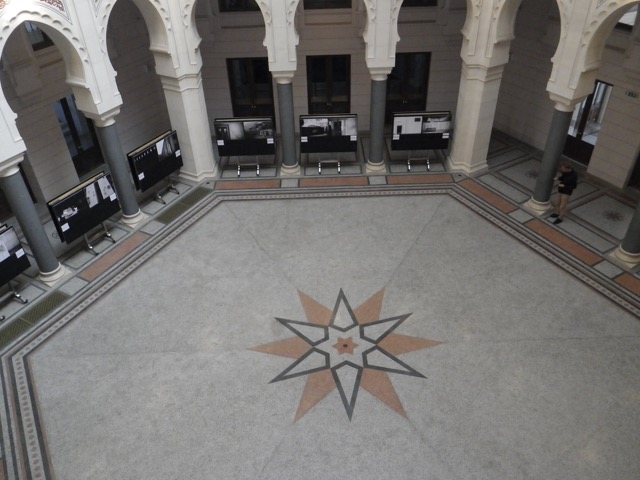
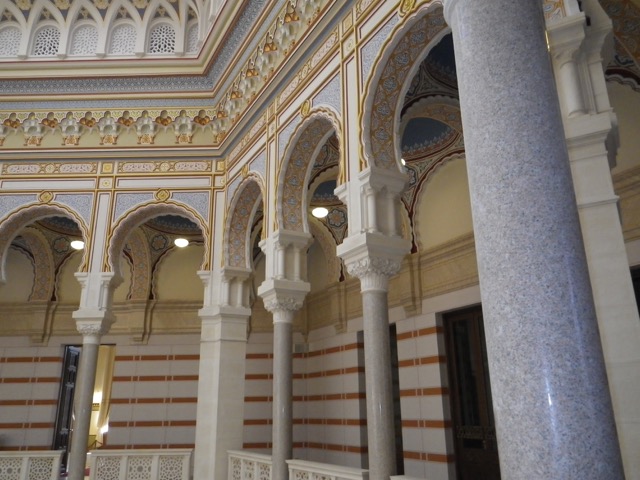
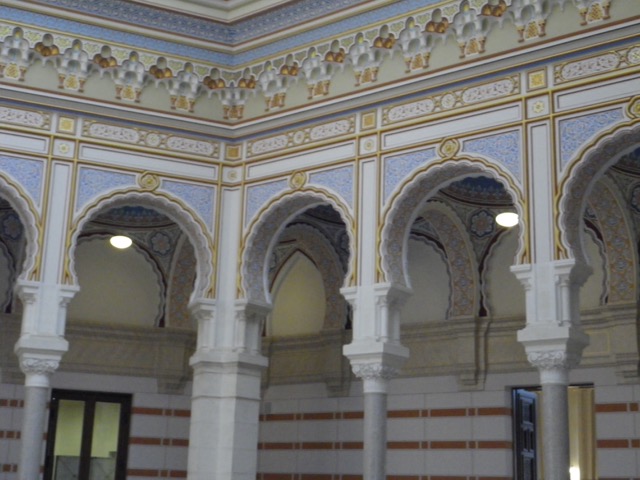
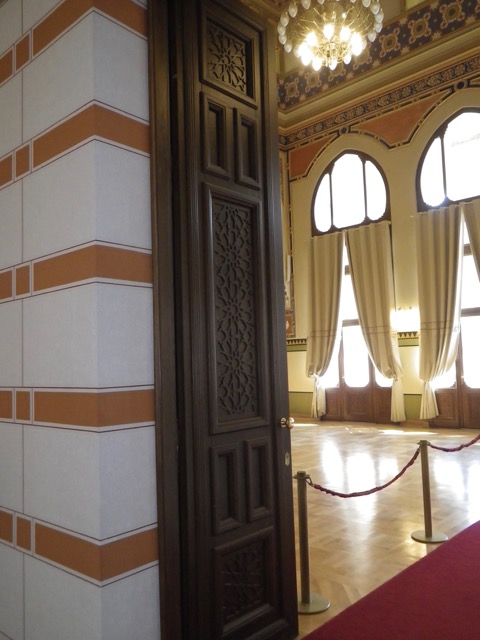
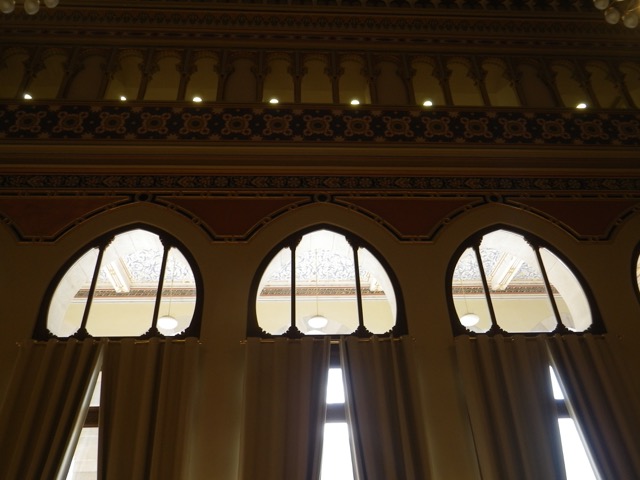
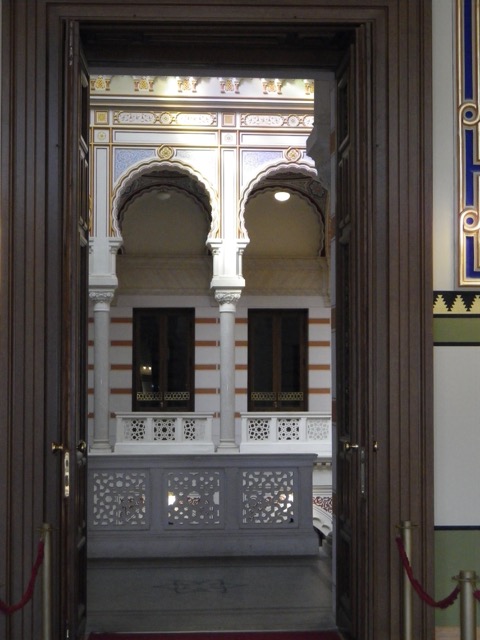
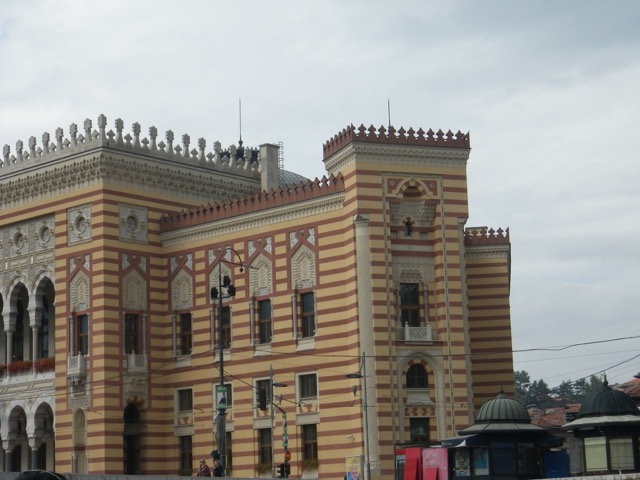
Next stop was Sarajevo City Hall as I was told the interior is impressive. It was devastated during the war and was rebuilt in stages.

imgp6552

imgp6553

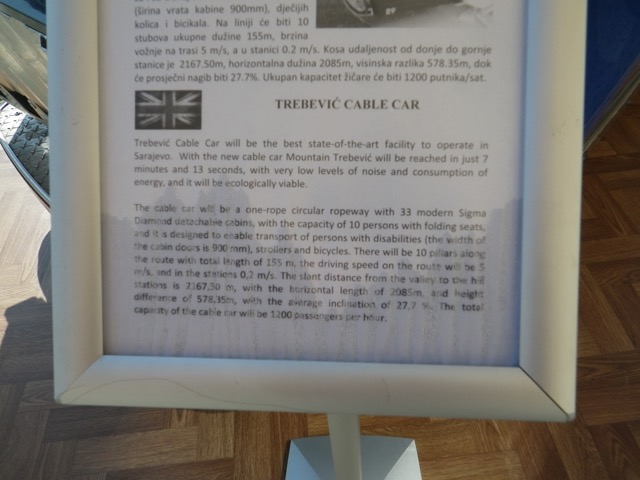
Outside, there is a cable car and information on the plan to rebuild the cable car system to Trebević, the mountain I went up yesterday. Both of my tour guides are skeptical that it will happen and my guide yesterday reminisced fondly of taking the old cable car up the mountain with her family.

imgp6554

imgp6555

I was a bit surprised by the 5KM fee to enter city hall so I could take pictures, but figured that’s how they’re funding the reconstruction and, really, it’s a token amount. What I didn’t know is that city hall doubles as a museum and there are heaps of exhibits. So you get a lot of bang for your mark!

imgp6556

Austria-Hungary built the original city hall and felt it was their duty to help with the reconstruction. I’m trying to remember why Spain got involved, which I know one of my guides told me.

imgp6557

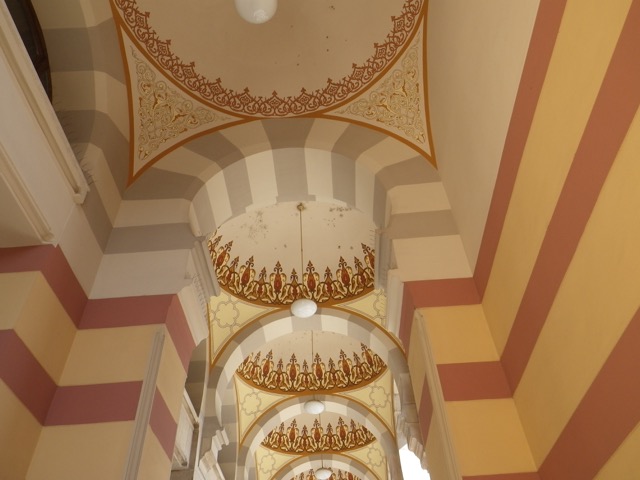
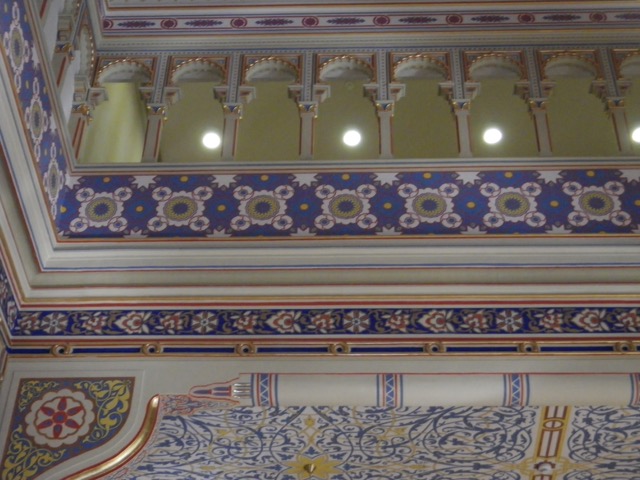
The ceiling mosaic. Wow!

imgp6558

imgp6559

imgp6560

One thing that I finally get after my two tours is why Sarajevans are so open to talking about the war and hold no punches. This is because they see themselves as victims, not as an equal culprits in the aggression. So when they talk about horrible events, they are not owning up to things that they did to themselves, but are pointing the finger at things that were done to them. That is my interpretation only and should not be taken as a judgement of the validity or not of this interpretation if it is accurate. But it makes a lot of sense and further helps me understand what happened here and why the impacts are so long-lasting.

imgp6561

imgp6562

imgp6563

imgp6564


imgp6567

City hall was the national library before becoming city hall again. It was the national library when it was bombed in the war. My guide yesterday said that this was an incomprehensible action by the Serbs because they were destroying their own heritage. Neno, from the walking tour, said that his grandmother still talks about seeing the ashes from all the books floating in the air.

imgp6568

imgp6569

imgp6570

imgp6571

This picture is of two soldiers on opposite sides of the war post-war at Srebrenica, site of the massacre of 8,000 Bosniak Muslims. I wonder what thoughts are going through their heads.

imgp6572

imgp6574

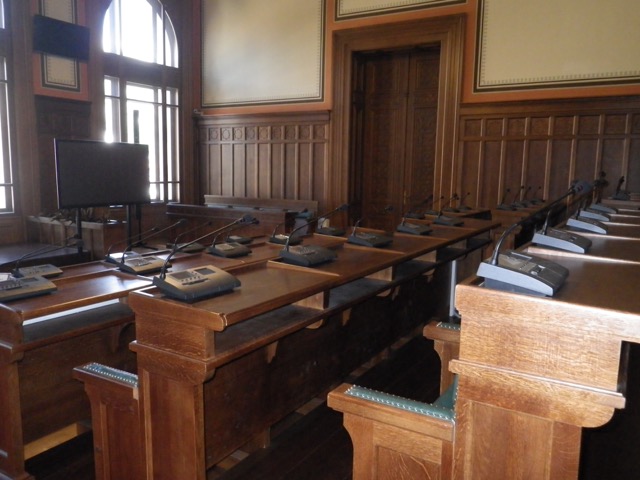
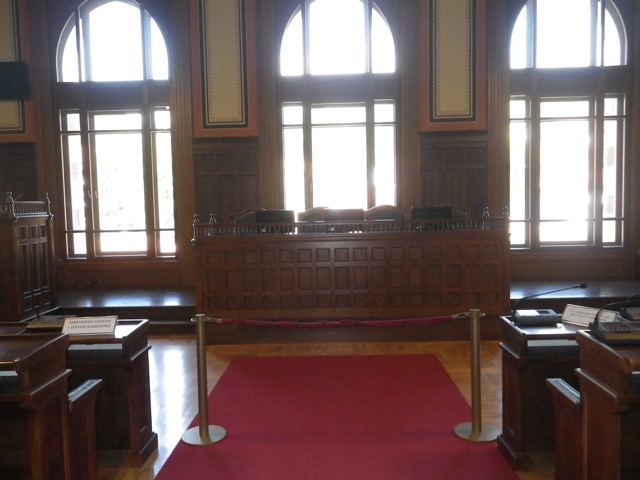
I was surprised by how much of city hall was open to visitors. Cordons and closed doors served as gentle guides telling us what areas were off limits.

imgp6575

imgp6576

imgp6577

This was a thorough exhibit about the history of city hall and Sarajevo in general. City hall was completed and opened in 1896. It was built in a pseudo-Moorish style, seen as a “cultural misunderstanding… regarded as a retarded form of foreign culture.”

Pardon the glare in these, but there’s too much information to just summarise it:

imgp6583

imgp6584

imgp6585

I saw video of the shelling in full colour. Tragic.

imgp6586

imgp6587

imgp6589

They began to rebuild almost immediately, just as it was one of the first major buildings to be destroyed.

imgp6590

imgp6591

imgp6592

imgp6593

imgp6594

There was an interesting section about the assassination of Archduke Ferdinand. The building that was a café and is now a museum has not changed much!

imgp6595

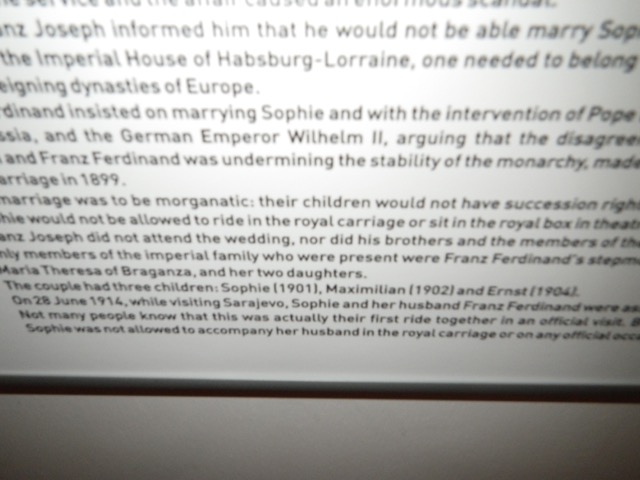
I was surprised that his marriage to Sophie Chotek was one of love and very controversial. She could not accompany him on official functions and their children could not inherit his title. To add a further sense of destiny to the assassination, it was the first time Sophie accompanied Franz Ferdinand on an official outing.

imgp6596

imgp6597

This photo of the lady running reminds me of something I forgot to share after the walk with Neno. He mentioned that his mother went to work in full makeup and heels even though her children begged her not to as she would not be able to outrun snipers. She said that she did so because she would be beautiful if she was left wounded on the street and also because there were reporters…

imgp6598

I learned yesterday, but forgot, that the peace accord was hammered out in Dayton, Ohio, of all places!

imgp6599

imgp6600

Those exhibits were essentially in the basement. I then went back to the main level and up to the first floor.

imgp6601

imgp6602

imgp6603

imgp6604

imgp6605

imgp6606

imgp6607

imgp6608

imgp6609

imgp6610

imgp6611

imgp6612

imgp6613

imgp6614

imgp6615

imgp6616

imgp6617

imgp6618

imgp6619

imgp6620

imgp6621

imgp6622

imgp6623

imgp6624

imgp6625

imgp6626

imgp6627

imgp6629

imgp6630

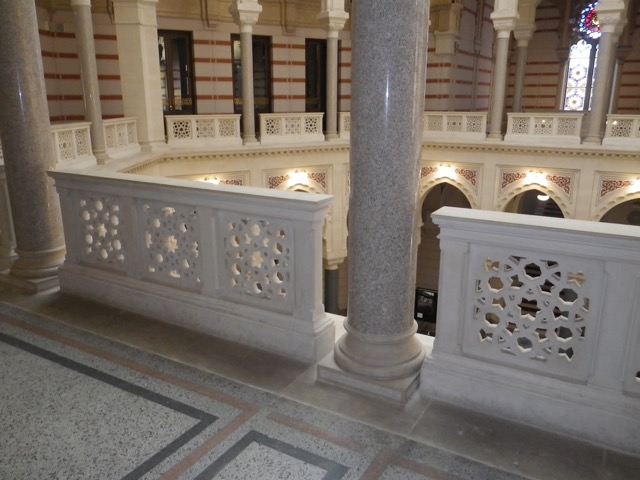
What am impressive building. I can understand how rebuilding it was important to Sarajevans and very likely boosted morale.

Next, I wanted to walk to New Sarajevo (across downtown down “Sniper Alley“) to photograph some of the things I saw on my tour yesterday. Sarajevo downtown is long and narrow as it is sandwiched by the mountains. There is a main thoroughfare that splits at the start of Old Town (Baščaršija), with traffic heading east passing south of Baščaršija along the river and traffic from the west passing to the north. Trolley cars go around Baščaršija in a loop. This map also happens to show the location of the brewery (pivara) across the river that I would visit later.

map

There are so many churches and mosques in this city that Sarajevo is known as Little Jerusalem.

imgp6631

imgp6632


imgp6634

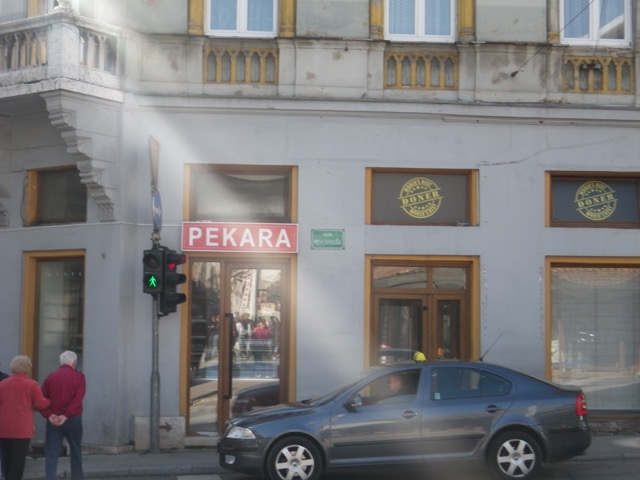
Vicki, there are TONS of bakeries in Sarajevo. Look for signs that say “pekara”! 🙂

imgp6635

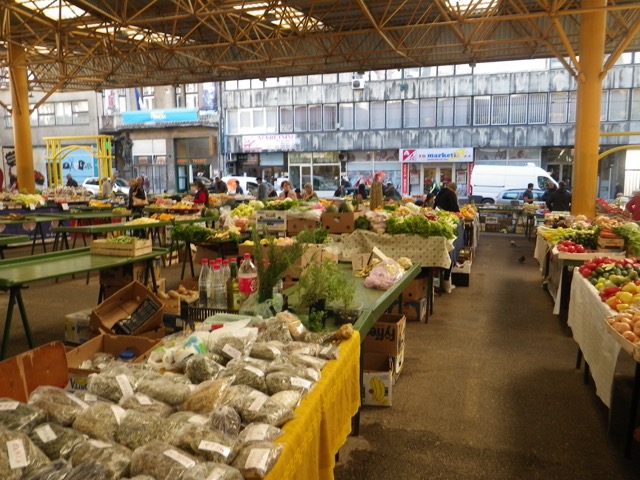
At the market I saw my first day, there is a memorial to the many dead in the war.

imgp6636

Loved the market!

imgp6637

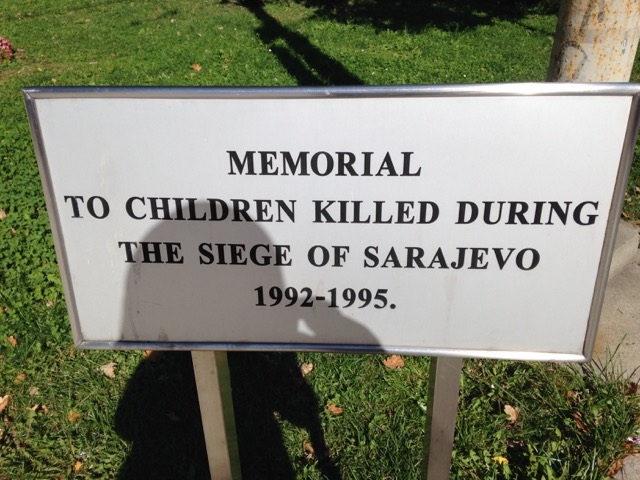
Next up was the memorial to all the children killed in the war.


img_1831

There’s a fountain but I just discovered I forgot to take a picture of it! There were fresh flowers all around it, with heartbreaking notes.

img_1832

There was a row of these lists of names, births, and deaths. This is very much  my generation.

img_1840

I noticed this subtle bit of art on the sidewalk by the memorial.

img_1841

img_1842

img_1843

img_1844

img_1845

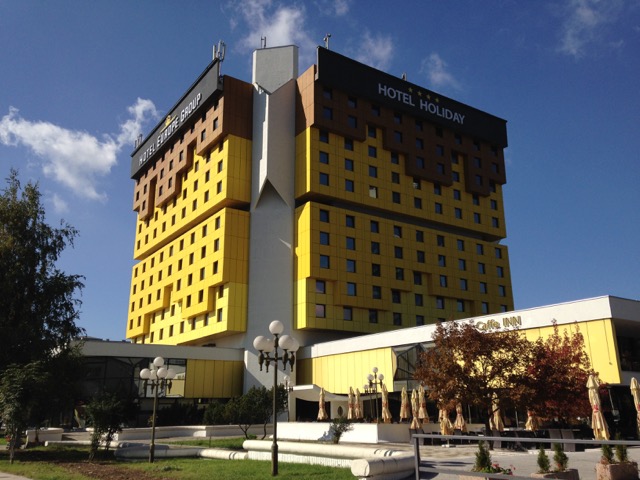
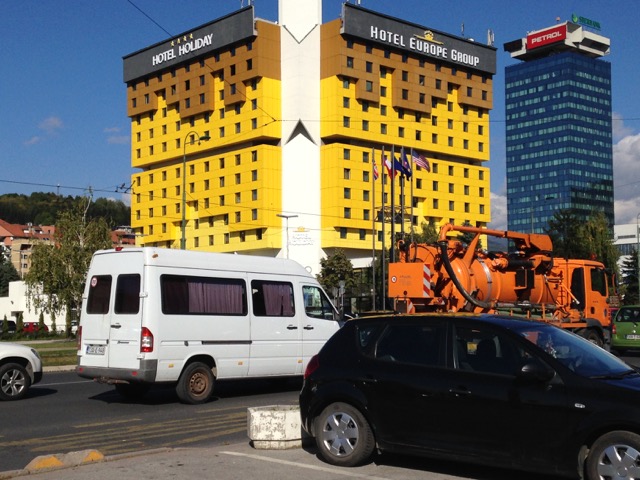
The iconic (former) Holiday Inn. I remember seeing pictures of it after it was shelled because its yellow façade is so memorable. It was never a direct target.

img_1847

A museum and I’m pretty sure something else even more important…

img_1848

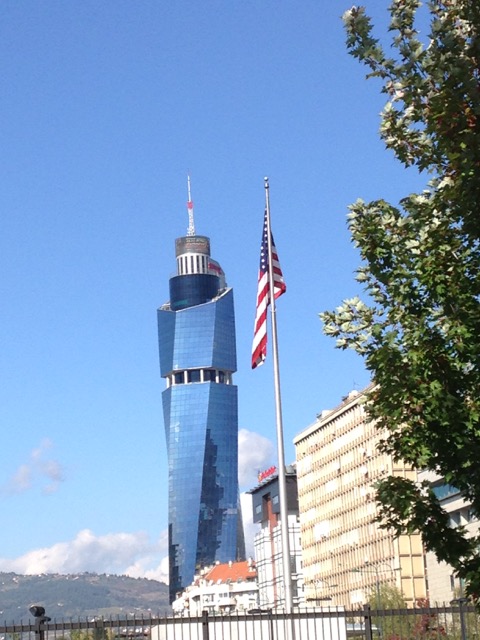
Our guide yesterday mentioned a building owned by a media magnate and I believe this is it. I stupidly stopped to take this picture in front of the huge US Embassy, but the guard who saw me do that did not speak up, so he must have realised I was not photographing the building.

img_1851

img_1852

img_1853

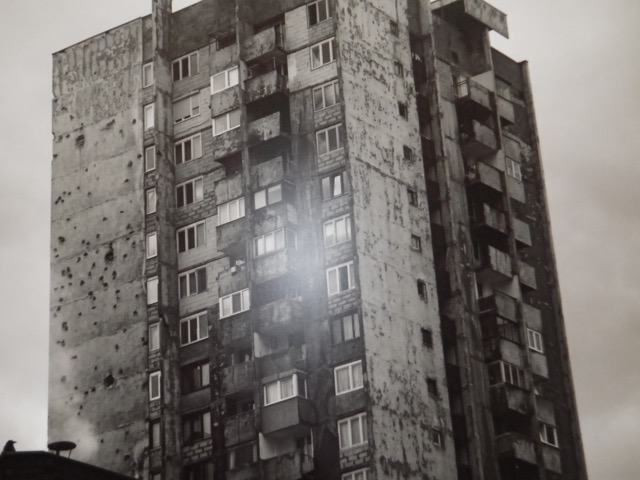
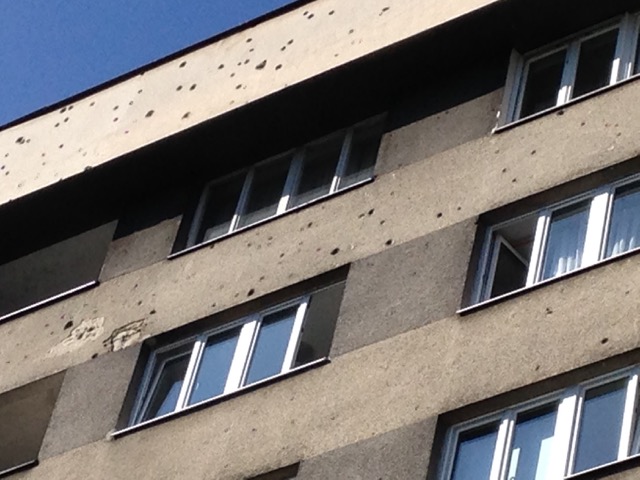
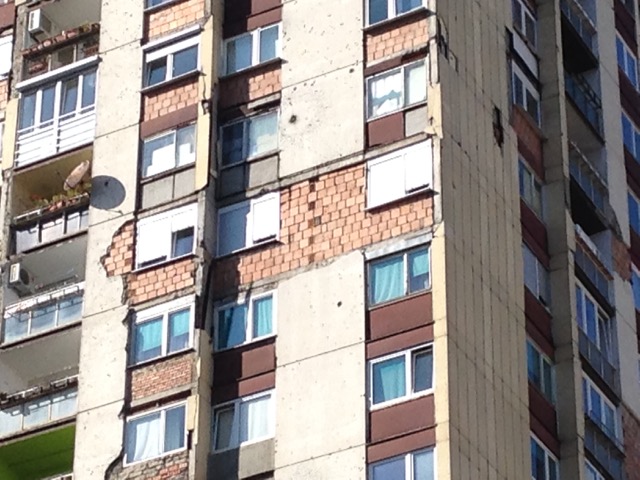
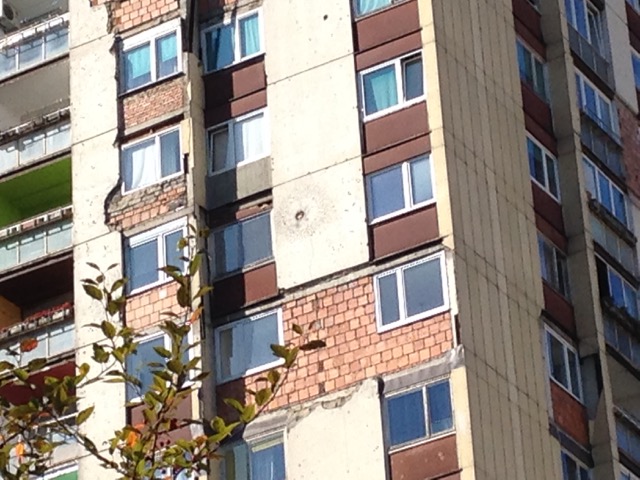
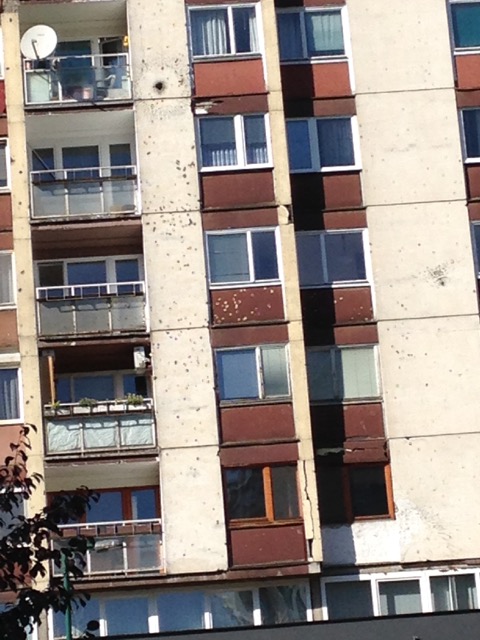
I finally got to the building that so impressed me yesterday. Can you see the impact crater? This is just one of many.

img_1855

Here’s another.

img_1858

Without embiggening this picture, I can see at least three impact craters. How can the structure still be solid?! There’s a Costa Coffee on the ground floor, a major chain, so they must trust the building…

img_1859

img_1862

There was more I wanted to photograph, but I was getting tired and still had to walk back. I’d walked 3.5KM since city hall and had to walk it back. I could have taken the trolley, of course, but there was more I wanted to photograph on the return trip.

img_1864

img_1865


img_1867

img_1868

This is where the road splits as we come into Old Town.

img_1870

This Courtyard Marriott is brand new.

img_1871

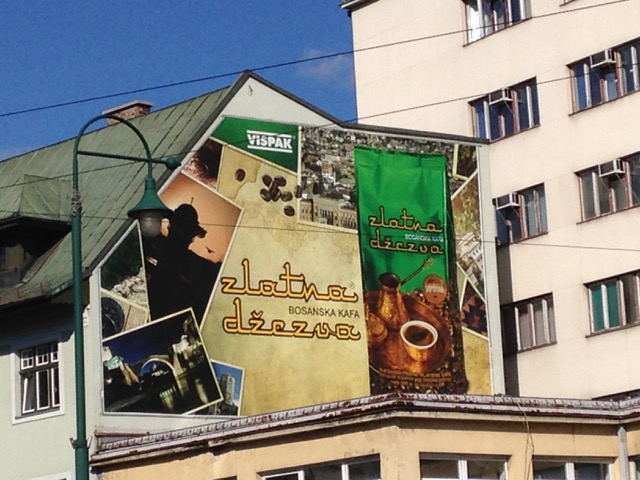
This is the brand of coffee I bought the other day. There are billboards for it all over the city, so it must be popular. I don’t like it nearly as much as my usual brands, but it is very satisfactory, especially for the price.

img_1875

By this point, I wanted a cold beer and decided to head to the Sarajevo Brewery, which for some reason wasn’t on my tourist map. I had a vague idea of where it was, but with the streets being as nonsensically laid out as they are, I knew I could wander around in circles for hours without getting to it. A half dozen, “Molim, pivo muzej?”s and pointing to passersby got me there. That’s, “Please, beer museum?” 😀

Entrance to the beer museum is 3KM, 5KM with a beer at the attached pub, or 25KM for lunch at the pub. I went with option two.

img_1876

The museum was really tiny and was only about the history of the brewery, with no opportunity to actually visit its operations. I was rather disappointed.

Sarajevans boast about having the first café in Europe, but beer was slow to come.

img_1877

img_1878

img_1879

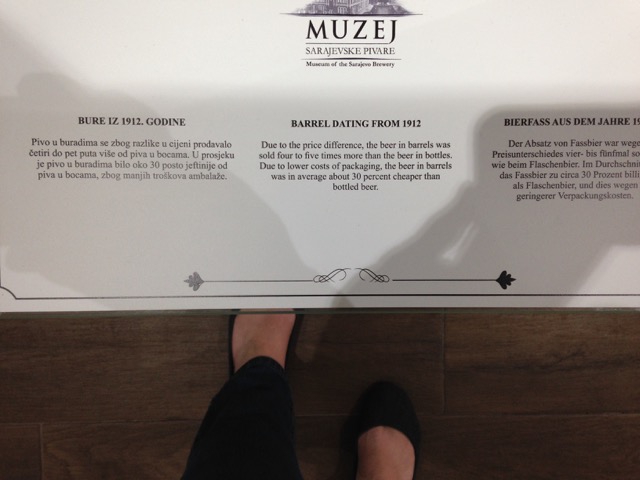
Barrels were the most popular container for beer as for equal volume compared to bottles, the price was about 30% cheaper.

img_1880

img_1881

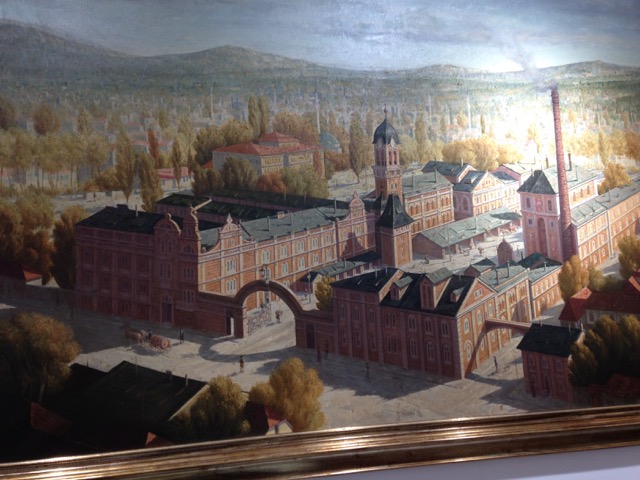
What a great painting of the brewery! Still looks like that.

img_1882

img_1883

This is the main newspaper in Sarajevo. We passed its building yesterday, but I didn’t get that far on foot.

img_1885

img_1886

The brewery had major operations until the start of the ’70s and then went into a steady decline. It continued with a token production during the war and was fully reconstructed and modernised after the war. There was a three-year contract with Coca-Cola to produce soft drinks, then a new contract was signed with PepsiCo.

img_1890

img_1891

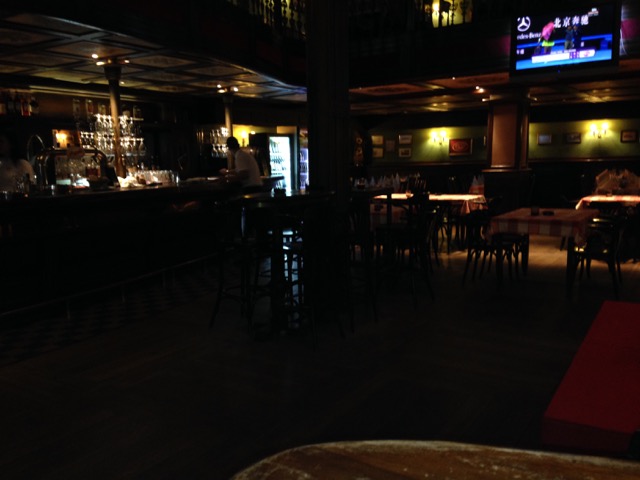
The pub was dead, but pretty cosy.

img_1892

It was rather a small beer and I wonder if I got taken as I have a hard time believing this was 2KM worth of beer (plus maybe a few sips as I think I’d tasted it by this time). This was a rather bitter lager, but tasty!

img_1893

img_1894

😀

img_1895

I cut through the market to get home and made a purchase! My travel purse has been both a blessing and a curse. I love all the pockets in it and its generous size, but the overly padded straps tend to fall down my shoulders. I also miss not having a bag that I can wear cross-body, keeping my hands free, and in which I can stuff purchases. So it was inevitable that I would end up replacing the bag on my travels and decided I’d start shopping when my sewing job on the handles started to give way, which was here in Sarajevo. Now, this isn’t really a location to look for the kind of bag I wanted so there wasn’t a huge amount of choice. But as you know, I know what I like. 🙂

I’d seen this bag several times over the last few days and when I came upon it on the way across the market, I decided to ask about the price. I’d seen similar bags marked 30KM, which was way more than I was willing to pay. My budget was 20KM (about 15CAD). The storeowner came out of her shop almost the second I started prodding the bag and brought it down for me.

I loved the beading.

img_1896

And the colour scheme.

img_1897

She quickly showed me the pocket in the strap, which is brilliant. Shame it’s not just a tad wider so my phone could fit in it.

img_1898

A zippered top is a must. I had to pass on a bag I loved even more because it didn’t have a zipper.

img_1899

There’s also an interior pocket for things I need to keep handy. I will miss not having more pockets, but one is better than none.

img_1900

The price was 25KM. but I noticed a slight imperfection in the stitching on the front, so I wasn’t willing to stretch my budget because I will need to fix it as the whole beaded panel could unravel. The clerk showed me other bags in the same style, but I found them hideous. After I passed on two or three of those, she pointed to the bag I liked, crossed out the 25 she’d written down and wrote, “20?” Yes, perfect! We were both very happy. 🙂

I bought dinner stuff and then headed up the hill, which felt about twice as steep as it did the other days. Boy was I tired!

For dinner, I put together a quick pasta that was the best pasta and sauce combo I’ve had since I got to the Balkans! I found these fresh Bosnian noodles and tossed them with a sauce that’s meant to be used as a dip that had much more complex flavours than any of the Italian jarred sauces I’ve tried.

Tomorrow was supposed to be my last day in Sarajevo, but a large work order came in, so I am staying till Saturday! This is a blessing because my next destination is expensive and will be difficult to get to, so I can travel there over a couple of days if I want to and then not feel like I have to take a private room with shared bathroom to save some money. I have to say that my last two weeks in the Balkans are growing murkier rather than clearer and that I’m no closer to knowing from where I’ll be flying to Madrid!

I think I’m done with tourism in Sarajevo because I have three solid days of work to do. I will venture out tomorrow to get groceries (and possibly a coffee if I go early enough), but the plan is to stay in all of Thursday with the hope of being able to finish early enough on Friday to hit a few museums. Somewhere in all of that, I will find time for another slice of Bosnian pie. I’d love to find the one with butternut squash!

A Walking Tour of Sarajevo

This morning, I took Neno’s free walking tour of Sarajevo. This was a really interesting tour as I got all the answers I wanted about Bosnian history. Neno remembers the war of ’92 to ’95 quite well since he was seven to eleven years old at the time and his family spent all 44 months in Sarajevo. But I’m betting ahead of myself.

The tour starts in front of the National Theatre at Susan Sontag Square. I had no trouble finding it even though it was off my map of old town. En route, I passed a few things of interest, like this clothesline. Can you imagine a city or even suburban town in Canada or the US permitting this?! For all we think we are forward thinking, we are incredibly short-sighted.

imgp6409

The hills on the other side of a river looked like a Hollywood backdrop, they were so beautiful.

imgp6410

Don’t they?!

imgp6411

I wish I knew more about these ruins. There is a dearth of signage in Sarajevo, something Neno brought up. Part of the reason is that there are disputes about who should pay for signs.

Sarajevo comes from two Turkish words, Saraj, palace or seat of assembly, and evo, valley. As I said in another post, I find that Sarajevo’s position in a valley is unusual. It definitely limits its growth.

imgp6412

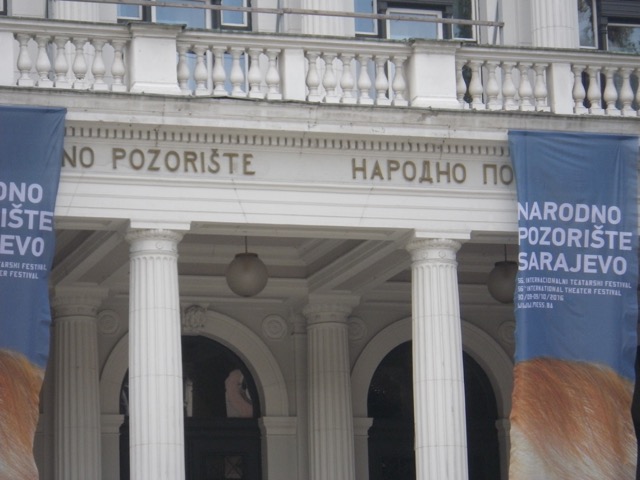
Here’s the National Theatre:

imgp6413

I was surprised to see Cyrillic. Neno would later explain to me that there is a part of Sarajevo, where the airport and East bus station are located, that is called Republika Srpska. It is a Serbian part of BiH and almost autonomous (think of Quebec in Canada, an example Neno brought up, not just my interpretation!). They favour the Cyrillic script while the rest of BiH favours the Latin script.

imgp6414

Neno started with a really comprehensive history of BiH. Surprisingly, it was a much easier narrative to follow than that of Bulgaria! In a nutshell:

The Ottoman Empire ruled here for  500 years, from the end of the 14th century to the end of the 19th century.

Austria-Hungary then came in for 40 years, which is when Sarajevo was modernized. Streets were widened, structures like the National Theatre were built, tram cars came in, street lighting was installed, etc.

After WWI was the first Yugoslavia, which was considered a period of stagnation. The capital was Belgrade and Sarajevo was neglected. There are no examples of Art Deco buildings in Sarajevo like you can see in Belgrade because there was barely any construction during the ’20s and ’30s.

After WWII came the second Yugoslavia, under the dictator Tito. Older Bosnians today think fondly of the ’60s and ’70s, remembering them as being more prosperous times. Tito died in 1980 and things went downhill over the next decade and a half, with the member states of Yugoslavia declaring independence one after the other.

The Siege of Sarajevo, “the longest siege of a capital history in the history of modern warfare” was started by the leadership of Republika Srpska, the Serbs, one of many ethnic groups in the area. They were vanquished by the Bosnians and Croats. The siege lasted 44 months, almost four years.

Neno comes from a mixed marriage, a Bosniak (Muslim) mother and a Serb (Orthodox) father. His father insisted on staying because Sarjevo was his home and, besides, there was no way the war would last more than a week… The family lives in “Communist blocks” about three kilometres from downtown on the eighth floor, so they rode out the war living in the basement of the building with their neighbours. Notice the tense I used at the start of that last sentence. It was not a typo. Neno still lives in the building in which he rode out the Sarajevo Siege.
He promised to tell us about how they got food and water later in the tour, so I will hold off on that, but said that they kept warm and cooked using firewood, essentially cutting down all the trees in their neighbourhood, then moving onto the furniture and books. He went to a makeshift school in the basement and his mother still put on a full face of makeup and nice clothes every day to go to work. Life went on.
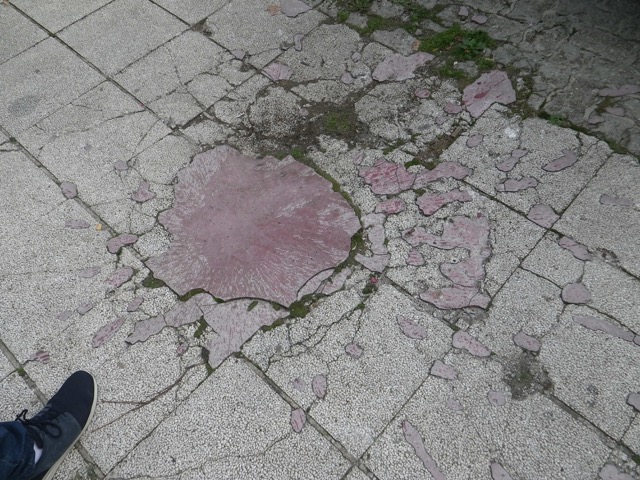
Our first stop was one of the “Sarajevo roses.” These are spots where mortar shells hit and which have been preserved by residents who feel that such little memorials are more significant than any statue. Neno poured water on it to make it stand out more. We are right by the National Theatre here. People died here.

imgp6415

Looking up to the hill where the bombings originated. It’s where the bobsled track from the ’84 Olympics is located. Which reminds me that Neno said that from his experience, people know Sarajevo for the Olympics, the assassination of Franz Ferdinand, and the Siege. I was rather ashamed that I did not know about the Olympics!


imgp6418

imgp6419

A very powerful message on this sign…

imgp6420

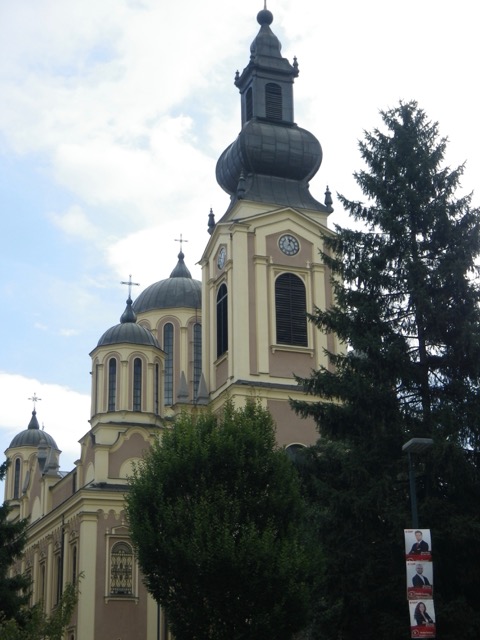
This is the older and largest Orthodox church in Sarjevo. It was recently renovated thanks to money that came from Greece (before its economic collapse).

imgp6422

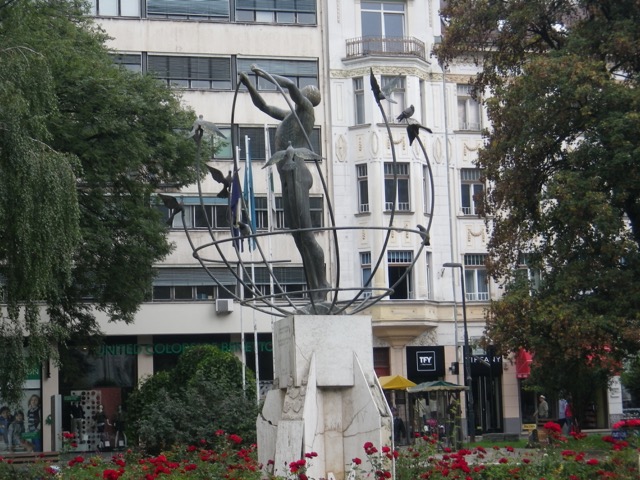
This statue was a gift from Italy after the war. The man is naked, so there was a lot of fuss made about it, similar to The Victor in Belgrade. Shortly after the statue was installed, someone put red pants on it!

imgp6423

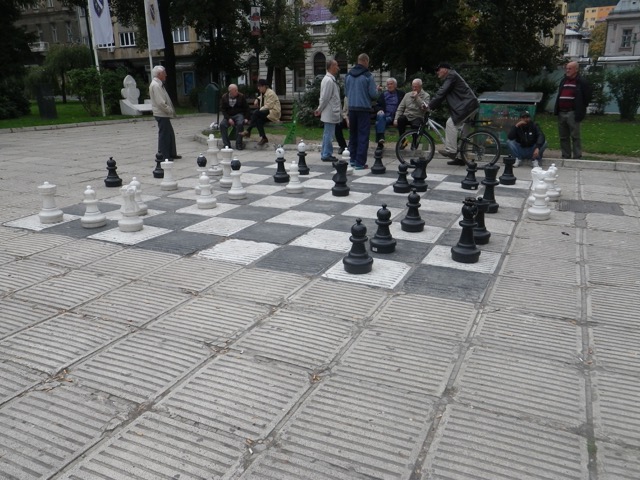
People play with this massive chess set every day, rain or shine.

imgp6424

Here is the only synagogue in all of BiH. It was originally built by Sephardic (Spanish) Jews and then Ashkenazi (German) Jews joined it later. BiH has a very small Jewish population, only 700 people, and the synagogue is barely used. The last wedding in it was 60 years ago!

imgp6425

imgp6426

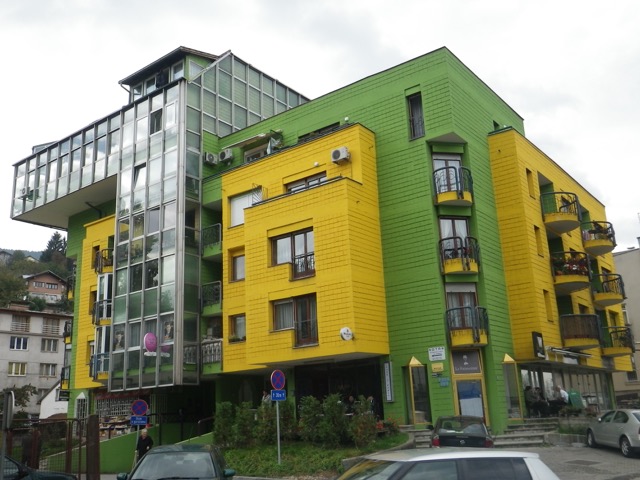
Next to it is the “ugliest building in Sarajevo,” an unusual piece of Communist architecture dating to the time of the Olympics. It is called the Parrot! Amusingly, rent in this monstrosity is a bit more than in the lovely Austro-Hungarian flats across the river because the view is better on this side.
imgp6427

imgp6428

imgp6429

imgp6430

imgp6431

Now, we get to the good stuff that made me so happy I took a tour. As it turned out, the assassination of Archduke Franz Ferdinand and his wife Sofia was NOT on the Latin bridge, but right at the corner of what is now the museum and what was then a café. Neno explained how it all went down and I could not help but think of the assassination of JFK.

The Archduke, in an open motorcade,  came down the road in the direction of this museum towards city hall. Members of the Serbian Black Hand group were positioned in two places to assassinate him. The first group left off a hand grenade that injured people, but did not kill the Archduke. The driver sped off and the second group did not get its chance.

The Archduke had his meeting and insisted on canceling lunch so that he could go to the hospital to visit the wounded. However, he forgot to inform the driver of this. So on the way back towards the hospital, the driver started to turn right here at the museum, which, again, was a café… where Black Hand member Gavrilo Princip was despondently pondering the failed coup. The car stopped and the assassin was able to kill the Archduke and his wife, which was the triggering factor for World War I. There is a definite sense of fate/destiny in the tale.

Because Princip was two weeks shy of his 20th birthday, the age of majority, he was only sentenced to 20 years in prison, rather than death as were the ones who made the initial attempt. He died four years later of tuberculosis.

imgp6432

imgp6433

imgp6434

We then moved on to the oldest mosque in Sarajevo, also recently refurbished, this time with money from Turkey. There are about 200 mosques in Sarajevo and the vast majority of Sarajevans identify as Muslim, although not all are practicing.

imgp6435

We acquired a mascot on our walk. Can you see the plastic tag on the dog’s ear? This dog is a stray and that tag indicates that s/he was sterilised. The stray dog issue dates from the war and they are dealing with it through sterilisation. This dog was incredibly sweet and just about everyone on the tour adopted it!

imgp6436

Here’s that oldest mosque again:

imgp6437

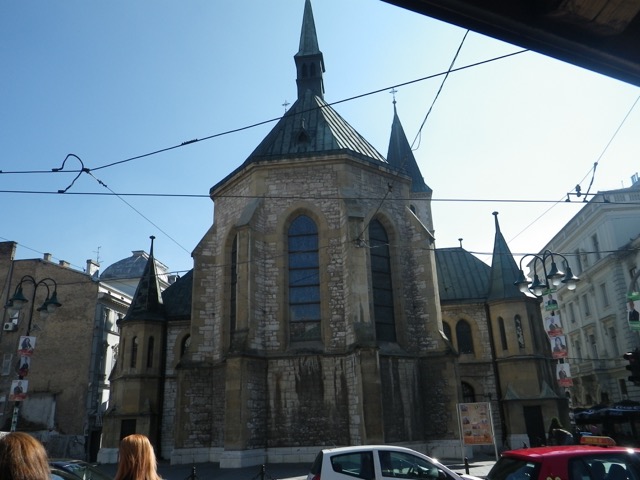
And here is the largest Roman-Catholic church in Sarajevo, with a Franciscan monastery next to it. All are welcome to worship here. Neno identifies as agnostic and says that he comes here on Christmas Eve with his Muslim friends to enjoy the service!

imgp6438

Across from the church is a beer brewery.

imgp6439

This beer brewery  was critical during the war as it sits over a large spring of good drinking water. This is where Sarajevans got their water during the war. Food came from the UN, which had a protected landing strip at the airport. Neno said his parents never had to pay for food, but it was very basic and they couldn’t afford anything on the black market. He recalls that some months after the war, his mother traded her gold earrings for the first chocolate he’d had in years and that it was the best chocolate of his life. The lesson he learned there was to appreciate the little things as they can be the most precious.

There is a pub next to the brewery and I will make a point to have a pint there!

imgp6440

imgp6441

imgp6442

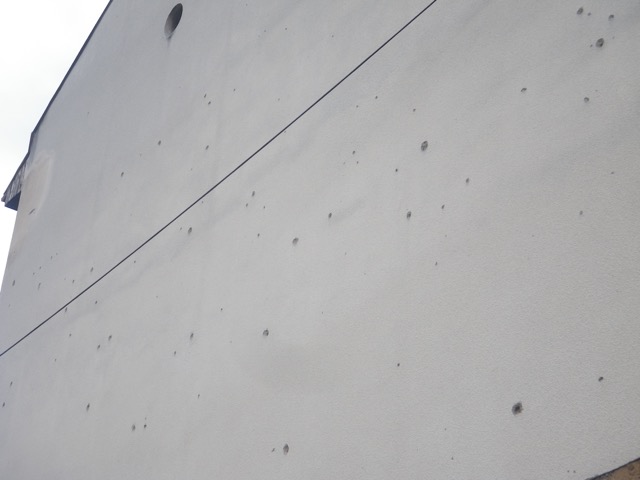
Continuing on, he pointed out buildings that still have shrapnel damage.

imgp6443

imgp6444

imgp6445

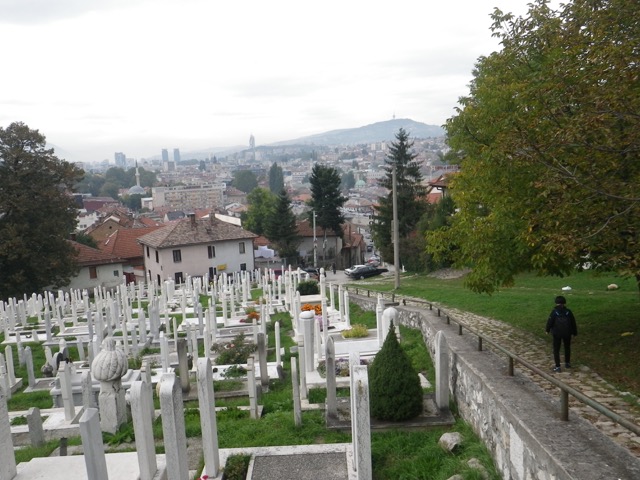
We went on to the oldest Muslim cemetery in the city.

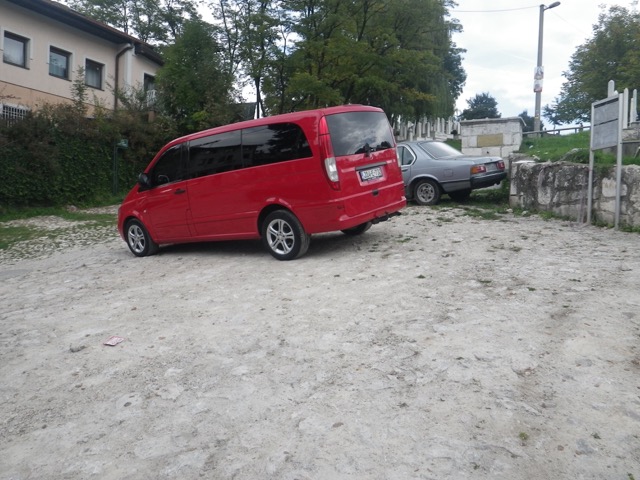
It’s kind of hard to see in this picture, but the slope of that parking lot was enough that I was seriously concerned about that van tipping over!

imgp6446

This is an ancient Ottoman road that led to Constantinople/Istanbul!

imgp6447

This is the oldest road in Sarajevo:

imgp6448

imgp6449

The Muslim graves show the head and feet, with the head pointing towards Mecca.

imgp6450

imgp6451

imgp6452

imgp6453

imgp6454

imgp6455

Here’s city hall:

imgp6456

imgp6457

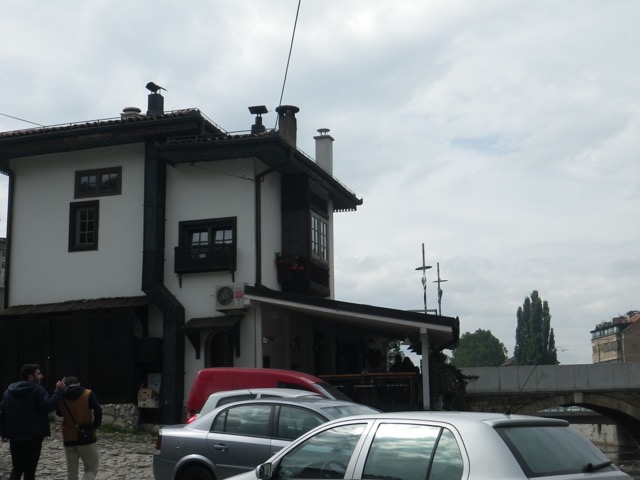
This is the Spite House. Eminent domain of sorts of practised to get the land on which sits the city hall. One owner said that he didn’t just want money, he wanted his house moved brick by brick across the river. It was and is now a restaurant!

imgp6458

Our tour ended here and Neno gave us a map of eateries to try out in Old Town. I headed off in search of a bathroom and then lunch! A bathroom was surprisingly easy to find and cost 1KM to use. I was going into one of these stalls when the attendant yelled out, “No!” to me and then made a motion of “go around the corner.”

imgp6459

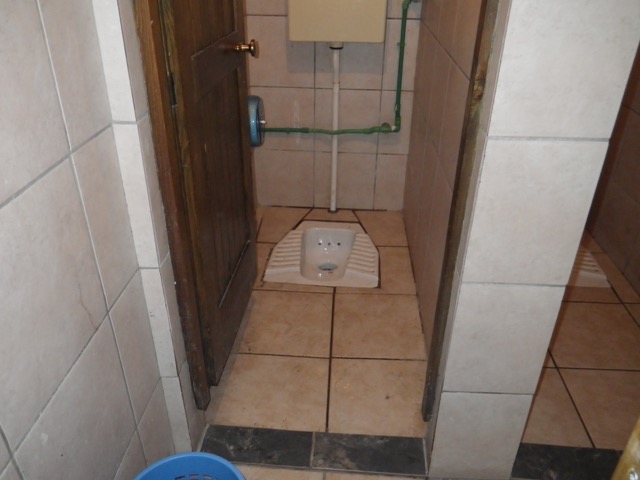
Where I found this. Personally, I would have preferred to squat and have toilet paper… 🙂

imgp6460

I found one of Neno’s recommendations for ćevapčići, Bosnia’s answer to the kebapche. I was the only tourist, no one spoke English, and the menu was entirely in Bosnian so I’m going to take his word that this was an authentic eatery! I pointed to the five-piece (kom) ćevapčići and asked for water. Unlike last night, when I got a bottle of water, I was brought tap water here (which was fine!).

imgp6461

Lunch underwhelmed me even though it was really tasty. I love the bread and the little sausages were actually more flavourful than kebache, but I could have used a little sauce, even if it was just ketchup. It was a cheap filling lunch after a long walk, but not something I’d want to eat regularly. I thought that  maybe I forgot to ask for something to go with the ćevapčići, but as I wandered around after and saw heaps of people eating it, I saw that that wasn’t the case. This is just how you eat it.

imgp6462

It was a little late in the afternoon for coffee, but I was in the mood. So after wandering around for a bit, I sat down at a cafe and ordered Bosnian coffee with a piece of hazelnut baklava. They had tons of different kinds, from Nutella and other chocolates to all sorts of nuts. I like pistachio the best and that was 2KM, which I was going to pay, then realised I’d never had it with hazelnut, which was only 1KM. So I decided to try something new! Like at lunch, pointing at the menu (which did have English) worked.

imgp6463

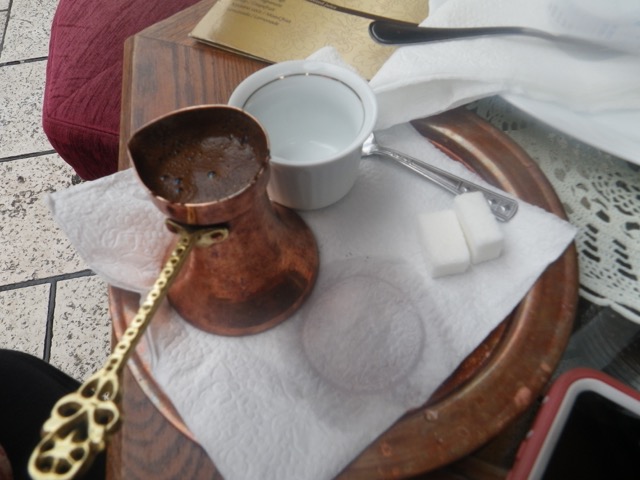
The coffee is simmered in this pot. I know I drank it wrong, but it was really good! I prefer milk to sugar in my coffee, but had the sugar for authenticity’s sake. Be careful as you drink as there is a lot of sludge at the bottom!

imgp6464

This is just what was in my cup and there was more in the pot. I poured some back into the pot to show on the cup walls how thick the sludge is.

imgp6465

I had a headache starting at this point and work to do, so I headed home for the afternoon. Now, I’m regretting not getting stuff to make dinner at home as it is pouring and cold outside. I think I’ll go through the pantry here and see if I can cobble something together!

It was a very informative day and I don’t feel nearly as emotionally drained as I would have expected. I’m hoping my tour tomorrow is a go, but I haven’t heard back. I think I will wander down to their office tomorrow morning and see if I can join the tour…