Revisiting the Rijksmuseum

Work went super fast this morning and at noon, I had an 1.5 hours left to do. I was torn between finishing and then heading later to the Rijksmuseum, or going to the Rijksmuseum for a few hours as a break, then coming home to finish. The latter choice felt more logical as I would have a solid four hours to see the museum. I suspected I only needed to spend two hours there, but I didn’t know how bad the queue would be to get in. Since the job was easy and I’m so well rested these days, I could finish up at my leisure before a later dinner.

It was really cold today, with frost on the grass in the square outside my flat and at the park I cut across to get to the Museum Quarter. Rather pretty!

I wandered around the Museum Quarter for a bit and found a street lined with stores featuring expensive designers.

The Chanel store was rather pretty, faced with clear green glass tiles.

There are a bunch of food stands on the plaza between the Van Gogh Museum and the Rijksmuseum. I’ve been pricing burgers for a bit and the burger I got here wasn’t cheap at 6 euros, but it was decent value for Amsterdam and tasty. It got cold fast, though! 🙂

I went next door and got a cafe cortado, which came with little cookies exactly like I fell in love with at the Mediterranean place in Sarajevo, and which was just 2.10 euros! I would never have guessed I’d find the best value of coffee so far in Amsterdam right on the Museumplein.

The lineup to get into the Rijksmuseum was interminable, a sharp contrast to the day I took this picture:

I got into the special line for folks who don’t need to go to the ticket desk. It wasn’t nearly as long as the regular line and it moved much more quickly. Can’t say the same for the coat check line and I kicked myself for forgetting I could have gotten a locker instead.

Since I’d already done a fast tour of the Rijksmuseum, I had a much better and more efficient plan of attack for today. I first headed to the special ground floor exhibits. I had no trouble getting in a second time with my Museumkaart, but some folks with a different card were told they had to get a ticket since their card was not scannable. The ticket was free, but they could not jump the queue to get it. I was devastated for them.

Like in so many museums, you can’t use a flash at the Rijksmuseum, so I’m going to try to be discerning and not show too many blurry ones.

So The ground floor has exhibits from 1100 to 1600, as well as special exhibits, where I started.

The first special exhibit I visited was the model ships. These were built true to life at miniature scale in the 19th century, a time when the technology of shipbuilding was growing in leaps and bounds thanks to such inventions as the steam engine. These scale models could be used to explain innovations to a lay person and to aid in the building of the full size models.

This is the figurehead from the frigate Prins van Oranje. As you can see, it’s a man in full armour.

A lighthouse model:

I wasn’t that interested in the gun gallery (armoury), but I learned that “the Netherlands was once a leading centre for the production and trade of arms.” I have to say that some of the guns were works of art.

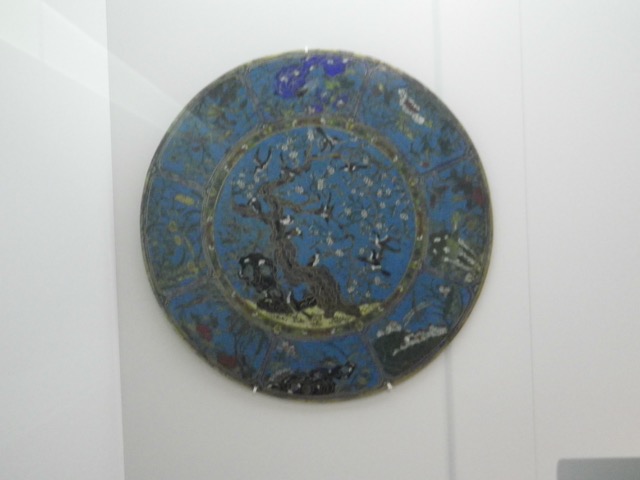
Then, I went to the pottery exhibit, one of my favourite parts of the whole museum. It’s actually broken into two parts, with other exhibits mixed in.

Blue and orange together make me happy.

This coffee and tea service shows that the application of enamel colours to porcelain was still a great challenge in the 1700s as evidenced by the fact that some of the pieces are more purple than pink.

This was an interesting object. It is a necklace made of four pieces of stovepipe. Surely meant as a concept and not something to wear!

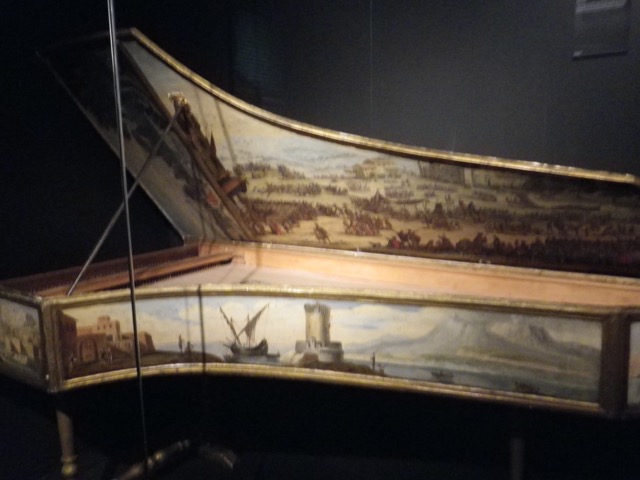
The musical instruments were also works of art. They were mixed in with a few other exhibits as well.

Love this bat pin.

And the dragonfly pin. Lovely detail on the comb.

A group of violins.

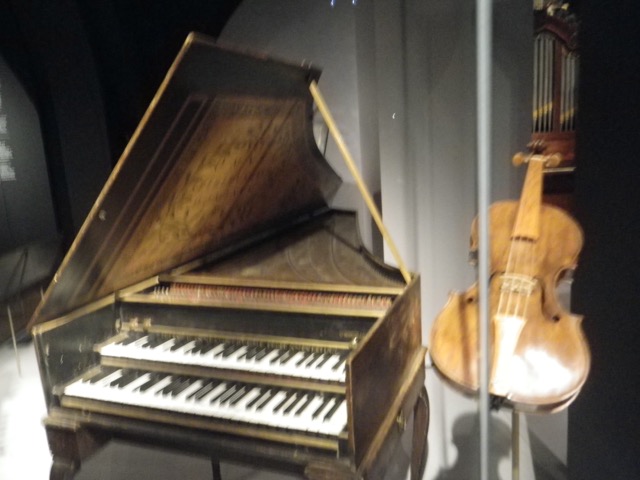
The lute (I think) that has a face is a hoot!

One of the things that enchanted me on my first visit was the Magic Lantern exhibit. These were the earliest forms of modern projectors. Images on plates of glass were projected. When the plates were changed in rapid succession, you got a moving picture. Very cool! They date back to the mid-1600s!

Here are some magic lantern plates.

We got to see one in motion. The arms on this windmill appeared to be moving.

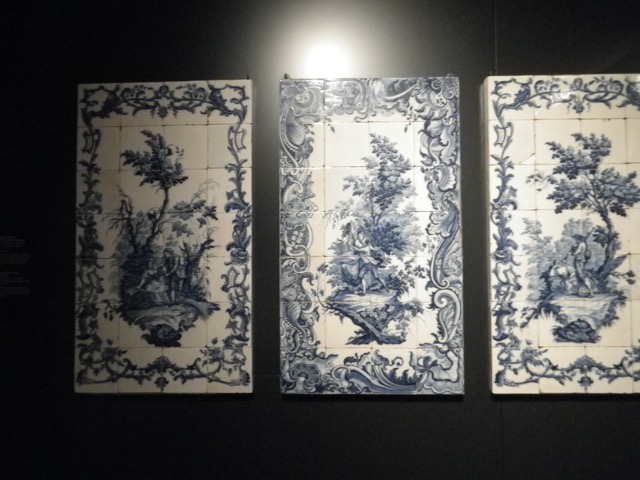
I then went into the Delftware (blue on white) exhibit, which had tiles and other decorative objects as well as practical items.

This is a roulette board.

This tile panel with a vase of flowers would have been fitted into a fireplace to give it interest when there was no fire burning.

I loved this dish with pomegranates and grapes because of the unusual colour choices the painter made. The grapes are orange and the pomegranates are blue and white.

This is a game box.

This is a beaker of ice glass, “an effect achieved by plunging the blown glass while still white-hot into cold water in order to produce cracks. When the glass is reheated and blown further, these cracks get bigger.”

There was a display of boxes.

Locks and keys:

There was an exhibit all about miniature silver things. Here are some mocked up in a dollhouse:

“Around 1700, porcelain vases of this size were extremely rare and prestigious.”

Coming back out of the model ships, I spotted this one. See the little figures on the deck? They are holograms! They were 3D and moving around. I’d never seen anything like it.

Next up was the exhibit about the Middle Ages, which I was not impressed with when I went through last time as it’s all religious art and objects. Yes, I know that was the theme of the day, but there was art that showed common life as well. So I rather blipped through this part of the museum.

Loved the colours on this painting:

A scene depicting the St. Elizabeth Day Flood.

The only known portrait of a black man in early European painting. He may have been been one of Charles the V’s archers, Christophie le More.

The ground floor of the Rijksmuseum has a picnic area for school groups and those with their own lunches. Look at that vaulted ceiling!

The Asian exhibit is tucked way in the back on its own. I don’t think people would know it’s there unless they studied the floor plan.

I loved the exhibit of kimonos.

This one was particularly unusual.

I was really impressed with this figure on my first visit. Look at the eyes!

I love Japanese pottery.

The museum has modern parts added to the old. So this would have been an exterior wall once upon a time.

Behind it was an exhibit of interesting photographs that did not photograph well. They were of collages of objects. The effect had a  3D texture that seemed innovative.

I would later see many more cabinets in this style. I think this is my favourite.

I headed up this back, almost secret, staircase to see the exhibits from 1700 to 1900.

There was a very cool light fixture that would “blossom” as it dropped down.

I wasn’t the only one who as mesmerised by it!

The staircase is really lovely. Shame its hidden away in a corner like that.

I watched the lights from the top for a bit.

Hope you can play this video!

There was more Asian pottery in the stairwell.

Next up was an exhibit of taxidermy about all the exotic critters Dutch explorers encountered.

Boa constrictor:

Capybara, an animal that is so exotic to me it might as well be a unicorn.

A llama.

So soft! I can now understand what all the fuss is about petting llamas!

Yes, that was allowed! 🙂

This entire hilarious sign is worth reading.

The museum has lost a lot of its period charm outside of what was once the main entrance, but you get the odd burst of it.

An Italian scene under umbrella pines.

A scene in the Rhine Valley. I can’t believe I remember that.

Pretty goblet.

This painting reminded me of the paint by numbers “style.”

I saw a couple more Van Goghs! This is Undergrowth:

One woman and her daughter came up to this one and said it must be Van Gogh. I knew it absolutely wasn’t, so I translated the sign for them (they only spoke French). The artist was, however, inspired by Van Gogh. The mother said that it was odd how the top is classical Dutch artwork, like dark like Rembrandt, and the bottom is Van Gogh. I explained that Van Gogh started in that darker style and then moved to the lighter, so this painting was rather like looking at the evolution of Van Gogh’s style. I hope she goes to the Van Gogh Museum!

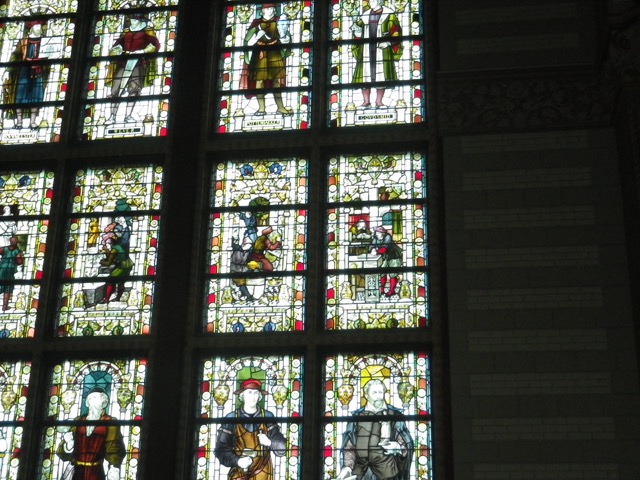
Some wandering around later, I climbed up what had once been the entrance staircase to go see the exhibits from 1600 to 1700, including the Rembrandts and the Vermeers. There is beautiful stained glass in this part of the museum.

And more vaulted ceilings.

Looking out into the main hall of the museum where you don’t need a ticket. Yes, this is an interior space.

The hall is gorgeous. I’m glad I got this picture last time as there were too many people today to make such a shot possible!

This painting depicts a breech of the dam. I love how your attention is drawn to that bright red cape billowing in the wind and conveying the drama of the scene.

Now, a hodgepodge of stuff.

Another incredible cabinet. Pretty sure this was made from hundreds of tiny pieces of wood in different colours.

Not sure if these incredible items had a function.

This enamelled violin was just a decorative object and could not be played.

Just wow…

More wow.

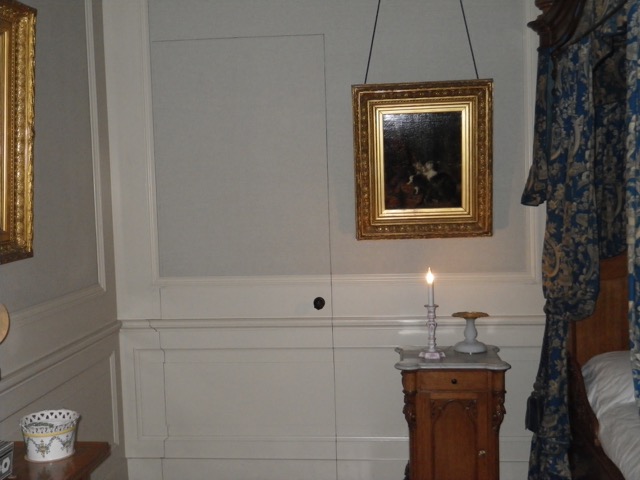
I would love a four-poster bed with a canopy. 🙂

Another incredible cabinet.

The painter of this red ibis with an egg was my kind of woman. Her name was Maria Sibylla Merian (1647-1717) and she was an artist and a naturalist. In 1699, when she was 52 and divorced, she and her youngest daughter sailed to Suriname!

Grey as it is, I really love the drama of this one.

Rembrandt’s famous Night Watch:

Vaulted ceiling in the great room holding the Rembrandts and the Vermeers.

Vermeer’s The Milkmaid. To be honest, I don’t remember learning about Night Watch in my art classes, but I definitely remember discussing The Milkmaid and how the milk being poured is the only sign of movement in the whole thing.

Another mosaic in the entrance hall floor.

This cheap crown was meant to be a gift for the King of Ardra on the west coast of Africa, but it never reached him.

Here is one of those box beds I saw at Rembrandt’s house, only his were proper cabinets with doors that shut.

A crib.

A map of the Iberian Peninsula. The bright blue lapis lazuli has faded to grey.

I loved these stained glass windows!

Her crooked eye is a lovely human detail.

Two oaks.

Another one of Rembrandt’s famous paintings.

Yet another magnificent linen cabinet. Just be grateful I’m not showing you them all!

William II, 14, and his bride, Mary Stuart, 9.

A hat with a bullet hole in it.

I was happy to see imperfect items on display.

Vases.

A composition of exotic fruits.

A feast of turkey pie.

The olives are so life-like.

As is the fruit.

Next, I headed upstairs to the section about 1950 to 2000, which I missed on the first trip. This is a researched and imagined view of Moscow by an artist who had never been there.

I then had to go all the way back down the way I had come, cross the museum, and go all the way back up to the exhibit about 1900 to 1950.

Love this painting.

And these vases.

A war-themed chess set.

A numbered prison coat from the Lenzig-Pettighofen concentration camp in Austria.

I rather like this piece except for the chrome legs.

A pressed glass set from the 1930s in a style that never caught on, so not many were produced.

I was done, so I rode the elevator all the way back down. Here’s the main lobby, facing the entrance to go left to the Asian exhibits.

Behind me is just a small part of the ticket line. Imagine twice as many people (at least) waiting outside! It was three by this point, so, really, I think these people are wasting their money as the museum closes at five.

Looking towards the café.

Back out in the bitter cold and needling rain.

The Rijksmuseum is a truly incredible space. The layout definitely seemed a lot more logical on this trip than my first. I just don’t like how the 1st and 2nd floors are out of order when it comes to dates, although I surmise that it was done that way so that Vermeer and Rembrandt could have the Great Hall. This is an expensive museum (17.50 euros per adult), so I recommend spending at least three hours in it. I spent about five hours total in it and that was plenty for me. If you get a Museumkaart, you can go in multiple times.

There are a few more museums I’m interested in, but there’s nothing hugely pressing. I still have five days to fill and seven museums on my list, so  I am off to do some holiday closure research. 🙂

Also, I will have another post up in a few hours, a 2016 recap.

The Royal Palace of Amsterdam

One of my orders for today never showed up (not a huge surprise with that client) and another one was mostly blank air — that I still get paid for in full. So I was done for the day by noon! Woohoo! I decided to head to Chinatown for lunch and then visit the Royal Palace of Amsterdam. Other than doing a proper tour of the Rijksmuseum, that would cover me for all the major Amsterdam Museums in case work really did end up pouring in. Spoiler: I really won’t have time to go out the next two days. And with the weather being as close to freezing and as foggy as it was today, I don’t think I would have made it out had I not had my Museumkaart as motivation, so yay for it!

Downtown Amsterdam has these neat electronic billboards with a switch that you can press to bring up a city map. I did that when the map suddenly switched to this amazing advert for “Sherlock,” whose next season I am ridiculously excited about being able to watch in real time (one episode here in Amsterdam, one in Hebden Bridge, and one at the cinema in Halifax!). This was very effective advertising and I actually caught several as I headed towards Dam Square.

For some stupid reason, I cannot stop using Google Maps even though it is a waste of space on my phone, so I ended up wandering around the Red Light District/Chinatown in circles trying to find the restaurant I was headed to. So yay for some extra sightseeing, if I want to be positive. But the app finally got deleted! Good riddance to rubbish taking up precious space on my phone.

You know how folks seem to think that French looks and sounds all pretty? Let me just say that the translation of that text is not lovely!

I found the New Season Chinese restaurant that had good reviews and was listed as a favourite by locals as well as considered “cheap eats” by Amsterdam standards. I really wanted some meat (trying to eat vegetarian at home to respect my vegan hosts), so I ordered a chicken and veggie stir fry with udon noodles and added very spicy red chile paste. SO good!

The server spoke perfect English and was very friendly, making me feel very welcome. She was quick with my drink order (beer, of course, since it’s practically the same price as anything else) and checked up on me. 13 euros total, which, believe me, is a good price for a sit down lunch with a beer in the parts of Amsterdam that I’ve been!

I then doubled back to Dam Square, which was VERY busy.

I have no idea how people find their bicycles!

Lots of people and pigeons in front of the Royal Palace. Darth Vader was playing a lament, presumably to Princess Leia. RIP.

One of the most amazing things that has come out of this great European adventure was seeing this sign and being able to giggle at the fact that I could recognise that they dropped the ball with the Russian! For those who are curious, the first word of the second line should be the second word of the first line, ie. in the big letters. “Welcome” is two words in Russian, so they basically have the Russian as “WEL (new line) come to…”

There was a very long queue to get into the Royal Palace. As I got closer to the ticket booth, a security card called out to anyone with a ticket or membership card of some type to go to him. I figured I qualified, so I did that and was able to not only get ahead of about two dozen people, but snag one of the last free audio guide players! The benefits of the Museumkaart aren’t just monetary!

The reception area was very busy, so I was surprised that there was barely any wait at the coat check.

I’m surprised by how much I love these monochromatic and rather posh Christmas decorations, considering how I tend to prefer bright colours and rougher textures.

The following is verbatim from several informational placards in the lobby area.

“The Royal Palace was built in the 17th century as the Town Hall of Amsterdam, after a design by Jacob van Campen. Its paintings and sculptures were made by some of the most distinguished artists of the time and allude to the city’s influence and prosperity in the Dutch Golden Age.

“In 1808, Louis Napoleon, brother of the French Emperor Napoleon Bonaparte, became King of Holland and converted the Town Hall into a Palace. The superb collection of Empire furniture, clocks, and chandeliers date from that period. The collection of Empire furniture is one of the best preserved and most complete collections in the world.”

“The Royal Palace of Amsterdam is one of three Places used by the Dutch Monarchy, notably for State Visits, Award Ceremonies, New Year’s Receptions, and other official functions. The building plays a role in royal marriages and in the abdication and investiture of the Monarch. When the Palace is not in use by the Royal House, it is open to the public.”

The tour was too fast paced and crowded to take notes, so I unfortunately have to rely on memory for everything the audio guide told us as there is very little actual signage within the palace. You also cannot use a flash, so most of my pictures are terrible. I’m going to include a few to show just how magnificent the building is, but, really, I cannot do justice to it. Do know that the building was embellished and turned into royal apartments during a two-year period at the start of the 19th century.

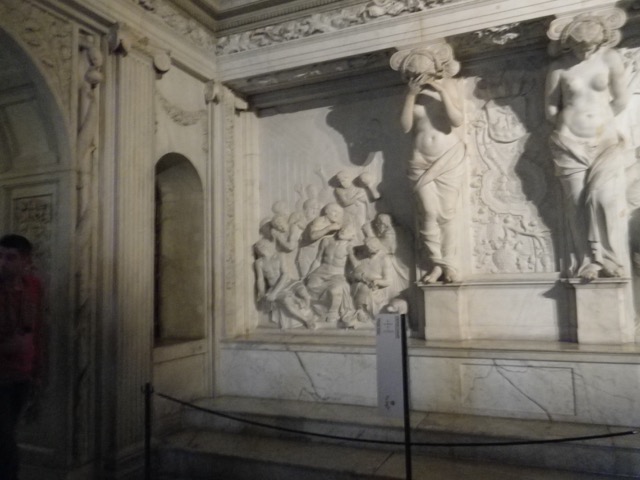
I started my tour in the last room because it wasn’t too crowded. This is the Tribune, where sentences were carried out in view of spectators in Dam Square.

There are three scenes portrayed in marble. This one is from the story of judge who would take both eyes of a rapist found guilty. One day, his son came before him and so the judge’s sentence was that his son lose only one eye and he, the judge, would lose an eye of his own.

This story was memorable. Two women are fighting over a child and there is a dead child at their feet. The judge has to decide who is the real mother of the child. So he rules that the living child will be cut in half. At this ruling, one of the women relinquishes her claim on the child, identifying her as the real mother.

Looking up to the Proclamation Chamber:

If you’re surprised that these snakes caught my eye, you haven’t been reading my blog for long.

The doors into the tribunal were also works of art:

This is the lectern where the sentence would be read.

People in Dam Square would look through these grates to see justice carried out.

Lady Justice is blind.

I then headed upstairs to the main part of the palace and all the public rooms available to view.

You enter into the magnificent Citizen’s Hall, which was meant to represent the World. It was originally a public space, then became a reception hall for the monarch. There are maps on the floor and the room is anchored by Atlas. Like in all the rooms, the audio guide explained the original purpose of the room when the building was the town hall, then the royal purpose, and finally, the modern purpose. You could also listen to optional audio about various objections. So, really, that was a lot of information to remember!

I could see Nova Scotia and Acadia (New Brunswick) on this map.

From this room, halls lead to the north and south galleries. The space is confusing to get around, but the audio guide does a good job of getting folks from one room to the next in a logical fashion. I got misplaced at one point, but a very helpful security guard got me sorted.

At this point, I was being bombarded with information, so I’m just going to give the name of each room and a picture or two. They all started to look alike and, frankly, I can’t remember which room with the word magistrate was once a queen’s apartments or the difference between the different treasuries!

Magistrate’s Chamber:

Little hallway space leading to the next room (I liked the floor).

Bust of the monarch Louis Napoleon (I think that was his name…).

Commissioners of Petty Affairs, where small things like neighbourly disputes were settled. I do remember that if you swore in this room, you had to pay one guilder!

Treasury Extraordinary:

This is the first room I encountered that has a bed. Get this. It’s actually a bedroom when the palace is closed to the public and has visitors. Can you imagine trying to relax in this room???!!! It was at this moment that it truly sunk in that I was not in a museum, but in a working building.

We exited into the South Gallery.

The Secretary’s Office:

Here’s the Treasury Ordinary, which is another bedroom:

Then the Burgomasters’ Cabinet:

And the Burgomasters’ Chamber:

I found myself in the Balcony Room/Proclamation Gallery looking down to the Tribune. This room leads to a balcony overlooking Dam Square where the Royal Family will present children, kiss at weddings, and do other such things, just like we see at Buckingham Palace in the UK.

Next up was the very cheerily named Execution Chamber, where the condemned would be brought up from the tribune to pray before being executed. After the building became a palace, it was a reception room for the Queen.

Next up, the City Council Chamber. This is where the modern monarch abdicates and the successor has his or her inauguration. Abdications and inaugurations? I’m not up on the protocols of the Netherlands royal family either, but it is quite different from that of the UK.

Then, I got lost on the way to the next room and found the Insurance Chamber, where I learned that insurance rates in Amsterdam were so low that people came from all over to buy their insurance.

Then, the Bankruptcy Chamber, where Rembrandt’s bankruptcy was processed (these two rooms appear to be mirror images of each other):

I made my way back to the Citizen’s Hall and a staff member directed me to my next destination, the Orphan’s Chamber, where the lives of children with only one or no parents were administered. Orphanages were also run from this room, which is now a bedroom for state functions. I’m trying to imagine myself as a guest sitting at that table writing a blog post…

Then, the Chamber of Accounts, whose bed actually looks comfy:

I can almost imagine curling up on that sofa. Almost.

The Chamber of the Magistrates Extraordinary:

That concluded my tour. I headed back out to Dam Square through these heavy doors. The wind was bitter and needling rain that threatened to turn to snow stung me.

One last glimpse before braving the weather.

The famous balcony:

The Royal Palace of Amsterdam is a breathtaking space, especially its Citizen’s Hall, and I learned a lot about the administration of Amsterdam during three periods of history. It’s definitely a must-see!

Fancy lamp post base on Dam Square

I stopped at the large Albert Heijn behind the Royal Palace to get some groceries and was rather overwhelmed by all the offerings and how Dutch can look so much like French and English in many regards, but not where it matters, like on ingredient lists! I was hoping to get sushi for dinner, but this store only had large plates of it.

Tired of throngs, I decided to try to make my home home through quieter streets and maybe even find the Albert Heijn where I got sushi over the weekend. Well, I made my way there with no detours! They had the smaller plates of sushi (yay!) and I was able to get home without any problems, although I didn’t take the exact same route I took on Sunday. It’s amazing to be getting somewhat orientated in such a confusing layout of a city. Once again, I am so very grateful to have the chance to truly live in Amsterdam in a proper home in a non-tourist area.

Tassenmuseum Hendrikje (Bags and Purses), Museum Willet-Holthuysen, and Rembrandt House Museum

I slept in a tad this morning and took it easy since I’ve been getting up early since I got here. I did a bit of my work for the day and set off late morning for the third museum in Amsterdam that I might have visited had I had to pay piecemeal for each entry: the Tassen Museum of Bags and Purses, the largest such museum in the world.

The sky was a strange colour as I stepped out of my flat.

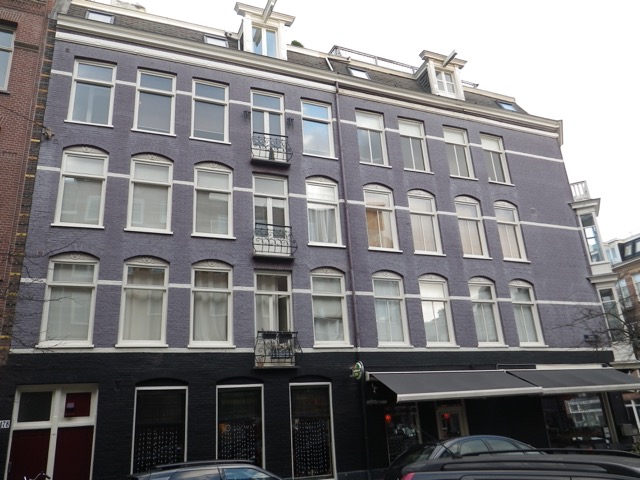
I love this purple building at the end of my block, a good example of how a building can be colourful, but not garish.

Moped parking spaces.

What is that blinding thing in the sky?!

A museum devoted to cat stuff. Sadly closed today.

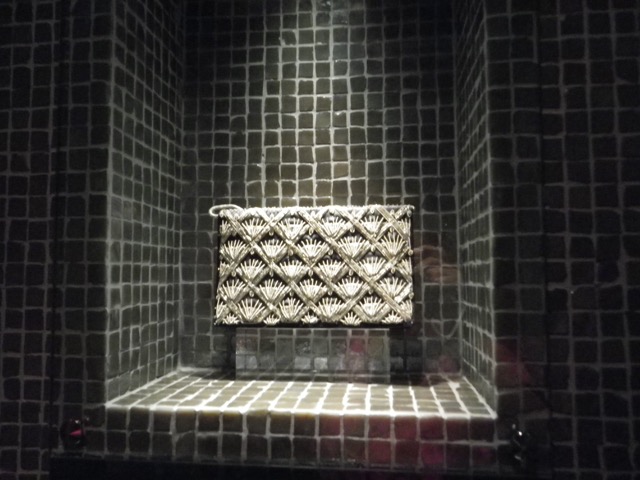
The Museum of Bags and Purses is in a canal building and the exhibits cover the history of bags from the 16th century to present day. The building housing the museum was built in 1664 for a former mayor of Amsterdam, Cornelis de Graeff, and restored as the museum in 2007.

I took about 50 billion pictures in this museum, but since everything was behind glass and I couldn’t use a flash, not many came out well. So I will show restraint. 🙂 I went through twice, so the pictures are going to be out of order. You enter the museum into a ground floor bag shop and then go up to the third floor to then work your way down.

Gaming purses.

Beaded bags were quite a luxury. They were first knit, then woven. Some have as many as 50,000 beads.

The need for sturdier bags made leather popular as the train travel age started.

Tortoiseshell was popular, but expensive and finicky. Advances in plastics made it possible to create replicas.

Snake skin with ivory clasp.

Prickly pear fibres and lace, dating back to 1789!

Chatelaines, which hung from a belt and then things like a thimble, watch, keys, sewing kit, etc. would hang from them.

Bags with silver frames were passed down from mother to daughter. The frame would be reused with a new bag.

Men’s leather bag. Bags for men fell out of favour as their clothing got pockets.

Very similar to chainmail.

Until recently, it was mandatory for Dutch schoolchildren to have a leather bag like these. Now, many use backpacks.

These were used before the leather bags. They held a tablet and stylus and served as a lap desk.

Novelty bags.

I like the stegosaurus look with the turquoise knobby bits.

All sorts of travelling cases.

These were popular as plastic became a common material.

Tulip bag.

I had to pay a 1.50 euro surcharge as they have a special exhibit about royal bags. I breezed through this on my first pass as it was crowded.

These belonged to Queen Elizabeth II.

I had kind of sort of thought to treat myself to a cream tea in their café, but it was closed today. I was told to help myself to free coffee or tea and cookies, though! Wow! Am I glad I didn’t get a coffee before going in and, of course, this rather makes up for the supplement I had to pay. 🙂

The café setting is extraordinary.

The crowd had gone through, so I went back to the top and started all over.

This 16th century bag had secret compartments. Intriguing.

Very pretty. Kind of looks like Mount Fuji?

Closeup of chatelaines with “stuff” on them.

Yup, Charlie Chaplin.

Very heavy cut steel bags.

See the teeny pencil?

Art Deco bags.

The SHOES!

Peacock feather bags.

Lobster bag, LOL

Margaret Thatcher’s “Weapon.” Google it!

Gateau (cake) bag.

“Socks” bags after the Clintons’ cat. To the left of it is a picture of Hillary Clinton holding it.

Versace bag used by Madonna at the premiere of “Evita.”

Sunflower bag.

Love the budgies.

*Swoons* Love that snake head clasp!

This bag was held by a member of the Dutch royal family and we got to see how it was selected and dyed to match the dress.

This jewel was in a toilet stall!

And this one in another stall!

Wall hanging.

Amusing donations box.

I’m always attracted to bags with such bright colours (we’re in the shop now!).

The Tassen Museum of Bags and Purses was incredible. I am a real bag nut, but not in the sense of wanting expensive designer bags that I’m afraid to use. I love finding unique bags at thrift shops, especially well worn leather ones. I have little patience now for bags made of PVC that will age quickly. There were so many bags in the shop that I would have loved and not all were at terrifying prices. I would definitely consider this museum a place to shop for a nice bag and I think it would be lovely to have high tea in their café, although if you factor in the price of admission, it’s extremely pricey. Definitely something I’d consider if I was a Museumkaart owner living here full-time, as that would reduce the total cost immensely.

I didn’t get anywhere near the next museum on my list when I passed one that was right up my alley, but hadn’t been on the list of Museumkaart member museums I’d consulted. I’d figured out that that list was outdated since none of the admission prices were right. So I went in and asked if I could get in free. Yes! It is the Museum Willet-Holthuysen, which gives you the opportunity to wander all through a canal house that was willed to the city of Amsterdam for public use in the 19th century. I’m a bit of a voyeur in that I like to go through houses and see how they’re decorated, so I could not miss this!

You know straightaway that the family was rich because they had one one set of stairs but two leading up to the front door. But you enter the building through the basement door.

Looking down the basement hallways to the kitchen and the back of the house.

All of these items were crocheted, LOL!

Some of the kitchen wall tiles had interesting details.

Even the clock was crocheted!

The secondary kitchen, for messy chores.

The garden at the rear of the house.

Look towards the front of the house.

You then go up this magnificent staircase to the first floor of the house, with the public rooms.

The front door.

The house had a doorbell.

The women’s salon, where the owner, Louisa Holthuysen, received her guests.

The ballroom, where they had parties.

The stunning blue “club room,” where the husband, Abraham Willet, received his male friends.

Love that painting at the top.

The ceiling.

Love this painting too.

The dining room had a low ceiling because there is a pantry above, halfway between this floor and the next. The brochure said the pantry was not open to the public, but it was. Signage throughout the property indicates that they are constantly renovating it, so I guess the brochure is a tad outdated.

Now into the conservatory at the rear of the house.

Signage says this room needs a lot of work to return it to its former vibrancy.

Heading upstairs to the private rooms, I found the entrance to the pantry. This room would have held a lot of valuable items, so only the mistress of the house would have had a key and the room would have been regularly inventoried.

Heading up from the pantry.

Skylight.

This staircase would have led to the garret, which had the laundry facilities. To the left is Abraham’s library.

Can you see the door in the corner? It led to one of Louisa’s rooms. This way, they could go see each other without having to pass any servants.

My flat has a seat like this. Really like it. 🙂

Can you imagine sitting at that desk looking down to the garden?

There is another “secret” door in the library, but there was no mention of where it leads.

Stained glass in the hall.

Garish carpet in the “collection room.” Louise and Abraham were very well to do and did not have children. They spent their time collecting art and socializing.

The incredible wallpaper in the collection room.

The rest of the house was “modernised” by Louise and Abraham when they married, but this room kept the traditional dark wood Dutch furnishings from a hundred years prior.

Then, the bedroom.

The bed was actually two twin beds pushed together.

The wash area. Hot water had to be brought up from the basement.

Another secret door.

Chest in the hallway.

Abraham and Louisa. She inherited the house from her father. They married in their late thirties.

The final spaces exhibit some of Louisa and Abraham’s things.

Hat and umbrella stand (I think) by the visitor entrance.

The two entrances.

What an extraordinary treasure this museum was!

I headed towards my next destination and kept my eye out for food along the way. I’m really not into the whole holiday thing, but there are some decorations that I really enjoy. These are so pretty.

WHAT IS THAT???!!!

Drawbridge over a canal.

Chipotle-style burrito shop.

Back of the house, with the garden again.

Approaching Rembrandt Square. I went the opposite way of my next destination, but this area was my best bet for lunch.

Statue of Rembrandt with The Night Watch.

Lunch!

NOT New York style pizza, but it hit the spot!

This is a cinema.

I prefer the real kind, thank you very much (yes, this is candy sushi!).

There are so many wonderful cheese shops in Amsterdam.

I found a second-hand store where you pay by the weight. A tee-shirt is about 5 euros and a kilogram costs about 35 euros. They had really lovely stuff.

My final destination of the day was the Rembrandt House, which he owned before foreclosing and going bankrupt and in which he painted many of his masterpieces. Again, I’m not a fan of Rembrandt, so I wouldn’t have paid to do this, but I thought it would be interesting to see his studio and, of course, I like house tours.

Well… I was about to start in the museum when a staff member told me I had to check my purse. That was not going to happen! I’ve never been asked to check it before as it is not huge. I told her that I had all my valuables in it and would take care to not have it hit walls or anything. She sarcastically retorted that I don’t care about my stuff since the zipper was open! What business is it of hers if I choose to have my bag open somewhere that there is nobody around?! So that set a sour tone for the tour.

Then, employees hovered around me during my entire time in the museum. I thought I was imagining things, but one guy followed me almost all the way through and whenever I’d look up, I found him staring at me. Finally, I got told off for trying to take pictures (no flash) when literally every other customer was taking pictures and not being told to desist! All I can think is that because I didn’t pay for admission, I wasn’t considered a real guest?

So needless to say, I didn’t get much out of my visit because I was so distracted and I rather regret expending the energy of getting to the Rembrandt House. It is crazy expensive (12.50 euros) and quick to tour, so I don’t recommend anyone go unless they have a Museumkaart and/or are huge fans of Rembrandt.

At any rate, the audio guide was really good. The most interesting thing I learned is that people at the time slept in a sort of cabinet and that they reclined rather than laid flat.

When Rembrandt declared bankruptcy, an inventory of all his possessions was made. That combined with sketches he made of his home made it possible to furnish the restored space very realistically. It was interesting to see his collections room with things like seashells, exotic stuffed animals, and books. A few of his works are exhibited in the house, including those of four of the five senses, the first of his works that I actually rather like.

But, of course, the pièce de résistance was his studio. What struck me when I came into it was the light. It was a good reminder that I should place my own studio where it faces north to get that soft consistent light that is so perfect for a painting studio. There was someone there demonstrating how Rembrandt would have made his own paints and I got to smell that wonderful scent of linseed oil I love so much.

Upstairs from the main studio was another studio where Rembrandt’s students studied. It must have been cold up there in winter as there was no obvious source of heat the way there were two stoves in Rembrandt’s space.

Finally, there was a series of rooms with drawings and etchings made by some of Rembrandt’s students. I was tired by this point and ready to leave, so I rather breezed through this and didn’t even catch the artist’s name. I just wasn’t keen on his style.

It was mid-afternoon by this point and I was done. I asked Google Maps to get me home and decided I couldn’t justify a tram, so off I went.

Amsterdam is very damp so you see mossy footpaths all over the place.

I was afraid to ask the price of that cute Batman purse in case it was affordable!

While I knew that Maps was sending me in the right direction when I set off, I found myself walking longer than expected without having to turn. I realised that Maps had stopped navigating and that I was farther from home than when I’d started! This would happen three times before I figured out that because I was asking Maps to navigate to a landmark that was closed, it figured I was an idiot and didn’t mean to go there. Google’s idiocy never fails to astound me! And I was using the landmark because Maps doesn’t recognise my address. *sighs*

I put the app away in disgust and decided that even though I was really getting too close to home to make it worth taking a tram, I would. I passed the blumenmarkt on the way, a floating market selling all manner of flowers and bulbs.

There was a bit of a wait for a tram when I got to a stop, so I popped into the supermarket right there to get some dinner stuff (been shopping daily) and when I got out, the tram was just pulling up. It felt absolutely ridiculous to pay 4CAD to go about four stops or just shy of 2KM, but I was footsore (still breaking in my new boots) and really tired as I hadn’t sat down since I left except for the few minutes when I had my coffee. My tram driver was really sweet!

I got in and went straight work, then made a curry for dinner. The Patak sauces that I like that are such a luxury in Canada are super cheap here (but of course), so I’m working my way through all the flavours I haven’t tried yet. Why not? 🙂

This will be my last really full day out for a bit as I have larger quantities of work to do every day. But I should still be able to go out to do a museum every afternoon.

My Museumkaart has already paid for itself and I am 22 euros or 32CAD ahead!

Seeing the Highlights of the Rijksmuseum and a Very Special Dinner at Addis Ababa

When I got out of the Van Gogh Museum, the day had gone from almost balmy to freezing. There was a really bitter wind blowing. I was going to walk to another museum on my list a few kilometres away when I realised that the Rijksmuseum was almost right next door. It is a huge museum dedicated to fine arts and history of the Netherlands. It’s one of those museums that ideally needs a couple of days to take in.

Since my Museumkaart gives me unlimited entry, I thought that I might as well pop in, as long as the queue wasn’t too long, do a whirlwind tour, see two very important works, and then decide if I want to devote a whole day to it. The regular queue was super long, but I was able to just walk in with my Museumkaart. There are several entry points within the museum where the card was scanned.

Here’s the famous I amsterdam sign outside the Rijksmuseum:

The  museum itself is magnificent.

I did not take any pictures on this go around. To be honest, I should have found some lunch before going in so I was kind of intent on getting in, seeing what I wanted to see, and getting out. I was also rather tired by this point. The museum is a genuine labyrinth. The map and signage aren’t that helpful and no one I asked for directions could help. I joked on Facebook that I needed a search party! I also find that the distribution of the items is in an odd order. You start in the Middle Ages, jump to the 19th century, go back to the 17th century, and then jump ahead again to the 20th century!

There were two paintings I desperately wanted to see and I found them! The first was Vermeer’s The Milkmaid:

The other was Rembrandt’s The Night Watch:

I’m not really a huge fan of either artist, but these are such iconic works!

Admission to the Rijksmuseum is 17.50 euros, so two visits there will already eat into the cost of my Museumkaart! The museum would not have been on my list if I had to pay for my museum entries piecemeal and I’m glad I had a chance to scope it out and decide that it would be worth a day of my time. When I go back, I want to pay particular attention to model ships, pottery, musical instruments, and magic lantern slides. There  is also an out of the way Asian exhibit that was spectacular. So expect a much better Rijksmuseum write-up than this one, as long as my clients cooperate. 😉

Speaking of which, I came straight back home to have my leftover curry for a late lunch, write up my Van Gogh blog post, and then do an assignment due this evening. I was done by 6:30 and hungry. There are three Ethiopian restaurants within a one-minute walk of the flat (!!!), so I did some research as to which would be the best, Addis Ababa. Ethiopian is a favourite cuisine of mine and I haven’t had it in five and a half years!

I splurged and requested “an Ethiopian beer” and was brought this wonderfully caramelly nectar of the gods:

I picked the doro wat special, which came with all these sides. The spinach and cheese are what made it special. I normally don’t like cooked spinach, but dang was this stuff tasty! The “cottage cheese” was more like a Bulgarian sirene/non-salty Greek feta. Then, continuing clockwise, you have some spicy red lentils, lettuce and tomato, potato/carrot/cabbage, and non-spicy lentils. When I would eat Ethiopian food in Ottawa, I was still a vegetarian and my dinner would be those four dishes (no spinach or cheese) in larger portions. So these sides were very familiar to me.

I had doro watt in Lethbridge, but it was very different to what I was served tonight. It had been my first time eating an Ethiopian meat dish and was so long ago that I can’t even compare. This was whole drumsticks cooked in a slightly spicy berber sauce. It traditionally comes with hardboiled eggs, but I asked for none of those, of course, and got extra chicken!

I ignored the knife and fork and dug in using the injera (teff pancakes seen above) as scoops. I thought I must have looked like as slob, but I later learned that I looked like I knew what I was doing. The server was surprised that this was not my first, not my fifth, but likely my twentieth to thirtieth time eating this cuisine! What a wonderful end to a truly special day.

Logistical Planning My First Day in Amsterdam

After dinner last night, I had a shower and then got out of my hosts’ way so they could finish packing for their trip. I went to bed around 10:30 or so and am surprised I pretty much slept the night through considering how hard the bed was (worse than Bulgaria!). But, hold on, hold on, I knew that ahead of time that the guest bed was bad and it would be a tradeoff for not having to pay for a room somewhere. Tonight, I move to the very luxurious master suite. 🙂

So, I ended up being awake pretty early. I did some online stuff, including trying to figure out why some of you long-time readers are suddenly having your comments moderated. I don’t have an answer for that yet, sorry. Just know that it’s nothing personal and that I’m working on it!

I eventually got up and made coffee and breakfast (had bought things last night), then started to plan my time in Amsterdam. The first thing I researched was whether the “Museumkaart,” an all access pass to museums all over the Netherlands, would be good value for me at 60 euros. It certainly will be, so I’ll get it and then I’ll do one or two museums a day. I’m planning to be pretty much “on vacation” through this weekend and everything is open, so I’ll be in hard core tourism mode, then I’ll work half days next week. As long as I don’t eat out much, the museum pass will be my biggest expense.

Next, I decided to see if getting a SIM card for my phone would be an option. Google told me that Lebara would be a good place to ask and there happened to be one right in front of the Albert Heijn grocery store I went to last night. So I headed there around noon.

A very nice guy from Jordan who spoke perfect English got me sorted very quickly. The SIM was free and 1GB of data was just 10 euros! I think this was my cheapest place to get online so far, possibly even better than Serbia.

I then wandered a bit around my neighbourhood.

This is a part of my street. I live at the end of it on the left.

So many bicycles. And bike lanes. I got yelled at a number of times today for not watching for bikes and/or getting in their lane. Need to be more conscious of that! Crossing streets can be challenging since you have to look both ways for bikes, then cars, then possibly trams, then cars, then bikes again!

This is where we had dinner last night, Olivity. From the outside, I would never have guessed it’s a restaurant.

I got some dinner things at a different Albert Heijn and then went home to make sure there were no last minute things my host needed me to know before she headed off. I then spent some time putting on laundry and unpacking. It was too late to go out to a museum or something since everything closed at five today. Tomorrow, Friday, things are open later and I plan to make a very full day of it, starting with a walking tour, then at least one museum.

But I still went back out in the late afternoon. It was rather gloomy and damp, but not as bitterly cold as I expected. I had to wash my sweaters today so I only wore a thin long-sleeved cotton top under my coat and I was perfectly warm. I actually don’t think I’ll need the other layer if I’m walking as much as I think I will be and it’ll save me having too many layers when I go into museums. However, I do want a fluffier scarf and some sort of warm hat.

So my afternoon walk. The endless rows of terraced houses reminded me so much of London, but the architectural style is completely different.

Neat wooden bicycle.

My first canal! (Not counting what I saw from the train.)

Bicycles and a canal, so quintessentially Amsterdam!

Like being in one of Rembrandt’s paintings. The sky didn’t really translate to pixels, but the lighting was so evocative of his paintings!

The entirety of this poem by Emily Dickinson was on several plaques. Reading it, I was hit by a surprising wave of homesickness.

To make a prairie it takes a clover and one bee,
One clover, and a bee.
And revery.
The revery alone will do,
If bees are few.

I didn’t actually make it to downtown tonight. It’s a bit of a hike (1.5KM just to the limits of it) and I’m doing a walking tour tomorrow so it didn’t make sense to do that. Once that’s done, I’ll go get my Museumkaart. I was advised to get it at one of the less busy museums, so I won’t be doing the two at the top of my wish list just yet, especially since you’re strongly advised to prebook your visitation slot. Can you guess what two museums they might be?

I can’t wait to go exploring tomorrow!