Introducing Hebden Bridge

Yes, a post with pictures. Don’t faint!

I was trying to capture the snow, but it was melting so fast I just got water. Anyway, this is the view from the sitting room. Will try to get one in better weather to prove that it is truly glorious.

Snow was sticking at higher elevations.

The town is built on hills, so there are many layers.

Construction is all this dark Victorian brick.

This is not quite the town centre, but is in the village proper. Pretty sure that bus stop is close to the one I need to take to go to Halifax on Sunday.

When I walk down into the village, I’m normally on the road at the bottom that you can see with the yellow line, and then I turn at this pub (The White Lion) and go along the pedestrian street that you can see at the mid-left.

This is a school.

It is absolutely treacherous to walk around. The rock is very slippery. I’d hate to have to go out in icy conditions.

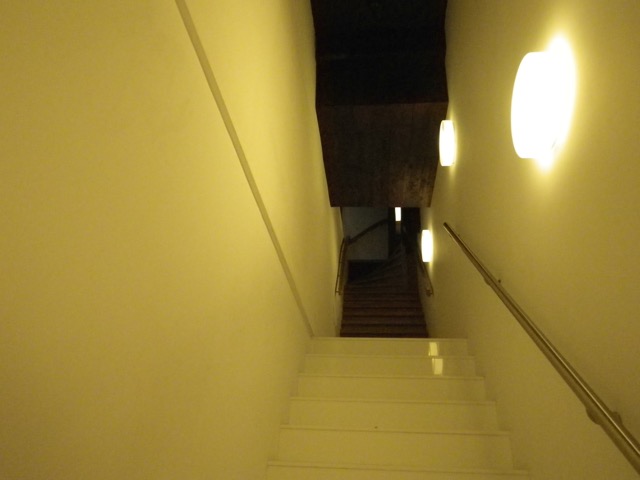
I have a staircase like this, about twice as long as that first bit to the landing, to go down to come home or to climb up to go out.

So those first pictures were taken in my walk between my house and the Spanish teacher’s house, which I found without any problems. I got a lot out of my hour and believe that I’m welcome back, but I’m definitely more advanced than the other two pupils. One had almost no Spanish and the other communicated well, but had a small vocabulary.

It was interesting to be assessed by a proper teacher. She said that I don’t make nearly as many mistakes as I think I do and that they are minor. Even with my insisting that I can barely understood a movie or follow the plot of a novel and that I have so few verb tenses, she said that I’m “fluent” on the scale of knowing a foreign language. To me, “fluent” is equal to “native proficiency,” but she says it’s actually not. She also said I need to focus on immersion and reading more rather than doing grammar drills — which I know and have been too lazy to implement. She suggested I take one-on-one private conversation lessons when I get to Mexico to work on my specific weaknesses and to spend more time reading fiction books and less time reading the newspaper and magazines so that I can start to work on following plot lines. She also suggested getting audio books that have a PDF so I can follow along as I’m reading and continue developing my ear (similar to what I’m doing when I watch something in Spanish with Spanish subtitles).

I came away feeling very surprised by this assessment.

I was going to give you a tour of the village after, but it was COLD. I blipped through a tiny bit of it, but there’s more to see.

I thought this scene looked very English:

I missed my calling.

I’m in the centre of St George’s Square.

Here’s the start of the pedestrian section. Considering how many people were out and about picking up their shrieking kids, I’m surprised it was so empty.

This is the bridge that gave the village its name.

Looking up to that school from earlier in the post.

Heading home. I believe that’s “downtown” Hebden Bridge across the river. Those blue windows and the blue door belong to a Boots (equivalent to a Walgreen’s in the US or a Shopper’s in Canada).

Everything is damp and mossy and licheny.

So many buildings are stuck together, rather like in Amsterdam. My house is a very strange concept, a long row of houses spread out over five stories. The houses at street level facing the road are large homes over several stories with many rooms. The houses at ground level, around the back, are very small with a split-level ground floor that has a kitchen/diner and a sitting room, and then a short steep staircase up to a bedroom and a bathroom. I would be fascinated to see a floor plan of how all the different units fit together. I can definitely hear the neighbours!

I would not want to drive here. It’s worse than Veliko Tarnovo!

But very pretty.

The village is 1 mile downhill from my house. I am going to get my exercise walking here. I see a lot of people with walking sticks and am rather regretting not buying one I saw on mega sale in Moab last spring, but I was doubtful it would get on the plane with me. I should probably check the charity shops here and see if I find something. My fall in Amsterdam scared me badly for all its what ifs.

At any rate, welcome to Hebden Bridge! I will show you more as I get out and about. I know I’m stuck at home again tomorrow typing, but I might have some free time over the weekend. It’s frankly cold out there and the house here is cosy, so… 🙂

Free Manchester Walking Tour

Here are a couple of random bonus Amsterdam pics I forgot I took for my last Amsterdam post…

These cute cars are all over the city.

They can only go very slowly. I think they sound like a greater alternative to a scooter.

A sign outside Salsa Shop:

And part of Salsa Shop’s wall of deliciousness. There were probably 10 times as many bottles in the shop.

Okay, so on to Manchester.

The bed here is terrible so I’m shocked that I slept a solid six hours to 5AM. I then tried to go back to sleep for a few hours, but kept getting woken up by the other people in the building talking loudly as they went about their morning routine. Nothing I can fault anyone on; it’s what I expected. I was offered an air mattress to sleep on instead and I will try that tonight. I don’t have to be up tomorrow, so if should be able to get a little caught up on my sleep. I did have to be up today since I had booked a walking tour for 11.

So I got up around 8:30 and took my time with breakfast and coffee. That was pleasant, I have to say, and I’m glad I didn’t rush out the door. I was also glad that it wasn’t freezing in here at all, which I’d expected based on reviews. I did use two duvets, but slept under them in just a tee shirt and was comfortable. So, really, in the light of having had some sleep my dump was much homier than expected and I continue to have no regrets for having picked it.

Besides the price, the reason I picked this less than one-star accommodation was the proximity to public transport and ease of getting into Manchester. It was a straight shot on the train and short walk from the airport and a bus into Manchester can be taken about three blocks away. With the buses running every few minutes and the 5KM ride estimated to take 20 to 30 minutes, I left around 9:45. I had done my research ahead of time and learned that instead of buying a single fare for £2.90, I should buy a day pass for £4. In other cities I’ve visited, buying such a pass requires making at least three trips to be worth the purchase, but for Manchester, it’s a good deal on just a return trip!

Conveniently, the final stop on my route was about two blocks from where the Free Manchester Walking Tour started, at Sackville Gardens by the Alan Turing statue.

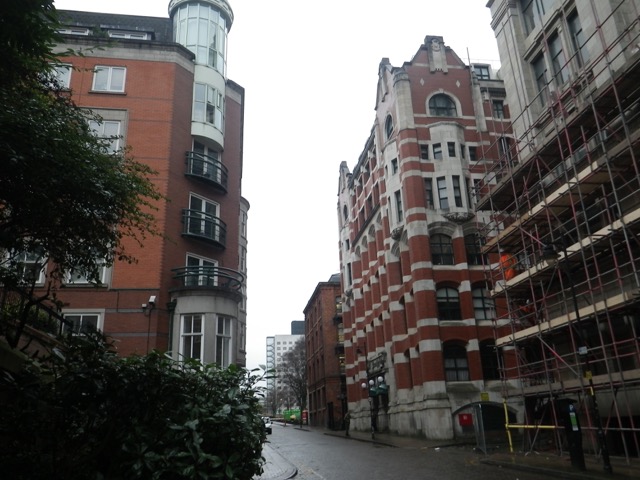
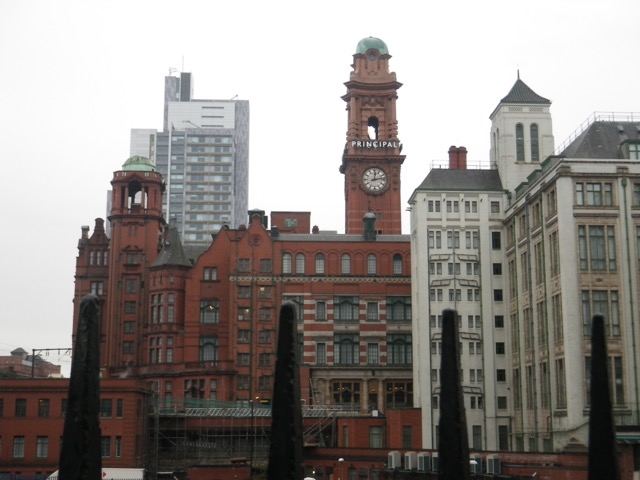
Manchester didn’t make much of an impression after I got off the bus, despite being full of these wonderful red brick buildings that I would learn were once warehouses for textiles.

I found Alan Turing‘s statue without any problems. If you do not know who Alan is, I am very sad. Please stop reading this blog and go watch the recent film The Imitation Game. It’s okay. I’ll wait. Can’t be bothered? 🙁 He was a brilliant mathematician who is pretty much the father of modern computing. He helped crack the Nazi Enigma code, which surely brought about an earlier end to WWII, saving thousands of lives. He was also gay at a time when being gay in the UK was illegal, was chemically castrated for his crime, and died young, presumably from suicide. He was a great man who deserved so much better. I wasn’t crazy about The Imitation Game (was a bit too familiar with the story to be wholly satisfied), but it revived interest in Alan and his work.


Why is Alan wearing a scarf? It’s a homeless initiative. Have an extra scarf? Drape it around Alan. Need a scarf? Alan should have one for you.

By the way, that statue is a disgrace and looks nothing like him!

These mosaics bring attention to import LGBT sites around Manchester.

I was super early early, so I found a café with Barcelona coffee prices (that’s a good thing after Amsterdam) and had a macchiato with cinnamon. Mmm.

When I got back to Alan’s statue, a crowd had start to gather and our host, Josh, soon showed up. Introductions were made and the tour started around 11:10. I’m just going to say here that Josh’s tour is one of the best I’ve been on and he was very interesting and funny, but my brain is so fried that I can barely remember anything he told us. 🙁

He started with a brief history of Manchester, separated into four epochs, from the Romans in AD 79, through the Middle Ages, during the Industrial Revolution, and then modern Manchester. His tour focuses on the latter two periods of Manchester’s history, but the intro helped to set the city into its historical context. I remember that “chester” means that there was a Roman fort in the environs and that the original name of the city was the Latin equivalent of the name of a mountain range in Wyoming for the exact same reason: Mamcium — Teton — breasts-shaped mountains.

He also told us a bunch of grandiose quotes about Manchester that betrayed how full of itself the city can be. There is quite a rivalry with Liverpool and to a lesser extent London. Much later in the tour, I asked if it’s true that Manchester is becoming a more affordable answer to London and Josh said that’s right and that one of the results is that he’s been priced out of downtown. He’s quite concerned about a new train link that will put London an hour away as that’s commuting distance.

One of our first stops was UMIST, University of Manchester Institute of Science and Technology. I wish I could remember more than that because I know there was more, but my brain really is mush tonight.

We then learned a bit about Alan and the legend that the Apple logo originated with him (not true). There was also a plaque in the area saying that we were standing by an apple tree grown from a seed from one of Sir Isaac Newton’s apples, but there was not an apple tree to be seen.

Next, we went to the monument to Vimto, a drink I’d never heard of that was invented by a Quaker (I think) as an alternative to alcohol. It is apparently hugely popular in the Arab world.

Josh gave us a sample of the fizzy version of the drink, which was apparently a travesty. It smelled and tasted like cough syrup. Some Mancunians (residents of Manchester) on the tour said that the non-fizzy drink is nice diluted with hot water, but I don’t think it’d be to my taste.

We moved on to Orient house, which is the building with the scaffolding.

Josh told us how his friend Ben lived in this building in quite a grotty apartment that was very Manchester with its view to train arches and other things, but Ben was evicted with four weeks’ notice so that the building could be renovated and turned into luxury housing. I asked if Ben is homeless now. Nope. The story has a happy ending. Ben is living in a lovely new place that’s a bit more expensive. Why am I telling you this? Josh said Ben would get a kick out of seeing his story in my blog. 🙂

We moved on to the shores of the mighty Medlock River…

This is right by the building where Noel Gallagher of Oasis wrote the songs for “Definitely, Maybe.” Oh, that reminds me of something!

So Manchester was the first industrialised city in possibly the whole world, or at least in the UK. Its industry was textiles, primarily cotton. But the city went into decline in the early 20th century and industry pretty much ended after the 1940 Blitz. The city rather reinvented itself as an alternative music scene and was the home of that techno punk type music, with lots of raves and a  club scene. Totally not my thing, but it was interesting to see the contrast of this very classical looking city with its rather liberal attitudes. There’s quite a large gay scene here as well.

We walked along a canal that reminded me of Amsterdam.

To the heart of Manchester’s gay village. Josh told us how gay men would hang out at the Union Hotel and there were frequent raids while prostitutes hung out a few blocks away and were also frequently raided. They finally had the bright idea to hang out together and pretend to be a legitimate hetero couple when the police came knocking. It worked. LOL! But the owner was finally told that he couldn’t keep running his business that way and that something had to change. So he appended the word “New” to his establishment…

Manchester’s animal is the worker bee, which symbolises all that Manchester wants to be.

I love the pub names and Josh found it funny that we North Americans are so enchanted by this.

I am really distressed by how little I’m remembering. Sorry for the worst travel post ever. Josh’s tour deserves better!

This was a neat building in that every floor is in a different architectural style.

We went into Chinatown. The ratio of Chinese to non-Chinese here is the highest in the UK.

This was a neat building. It leads down to… a nuclear bunker. It was built during the Cold War for a whopping £4 million to house only 40 people. It was a classified and very top secret building that, really, was useless. There are tunnels leading out of it and British Telecom ran phone lines through them. A homeless person caused a fire down there that not only took out phone service in the area, but also the internet in part of Sweden. Josh is not sure how that happened but swore it’s true!

The city library.

The Midland Hotel. Hitler loved it and wanted it for Nazi headquarters after Germany won the war.

We took a break here as we’d been going for two whole hours that would have flown by had it not been so bloody cold and wet out. We stopped for a hot drink at a Cafe Nerro where I also splurged on a giant oatmeal raisin biscuit since I hadn’t realised the tour was so long and wasn’t going to make it to lunch. This is where I discovered my useless phone had dropped from 70% battery life to 9% despite having no apps open and being on Airplane Mode. I’m going to miss Siri, but I’m going to a better phone next… I had a Lightning cable on me, but no way to plug the phone in. Josh saved the day by offering me a wall charger! We were in the café just long enough to get my phone up to 52%, which got me home.

We continued on to Manchester Central, which is a convention centre, not a train station, and the site of the Peterloo Massacre. Please go read up on it, but the short of it was that a bunch of unarmed protesters for the reform of parliamentary representation were slaughtered in 1819.

This Hilton hotel is the tallest building in the area and howls when the wind blows.

We moved on to the Free Trade Hall, site of an important moment in the history of the suffragettes. It’s the only hall named after an idea rather than a person. Manchester was a bit late in getting parliamentary representation, so it was poorly supervised and taxed, allowing free trade and commerce to flourish.

Next door is the Royale Theatre, the oldest in the city.

Now, Manchester City Hall, which rather looks like Canada’s Parliament Buildings.

This is Albert Square and that’s Albert’s monument. Albert as in the consort of Queen Victoria, who did not attend the opening of the building. Her statue is somewhere else in the city and she apparently looks like Jabba the Hutt… which reminds me that except for that statue, there are no statues of women in Manchester! Within a few years, there will be one of a suffragette, though.

I correctly guess that the decoration at the top of the tower is a cotton ball.

Next we moved to Lincoln Square. What a good likeness of Abraham Lincoln this is! This statue represents Manchester’s link with the US during the US Civil War. Manchester was a procurer of slave cotton, but ultimately put an embargo on it and instead moved to non-slave, inferior cotton from the Middle East. This contributed to speeding up the collapse of the Confederate economy. This is in no way to say that Manchester brought about the end of the Civil War, but its actions did speak loudly.

We then went into the wonderfully warm Royal Exchange, which is now a theatre and café.

This board is where the stock prices were advertised. The numbers shown are from the last day of trading, which I believe was 1969.

I forgot to ask how the numbers got changed considering how high up this thing is, but I now see the railing, so I imagine there’s a catwalk behind it.

Right in the middle of the space is a theatre in the round for 755 people, with none of the seats being more than eight feet from the stage.

We finished our tour here, where we learned about the June 15th, 1996 IRA bombing. I learned that authorities got about a 90-minute warning that the bomb was going to go off and they found it, but it could not be diffused in time so they decided to let it explode. They evacuated about 75,000 to 80,000 people, which is an amazing feat. There were injuries and heaps of property damage and economic consequences, but no one was killed. This would be a watershed moment for a city in decline as the rebuilding efforts brought a new vitality to the city.

This is the corn exchange building.

The bomb detonated just about here.

I remember that bombing so clearly. It was the month that I graduated from high school and just weeks ahead of my last trip to Quebec City.

Thus ends Josh’s tour. One last time, do not judge it based on this post. 🙂

It was probably the weather, but Manchester didn’t make a huge impression on me. Museums are free, but I’m really museumed out and glad I have an excuse to stay home tomorrow.

After the tour, I headed back towards the Royal Exchange as I’d spotted a Barclay’s, where I was able to take out some more cash. You may wonder why I didn’t simply make a larger withdrawal yesterday and the short answer is it’s what I had in that account and I had to move money around to get more. 🙂

By this point, I was very wet, very cold, very tired, and getting grumpy, so it was time to find food and get home. I was disgusted by how many streets downtown did not have signage so my map was all but useless, plus it was disintegrating in the damp.

My original plan for the day, when I thought the tour was two hours long, was to have a cream tea after and then get a takeaway later for dinner. But the tour had run way over and it was three by the time we were done (four hours!). So it was time for a proper meal. I decided to splurge and get a full tea even if I knew that would be around £20. I’d done my research for the cream tea and wanted to try the Richmond Tea Rooms, which were conveniently right by Sackville Gardens and on the way to my bus.

I passed this mural on the way, which had a much better likeness of Alan.

I found the Richmond Tea Rooms without any trouble. They have an Alice-in-Wonderland over the top theme. Very cute! As expected, a full tea was over £20, but they had a “Hatter’s” tea for just £10.50 with sandwiches, a scone, and a pot of tea! I knew that would be plenty.

Service was super slow and I rather regretted going when I was tired, grumpy, and starting to get a headache, but I’m glad I stuck it out. The server asked if I had any dietary restrictions and offered to sub tomato and cheese for egg salad when I told her. This is what they brought me:

I had three small sandwiches with a bruschetta-type thing and also an onion and bell pepper tart that I was told had no egg in it, just cheese. SO good! The sandwiches were chicken, ham and butter, and tomato and cheese. Dessert was a huge raisin scone with clotted cream and jam. For tea, I picked their house blend. This was definitely plenty. It’s now four hours later and I’m only just starting to get peckish.

The Richmond Tea Rooms really put on a nice tea. The food was at least as good as at the Wolseley in London, but, of course, I didn’t have the same level of service.

It was past four and pitch dark when I got out of there. I went back to the area where I got off my bus only to see one with my number at a bus stop on the correct side of the way to head home. I didn’t bother rushing to it since I knew another would come along quickly. Sure enough, by the time I’d made my way to the bus stop at a leisurely pace that respected the traffic signals, another one was pulling up. It was very full, so I went upstairs, my first time riding in the top level of a double decker since Edinburgh!

Unlike in most other cities with bus services, Manchester’s buses don’t announce the stops, so I had to keep an eye out to make sure I didn’t get taken for a ride. I ended up missing my stop, but the next one wasn’t much further and I would have ended up walking the same amount anyway. I popped into Tesco to get something light for dinner, settling on some Pot Noodles that would just need water from the kettle and a huge salad.

Weather aside, it was a good day in Manchester. I’m glad I picked the walking tour as my only activity here as it gave me a good idea of what the city is all about.

Het Scheepvaartmuseum (Museum of Maritime History) and NEMO Science Centre

Well, I’m all museumed out. 😀 I have two days left here and two more museums on my list, but I’m ready to let them go. I have work to do tomorrow and Wednesday, I want to give the house a good polish as I’ll be leaving early on Thursday.

I definitely won’t be getting to Haarlem to visit the Ten Boom house because… I had a bad fall today and I’m not as ambulatory as I’d like. 🙁 I slipped on a slick surface while trying to avoid some of the billion out of control brats at the Museum of Maritime History and went down really hard. If it had been my bad knee, I know it would have dislocated. I just know that if I had let my health insurance lapse, it would have been worse, because that’s how things tend to go. As it is, I don’t think I need X-rays or medical treatment, but I may reassess in the morning. I’m RICEing (Rest, Ice, Compression, Elevation) tonight. It was only about 4KM to get home from the museums and I ended up getting on a tram, which was a good move. I really banged it hard. 🙁

At any rate, off to the Het Scheepvaartmuseum! I can’t believe I almost skipped this one!

To get there, I decided to cut through the park near my flat, but did so on a different path and found an information placard about it. As it turns out, it is Vondelpark and basically Amsterdam’s answer to Central Park! It was created in 1834 as a place for riding and strolling. It is in an English landscape garden style meant to mimic natural landscape. The Vondelpark was designated a national monument in 1996.

I went down the street with the posh shops and noticed this shop name Stone Island that sells cold weather gear. LOL

I found myself at the front of the Rijksmuseum.

There was a magnificent house across the canal. I want to live in a house with a tower! 🙂

Here’s another interesting house I passed on my walk. I was going to do the museum of architecture, but, really, I’m museumed out. 🙂

So Anne Frank does have her own street!

I got to the Maritime History Museum with only a few wrong turns and barely any extra mileage, much better than when I was using Google Maps to navigate. It helps that Amsterdam does technically have a grid pattern and that street names are continuous rather than changing every few blocks.

I liked the tile and brick on this one.
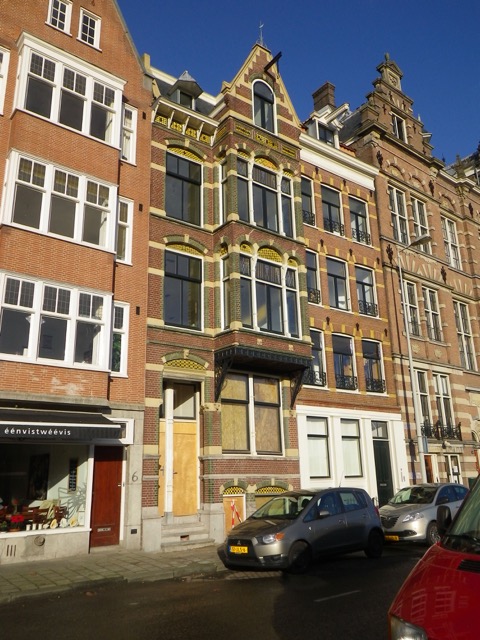
I really looked forward to visiting the replica of an old ship!

The Maritime History Museum appears to be floating. The main entrance is around the side to the right, facing the picture. It is built over hundreds of Norwegian piles.

There’s the NEMO Science Centre nearby. I knew its shape was impressive, but not that impressive! More on NEMO later.

You enter the Maritime History Museum into a magnificent courtyard that is covered with a glass roof. There’s a desk for folks with a Museumkaart to sign in and get an admission bracelet, map, and instructions. Bit of a queue today, but better than at the ticket desk!

I went into the basement to stow my things in a locker. Loved the contrast of the teal with the red brick.

The basement was a bit of a maze.

The barcode on the bracelet is scanned at the entrance of the locker room and you are assigned a locker, which is locked and unlocked electronically.

To my surprise, I was really hungry by this point, so I checked out the café prices. They were better than at most museums I’d been to, so I scrapped my plans to have a late lunch after my tour and ordered food. My coffee came with a meringue that I will confess I ate. My problem is really more with the yolk of the egg than the white. To the left of the coffee is “coffee milk,” which is beige. I’ve since learned that it is evaporated milk, which is not sweet the way condensed milk is. I was grateful to see it as all the coffee drinks with milk were significantly marked up, but I got charged for a black coffee, and the portion was about four times as generous as expected. I went with the cheapest thing on the menu, a grilled cheese with ham, that had this really good melty white cheese and a side of ketchup. It was a lovely lunch in a beautiful café on a gorgeous day.:D

This museum has an audio tour, which I didn’t find as polished as at other museums. For one thing, the player never stopped nattering and would just repeat itself ad nauseum. The stops were also not well marked and it was rather a treasure hunt to find them. But I would never have gotten as much out of the museum as I did without it.

From the courtyard, you can go to the east, north, or west, with south being the exit. I started in the east, which has the actual exhibits.

I was inordinately amused that emergency in Dutch looks like calamity.

There was a big window on the first floor landing with a great view.

I started with the yacht models as I was still looking for stop number one of the audio tours.

Still looking for stop one, I moved to the next room, in which I spent the most time of my entire visit: the atlas room. It was pretty much my idea of heaven. Here is one of the nine volumes of the Atlas Mayor, which started in 1662, and was available in Dutch, French, German, Spanish, and Latin. Here, it is open to a city map of Amsterdam, dated 1649.

Someone told me the first stop for the audio tour was all the way back downstairs at the entrance to the East Wing, so down I went and then I had be directed to a rather well hidden audio point….

As it turned out, the atlases were the first room I was meant to visit. I learned that the Atlas Mayor is the pinnacle of Dutch cartography of the Golden Age and the result of two centuries of map-making and compiling atlases.

Some of the atlases on display are ancient. This map dates back to 1482. What was most fascinating was seeing the maps become more and more accurate, and especially seeing North America take shape.

The atlas above was scanned and I could flip through it. Entirely coincidental that I photographed a scan of the map above!

Just like with the iBooks app, you can literally flip pages. I spent a lot of time on this display. You could even email yourself your favourite maps.

England and Scotland, as understood in the late 1400s.

All the exhibits are dim and you have to press this little lightbulb to get enough light to read the text.

More volumes of the Atlas Mayor.

I then went back to the exhibit of yacht models. Notice that this one is on skates, for sailing on ice.

This is considered one of the finest in the collection for its craftsmanship and mahogany. I find it rather looks like a violin.

There is a third room that is not part of the official tour. It has a table set with china and the walls are lined with rows of cupboards. Curious, I opened one of the cupboards.

Ooh! Each cubby had a silver item.

I headed up to the second floor, admiring the construction of the building.

Next up was a maritime art gallery. To be honest, it started off as a lot of the same to me and I wasn’t really that keen to learn about the various battles, like the Battle of Gibraltar depicted in the scene below. I really was museumed out. 🙂

This one was stylistically interesting to me. Notice the sea monster?

Now, this was interesting because I’d never seen a pen painting before. It’s all done in pen and ink with perhaps a few brush strokes for sky and shadows.

Here’s another one, with a closeup on a whale:

Seascapes like these were in demand around 1650, when the Netherlands became a maritime superpower.

Notice how shiny this one is. That’s achieved with linseed oil. 🙂

I loved the design of the gallery. The paintings appeared to be floating over empty space, but it was just black mirrored flooring.

This was the first exhibit I’ve been to that explicitly talked about how the grey climate here contributed to the dark and subdued colours of classical Dutch painting. Let me tell you, two weeks in Amsterdam in winter and Rembrandt makes a lot more sense to me!

This one rather reminded me of my favourite Monet, with that little burst of light in the centre.

A very calm day with no wind. Can you find at least two clues that tell us that?

Hint:

We then got to more modern paintings and my interest was piqued as there was more colour.

Next stop, navigational instruments, another spectacular room.

I learned all about astrolabes. I had no idea that they are so rare, that most were melted down, and that the ones still in existence were usually found in shipwrecks.
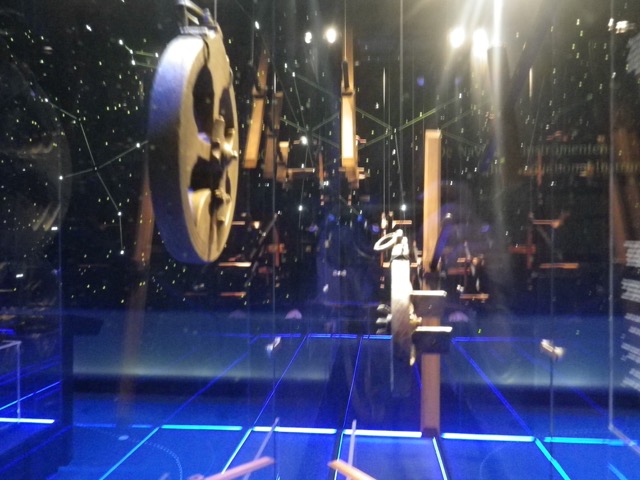
I learned that depth finders had a bit of wax at the end of them to collect sediment from the ocean floor to give further navigational information.

Next up, the naval decorations.

All the figureheads pointed towards this display, which was of rushing water, complete with sound. Standing in front of the display case, I really felt like I was on the prow of a ship cutting through the ocean.

I loved the variety of figureheads and their expressions.

Gritted teeth and scared eyes.

And just… LOL!

Like downstairs, there was a room off the official tour, this one with squashy armchairs and photo albums. I picked a chair at random and found that my photo album was about the Arctic in Norway.

The third floor is not on the floor plan, but there was nothing telling me not to go up, so I did. 🙂

I got a good view of the roof from above.

Now, it was time to head out to the ship!
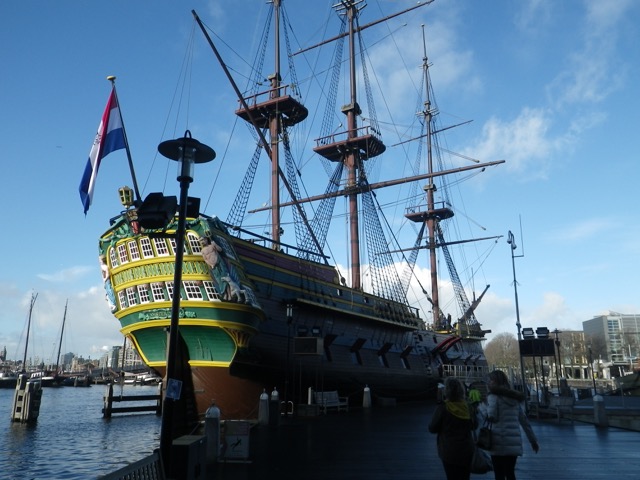
This ship was overrun by disorderly brats who were shrieking. Mexican, Balkan, and Spanish children are so well behaved and orderly that this was a shock. I explored as best I could, but it really wasn’t as much fun as it should have been.

This is the orlop deck, which accommodated 200 sailors and soldiers crammed in around personal effects.

I headed up to the first level of the exterior deck and the captain’s quarters.

Guest quarters were a tad cramped.

Compared to the captain’s quarters. I could not stand up in this part of the ship, however.

I went down into the hold, where the shrieking of the demon spawn was echoing, so I hurried back up.

This ship dates back to 1900 and was an icebreaker.

I was able to view the Royal Barge in its own boathouse. It was built for King William I of the Netherlands between 1816 and 1818. He didn’t use it, but his successors did. It was last used at the silver wedding anniversary of Queen Juliana and Prince Bernhard in 1962.

Coming out of this exhibit is when I fell. 🙁

I went back in to visit the West Wing.

Even if I hadn’t been sore, my brain was about to explode, so I went very quickly through an exhibit about the Golden Age of the Netherlands and one about whaling.

We were able to go into this giant whale.

The final exhibit was a game that looked like a lot of fun and had a grown-up version, but it was overrun with kiddos, so I didn’t even try. I went all the way back to the basement to fetch my coat. Green dots are free lockers, red dots are occupied, flashing green dots have been opened by the scanner at the entrance. Neat system.

I was really sore, but still wanted to go check out NEMO.

I made it most of the way up this staircase, but took the elevator back down.

Amsterdam looked like a painting…

The lineup into the science centre was absurd. I’d done my research and knew that I would not spend much time there, so I decided to see if I could jump the queue with my Museumkaart. Yes!

The NEMO Science Centre is a giant interactive playground meant to teach kids about science. If you plan to visit Amsterdam with children, put this one on your list!

I didn’t bother going near any of the interactive stuff since it was all too busy, but I did catch a few interesting static exhibits. These wooden figures were meant to illustrate the structure of different crystals.

These are primitive batteries, but work more like capacitors.

There was a neat display of old technology, like this 1980s model of CD player.

There was a very graphic multi part sex exhibit. I love how Europeans are not prudes.

I liked the models demonstrating creative sexual positions.

And this exhibit where young and old could practice French kissing.

In an exhibit on more futuristic tech, I found this hat with solar panels woven into it. Can you imagine something like this in Mexico? I’d never have to worry about charging my phone!

There was an exhibit about how solar cars are becoming the norm in the Netherlands and there is an increasing number of charging stations.

I only stayed about 40minutes, longer than I expected I would! I was ready to get off my leg by this point, but I still took the time to capture a few more images of the building’s incredible exterior.

I walked along the water a bit towards Centraal Station, where I could get a tram straight home. I knew I wasn’t up to walking 4KM on that knee. 🙁

This friendly guy (gal?) came to say hello.

How did it get up there?! And why is it not strapped down better?!

I found a whole neighourhood of folks living on the water. By the way, I learned that some canal dwellings are houses on piles while others are boats. The boats are more expensive to live in because they have to be periodically hauled out of the water and their hauls scraped and repainted.

People have real addresses with post boxes.

I bet this person doesn’t come home drunk…

Interesting floating pagoda.

This is a hotel right near Centraal Station.

Back at Amsterdam Centraal.

I got in and got my knee on ice. I researched places nearby to go have dinner, but ultimately decided to just pick up a frozen pizza at the supermarket as well as a few other sundries. I’m glad I didn’t try to go any further than that. I was annoyed that they don’t accept credit cards and I had to give all my remaining cash, which was supposed to get me through to Thursday. So now, I have to make another withdrawal, which will cost me 5CAD. Should have gone out for dinner after all. *wry grin*

Accident notwithstanding, this was another great day of Amsterdam museums! I ended up viewing 257.04CAD worth of museums for just 87CAD. So I think I got my money’s worth out of the Museumkaart! 🙂 I do wish I had gone out of Amsterdam one day, but it just didn’t make sense to do so when I had so much here to keep me occupied. The Museumkaart really was a smart purchase as I’m not sure what I would have done with myself otherwise since work was so slow and I’m on a tight budget. I’m also glad I didn’t get a transportation card and so was motivated to walk as much as I did. I got to know my part of Amsterdam very well and saw things I wouldn’t have noticed from a tram. I have two days left and if my knee cooperates, I want to go explore a bit more of West Amsterdam, where I’m living, since it shouldn’t be too cold…

Museum Ons’Lieve Heer Op Solder (Our Lord in the Attic)

Thankfully, the zombie apocalypse wound down around 2AM and I was able to get some sleep. When I awoke, I appeared to be the only survivor. Amsterdam was dead quiet… I had another slow morning and researched things that would be open today. Truth be told, I didn’t feel like going out into the cold drizzly rain, but I didn’t really have any good reason to stay home. Of the four things still on my list, two were open today and one was near Dam Square, so not too far away, and it opened at one. I really wasn’t keen on it, the Museum Ons’Lieve Heer Op Solder (Our Lord in the Attic), but so many people told me I had to visit it and reviews online were incredibly positive. And so, off I went to find a hidden church buried within Amsterdam’s Red Light District. I do so love it here! 😀

There was so much garbage in the streets.

Lots of firecracker wrappers.

This huge one was right by my front door and is likely the one that exploded around 1:30 with a bang that made me certain the room was going to collapse and grateful that I hadn’t tried to go to sleep yet.

So many outside a Chinese restaurant!

I found the museum without any trouble. I might not have gone the most direct route, but I’m doing pretty well at navigating on my own now!

So this museum is about a “house church.” In the late 1500s, overt Catholicism was banned in Amsterdam as Protestantism took over. So people built churches in their homes. As long as people were discrete, authorities turned a blind eye. It wasn’t illegal to be Catholic — you could believe and practice anything you wanted in private — but you couldn’t openly display your faith.

This church in an attic dates back to 1663 and is one of the best preserved old houses on the canals. There are actually three houses within this building and the tour takes you from the cellar to the very top. You can see elements that date all the way back to the 17th century, although the church was restored to look as it would have in the mid-1800s. I hadn’t realised I was going to get to tour such an old house, so my curiosity was immediately piqued!

Like in many of Amsterdam’s museums, you get an audio guide. They’re not always free, but here they were.

The guides are available in a number of languages. Here, we see Dutch, English, French, German, Spanish, Italian, and Russian.

Model of the house.

Barrel for soapmaking found during an excavation of the house.

The museum entrance is actually in a building next to the old house. You start in its basement, climb up to the ground floor of the old house, work your way up to the attic, then go down to the cellar and back over to the newer building.

The floors are ancient, so guests have to wear shoe covers.

I was wearing my big boots, so I just went for the big covers.

Like with all my other tours, there’s no way I can remember everything I heard in the audio guide and this time, I don’t have any literature to help me recall details.

This was the front room of the more modest house.

Still pretty fancy! It was probably a living room, but there is evidence that it could have been a store at one point.

We now go into the entrance hall for the house.

Notice the “Dutch door.”

The entrance hall is impressive, but the rooms narrow and the ceilings lower as you go back into the house.

You could see right through some of the floors.

Here’s the 19th century kitchen.

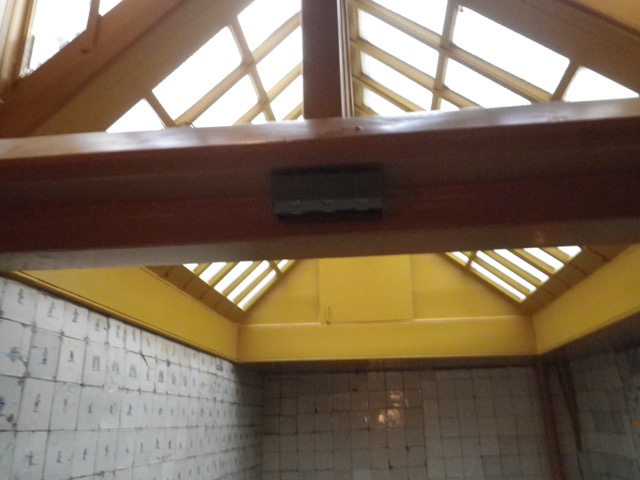
Loved the unexpected skylight.

The tiles on the wall to the left have scenes with children.

Those by the fireplace have scenes with animals.

We’re now going into the room that would have been the kitchen for the larger house, called a “momkamer,” which, if I remember correctly is a sort of tavern. All of these items were recovered from an excavated “cesspool.”

There was a hilarious video about the cesspool. The scene previous to this one was a very graphic depiction of someone defecating.

We then had to go down then up some stairs.

And up a small and super awkward staircase.

Into the drawing room of the larger and grander home. By the way, the only real light in the whole museum comes through the windows, as would have been the case in olden times, with a few lights mimicking candles. So that’s why some of my pictures are so dark.

Here’s the stove in the drawing room. I like the green tiles.

Wall hangings were more interesting than plain plastered walls and provided warmth to the room.

There was a box bed in the corner.

A table with some chairs.

I learned that there are only two original 17th century staircases in the house and that guests are only permitted to use one set. This one that I had just come up.

A lot of skill would be needed to come out of that door onto that narrow ledge!

We then went into the parlour where the owner, who had a linen business, received his guests.

The room was meant to show off so everything was fancy, including the ceiling.

Symmetry was very important in traditional Dutch design. So this door doesn’t work or go anywhere. It just exists as a twin to the door on the other side of the room.

The dark lines on the floor match the pattern of the ceiling.

I continued to climb up. Here, we’re looking down to the entrance hall.

Another box bed, with an interior window with a shutter. We are now on the path to the entrance of the church.

There would be holy water in this basin to do whatever it is Catholics do with holy water before entering a church.

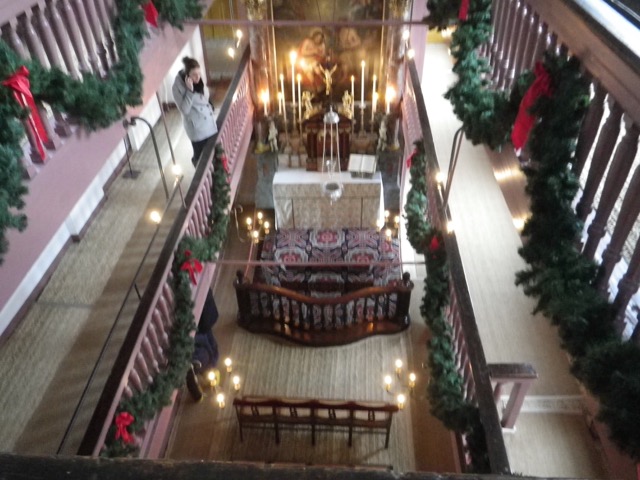
And the church. Wow.

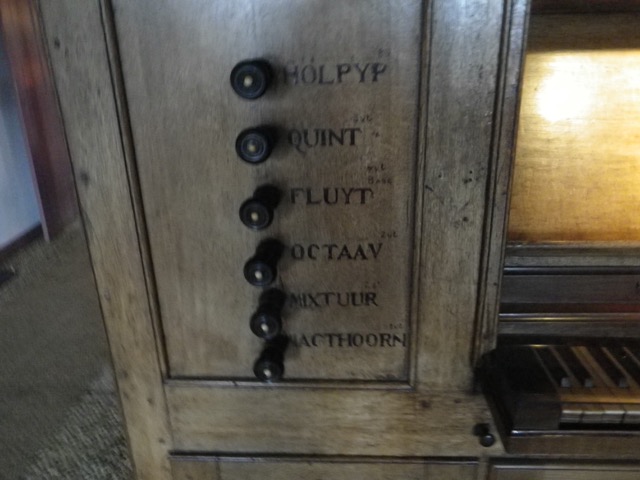
Looking up at the organ. I can’t believe they could play music when they had to be “discrete.”

They had to go through several layers of floor to build the church. These metal ties were used to make up for cutting into supporting braces.

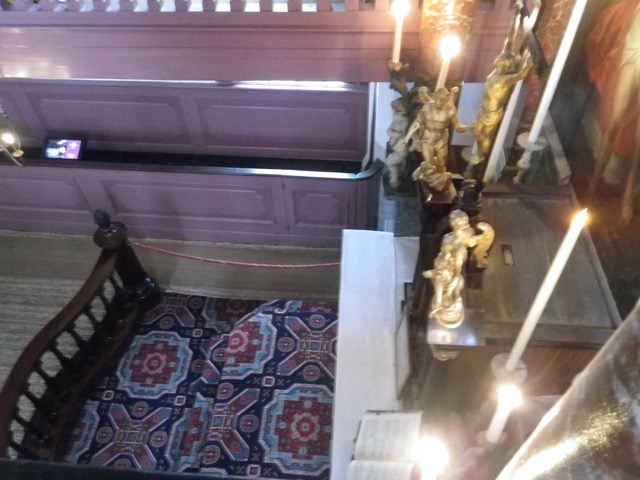
The altar.

Father God.

The pillars are wood painted to look like marble.

The church was originally painted yellow, but this mauvey colour dates from the mid-19th century. Here are some layers of original paint over the years.

Floor covering of woven rushes (made in England).

The pulpit is hidden in this pillar and folds out. There was a video about that. The mechanism is very intricate!

I found a staircase leading up to the organ. It would be easy to miss and I’m glad I spotted it as it leads to another staircase!

So here’s the organ.

This rope leads up to a pulley system that would have been used to bring the linens to the top of the house for storage.

Such narrow, twisty stairs!

Here I am at the very top of the house, in the attic.

This was my first time being all the way at the top of a house in Amsterdam. Quite a long ways down!

Here’s the rope from downstairs.

You can look up through glass-covered hole in the ceiling to see the pulley mechanism. It’s just above that platform.

There was another funny cartoon, this time about the workings of the pulley system.

I headed down into the sacristy, where the priest would dress for mass.

The dove symbolises Christ.

There was a small chapel for devotees of the Virgin Mary.

I headed down to the confessional.

The audio guide said this is a baptismal fount.

I don’t remember what this room was for other than it had a display of religious silver objects. Bits of original wallpaper were found during the restoration and then copied so they could recover all the walls.

This was the last priest of the house, Petrus Parmentier.

Looking down to the museum entrance across the alley.

Now, we’re in the priest’s house.

The priest worked here for, I think, seven years and paid rent for this space. The owner of the house left a provision in his will that the priest be allowed to keep using the space, but because of the debts on the property, he had to leave.

Now, I went down an almost ladder-like staircase to the 17th century kitchen!

This door opens into the alley.

This room was used until 1952. I really wish I had more information about what it was like in those days compared to now. You can cross this room into a pantry-type space. To the left of that door at the back is…

A toilet. “Flushed with a bucket of water.”

I went back up that staircase, down another, and then I was at the end of the tour.

There are some exhibits in what would have been the cellar of the house.

Looking up, you can see some of the original brick and one of the staircases.

Part of the original foundation.

Back in the entrance building, you can climb up to see a few more things.

The “Voices of Tolerance” is really just a place of contemplation. You can see the word spelled in several languages. I see both Russian and Serbo-Croatian. 🙂

I’ve heard about the “Miracle of Amsterdam” ad nauseum.

It was super cold when I came out and I just wanted to get back to my warm and cosy house, about 40 minutes away. I stopped to pick up a hot cone of Dutch “patates.” Very expensive and the ketchup was extra. But they were pretty tasty and warmed me up on my long walk. 🙂

I’ve passed several times a shop that sells halva, a confection usually made with sesame paste and honey that I adore, and today they were handing out free samples. I got to try pistachio and one other of my choice, which was espresso. I really wanted to treat myself to a piece since they had so many varieties, but a small piece was 10 euros and I knew that was highway robbery. I mean, I’ve been able to buy a very decent block of halva in Assinboia for about 5CAD or 3.50 euros for a few years now! So I just savoured my samples and went on my way.

I was really glad to get in around three, but even gladder that I went out. Turns out all the fuss about Our Lord in the Attic was warranted!

Museum Van Loon and the Dutch Resistance Museum (Verzetsmuseum)

For the last few days, I’ve been running on less sleep than I normally need, just because it’s been really high quality snoozing. But when I woke up at 7:30 this morning, about the time I’ve been getting up since I got here, I just wasn’t ready to be up. There was nothing pressing to do today and nothing opens until 10:00 anyway, so I rolled back over. Next thing I knew, it was 9:30!

I had a sloooooooow morning, enjoying my coffee and spending time with the cats. I’d already planned my itinerary for the day and I set off perhaps around 10:30 or even 11:00. My first destination was the Museum Van Loon. This is another canal house tour and I wasn’t sure I was that keen to go. But since it’s a period house that is still lived in, I felt it would be a different experience. And since Contessa enjoyed the last canal house tour, I knew I had at least one reader who would appreciate the write-up. 🙂

The museum was easy to get to. I’m starting to know my way around the main intersections and there are usually signposts telling tourists that attractions are thataway.

Church?

I passed a French bookshop with a clever name, Time Found. Obviously a reference to Marcel Proust’s In Search of Lost Time.

The exterior of the Van Loon home isn’t that impressive. The house was built in 1672 and has been in the Van Loon family for 400 years. It was opened to the public in 1973. The family inhabits the upper rooms, but still uses some of the lower rooms for special occasions.

It’s a very informal visit. They scanned my Museumkaart, gave me a very informative little booklet, and then told me to just wander around at my leisure.

You start in the entrance hall.

The house is unusual as this is the only staircase up. That is, there is no staircase for the servants. The handrail is made entirely of brass.

The first room I visited was the Blue Drawing Room, which had a lot of lovely pink furniture!

The Empire wood floor dates back to 1810, is in good condition, and is extremely rare.

This checkered pattern on the back of the chairs was unexpected and delighted me.

Next, I went into the dining room. The family still eats here on special occasions and also rents it out.

I was surprised by how much I liked the next room, the Red Drawing Room, since I’m not much of a fan of red.

These are the stairs down to the kitchen. I didn’t realise at this point that I was allowed to go down.

Now, we’re in the Garden Room. It was used as a bedroom and later as the family dining room.

Looking towards the Coach House.

I headed upstairs and was surprised by how rough the floors look.

Now, the sheep room, so called because of the wallpaper. It was a guest bedroom.

I love this design.

Next up is the Drakensteyn Room with its incredible wall hangings. They give the room its name as the hangings come from Castle Drakensteyn, the private mansion of H.R.H. Princess Beatrix.

Upstairs hall:

Here’s the Red Bedroom, with its interesting door. It “is smaller than the room on the other side of the landing, because of the hidden stairs behind the bed which lead up to what was formerly the servants’ quarters. In order for the two doors on the landing to face one another without compromising the symmetry of the rooms, a false door was put in… When the door is closed, it looks as if the door is directly opposite the chimneypiece. The real door, however, is next to it.”

See what they mean?

Now, the Bird Room, which served as a nursery.

I wonder where this door goes.

This room had some interesting info on the growth of Amsterdam. “Growing prosperity in the city of Amsterdam around the middle of the 17th century led to more demand for luxury carriages. Daniel Stalpaert was the first city planner of Amsterdam to add a street between Keizersgracht [which the Van Loon home faces] and Prinsengracht: The Kerkstraat. It was specifically designed to offer space for coach houses.” Remember this…

The wallpaper is what gives the room its name.

These modern glass doors between the landing and the hallway bewildered me.

I headed down to the kitchen.

The kitchen was as far away from the dining room as possible to prevent smells and heat from permeating the dining room. It didn’t matter that food was served cold.

This cupboard has mesh to keep air circulating so food would stay fresh and flies and other insects couldn’t get in. I think they’re called pie cupboards in the American South.

I went out into the garden.

Here’s the Coach House. The family only reacquired the coach house in 2012.

I kid you not, the building still smelled like horses.

Since I hadn’t really paid for my admission and this is a private house, I had decided that I would have a hot beverage in the coach house. There were several choices that included hot chocolate and mulled wine, but I went for a cappuccino.

Here’s that cat they don’t want let into the house. So friendly!

This is a garden layout. All the text has the names of plants.

Staircase leading back up.

I’m glad I visited the Museum Van Loon, but at 9 euros, I think it’s something that should only be on your list if you’re crazy about architecture or have a Museumkaart.

My next destination, the real one of the day, was the Museum of Dutch Resistance, a short distance away. I passed a particularly leaning house.

I’m glad I know they were built like that on purpose!

By the way, it was warmer today, above freezing, but very damp.

I found the museum without any trouble and was delighted that I knew I could get home again very directly without any help!

I’m really not sure how to go about with this museum write-up. This is a subject I know a lot about. I think I’m going to go with the idea that most people have some basic WWII/Holocaust history and just point out things in the exhibits that were of interest to me rather than try to set the context. If you want to know more, ask and I’ll answer and/or send you to the appropriate resources.

Let me just start off by saying that the museum is brilliantly put together. The layout looks chaotic at first glance, but is actually very logical and fluid. Everything is translated into English and the audio guide is fantastic. I can’t imagine any way the museum could have better presented the subject matter.

So Dutch resistance during WWII. After Germany conquered the Netherlands, the Dutch could collaborate, adapt, or resist. Of course, the latter are the most celebrated. I was surprised that there is no mention at all in the museum of two of who I think are the best known resistors, Miep Gies and Corrie Ten Boom, but I appreciated that I got to meet others.

The invasion of Holland was insidious. The Nazis came in gently and wore down the Dutch before their show of horror began. This explains in part why some people collaborated at first, because Holland was in the throes of economic crisis and the Nazis brought a measure of prosperity.

All through the museum, you are invited to reflect on what you would have done in that situation. I like to think I would have resisted, but I suspect I would have been an adapter. I sincerely doubt I would have been a collaborator.

Holland surrendered shortly after the bombing of Rotterdam (seen here) to prevent the loss of more civilians. Life quickly went back to normal. At the foreground, you see a man buying an ice cream.

“Ozo” (so there) became the rallying cry of the resistors. It actually meant “Orange will triumph” (Oranje zal overwinnen). Orange was the colour of the resistance.

The February Strike of 1941 was a turning point. By this time, sanctions against the Jews at begun. Starting with the trams, Amsterdam ground to a halt to protest the treatment of its Jews.

The Germans used a lot of propaganda and borrowed the letter V for victory from English. The resistance in turn took it to mean the Germans are drowning, as that word starts with a V in Dutch.

The identity card was introduced in 1941. “Every Dutch citizen age 15 and over must be in possession of such a card, with passport photo and fingerprint, and must carry it at all times. The data are recorded in a central registry. No other country in Europe has an identity card that is so technically and administratively complete.” This card gave the Germans more control over the Dutch and especially to counteract the resistance, but there was little protest against the card. Jews have a large J stamped onto their documents and have to wear a Star of David.

An order directing the person to report to a labour camp. Some people went, thinking it wouldn’t be that bad. Others went into hiding.

Examples of some possessions that would be taken to a labour camp.

Those who reported to go to a labour camp were first sent to the transit camp Westerbork to await orders to move on to other camps, like Auschwitz. Some people would write goodbye letters ahead of time. If they were called to leave, it would be without notice, so they would throw the letters out of cracks in the walls of trains and hope they were delivered. Most of these letters were very positive and hopeful in tone.

Of the 140,000 Jews in the Netherlands:

107,000 were deported, of with 5,500 survived and 101,500 died.

25,000 went into hiding, of which 18,000 survived and 7,000 died.

8,000 survived, but were sterilised or otherwise brutalised.

Survivor standing in front of a pile of bones.

As supply lines were cut off, a very complex rationing system came into being.

There were a lot of surrogate products for things like coffee and tobacco.

People got creative. This bicycle’s front wheel was replaced with a scooter wheel.

As the Allied forces marched into Europe, the Dutch expected to be liberated and defiance increased. Germany stopped playing the nice guy and switched to intimidation and violence.

When the Germans had invaded Holland, they released 300,000 (!) Dutch POWs as a measure of goodwill. In 1943, there was an announcement made that all of them would have to report back to labour camps as POWs. This led to a series of strikes. Now that the Netherlands as a whole had experienced the terror of Nazi Germany, resistance grew. This would be another turning point.

Personal effects of a man executed as an example. The Nazis thought he was a striker, but he had actually not been scheduled to work that day. That didn’t matter.

Hiking boots of a woman who escaped Holland by climbing the Pyrenees into Spain.

This razor concealed microfiches.

Going into hiding was no small feat as that meant papers had to be forged and food found.

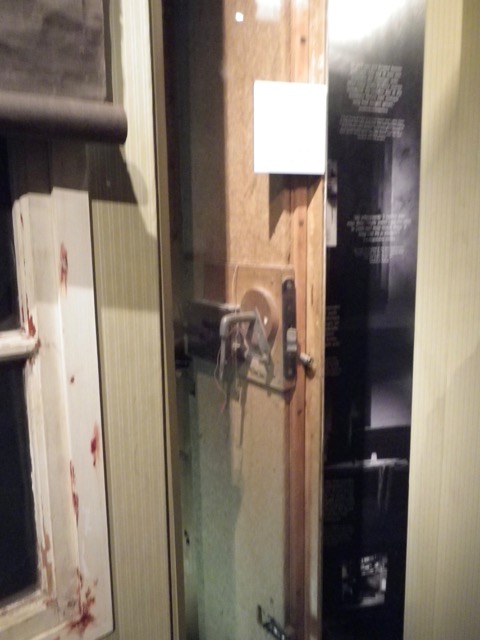
This is a real door that once led to a hiding space.

Printing equipment for counterfeit documents.

People in the camps occupied themselves as they could. This was a chess game.

This little Christmas tree was made from a man’s bandages and the foil covering his medication.

Door of a cell in Weteringschans Prison.

As the war wound down, there was the Hunger Winter, when supplies were not coming in. This reminded me so much of the testimony of people who lived through the Sarajevo siege, about how all the trees and as much wood as could be gathered was burned for heat.

There was an interesting special exhibit just before the end about food in wartime. The Hunger Winter notwithstanding, the food situation in Holland during the occupation was not as bad as imagined because Holland was self-sufficient. People actually ate more healthily as they were getting more produce into their diets.

One of the recommendations was that people cook their vegetables for a shorter period of time to use less fuel and to preserve nutrients. People were strongly advised to not peel their potatoes, which was met with disgust. Personally, I think the peel is the best part of a potato!

20,000 people died during the Hunger Winter.

The final exhibit is about the liberation of Holland. To be brutally honest, I was really pissed off by this point that there had not yet been any mention of Canada specifically. We were just lumped in with “the Allies” and the US got a lot of individual mention, when they joined the war well after us, and only after they got attacked, and Canada did the bulk of the work in liberating Holland. I was shocked to see Canada so badly disrespected. At least, we got some mention in this final exhibit.

That was part of the Canadian flag at the time.

Destroyed bust of Hitler.

Collaborators were treated poorly, many executed without trial. Women had their head shaved.

The tour ended with this quote, “Asking yourself a question, that’s how resistance begins. And then ask that very question to someone else.”

There was another brief exhibit about Dutch colonialism, but that didn’t interest me.

I really recommend the Dutch Resistance Museum as a must see in Amsterdam. I think that it can serve equally well someone who has no knowledge of the subject as someone who is well versed in it.

I headed home into an afternoon that had become bitterly cold and passed on the Kerkstraat the entrance to the Van Loon coach house.

Couple more things of interest on my long walk home:

Where you learn to murder people?

It was another really lovely day in Amsterdam!  Very little will be open tomorrow, so I’ll probably stay in. There is a pair of museums I might do Monday and I would really like to head to Haarlem on Tuesday to visit the home of resistor Corrie Ten Boom, but I’m having a hard time coordinating with the museum’s holiday schedule. So that’s a big if. I still have plenty on my list to fill my last four days, but, really, at this point I’ve done what I wanted to do here and anything else is icing on the proverbial cake.

I’m off to make an extra special dinner to ring in the 2017. 🙂